To turn off vibration on a Google Pixel 4a, open Settings, tap Sound & vibration, tap Vibration & haptics, and turn off Use vibration & haptics. That one switch stops every vibration on the phone, including calls, notifications and touch feedback. If you only want to stop some vibrations, leave the switch on and turn off the individual options below it instead.
Google documents this switch in its Pixel Phone Help article on volume, sound and vibrate settings, which applies to Pixel phones generally. The steps and screenshots below come from a Pixel 4a running Android 11.
In this article:
- Turn off all vibration
- Step-by-step with pictures
- Turn off only some vibrations
- Stop vibrate mode from the volume button
- FAQs
How to Turn Off All Vibration on a Google Pixel 4a
- Swipe up on the Home screen and open Settings.
- Tap Sound & vibration.
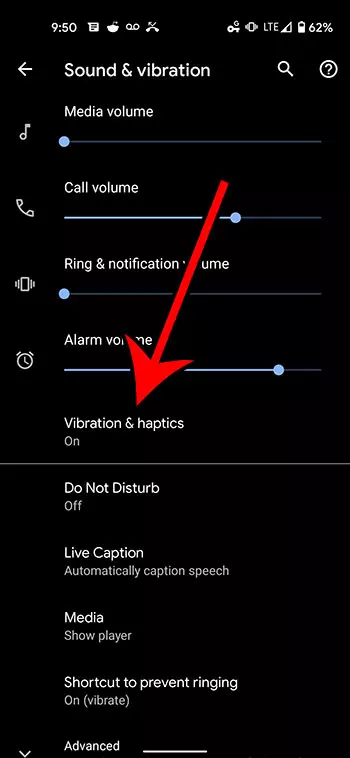
- Tap Vibration & haptics.
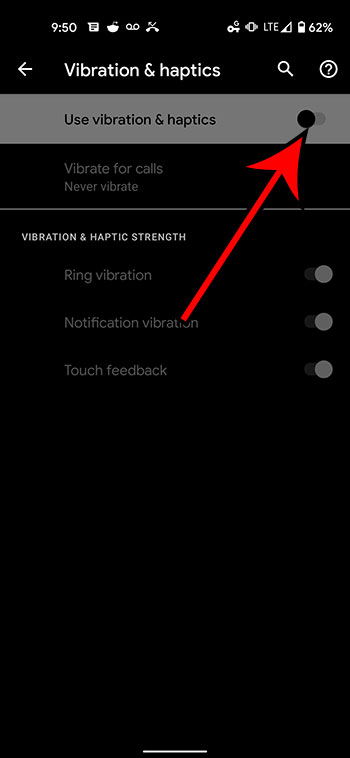
- Turn off Use vibration & haptics.
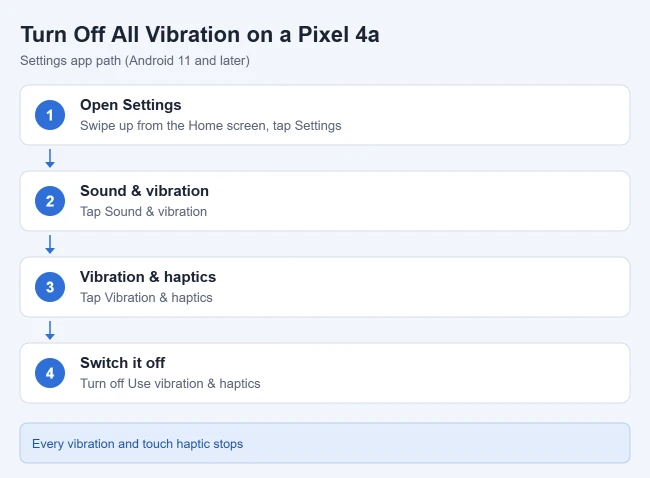
Result: The phone no longer vibrates for calls, notifications, alarms or touches. The individual options on the same screen are grayed out until you turn the main switch back on.
How to Disable Vibration and Haptics on a Pixel 4a (Guide with Pictures)
These steps were performed on a Google Pixel 4a with Android 11. Newer Android versions use the same path, though the screen layout may look slightly different. Our guide on finding the Android version on a Pixel 4a shows where to look.
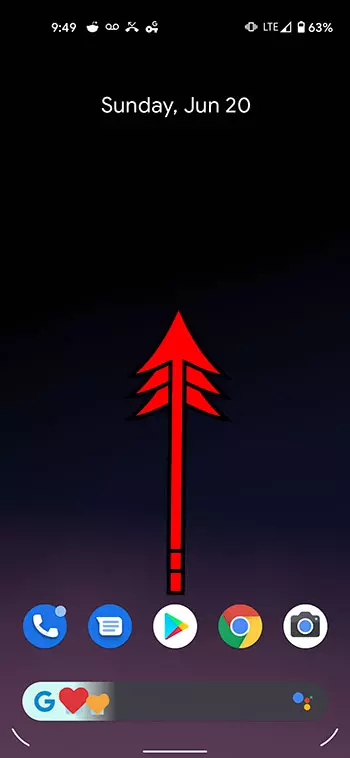
Step 1: Swipe up on the Home screen to open the Apps menu.
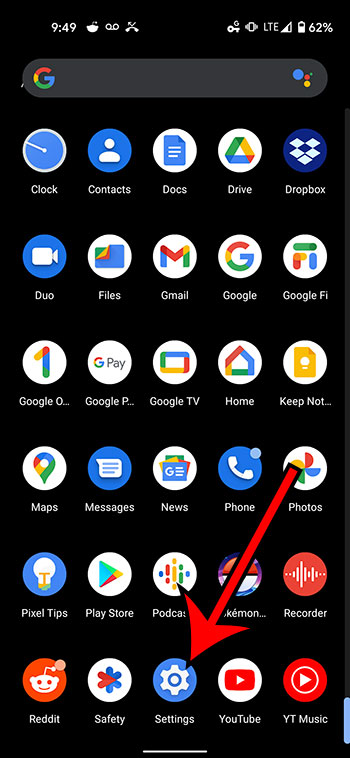
Step 2: Scroll down and select the Settings icon.
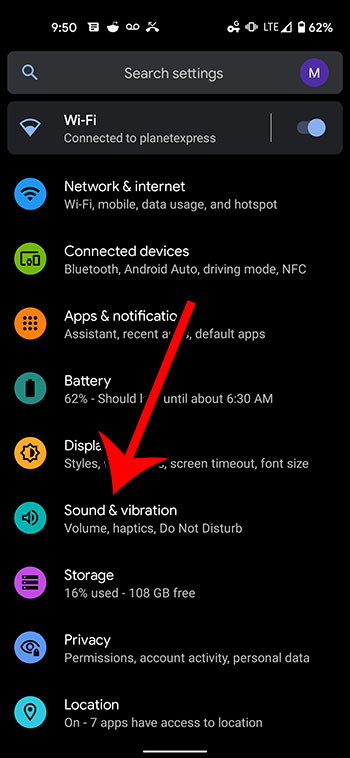
Step 3: Choose Sound & vibration from the menu.
Step 4: Select Vibration & haptics.
Step 5: Tap the switch to the right of Use vibration & haptics to turn it off.
How to Turn Off Only Some Vibrations
Turning off everything also removes the light buzz you feel when you type or tap, which some people like. Google’s Android Accessibility Help lists the separate controls that sit under the main switch on the Vibration & haptics screen:
- Ring vibration – whether the phone vibrates for incoming calls.
- Notification vibration – whether app notifications vibrate.
- Touch feedback – the small buzz when you tap or type.
- Alarm vibration – whether alarms vibrate as well as ring.
- Open Settings and tap Sound & vibration.
- Tap Vibration & haptics and leave Use vibration & haptics on.
- Turn off each option you don’t want, such as Notification vibration.

Result: Only the options you turned off stop vibrating. The option names can vary by Android version, so you may see slightly different labels on your phone.
How to Stop Vibrate Mode from the Volume Button
If your Pixel is buzzing because it is set to vibrate instead of ring, you can switch modes without opening Settings. Google’s Pixel help describes it this way:
- Press a Volume button.
- Above the volume slider, tap the ring icon.
- Tap Ring to switch from vibrate back to ringing, or tap Mute for silence with no vibration.
Result: In Ring mode the phone plays sounds; in Mute mode it neither rings nor vibrates. This doesn’t change your Vibration & haptics settings.
You can also show the battery percentage on your Pixel 4a or turn on Battery Saver from the same Settings app. That app is also where you turn NFC on or off on a Pixel 4A.
Frequently Asked Questions
Does turning off vibration stop the keyboard from buzzing?
Yes. Turning off Use vibration & haptics stops touch feedback too. If you want to keep call and alert vibration but lose the tap buzz, turn off only Touch feedback. To silence the beep the Phone app keypad makes as well, see how to turn off dial pad tones on Android.
Will I still hear notifications after turning off vibration?
Yes. This setting controls vibration only. Your ringtone and notification sounds keep playing at whatever volume you’ve set.
Why are the vibration options grayed out?
The individual options are disabled while Use vibration & haptics is off. Turn the main switch back on to change them.
Can I make my Pixel 4a more sensitive to touch instead?
Yes, that’s a separate setting. See how to increase touch sensitivity on a Google Pixel 4a.

Matthew Burleigh has been writing tech tutorials since 2008. His writing has appeared on dozens of different websites and been read hundreds of millions of times.
After receiving his Bachelor’s and Master’s degrees in Computer Science he spent several years working in IT management for small businesses. However, he now works full time writing content online and creating websites.
His main writing topics include iPhones, Microsoft Office, Google Apps, Android, and Photoshop, but he has also written about many other tech topics as well.