To see app updates on a Google Pixel 4a, open the Play Store, tap your profile picture in the top-right corner, and tap Manage apps & device. The Updates available section shows how many apps have updates waiting. Tap See details to see the list, then tap Update next to one app or Update all to install everything.
These steps follow Google Play’s guide to updating Android apps as of October 2026. App updates come from the Play Store app, not from Android itself, so the same path works on the Pixel 4a (which stays on Android 13, its final version) and on every newer Pixel. The menus look the same on most other Android phones too, because the Play Store is the same app everywhere.
View and Install App Updates on a Pixel 4a
You need to be signed in to the Google account you used to download the apps, and you need a Wi-Fi or mobile data connection.
- Open the Play Store app. If it isn’t on your home screen, swipe up from the bottom of the screen to open the app drawer and tap Play Store.
- Tap your profile picture (or the circle with your initial) in the top-right corner. A menu opens with your account name at the top.
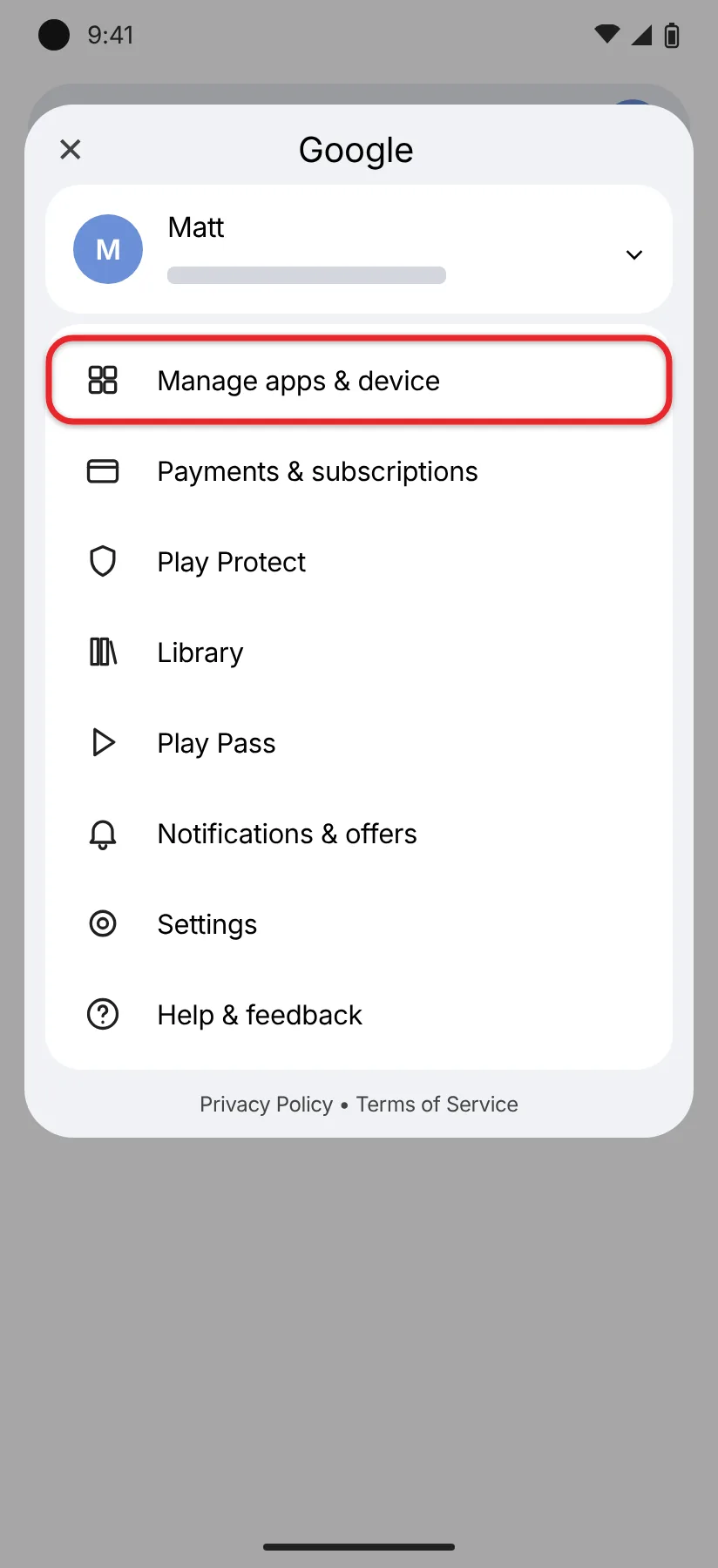
- Tap Manage apps & device. The Overview tab opens. Under Updates available, you’ll see a count of apps with pending updates, or a message that all apps are up to date.
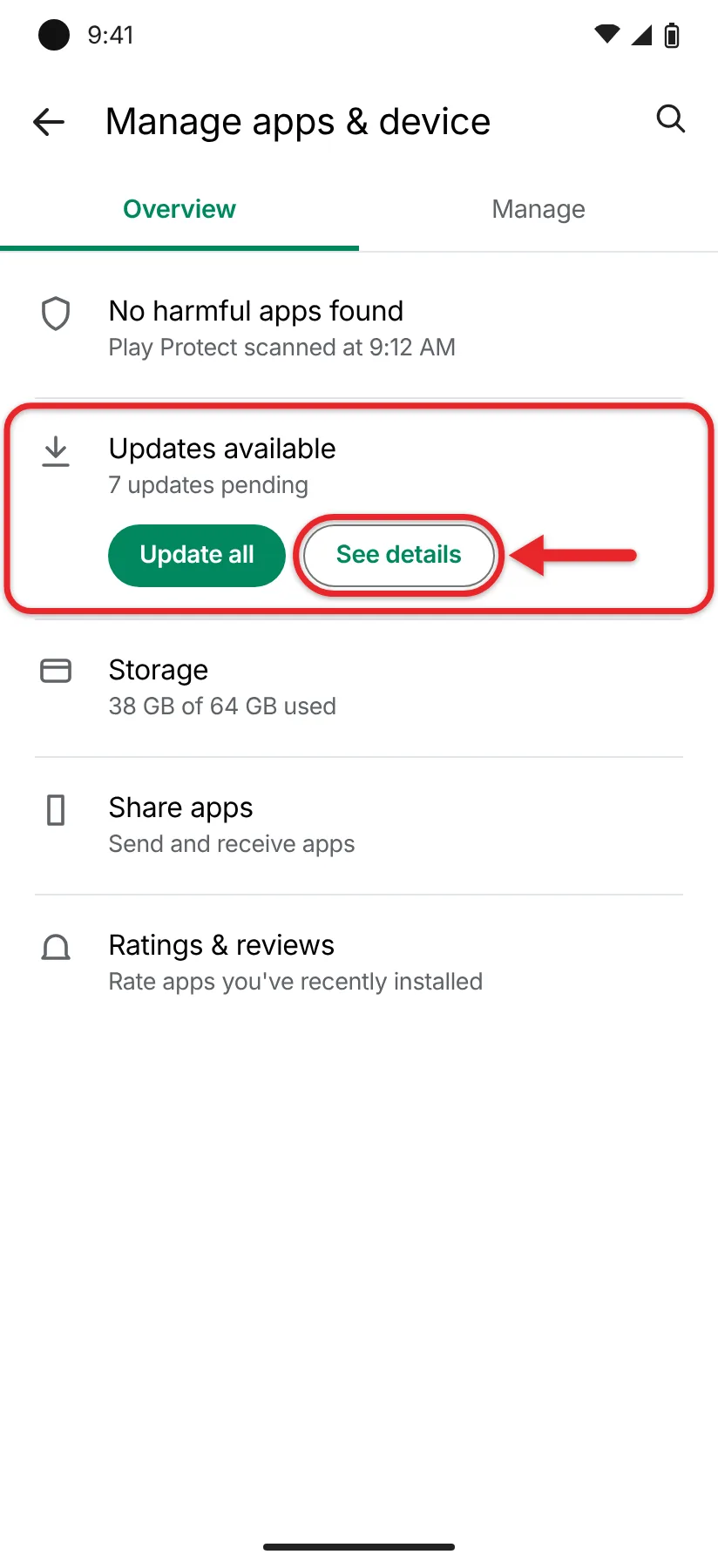
- Tap See details. A list of every app with a waiting update appears, along with each download’s size.
- Tap Update next to an app to install just that update. The button changes to a progress indicator while the update downloads and installs.
- To install every update at once, tap Update all at the top of the list instead.
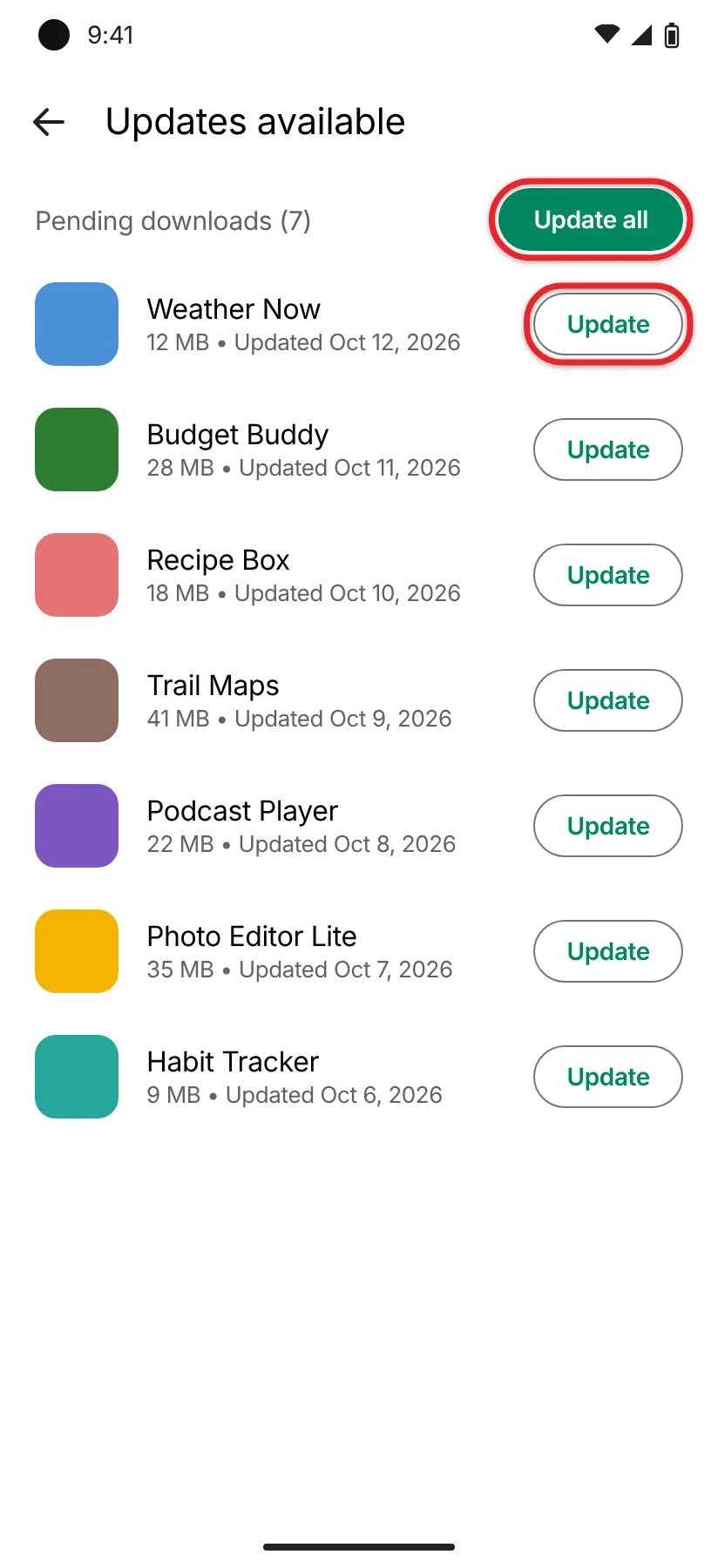
When an update finishes, the app drops off the list. When the list is empty, everything installed from the Play Store is current. If an app has no Update button, it means there’s no update for it right now.
If you only wanted to check what’s pending, you can stop after step 4. Nothing installs until you tap a button or until automatic updates run.
See What Changed in an Update
Before you install an update, you can read the developer’s release notes.
- On the Updates available list from the steps above, tap the name or icon of the app.
- The app’s Play Store page opens. Scroll to What’s new to read the notes for the latest version and see when it was last updated.
Release notes vary a lot. Some developers list every fix, and others just write “bug fixes and improvements.” If you rely on an app for something important, like banking or two-factor codes, this is a good place to check for changes before you update.
Turn Automatic App Updates On or Off
Most people don’t need to check for updates by hand, because the Play Store can install them in the background. Here’s how to choose when that happens.
- Open the Play Store and tap your profile picture.
- Tap Settings.
- Tap Network preferences.
- Tap Auto-update apps.
- Pick one of these options:
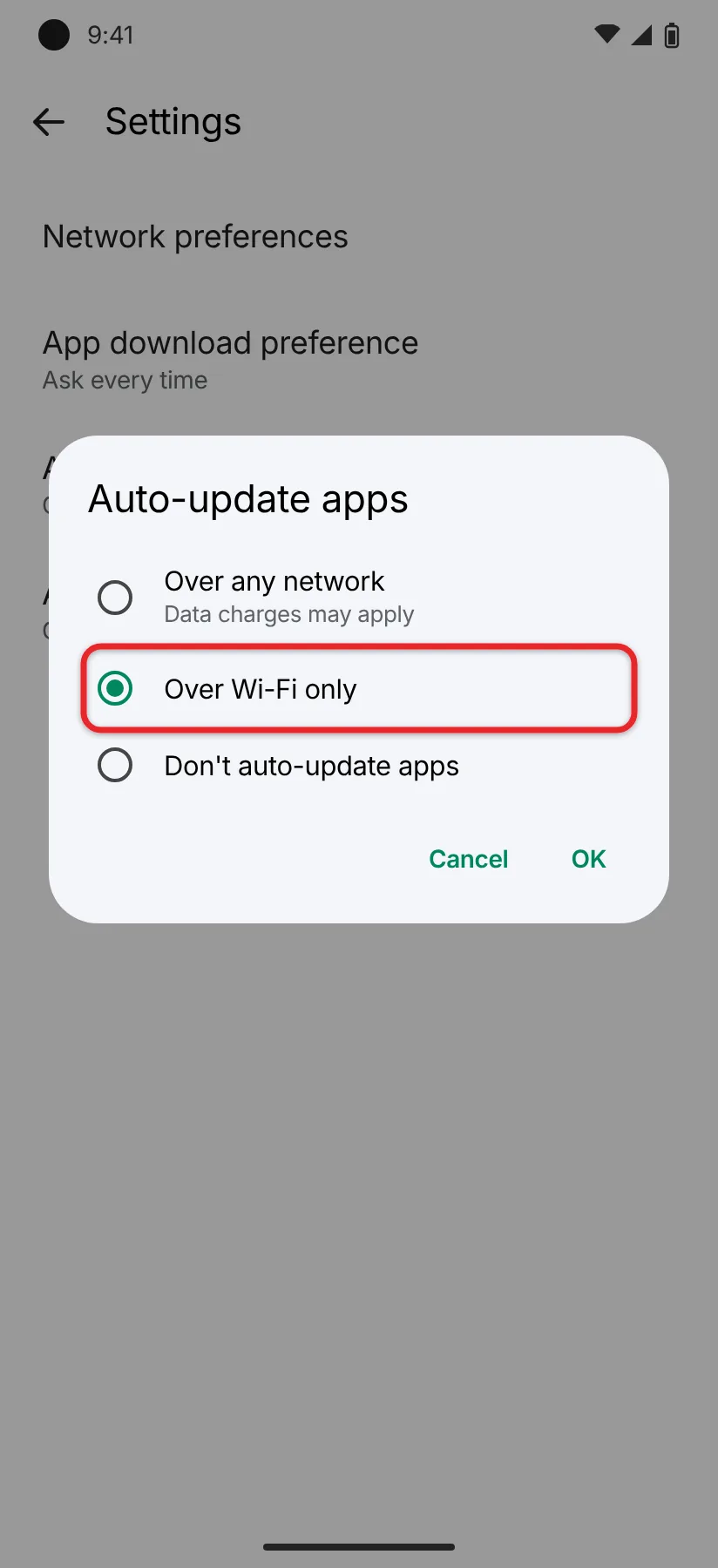
- Update all apps over Wi-Fi or mobile data installs updates whenever you’re online.
- Update over Wi-Fi only waits for a Wi-Fi connection. This is the best choice if you have a limited data plan.
- Don’t auto-update apps leaves every update for you to install from the Updates available list.
- Update with limited amount of mobile data appears only on some accounts. Google says it’s available to a limited group of users.
Even with Don’t auto-update apps selected, Google may still install updates that fix critical security problems. If you want to keep updates fully under your control, our guide on how to stop apps from updating automatically on Android covers the trade-offs.
Update One App Automatically
You can also leave auto-updates off for most apps and turn them on for a few you always want current, such as your banking app or your messaging app. This works the other way too: you can turn off auto-updates for one app you’d rather update yourself.
- Open the Play Store, tap your profile picture, and tap Manage apps & device.
- Tap the Manage tab at the top. A list of your installed apps appears.
- Tap the app you want to change. Its Play Store page opens.
- Tap the More icon (three vertical dots) in the top-right corner.
- Turn Enable auto update on or off. A check mark means the app updates automatically.
App Updates vs. System Updates on a Pixel 4a
The Play Store only handles apps. Android version updates and monthly security patches come through the phone’s Settings app, under System > System update (some Pixels label it Software updates). You can see your current version under Settings > About phone > Android version, and our article on what Android version is on a Google Pixel 4a explains what each number means.
This matters on a Pixel 4a. Google lists the Pixel 4a and Pixel 4a (5G) among the phones that no longer receive Android version updates and security updates. The 4a’s last Android version is Android 13. You can still update your apps through the Play Store as long as each developer supports Android 13, and keeping apps current is one of the few ways left to get security fixes on that phone.
Apps you installed outside the Play Store, such as an APK file you downloaded from a website, won’t show up in the Updates available list. Those apps update through their own built-in updater or by downloading a newer file from the same source. Installing those files requires allowing apps from unknown sources on a Pixel, so only use sources you trust.
If an App Won’t Update
Work through these in order. Most update problems clear up after the first two or three.
- The update says Pending or Waiting for Wi-Fi. If you chose Update over Wi-Fi only, Play waits for Wi-Fi before downloading. Connect to Wi-Fi, or tap Update on the app yourself to install it now. Updates also queue behind each other, so one large download can hold up the rest.
- There’s no Update button. That app has no update available for your phone right now. Developers sometimes release updates in stages, so a friend may get a version a few days before you do.
- You’re low on storage. Open Settings > Storage and check how much space is free. Google suggests freeing space if you have less than 1 GB available or see a storage warning. Delete apps you don’t use, or old photos and videos you’ve already backed up.
- The download keeps failing. Switch from mobile data to Wi-Fi (or the reverse), then try again. Close the Play Store by swiping up from the bottom of the screen and holding to open recent apps, swiping the Play Store card away, and reopening it.
- Restart the phone. Press and hold the Power button and tap Restart. If holding Power opens the Assistant on your Pixel, press Power and Volume up together instead. Some updates need a restart to finish.
- Clear the Play Store’s cache. Open Settings > Apps > See all apps > Google Play Store > Storage & cache > Clear cache, then reopen the Play Store. This doesn’t remove your apps or purchases.
- Updates stopped installing automatically. Google notes that a sign-in error on any account on the phone can block automatic updates. Open Settings > Passwords & accounts (Passwords, passkeys & accounts on newer Pixels) and look for an account with an error message, then sign in again.
- The Play Store says the app isn’t compatible with your device. The developer has likely stopped supporting your Android version. On a Pixel 4a, that means the app now requires something newer than Android 13, and there’s no way to get that update on that phone. The version you already have usually keeps working until the developer or the service shuts it off.
Some updates also ask for new permissions. If you see a prompt about new permissions, read it before you accept, since that’s where an app tells you it wants access to something new, like your location or contacts.
Frequently Asked Questions
How do I know if my Pixel apps are up to date?
Open the Play Store, tap your profile picture, and tap Manage apps & device. If the Updates available section says all apps are up to date, there’s nothing to install.
Can I still update apps on a Pixel 4a?
Yes. Google ended Android and security updates for the Pixel 4a, but the Play Store still works and still delivers app updates. Over time, some apps will raise their minimum Android version above Android 13, and those apps will stop getting updates on the 4a.
Does Update all use mobile data?
It uses whatever connection you’re on when you tap it. If you’re on mobile data and don’t want to use it, connect to Wi-Fi first. The Update over Wi-Fi only setting controls automatic updates, not updates you start yourself.
Can I undo an app update?
The Play Store doesn’t have a button to roll back most apps. For some built-in Google apps, you can open Settings > Apps > See all apps, tap the app, tap the More icon (three dots), and tap Uninstall updates to return to the version that came with the phone.
Why do my apps update without asking me?
Automatic updates are turned on. Change it in the Play Store under your profile picture > Settings > Network preferences > Auto-update apps.

Matthew Burleigh is the founder, head writer, and editor of Solve Your Tech, which he launched in 2012. He has written technology tutorials since 2008 and worked in IT since 2003, including small-business support, IT management, and consulting. He holds Bachelor’s and Master’s degrees in Computer Science from Arizona State University.
Matthew writes practical guides for Windows, iPhone and iPad, Microsoft Office, Outlook, Google apps, and Android. Solve Your Tech’s guides are checked step by step against the device or app maker’s own documentation and tested on his own devices whenever he has the hardware or software, with clear steps, sources, and update dates.
Read more about Matthew and how Solve Your Tech writes and updates its guides, or report a correction.