To increase touch sensitivity on a Google Pixel 4a, open Settings, tap Display, scroll toward the bottom, and turn on Increase touch sensitivity. On newer Pixels, look under Settings > Display & touch > Touch sensitivity for Screen protector mode (Pixel 8a and earlier) or Adaptive touch (Pixel 9 and later).
The Pixel 4a stopped getting Android updates after Android 13, and Google lists it among the Pixels that no longer receive Android version or security updates. The Pixel 4a steps below cover Android 11 through 13. The newer-Pixel steps follow Google’s Pixel display settings guide and apply to current models, up to the Pixel 11, running Android 16 or Android 17. If a label on your phone doesn’t match, the Settings search method works on every version.
What the Setting Does
A touchscreen senses your finger through the glass. A screen protector adds another layer, and a thick tempered-glass protector can make light taps, quick swipes, or taps near the edges register less reliably.
Turning on increased touch sensitivity tells the Pixel to respond to weaker touch signals. That makes up for the extra layer. It doesn’t speed up the phone or change how apps work. It only changes how easily the screen reads your finger.
Leave it off if you don’t use a protector and the screen works fine. With the extra sensitivity on, a bare screen is more likely to react to a palm, a damp cheek during a call, or water droplets.
Turn On Increased Touch Sensitivity on a Pixel 4a
- Swipe up from the bottom of the Home screen to open the list of all your apps.
- Tap Settings, the gray gear icon. You can also swipe down from the top of the screen twice and tap the small gear at the bottom of the Quick Settings panel.
- Tap Display. You’ll see brightness, Dark theme, and other screen options.
- Scroll toward the bottom of the list. On Android 11, tap Advanced first to show the rest of the options.
- Find Increase touch sensitivity. The description under it mentions screen protectors. Some later builds label it Screen protector mode instead.
- Tap the switch so it turns blue. The change takes effect right away, and there’s nothing to save.
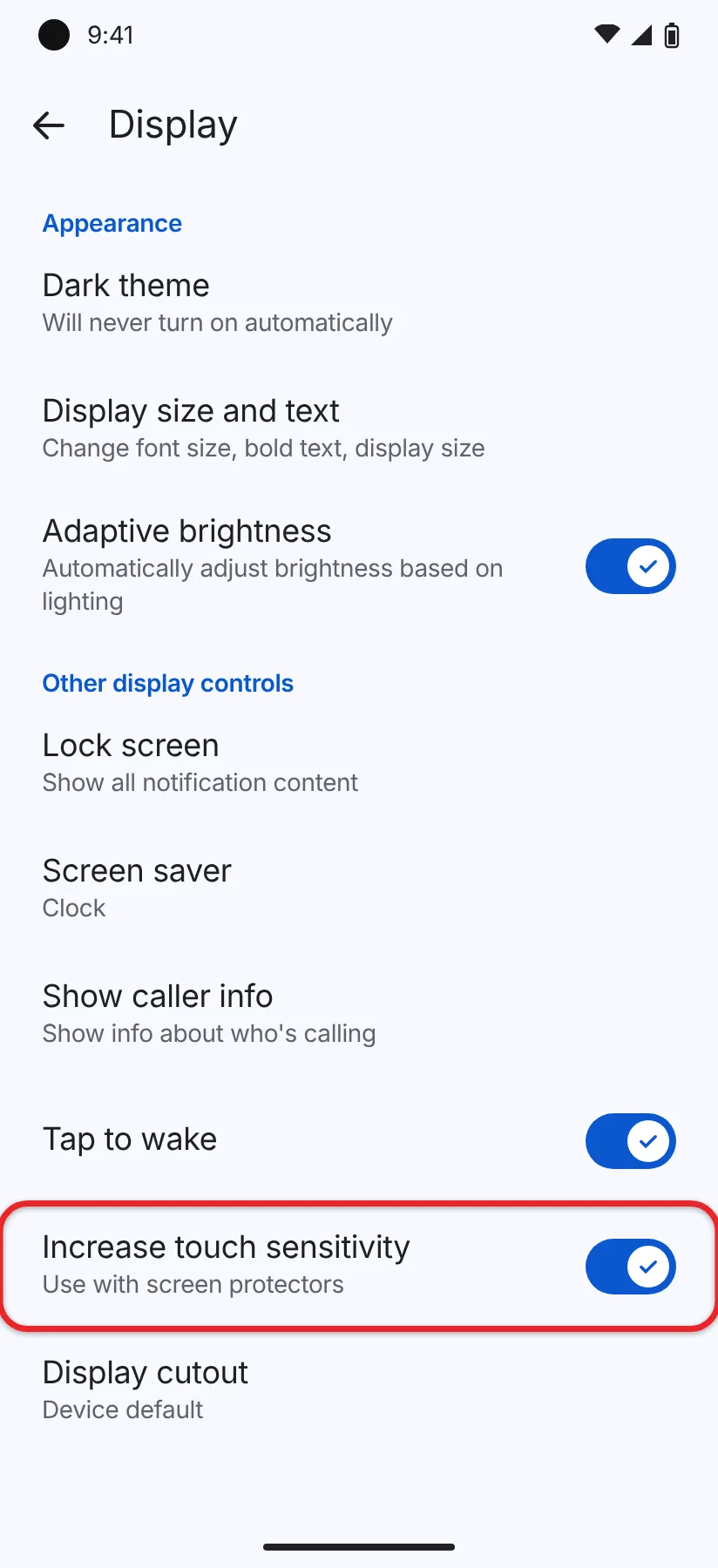
To check the result, tap lightly on a few small targets, such as the keyboard keys or the back arrow in an app. If you find the screen now reacts to touches you didn’t mean, go back to the same screen and turn the switch off.
While you’re in the Display menu, you can also enable Screen attention on a Pixel 4a so the screen doesn’t go dark while you’re reading.
If the small buzz you feel with each tap bothers you more than missed taps, you can turn off vibration on your Pixel 4a separately.
Not sure which Android version your phone has? You can check the Android version on a Pixel 4a.
Find the Setting With Settings Search
Google has renamed and moved this switch more than once, so search is the quickest way to reach it on any Pixel.
- Open Settings.
- Tap the search bar at the top of the screen, labeled Search settings.
- Type touch sensitivity. If nothing useful comes up, try screen protector.
- Tap the matching result. Settings opens the right page with the switch highlighted.
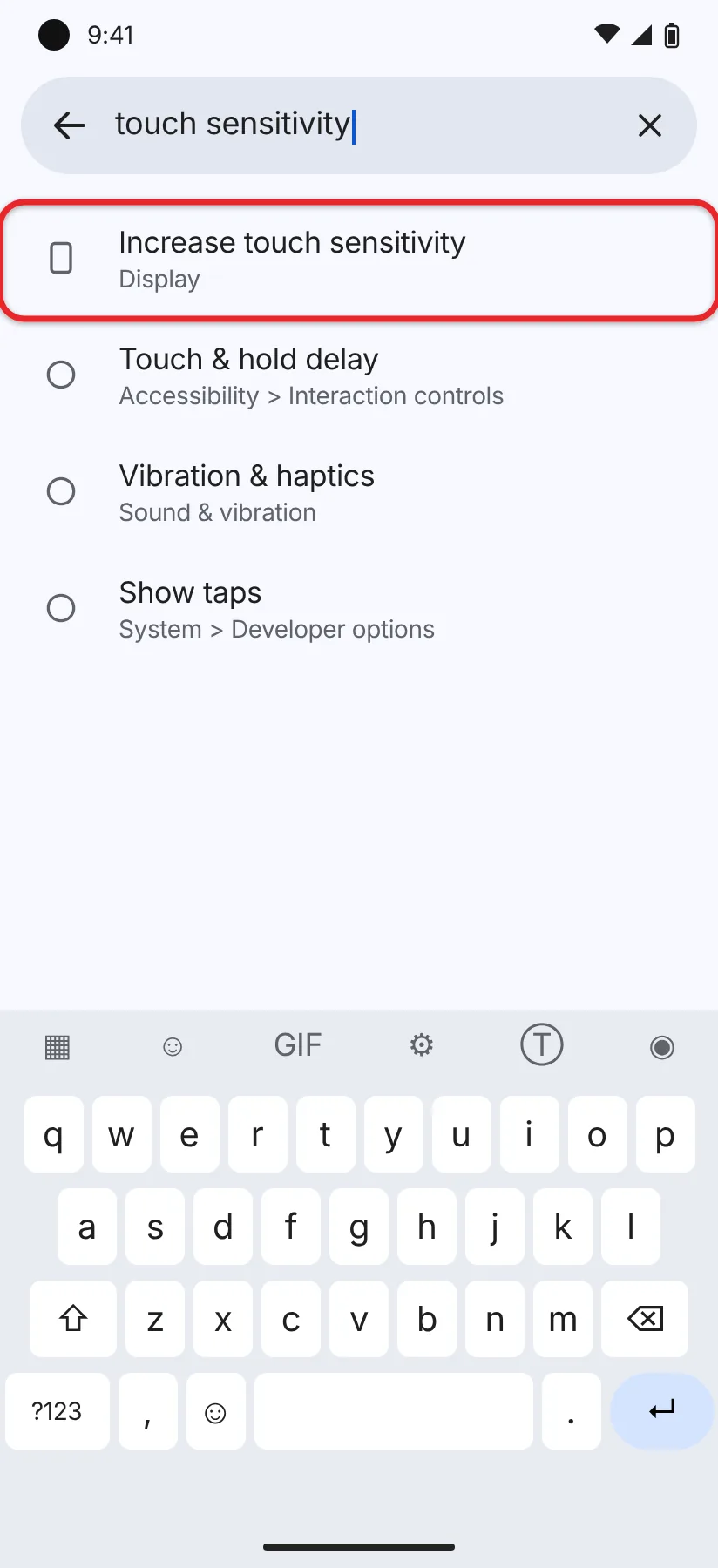
- Turn the switch on.
Touch Sensitivity on Newer Pixels
On current Pixel phones, Google moved the touch options into their own submenu.
- Open Settings.
- Tap Display & touch. Older versions call it Display.
- Tap Touch sensitivity.
- Turn on the option your phone shows. The switch takes effect right away.
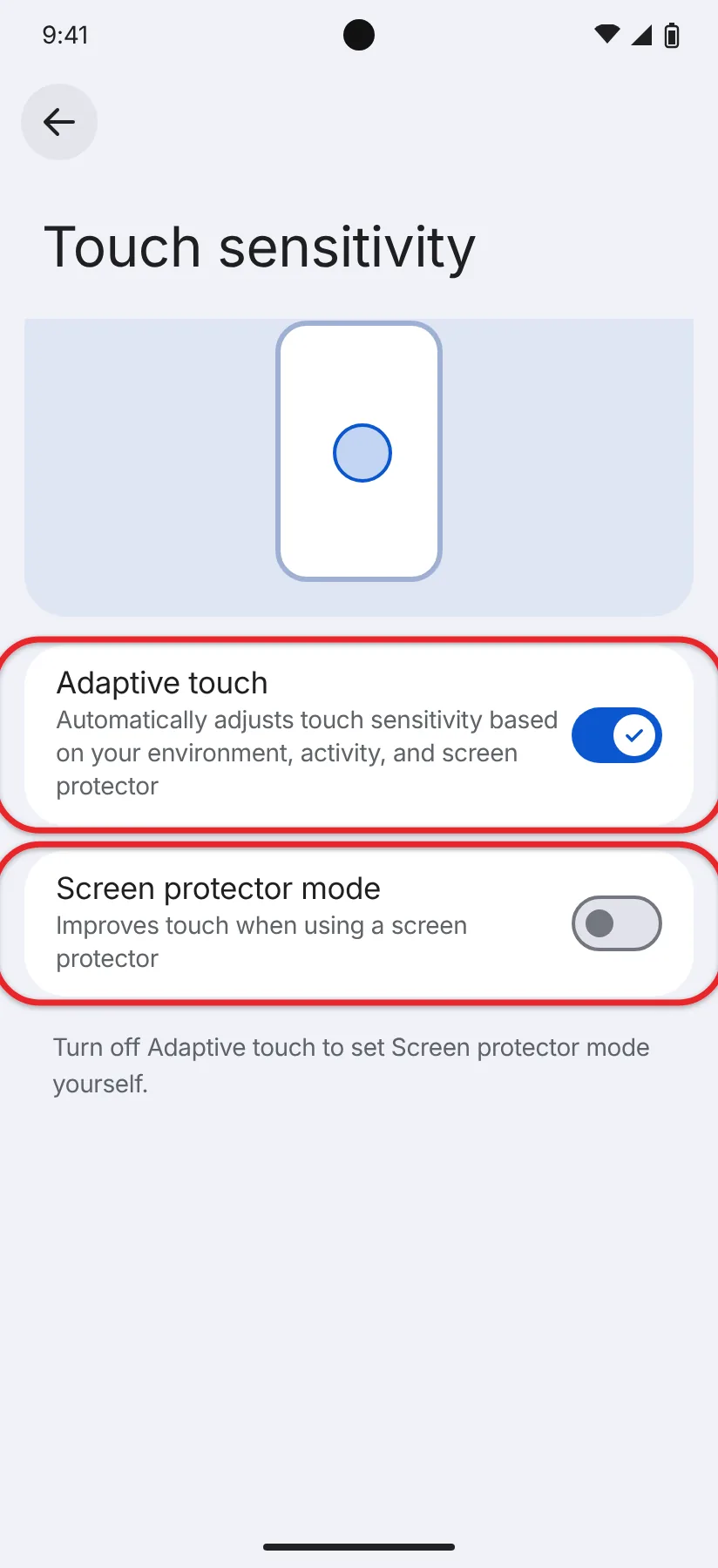
The option you see depends on your model:
- Screen protector mode on the Pixel 8a and earlier, including the Pixel 6, Pixel 7, and Pixel 8 series and the original Pixel Fold.
- Adaptive touch on the Pixel 9 series and later. The setting’s own description says touch sensitivity adjusts automatically to your environment, your activities, and your screen protector. Reviewers found it switched on by default on new Pixel 9 phones.
The two options solve the same problem in different ways. Screen protector mode stays at a fixed higher level until you turn it off, so remember to switch it off if you remove the protector. Adaptive touch adjusts on its own, which also helps when your fingers or the screen are wet. Google’s troubleshooting advice is the same for both: if taps still feel off, try the switch both on and off and keep whichever setting works better with your protector.
Other Settings That Change How Touches Feel
If the screen registers taps fine but certain gestures feel off, one of these settings may fit better than the sensitivity switch.
- Back gesture sensitivity. If swiping in from the edge to go back doesn’t trigger, or triggers too easily, open Settings > System > Gestures > System navigation (called Navigation mode on newer Pixels) and tap the gear next to Gesture navigation. Move the Back sensitivity slider for the left and right edges. A thick case that covers the edges can make the default level feel too low.
- Touch & hold delay. This controls how long you hold a finger down before the phone treats it as a long press. Open Settings > Accessibility > Touch & hold delay and choose Short, Medium, or Long. On Android 12 and later, including the Pixel 4a’s final updates, it’s inside Accessibility > Interaction controls > Timing controls; searching Settings for “touch & hold” finds it on any version. A longer delay can help if you open menus by accident when you meant to tap.
If the Screen Still Misses Touches
- Take the protector off. Google’s own touchscreen troubleshooting guide lists removing the case or protector as the first check. A protector with an air bubble, a lifted edge, or a crack often causes dead spots that no setting can fix. Peel it off only if you’re ready to replace it, because you may not be able to put it back on.
- Check the case edges. A case lip that presses on the screen can cause missed or phantom touches near the edges.
- Clean and dry the screen. Oil, water, and stickers over the screen all interfere with touch. Gloves block it unless they’re made for touchscreens.
- Restart the phone. Press and hold the power button and tap Restart. This clears a frozen app or a stuck touch driver.
- Install updates. On newer Pixels, go to Settings > System > Software updates. The Pixel 4a won’t receive new Android versions, but you can still update your apps in the Play Store.
- Look for a problem app. If the screen misbehaves in only one app, the app is likely the cause. Update it or contact its developer.
- Test in safe mode. If touch problems started after you installed something, restart in safe mode, which turns off apps you downloaded. On a Pixel 4a, press and hold the power button, then touch and hold Power off and tap OK. On a Pixel 6 or later, press and hold the power and volume up buttons, then touch and hold Power off or Restart and tap OK. “Safe mode” appears at the bottom of the screen. If touch works normally there, remove recently downloaded apps one at a time. To leave safe mode, restart the phone. Safe mode turns on Airplane mode, so turn it off if you need Wi-Fi or calls.
- Run a touch test. Pixel 9 series phones (and later models that show it) have Settings > Display & touch > Touch diagnostics. On a Pixel 4a, you can turn on Developer options and switch on Pointer location, which draws lines wherever the screen senses your finger. Drag a finger slowly across the whole screen. A gap in the line points to a dead spot in the protector or the display.
If one area of the screen never responds, even with the protector removed, the display or its digitizer (the touch-sensing layer under the glass) may be damaged and need repair. Google’s troubleshooting guide links to its Pixel repair options for your country.
Pixel Touch Sensitivity Questions
Does the Pixel 4a have a glove mode?
Not as a separate option. Increased touch sensitivity can help with thin gloves, but Google designed it for screen protectors. Touchscreen gloves work much better.
Does increased touch sensitivity drain the battery?
There’s no meaningful effect you’d notice in daily use. Google doesn’t list any battery impact for Screen protector mode or Adaptive touch.
Should I turn it on if I don’t use a screen protector?
Usually not. Without a protector, the higher sensitivity can make the screen react to accidental touches. Try it only if the bare screen feels slow to respond, and turn it off if you notice stray taps.
Is touch sensitivity the same as pointer speed?
No. Pointer speed controls how fast the cursor moves when you connect a mouse or trackpad. It doesn’t change how the touchscreen reads your finger, so it won’t help with missed taps.
Why can’t I find the setting on my Pixel?
The name depends on your model and Android version. Look for Increase touch sensitivity, Screen protector mode, or Adaptive touch, or type “touch sensitivity” in the Settings search bar.

Matthew Burleigh is the founder, head writer, and editor of Solve Your Tech, which he launched in 2012. He has written technology tutorials since 2008 and worked in IT since 2003, including small-business support, IT management, and consulting. He holds Bachelor’s and Master’s degrees in Computer Science from Arizona State University.
Matthew writes practical guides for Windows, iPhone and iPad, Microsoft Office, Outlook, Google apps, and Android. Solve Your Tech’s guides are checked step by step against the device or app maker’s own documentation and tested on his own devices whenever he has the hardware or software, with clear steps, sources, and update dates.
Read more about Matthew and how Solve Your Tech writes and updates its guides, or report a correction.