To enable unknown sources on a Google Pixel 4a, open Settings, tap Apps, tap Special app access, tap Install unknown apps, choose the app you’ll install from (usually Chrome or Files), and turn on Allow from this source. You can also skip the menus: open the APK file you downloaded, tap Settings on the warning that appears, and turn on the same switch.
Most Pixel 4a phones end on Android 13 and use the Apps path above; on Android 10 or 11, the menu is Apps & notifications, covered below. These steps match Google’s Pixel guide to downloading apps.
What “Unknown Sources” Means on a Pixel
Older Android phones had one Unknown sources switch that let any app on the phone install other apps. Android 8.0 replaced it with a per-app permission called Install unknown apps. Instead of opening the whole phone to outside installs, you give permission to the specific app that holds the file, such as Chrome if you downloaded the APK in your browser, or Files if the APK is in your Downloads folder.
That’s why you won’t find a single “Unknown sources” toggle on a Pixel 4a. You’re looking for Install unknown apps, and you turn it on one app at a time.
An APK (Android Package) is the installer file for an Android app. The Play Store handles these files for you, but when you get an app from a developer’s website or a beta program, you open the APK yourself, and that’s when this permission matters.
A Windows PC can’t open these files on its own, but there are ways to install an APK on Windows 11.
Before you start, it’s worth knowing the risk. Google warns that apps from unknown sources can put your phone and personal information at risk. Only allow a source when you trust where the file came from, and turn the permission off when you’re done.
Allow Unknown Apps on a Pixel 4a (Android 12 and 13)
Not sure which version you have? Follow the steps for finding the Android version on a Pixel 4a.
- Swipe up from the bottom of the Home screen to open your app list, then tap Settings (the gray gear icon).
- Tap Apps. You’ll see your recently opened apps near the top and more options further down.
- Scroll to the bottom and tap Special app access. A list of advanced permissions opens, including Display over other apps and Device admin apps.
- Tap Install unknown apps. Every app that can request this permission is listed, with Allowed or Not allowed under its name.
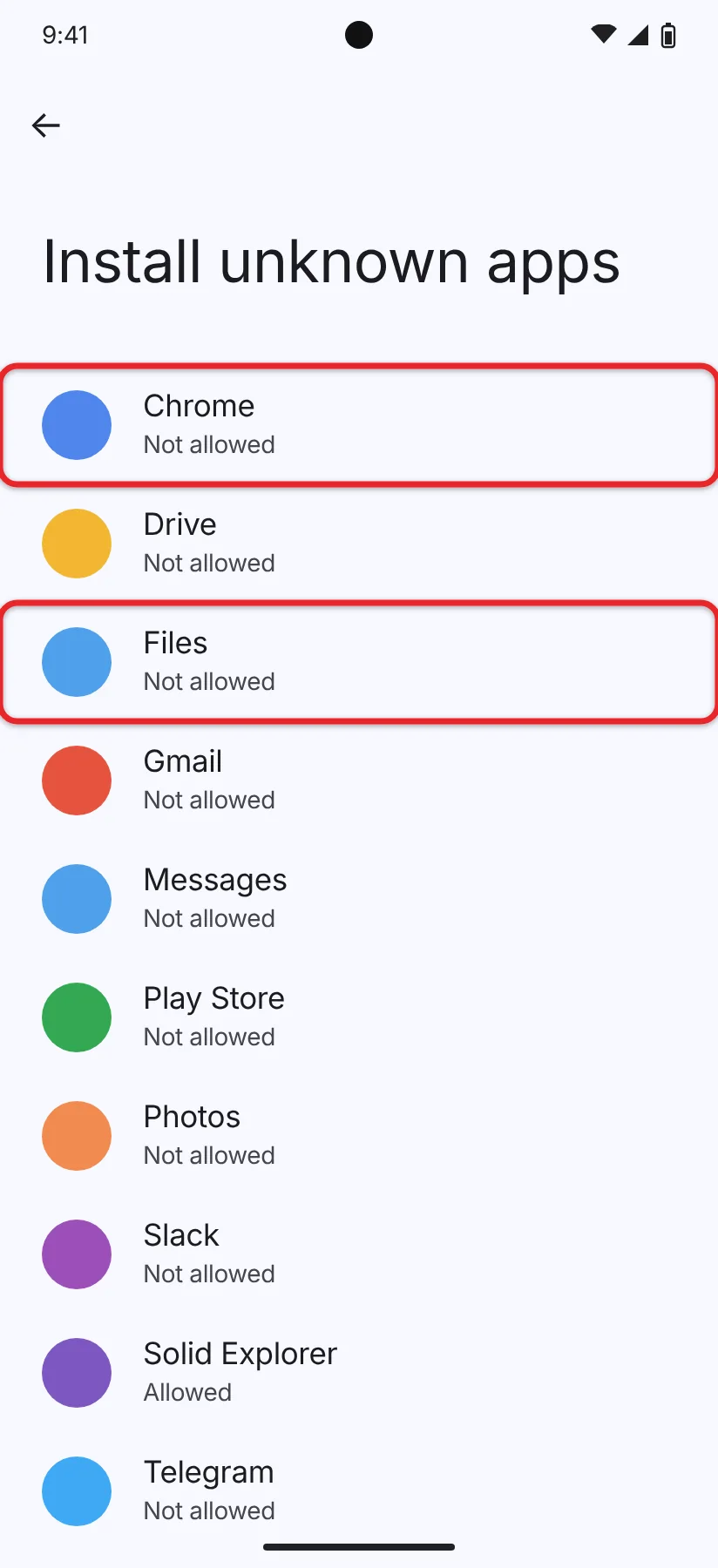
- Tap the app you’ll use to open the APK. Pick Chrome for a file you’re downloading in Chrome, or Files for an APK that’s already saved on the phone.
- Turn on Allow from this source. The switch turns on, and the app now shows Allowed on the previous list.
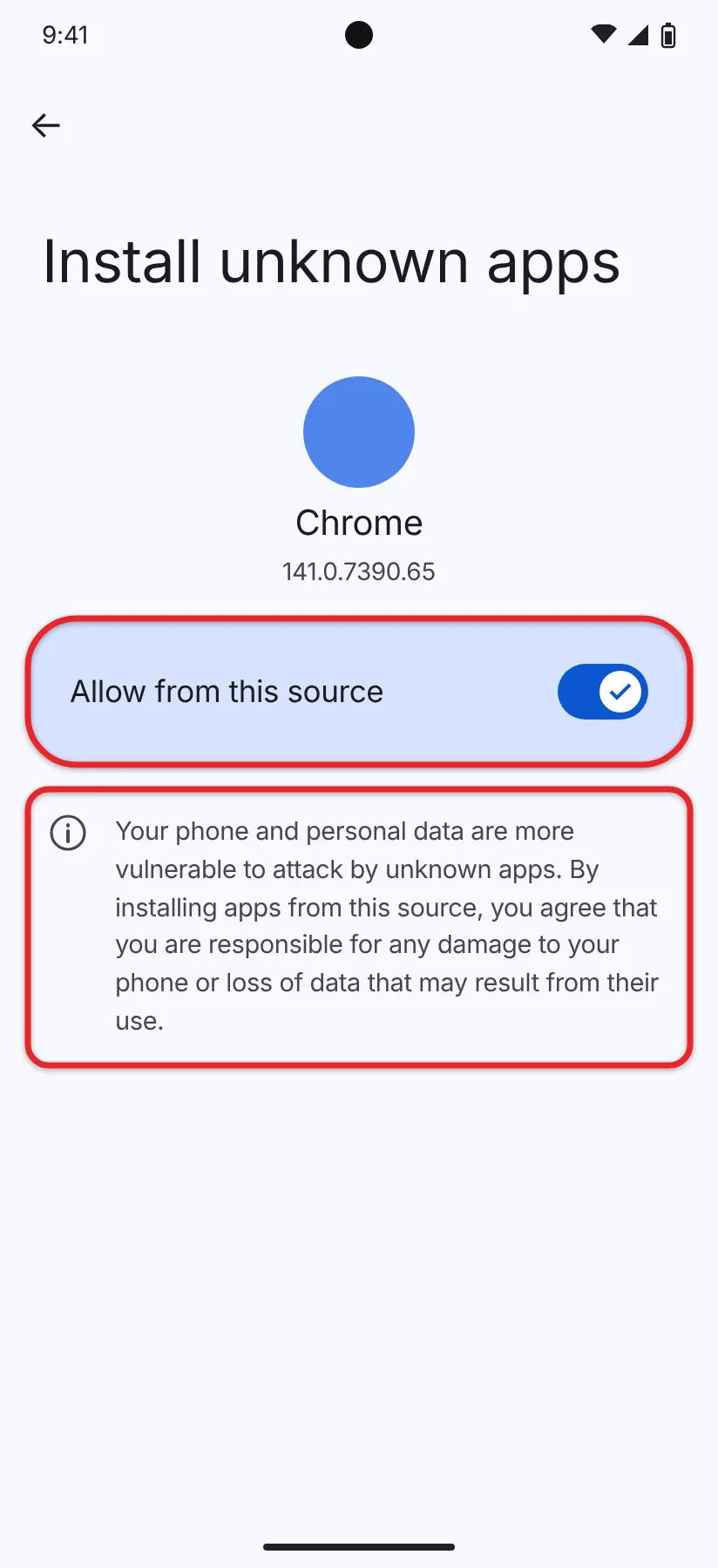
Under the switch, Android shows a warning that your phone and personal data are more vulnerable to attack by unknown apps, and that you’re responsible for any damage or data loss that results. There’s nothing to confirm; the permission takes effect as soon as you flip the switch.
You can now open the APK and tap Install. For the full download-and-install process, read about installing an APK on Android.
Steps for a Pixel 4a on Android 10 or 11
If your Pixel 4a never installed the Android 12 update, the permission sits one level deeper.
- Open Settings.
- Tap Apps & notifications.
- Tap Advanced to expand the list, then tap Special app access.
- Tap Install unknown apps.
- Choose the app you’ll install from, such as Chrome or Files.
- Turn on Allow from this source.
Allow a Source From the Install Prompt
You don’t have to go through Settings first. Android asks for the permission when you need it.
- Download the APK in Chrome, or open the Files app and go to Downloads.
- Tap the APK file. Depending on the source, you might need to tap OK on a download warning first.
- A message appears saying your phone isn’t allowed to install unknown apps from this source. Tap Settings.
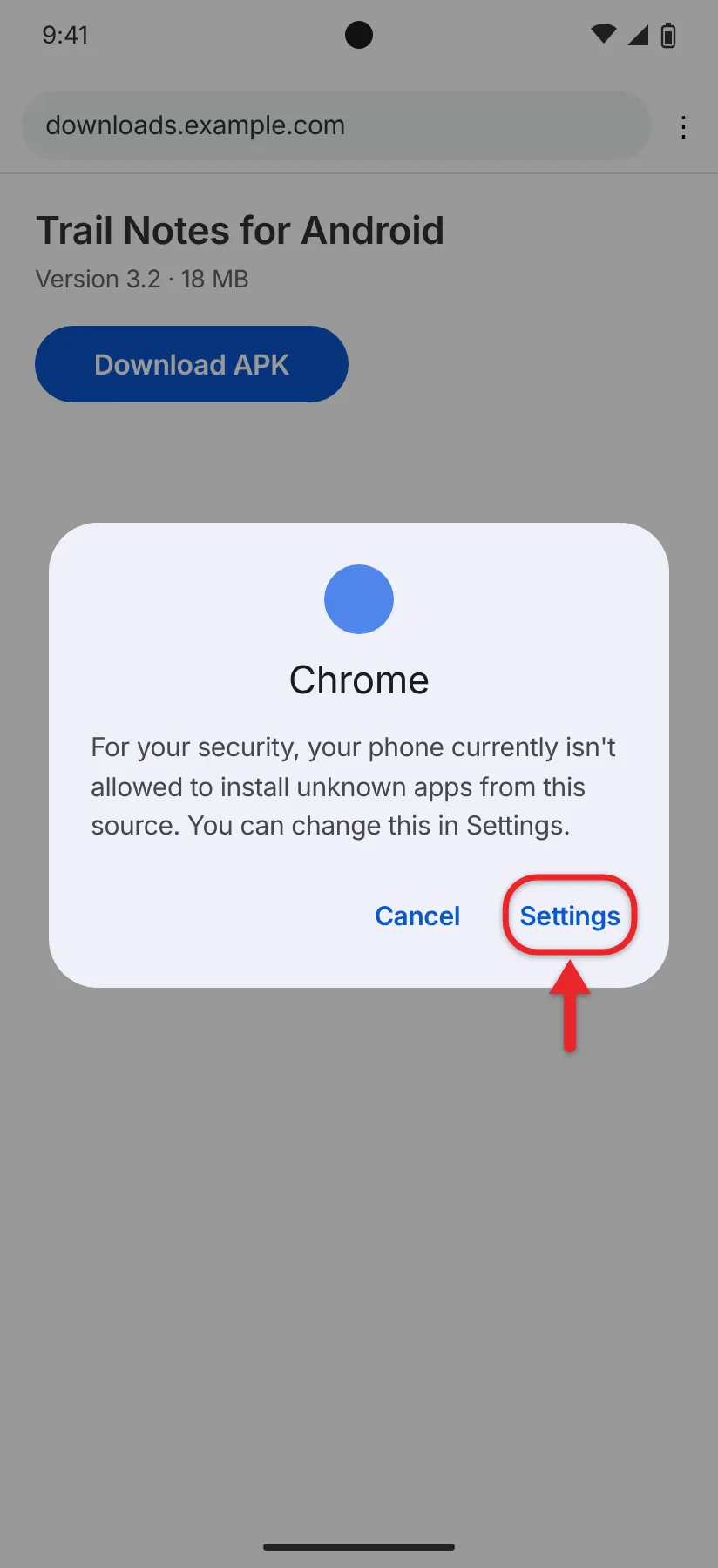
- Turn on Allow from this source.
- Tap the back arrow. The install screen returns. Tap Install.
This is the quicker method for a single app, because it opens the right app’s permission page for you.
Newer Pixels on Android 16
On a Pixel 6 or later running Android 16, the path is the same as on the Pixel 4a with Android 13: Settings > Apps > Special app access > Install unknown apps, then pick the source app and turn on Allow from this source. The install-prompt method works the same way too.
Two things on newer Pixels can stop an install even after you allow the source:
- Advanced Protection. This optional Android 16 security mode blocks installs from unknown sources and blocks updates to apps that were installed that way. If you turned it on, you’ll need to turn off Device protection under Settings > Security & privacy > Other settings > Advanced Protection first. Google’s Advanced Protection help page explains what else changes.
- Very old apps. Starting with Android 14, Android won’t install apps built for Android 5.1 or earlier (target API level below 23). An old APK that installs fine on a Pixel 4a with Android 13 can fail on a newer Pixel. There’s no setting to change this; you need a newer version of the app.
Google’s Developer Verification Changes
Google is adding a developer verification requirement for apps on certified Android devices. Here’s where it stands in October 2026, based on Google’s developer verification page:
- September 30, 2026: Checks began in Brazil, Indonesia, Singapore, and Thailand for apps installed from participating app stores.
- 2027: Google plans to expand verification to all apps on certified devices worldwide.
- Which phones: Certified Android devices running Android 7 or later. The checks are delivered through Google Play services, so a Pixel 4a on Android 13 is covered even though it no longer gets Android updates.
If you’re in the US and following the steps above today, nothing has changed. Once the global rollout reaches you, installing an app from a developer who hasn’t registered with Google will take a one-time setup Google calls the advanced flow.
Google’s Android Developers blog post on developer verification lists the steps: turn on developer mode, confirm no one is pressuring you, restart the phone and sign back in, wait one day, then confirm with your fingerprint, face, or PIN. After that you can allow unverified installs for 7 days or indefinitely. Each unverified app still shows a warning with an Install Anyway option. For help with the first step, read about turning on Developer options.
Most apps won’t need this. Google Play automatically registers 99% of apps, and developers who distribute only outside the Play Store can register through Google’s Android Developer Console.
Turn the Permission Back Off
Leaving Allow from this source on for a browser means any website that gets you to tap a download could try to install an app. Once your app is installed, turn the permission off. The installed app keeps working.
- Open Settings and tap Apps.
- Tap Special app access, then Install unknown apps.
- Tap the app showing Allowed.
- Turn off Allow from this source.
On Android 10 or 11, start from Apps & notifications > Advanced > Special app access instead.
Apps installed from an APK usually don’t update through the Play Store. For a new version, download the new APK and allow the source again, so bookmark the developer’s official download page.
If the App Still Won’t Install
- You allowed the wrong app. The permission belongs to the app that opens the APK. If you downloaded in Chrome but opened the file from Files, allow Files.
- The source app isn’t in the list. Only apps that ask for this permission appear under Install unknown apps. Open the APK with Chrome or Files, which both support it.
- Play Protect blocks or warns about the app. Google Play Protect scans apps from outside the Play Store and can block ones it thinks are harmful, including unverified apps that ask for sensitive permissions often used in scams. If it flags the app, don’t install it unless you’re certain of the source.
- “App not installed” or a conflict message. This often means a version of the app from a different source is already on the phone. Uninstall the existing copy first, keeping in mind that its data may be deleted.
- The app installs but a setting is grayed out. Android 13 and later restrict sensitive permissions, such as accessibility access, for some apps installed outside an app store. If you trust the app, open Settings > Apps, select the app, tap the three-dot More menu, and choose Allow restricted settings.
- The switch is grayed out on a work phone. Your company’s device management policy can block installs from unknown sources. Ask your IT team.
Pixel Unknown Sources Questions
Is it safe to enable unknown sources on a Pixel 4a?
It’s as safe as the file you install. An APK from the developer’s official website is a much lower risk than one from a file-sharing site or a link in a text message. Keep Play Protect on, allow only the app you need, and turn the permission off afterward. Since the Pixel 4a no longer gets security updates, it’s more exposed to malware than a supported phone, so be extra careful about what you install.
Where is the Unknown sources setting on Android 13?
There isn’t a single Unknown sources switch on Android 13. Go to Settings > Apps > Special app access > Install unknown apps and allow the specific app you’ll install from.
Do I need to leave the permission on for the app to keep working?
No. The permission only controls whether the source app can install other apps. Anything you already installed keeps working after you turn it off.
Will Google stop me from sideloading apps in 2027?
Not completely. Google’s plan requires apps to come from verified developers, but people who want to install unverified apps can use the advanced flow, which adds a one-time 24-hour wait. Installs through ADB from a computer also aren’t affected.

Matthew Burleigh is the founder, head writer, and editor of Solve Your Tech, which he launched in 2012. He has written technology tutorials since 2008 and worked in IT since 2003, including small-business support, IT management, and consulting. He holds Bachelor’s and Master’s degrees in Computer Science from Arizona State University.
Matthew writes practical guides for Windows, iPhone and iPad, Microsoft Office, Outlook, Google apps, and Android. Solve Your Tech’s guides are checked step by step against the device or app maker’s own documentation and tested on his own devices whenever he has the hardware or software, with clear steps, sources, and update dates.
Read more about Matthew and how Solve Your Tech writes and updates its guides, or report a correction.