To open a private tab in Safari on iPhone, tap the More button and choose New Private Tab, or tap the Tabs button and swipe right to Private Browsing. If Private Browsing is missing or grayed out, a Screen Time web filter such as Limit Adult Websites is the usual cause.
This guide covers Safari on iPhones running iOS 18 through iOS 27, with notes for iOS 17 and earlier. It shows both ways to open a private tab, how to tell you’re in Private Browsing, why the option can be missing, how a parent can change the filter in iOS 27 and in earlier versions, and how to lock or leave Private Browsing.

How to Open a Private Tab in Safari on iPhone
Method 1: Use the More button
Apple’s Turn Private Browsing on or off article gives the quickest route:
- Open Safari. Your last page appears.
- Tap the More button. A menu opens.
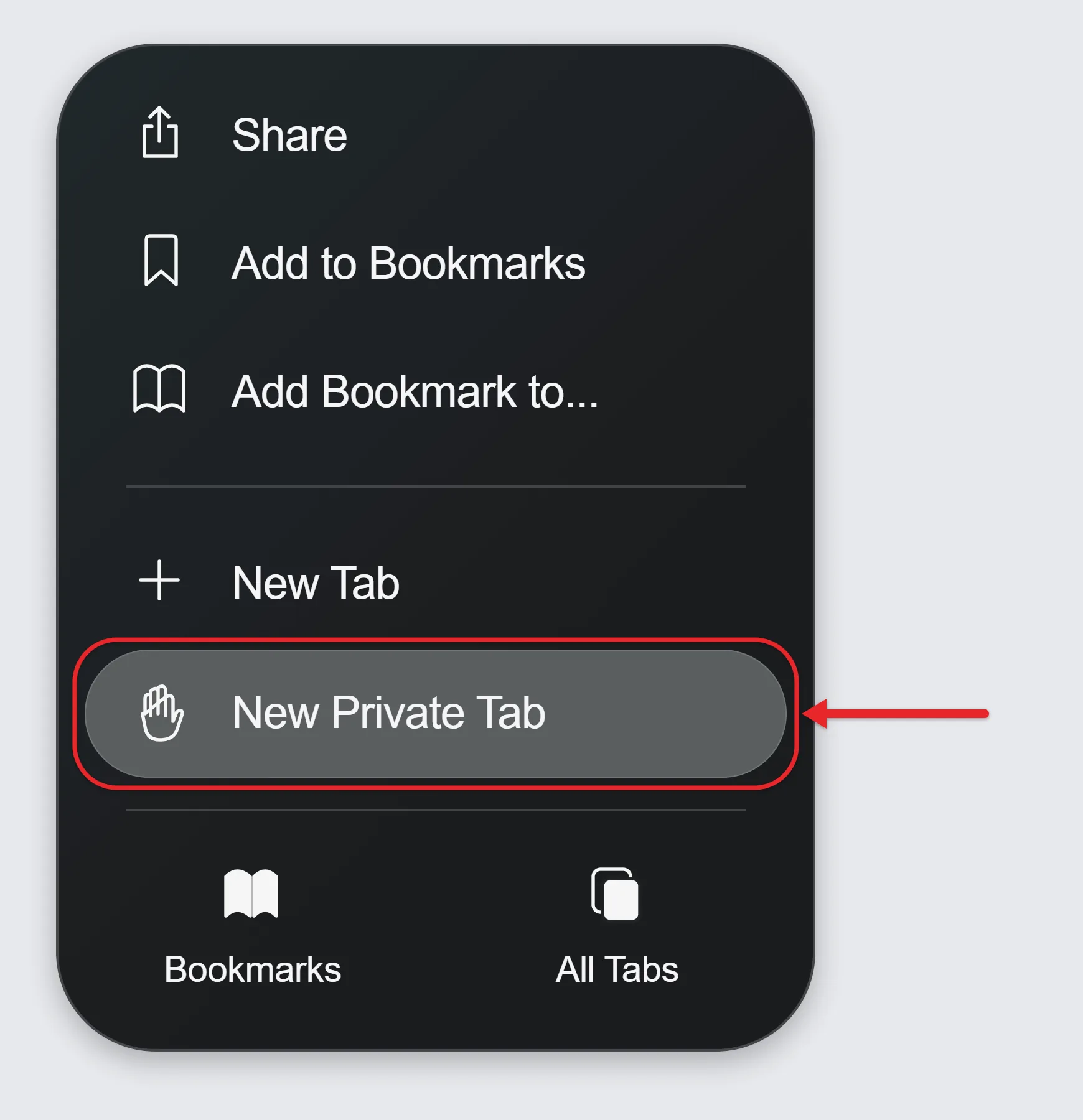
- Tap New Private Tab. A private tab opens.
Method 2: Swipe to Private Browsing from the Tabs view
From Apple’s Browse the web privately in Safari guide:
- Open Safari and tap the Tabs button. Your open tabs appear.
- Swipe right on the tab bar at the bottom of the screen until Private Browsing opens. The private tab group appears.
- If it’s locked, tap Unlock and use your passcode, Face ID or Touch ID. Your private tabs show.
- Tap the New Tab button (+). A new private tab opens.
While Private Browsing is on, the Safari address bar appears black or dark instead of white or gray. That’s the easiest way to check which mode you’re in. Private Browsing only applies to Safari, and the YouTube app has its own Incognito mode on iPhone.
Other browsers keep separate records, so a page you opened in Edge appears only when you view your history in the Edge iPhone app.
On iOS 17 and earlier
Apple’s steps for older versions are different: open Safari, tap the Tabs button, swipe to the Private tab group button, then tap the tab you want to open. If a guide tells you to look for a Private button and you can’t find it, you’re probably reading steps for an older iOS version. Check your version in Settings > General > About.
How to leave Private Browsing
Tap the More button and tap New Tab, or tap the Tabs button and swipe left to open a regular Tab Group. The address bar turns white or gray again. Your private tabs stay open and Private Browsing locks. To close them for good, turn off Private Browsing on iPhone.
To clear a whole group of tabs in one step, close all open tabs on iPhone.

Why Private Browsing Might Not Be Available
Work through these in order. The first one is the cause most of the time.
- Screen Time web filters: if your iPhone has content restrictions, website filters like Limit Adult Websites or Ask to Browse can block private tabs. Apple’s parental controls article says Limit Adult Websites is on by default for children under 18, and Ask to Browse is on by default for children under 13. Ages can vary by country or region.
- It’s just locked: if your iPhone has a passcode, Private Browsing locks when you aren’t using it, and your private tabs also lock when you lock the iPhone. Tap Unlock and use Face ID, Touch ID or your passcode.
- Old steps: the Private button moved in recent versions of iOS. Use one of the methods above instead.
- Safari itself is hidden: if the Safari icon is gone too, Safari may be turned off in Screen Time. A parent or the Screen Time passcode holder can allow it again. Bringing Safari back on an iPhone deals with that situation.
- Managed device: on a work or school iPhone, the organization’s device management settings may restrict Safari features. You can see whether a profile is installed in Settings > General > VPN & Device Management. Don’t remove a profile your school or employer requires; ask your administrator instead.
- A temporary glitch: if none of the above applies, close Safari from the App Switcher, restart the iPhone, and install any update in Settings > General > Software Update. Safari only updates along with iOS.
How to Remove the Web Filter
Content restrictions are controlled by a parent or whoever holds the Screen Time passcode. Children can’t change them without that passcode. In some places, settings like Ask to Browse and content restrictions can’t be turned off.
Changing the filter affects every website, not only private tabs. If the filter is there to protect a child, leaving it on is a reasonable choice, and the child can still browse in regular tabs.
On a child’s iPhone in iOS 27
Apple redesigned parental controls in iOS 27, and the new controls apply once every device in the Family Sharing group runs version 27 or later. Apple’s Block or allow access to apps and websites guide gives these steps on the parent’s iPhone:
- Open Settings, tap Family, then tap your child’s name.
- Tap Apps & Websites, then tap Restrictions. Enter your Screen Time passcode if asked.
- Scroll to Websites and tap Filtering.
- Choose Unrestricted. The other choices are Limit Adult Websites and Approved Websites Only.
On iOS 26 and earlier, or on your own iPhone
On your own iPhone, go to Settings > Screen Time > Content & Privacy Restrictions > App Store, Media, Web, & Games > Web Content and choose Unrestricted. That brings Private Browsing back. Enter the Screen Time passcode if asked. In iOS 27, website controls on the Screen Time screen are grouped under Apps & Websites, so look there if your menus don’t match.
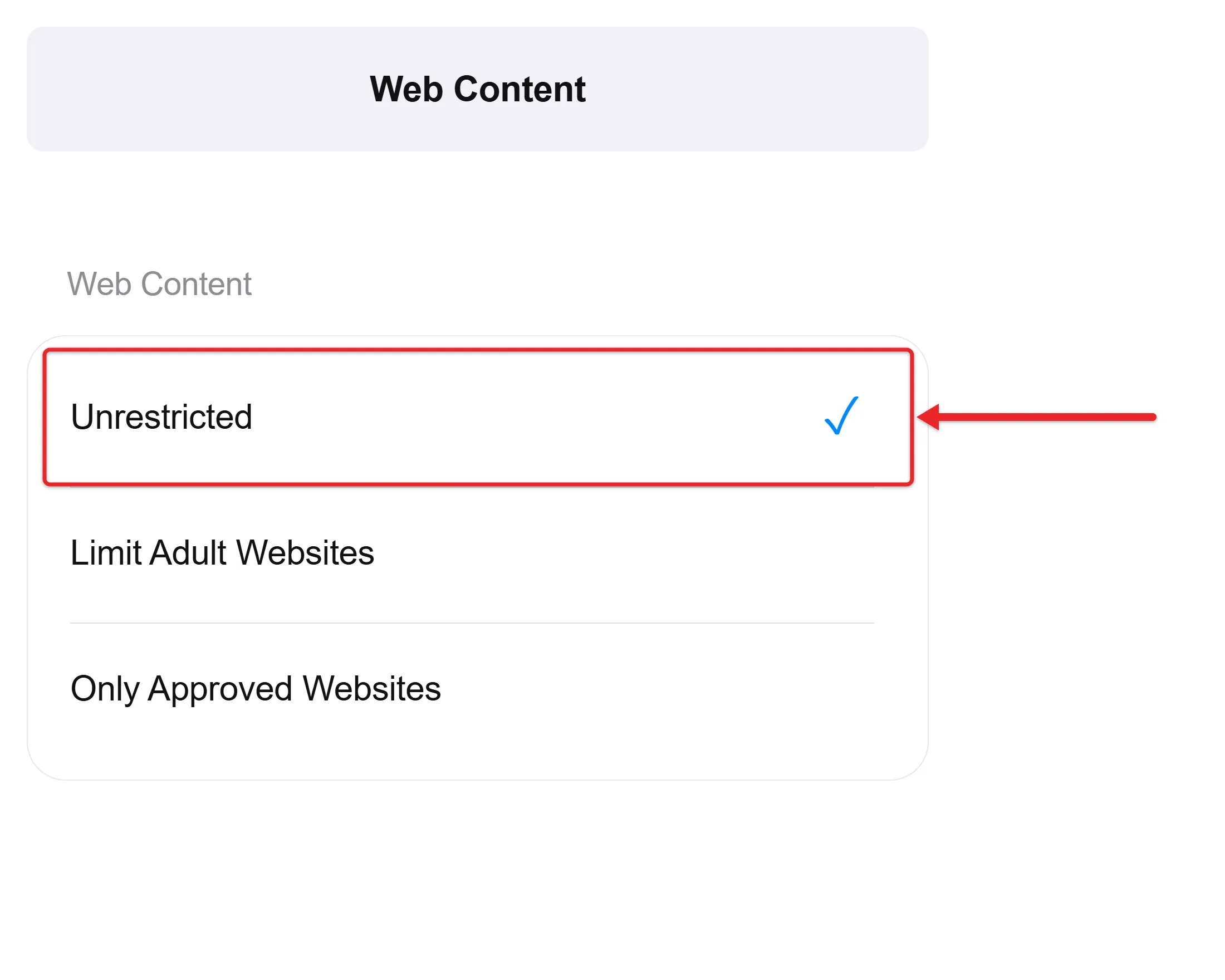
Turning off the main Content & Privacy Restrictions switch also works, but it pauses every restriction on the iPhone, not just the web filter.
After you change the setting, close Safari and open it again, then try New Private Tab. To set up or review other limits, see what restrictions on an iPhone are and how to set them up.
Lock Private Browsing for Extra Privacy
Go to Settings > Apps > Safari and turn on Require Face ID to Unlock Private Browsing (or Touch ID or Passcode, depending on your model). Private tabs then stay hidden until you authenticate. Turn the same switch off if you’d rather not unlock private tabs every time.
What Private Browsing Does
- Private tabs don’t appear in your History and aren’t shared with your other Apple devices, even with the same Apple Account.
- Safari won’t remember the pages you visit, your search history or AutoFill information, and Private Browsing blocks known trackers, removes tracking used to identify individual users from URLs, and adds fingerprinting protections.
- Extensions with access to browsing data are turned off in Private Browsing unless you allow them.
- You can choose a separate search engine for private tabs: in Settings > Apps > Safari, turn off Also Use in Private Browsing, then pick a Private Search Engine. For the full steps, read about changing the Safari search engine on iPhone.
- Private Browsing doesn’t protect you from malware or scam sites. Files you download and bookmarks you save stay on the iPhone.
Frequently Asked Questions
Does Private Browsing hide my activity from my internet provider?
No. It keeps browsing off your iPhone’s history. Your network, employer or school can still see traffic. Apple offers iCloud Private Relay separately for iCloud+ subscribers in supported regions.
Is iCloud Private Relay the same as Private Browsing?
No. Private Relay is an iCloud+ feature that hides your IP address from websites. Private Browsing keeps your history and AutoFill off the iPhone. Turning one on or off doesn’t change the other.
Why does Safari keep asking me to unlock Private Browsing?
The lock setting is on. Unlock with Face ID, Touch ID or your passcode, or turn off Require Face ID to Unlock Private Browsing in Settings > Apps > Safari.
Can I use private tabs in other browsers?
Yes. Edge has its own private tab on iPhone, and Firefox offers private browsing on iPhone. A Screen Time web filter can limit other browsers too.
More Safari Guides
- How to open, find and close tabs in Safari on iPhone
- How to manage cookies in Safari on iPhone
- How to zoom out in Safari on iPhone
Links from the Reddit app can open in its own browser instead of Safari, which you can fix by changing the web browser the Reddit iPhone app uses.

Matthew Burleigh is the founder, head writer, and editor of Solve Your Tech, which he launched in 2012. He has written technology tutorials since 2008 and worked in IT since 2003, including small-business support, IT management, and consulting. He holds Bachelor’s and Master’s degrees in Computer Science from Arizona State University.
Matthew writes practical guides for Windows, iPhone and iPad, Microsoft Office, Outlook, Google apps, and Android. Solve Your Tech’s guides are checked step by step against the device or app maker’s own documentation and tested on his own devices whenever he has the hardware or software, with clear steps, sources, and update dates.
Read more about Matthew and how Solve Your Tech writes and updates its guides, or report a correction.