To access your Google cloud storage, go to drive.google.com for your files, photos.google.com for your pictures and videos, and one.google.com to see how much space you’re using. Sign in with your Google Account (the same email and password as Gmail) and everything you’ve saved to Google’s cloud is there.
Most people who ask “how do I access my Google cloud” mean the free storage that comes with every Google Account, not the Google Cloud Platform that businesses use to run websites and apps. This guide covers the consumer storage first and explains the business service at the end. The steps match Google Drive and Google Photos on the web, the Drive, Photos, and Google One apps for Android and iPhone, and Google’s help pages.
What “Google Cloud” Means for a Regular Google Account
Google doesn’t have one app called “Google Cloud” for personal use. Your cloud storage is a single pool of space that several Google services draw from. Every account gets 15 GB free, shared across:
- Google Drive: documents, PDFs, videos, and any other files you upload, plus Google Docs, Sheets, and Slides files.
- Google Photos: photos and videos backed up from your phone or uploaded from a computer.
- Gmail: your email messages and attachments, including Spam and Trash.
- Phone backups: Android device backups (messages, call history, settings, and app data) and WhatsApp backups on Android.
Google One is the name for Google’s paid storage plans and the place where you manage that shared space. You don’t need to pay for Google One to use your free 15 GB. Google’s storage help page lists everything that counts toward the limit.
So “accessing your Google cloud” usually means one of three things: opening your files in Drive, viewing your pictures in Photos, or checking your storage in Google One. Pick the section that matches what you’re looking for.
Open Your Files in Google Drive
Drive is the closest thing Google has to a general cloud folder. If you’ve ever saved a Google Doc or uploaded a file, it’s here.
On a Computer
- Open any web browser and go to drive.google.com.
- If you’re already signed into Gmail or another Google service in that browser, Drive opens right away. If not, sign in with your Google Account email and password. This article on signing into Google Drive walks through the sign-in screens, passkeys, and adding a second account.
- Click My Drive in the left column to see the files and folders you own.
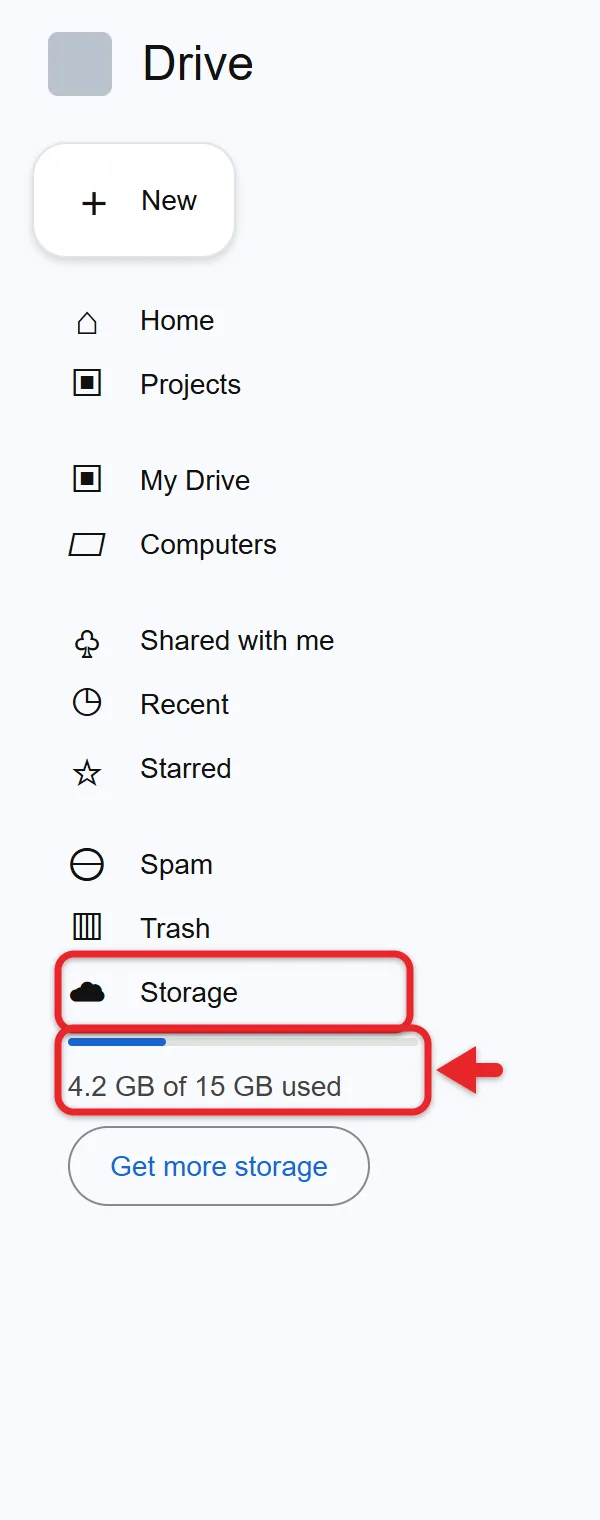
- Click Shared with me to see files other people have shared with your email address. These don’t use any of your storage.
- Double-click any file to open it. Google Docs, Sheets, and Slides files open in the browser for editing. Other files, such as PDFs and photos, open in a preview window with a Download button at the top.
If you’re already in Gmail, you can also click the Google apps grid (nine dots) at the top right and choose Drive.
If your file list feels cramped, you can show more files on the screen in Google Drive with Compact density and list layout.
To keep your Drive files in File Explorer or Finder like a normal folder, install the free Google Drive for desktop program from Google’s Drive for desktop page. It adds a Google Drive location to your computer that stays in sync with the cloud.
On an Android Phone or iPhone
- Install the Google Drive app from the Play Store or the App Store if it isn’t already on your phone. Most Android phones include it.
- Open the app and sign in, or pick the Google Account already on your phone.
- Tap Files at the bottom of the screen, then My Drive to see your files. The Computers tab shows folders backed up from a computer with Drive for desktop.
- Tap Shared to see files others have shared with you.
You can also go to drive.google.com in your phone’s browser, but the app is easier to use on a small screen.
To add a file from your computer or phone, here’s how to upload a PDF to Google Drive.
Open Your Photos and Videos in Google Photos
Photos backed up from your phone are stored in Google Photos, not in your main Drive file list. This is the most common reason people think their pictures are missing from “the cloud.”
- On a computer, go to photos.google.com and sign in with the same Google Account you use on your phone.
- Scroll through the main Photos view to see your pictures by date. Use the search bar at the top to search for people, places, or things like “beach” or “receipt.”
- On a phone, open the Google Photos app. Pictures with no cloud icon over them are already backed up and available on any device where you sign in.
To download a picture to your computer, open it, click the three-dot More options menu at the top right, and choose Download. To stop your phone from sending new pictures to the cloud, unsync Google Photos.
To send a picture to someone without attaching it, create a Google Drive link for the photo instead.
See How Much Cloud Storage You Have Left
The quickest check is in Google Drive, and the full breakdown is in Google One.
Quick Check in Google Drive
- Go to drive.google.com.
- Look at the bottom of the left column. You’ll see a bar and a line like “4.2 GB of 15 GB used.”
- Click Storage in the left column to see your largest Drive files first. You can also go straight to drive.google.com/settings/storage.
Full Breakdown in Google One
- Go to one.google.com and click Storage. On a phone, open the Google One app and tap Storage at the bottom.
- The page shows how much space Drive, Gmail, and Google Photos each use.
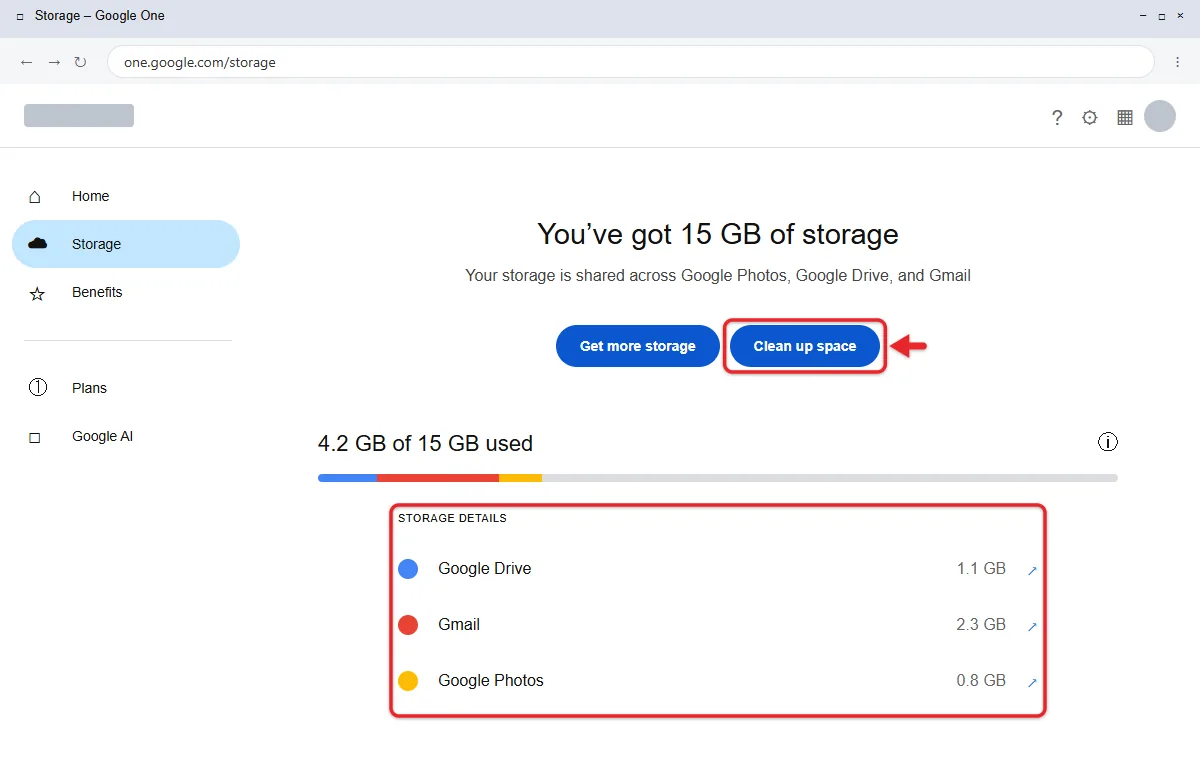
- To clear space, click Free up account storage. Google groups large files, deleted email, and items in the trash so you can review and remove them. Google’s cleanup instructions explain each category.
Deleting files from storage manager is permanent once you confirm Permanently delete, so download anything you want to keep first.
Files you remove in Drive itself go to a 30-day Trash; here’s how to delete and recover Google Drive files.
If you go over your limit, you can still sign in and view your files, but you can’t upload new files to Drive or back up new photos to Google Photos, and Gmail may stop sending and receiving email until you free up space or buy more.
Find Your Phone Backups
Android backups live in your Google Account, but Drive doesn’t have a tab where you can open them like files.
- On your Android phone, open Settings.
- Tap Google (on some phones, Google services), then look for Backup under Backup and restore. Some phones put Backup directly on the Google page.
- The backup screen shows which account is used and when each type of data was last backed up.
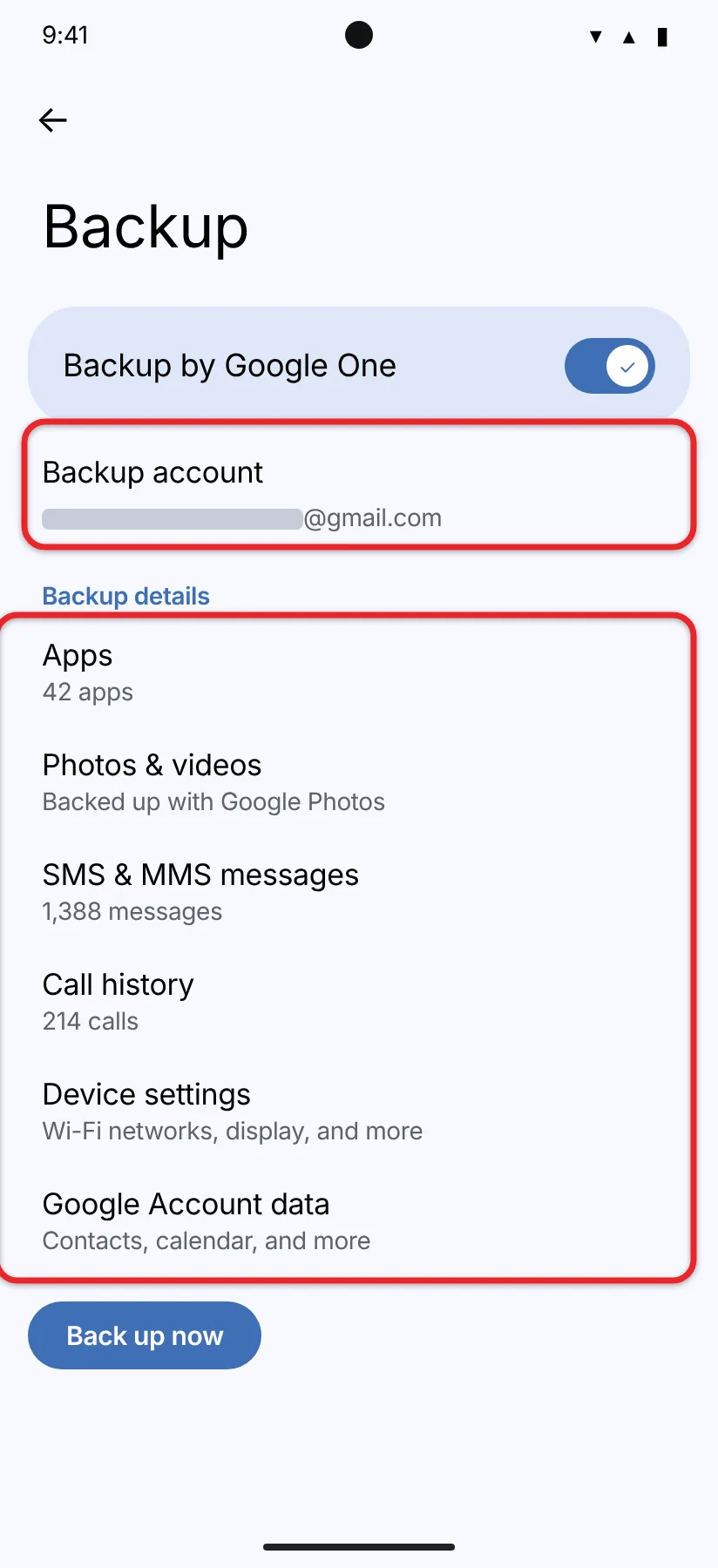
To see backups from all your Android devices, sign into your Google Account device dashboard on a computer. Google uses those backups to restore your data when you set up a new phone, not to browse individual files.
Business backup services work differently. If a work CrashPlan account still lists a retired PC, an administrator can remove the old computer from CrashPlan in its console.
iPhone backups are different. An iPhone backs up to Apple’s iCloud, not Google, unless you specifically back up photos with the Google Photos app or files with Google Drive. To see that space, here’s how to check how much iCloud storage you have left.
Google Cloud Platform (for Developers and Businesses)
Google Cloud with a capital C is also the name of Google’s paid computing service for building and hosting websites, apps, and databases. It’s a separate product from your personal Drive and Photos storage, even though it uses the same Google Account to sign in.
If this is what you need, go to console.cloud.google.com and sign in. New customers can start with a free trial that includes $300 in credit, and some products have a small amount of free monthly usage. You’ll need a payment method to set up billing. Google lists current limits on its Google Cloud free program page.
If You Can’t Find Something in Your Google Cloud
- Your files aren’t there. Click your profile picture at the top right and check the email address. Many people have more than one Google Account, and each one has its own separate storage.
- Your photos aren’t in Drive. Look in Google Photos. Since 2019, photos backed up from your phone don’t appear in your Drive file list.
- A file was deleted. Click Trash in the left column of Drive. Deleted files stay there for 30 days before Google removes them. Right-click a file there and choose Restore to put it back.
- A shared file disappeared. If the owner deletes it or stops sharing it, it leaves your Shared with me list. Ask the owner to share it again, or make your own copy next time.
- You can’t sign in. Use Google’s account recovery page and try from a device and location you’ve signed in from before.
- It’s a work or school account. Your organization controls that storage. Some admins turn off Drive or Photos, so contact your IT department.
Google Cloud Storage Questions
Is Google Drive the same as Google Cloud?
For personal use, yes, in the everyday sense. Google Drive is where your files are stored in Google’s cloud. Google Cloud Platform is a separate paid service for developers and businesses.
How much free Google cloud storage do I get?
Every Google Account comes with 15 GB of free storage. It’s shared between Gmail, Google Drive, and Google Photos, so a full inbox leaves less room for photos and files.
Do I need Google One to access my cloud storage?
No. Google One is the paid upgrade for more space. You can view your storage at one.google.com for free, and your Drive and Photos work the same with or without a plan.
Can I access my Google cloud from someone else’s computer?
Yes. Go to drive.google.com or photos.google.com in a browser and sign in. Use a private or incognito window and sign out when you’re done so your account doesn’t stay signed in.
Where is my Google cloud on my phone?
There’s no single app. Use the Google Drive app for files, the Google Photos app for pictures and videos, and the Google One app to see your storage.

Matthew Burleigh is the founder, head writer, and editor of Solve Your Tech, which he launched in 2012. He has written technology tutorials since 2008 and worked in IT since 2003, including small-business support, IT management, and consulting. He holds Bachelor’s and Master’s degrees in Computer Science from Arizona State University.
Matthew writes practical guides for Windows, iPhone and iPad, Microsoft Office, Outlook, Google apps, and Android. Solve Your Tech’s guides are checked step by step against the device or app maker’s own documentation and tested on his own devices whenever he has the hardware or software, with clear steps, sources, and update dates.
Read more about Matthew and how Solve Your Tech writes and updates its guides, or report a correction.