To sign into Google Drive on a computer, go to drive.google.com, enter your Google Account email address or phone number, click Next, then enter your password or confirm with your passkey. On a phone or tablet, open the Google Drive app and pick your Google Account, or tap Sign in and enter the same details.
Google Drive doesn’t have its own username or password. It uses your Google Account, the same one you use for Gmail, YouTube, or the Play Store. If you can open Gmail, you already have a Drive login. These steps cover Google Drive in a web browser, the Google Drive app for Android, iPhone, and iPad, and Google Drive for desktop on Windows and Mac.
Sign Into Google Drive in a Web Browser
This works in any current version of Chrome, Edge, Firefox, or Safari. Google asks that cookies and JavaScript be turned on in your browser, which they are by default.
- Open your web browser and go to drive.google.com. If you’re already signed into a Google Account in this browser, Drive opens right away and shows your files. You’re done.
- If you aren’t signed in, you’ll see either the Google sign-in screen or the Google Drive product page. On the product page, click Sign in at the top right.
- On the sign-in screen, type your Google Account email address (usually your Gmail address) or the phone number on the account in the Email or phone field, then click Next.
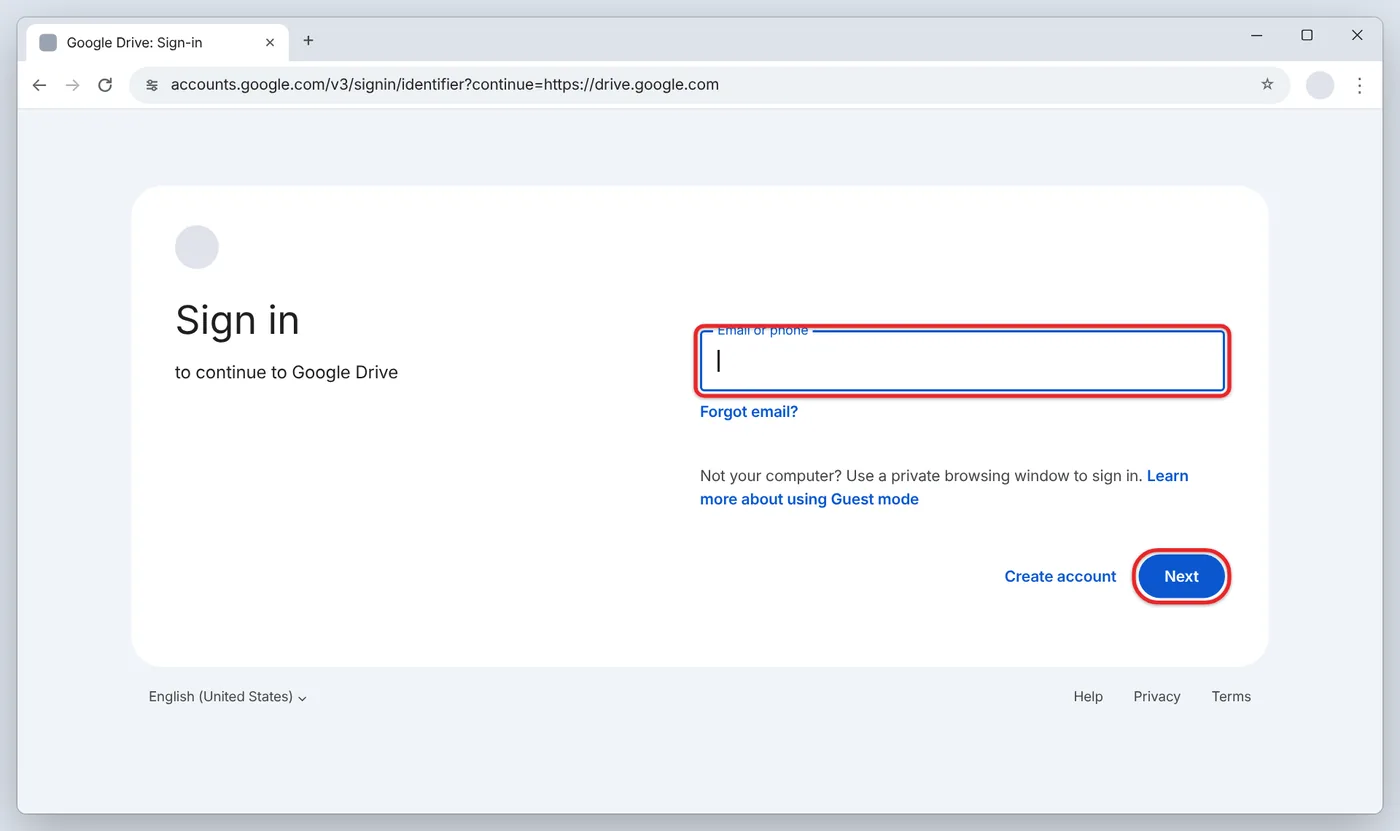
- Enter your password and click Next. If you’ve set up a passkey, Google may ask you to unlock your device with your fingerprint, face, or PIN instead. To use your password, click Try another way.
- If your account has 2-Step Verification turned on, approve the prompt on your phone or enter the code Google sends you.
- Google Drive opens with Home selected on the left side. Your files and folders appear in the main part of the window, and the New button sits at the top left.
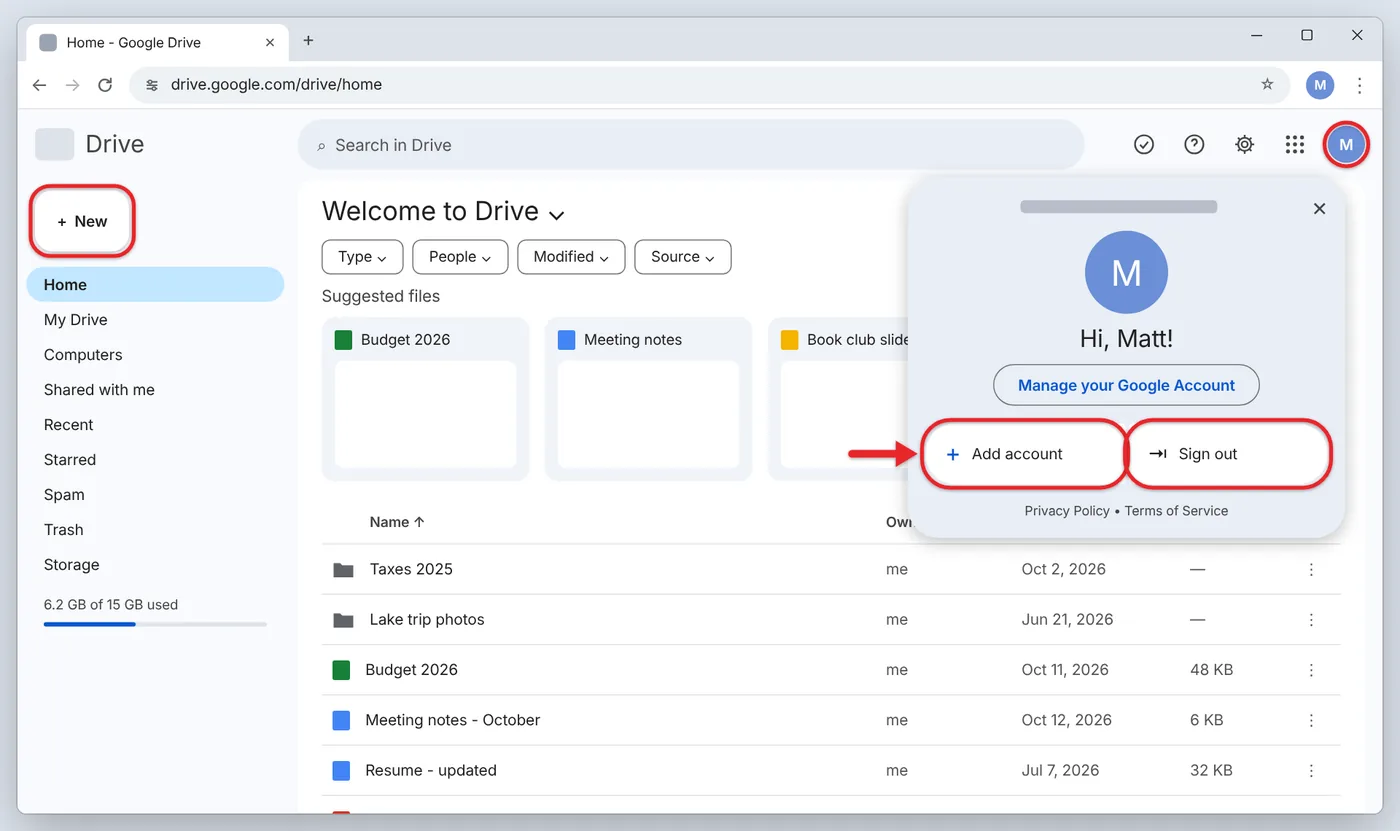
To confirm you’re in the right account, click the round profile picture or initial at the top right. The menu shows the email address you’re signed into.
Giving each account its own photo makes them easier to tell apart. To set one, read how to change your Google profile picture.
On a shared or public computer, sign out when you’re finished. Click your profile picture and choose Sign out. Logging out of your Google Account covers this for every device.
Once you’re signed in, you can right-click any folder to download an entire folder from Google Drive to your computer.
Open Drive From Gmail Instead
If you’re already reading your email, you don’t need to sign in again. Click the Google apps icon (the grid of nine dots) at the top right of Gmail, then click Drive. If you don’t see it, scroll down inside that panel. Drive opens in a new tab with the same account.
Switch to a Different Account or Add a Second One
You can stay signed into more than one Google Account in the same browser, which is handy if you have a personal account and a work or school account.
- In Google Drive, click your profile picture at the top right.
- To use an account you’ve already added, click its name in the menu. Drive reloads with that account’s files.
- To sign into a new account, click Add account, then enter its email address and password.
Google treats the first account you signed into as your default account. Some Google pages open with the default account first, so check the profile picture if a file you expect to see is missing. If you keep mixing up accounts, use a separate browser or a separate Chrome profile for each one.
Sign Into the Google Drive App on Android
Most Android phones are already signed into a Google Account from setup, and the Drive app uses that account automatically.
- Open the Drive app. If it isn’t on your phone, install Google Drive from the Play Store.
- If the app opens to your files, you’re already signed in. Tap your profile picture at the top right to see which account it’s using.
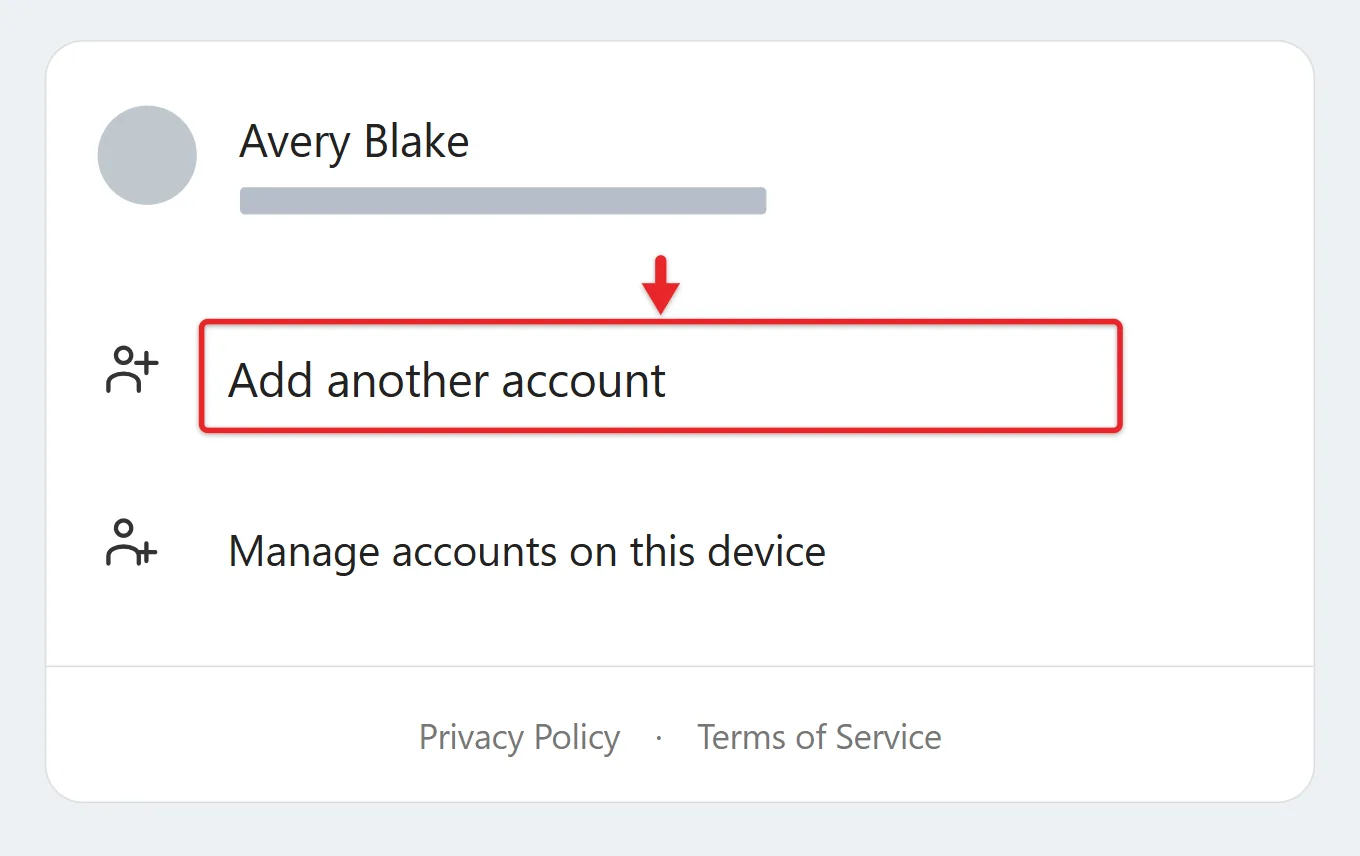
- To use a different account, tap your profile picture, then tap the account you want. If it isn’t listed, tap Add another account, enter your email address, tap Next, and follow the prompts. You may need to enter your phone’s PIN, pattern, or password first.
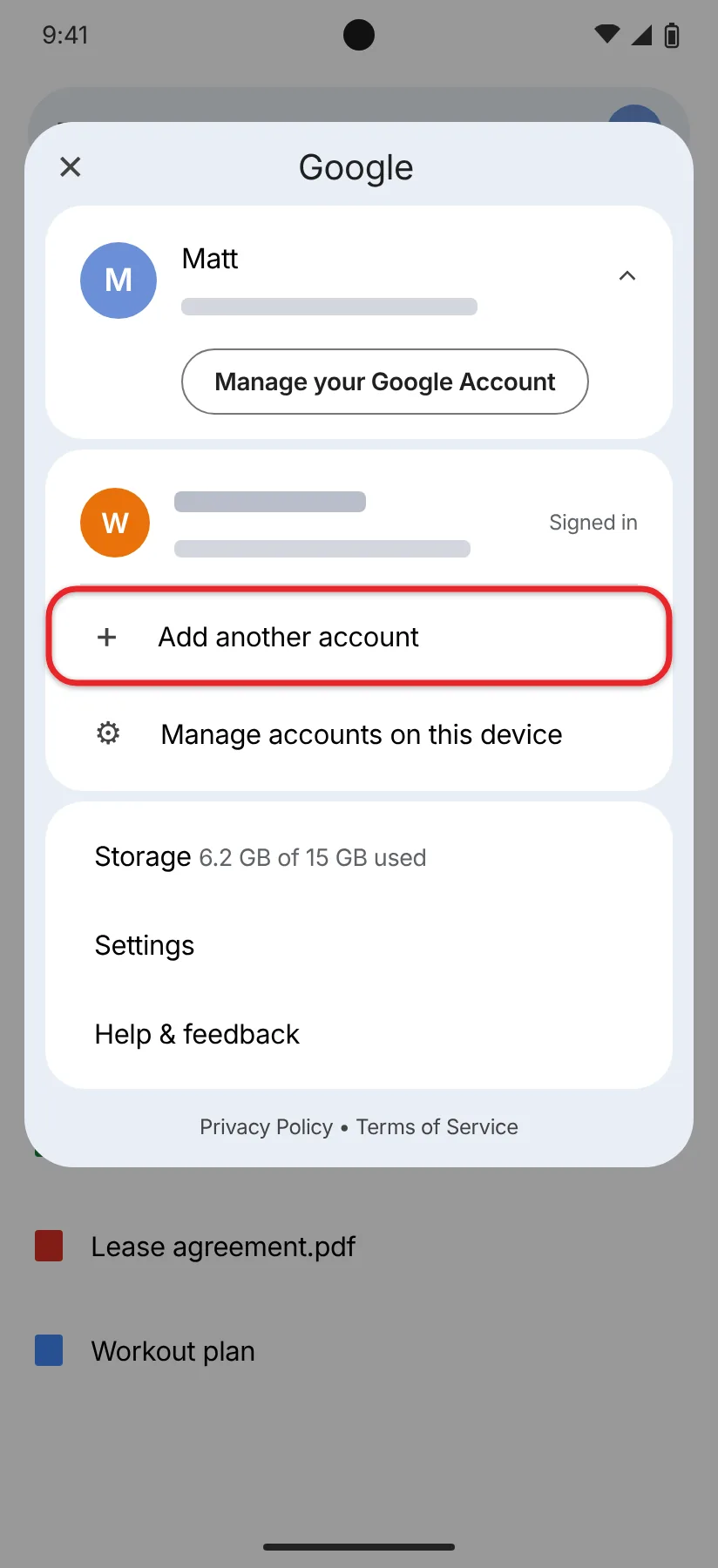
Accounts you add in the Drive app are added to the whole phone, so Gmail and other Google apps can use them too. You can also add an account from Settings under Passwords & accounts (some phones call it Users & accounts or Passwords, passkeys & accounts), then Add account > Google, as Google explains in its Android account help.
Sign Into the Google Drive App on iPhone or iPad
- Install Google Drive from the App Store if you don’t have it, then open it.
- Tap Sign in. If you’re already signed into another Google app such as Gmail or YouTube, the app may list that account. Tap it and tap Continue.
- If your account isn’t listed, choose the option to add an account, enter your email address and password, and complete 2-Step Verification if it’s on.
- If your iPhone asks for permission to sign in through google.com, tap Continue. Google apps on iPhone use this standard prompt.
- The app opens on Home. Tap Files at the bottom to see everything in My Drive.
To switch accounts later, tap your profile picture at the top right and pick another account. You can also open Drive in Safari at drive.google.com if you’d rather not install the app, though the app is easier to use on a small screen.
Your Drive files also show up in the Google Docs app, where you can rename a file on your iPhone from its More menu.
Sign Into Google Drive for Desktop on Windows or Mac
Google Drive for desktop is a free program that puts your Drive files in File Explorer or Finder. The Drive system requirements are 64-bit Windows 10 or later (Windows 11 or later on ARM-based PCs) and macOS Ventura 13.0 or later. Google’s Drive for desktop help page has the download links.
- Download and open the installer (GoogleDriveSetup.exe on Windows or GoogleDrive.dmg on a Mac) and follow the prompts.
- Open Google Drive for desktop, click Get started, then click Sign in.
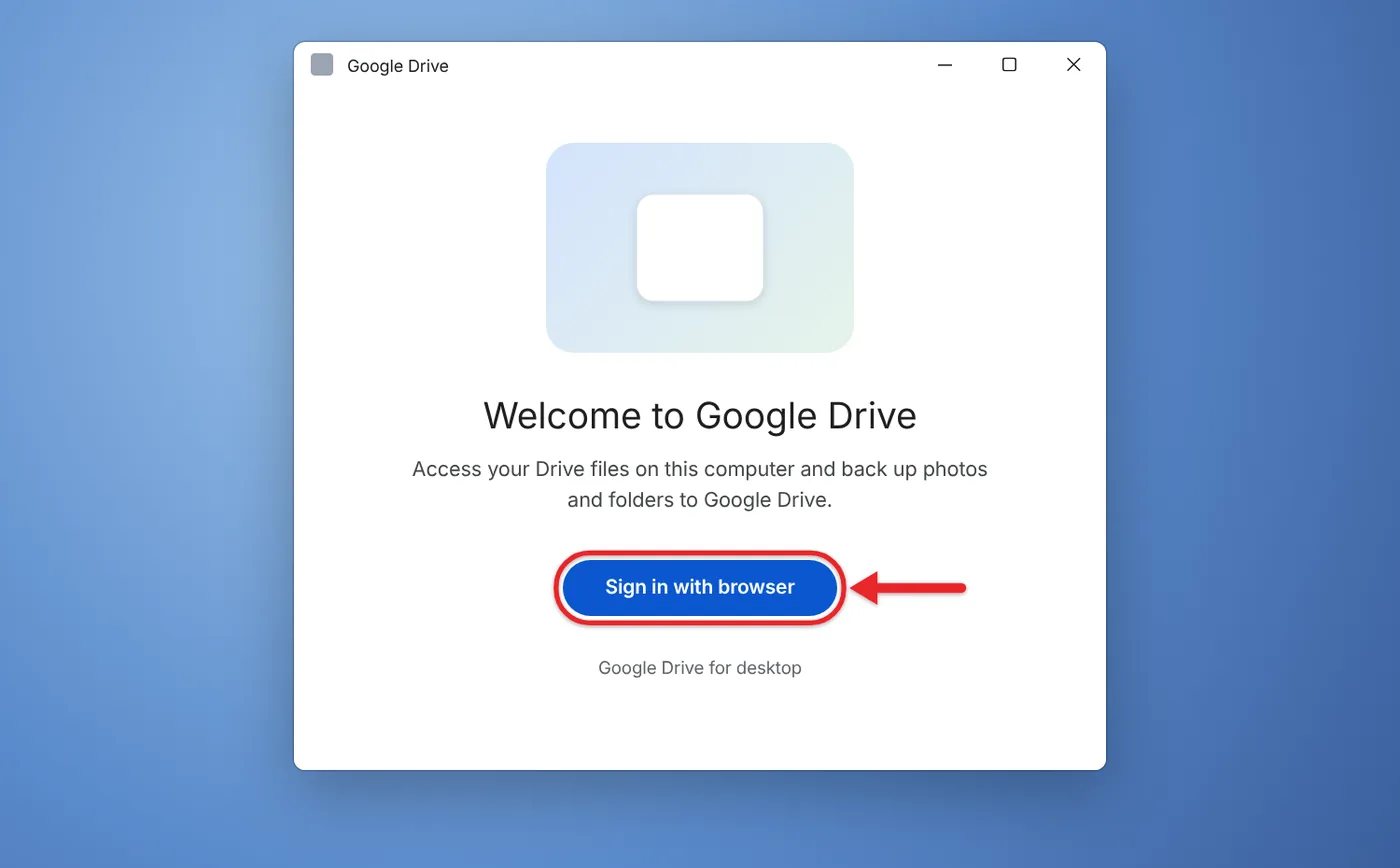
- Your web browser opens to the Google sign-in screen. Choose your account or enter your email address and password.
- When the browser says you’ve signed in, return to the app. A Google Drive folder appears in File Explorer (Windows) or Finder (Mac), with your My Drive files inside.
The Drive icon sits in the system tray at the bottom right on Windows (click the up arrow if it’s hidden) or in the menu bar at the top right on a Mac. To add another account, click that icon, click your profile picture, choose Add account, then Sign in through your browser. Restart Drive for desktop when you’re done. It supports up to four accounts at once.
Google Docs, Sheets, and Slides Use the Same Sign-In
Signing into Drive also signs you into Google Docs, Sheets, and Slides in that browser, because they all use your Google Account. You can go straight to docs.google.com, sheets.google.com, or slides.google.com and sign in the same way. Every file you create in those apps is saved to your Drive automatically. Once you’re in, you might want to upload a PDF to Google Drive or other files you want to reach from anywhere.
If you don’t have a Google Account yet, click Create account on the sign-in screen and choose For my personal use. You can make a new Gmail address or choose Use your existing email to use an address you already have. Google’s account creation guide walks through each screen. Drive comes with every account, including 15 GB of free storage shared with Gmail and Google Photos.
To find your photos and phone backups in that same space, you can access your Google cloud storage.
If You Can’t Sign Into Google Drive
- You forgot your password or email address. On the sign-in screen, click Forgot email? or Forgot password?, or go straight to Google’s account recovery page. Recovery works best from a phone or computer you’ve signed in with before, at home or work.
- You’re in the wrong account. If a file someone shared isn’t there, or Drive says you need access, check the profile picture. The file may have been shared with a different email address. Switch accounts, or ask the owner to share it with the account you use.
- The sign-in page keeps reloading or shows a cookie error. Turn on cookies for google.com, try a private or incognito window, or try a different browser. Browser extensions that block trackers can also interfere.
- You don’t get the verification prompt. Make sure your phone is online and signed into the same account. On the verification screen, click Try another way to use a backup code, a text message, or another method.
- Your work or school account won’t sign in. These accounts are managed by an administrator who can turn off Drive or block certain devices. Contact your IT department.
- Someone offers to sign in or “verify” your account for you. Don’t share your password or verification codes. Google never asks for them by email, phone, or text.
Frequently Asked Questions
Is my Google Drive login the same as my Gmail login?
Yes. Drive, Gmail, Docs, Photos, and YouTube all use the same Google Account email address and password. There’s no separate Drive account to create.
Can I be signed into two Google Drive accounts at once?
Yes. In a browser, click your profile picture and choose Add account, then switch between accounts from the same menu. Each account opens in its own tab or window, so you can have both open side by side.
Do I need the app to use Google Drive on my phone?
No. You can sign in at drive.google.com in your phone’s browser. The Google Drive app is free, though, and it’s easier for uploading photos, scanning documents, and getting notifications.
Why does Google ask for my fingerprint instead of my password?
Google now offers passkeys, which let you sign in with your device’s screen lock. You can still use your password by clicking Try another way on the sign-in screen.
How do I sign out of Google Drive?
In a browser, click your profile picture at the top right and choose Sign out. On Android, signing out means removing the account from the phone’s Settings, which also removes it from other Google apps.

Matthew Burleigh is the founder, head writer, and editor of Solve Your Tech, which he launched in 2012. He has written technology tutorials since 2008 and worked in IT since 2003, including small-business support, IT management, and consulting. He holds Bachelor’s and Master’s degrees in Computer Science from Arizona State University.
Matthew writes practical guides for Windows, iPhone and iPad, Microsoft Office, Outlook, Google apps, and Android. Solve Your Tech’s guides are checked step by step against the device or app maker’s own documentation and tested on his own devices whenever he has the hardware or software, with clear steps, sources, and update dates.
Read more about Matthew and how Solve Your Tech writes and updates its guides, or report a correction.