To add a new user in Google Chrome, click the Profile icon at the top right, then click Add Chrome profile. Sign in with a Google Account or continue without one, pick a name and color, and the new profile opens in its own window with separate bookmarks, history, passwords, extensions, and settings.
These steps are for Chrome on Windows, Mac, and Linux, checked against Google’s Manage Chrome with multiple profiles and Browse Chrome as a guest help pages in October 2026. Older guides mention “Manage People” or “Add person,” which Chrome has since renamed.
How to Add a New User (Profile) in Chrome
- Open Chrome on your computer.
- Click the Profile icon at the top right, just left of the three-dot menu. It shows your photo, your initial, or a person outline.
- Click Add Chrome profile. A setup window opens.
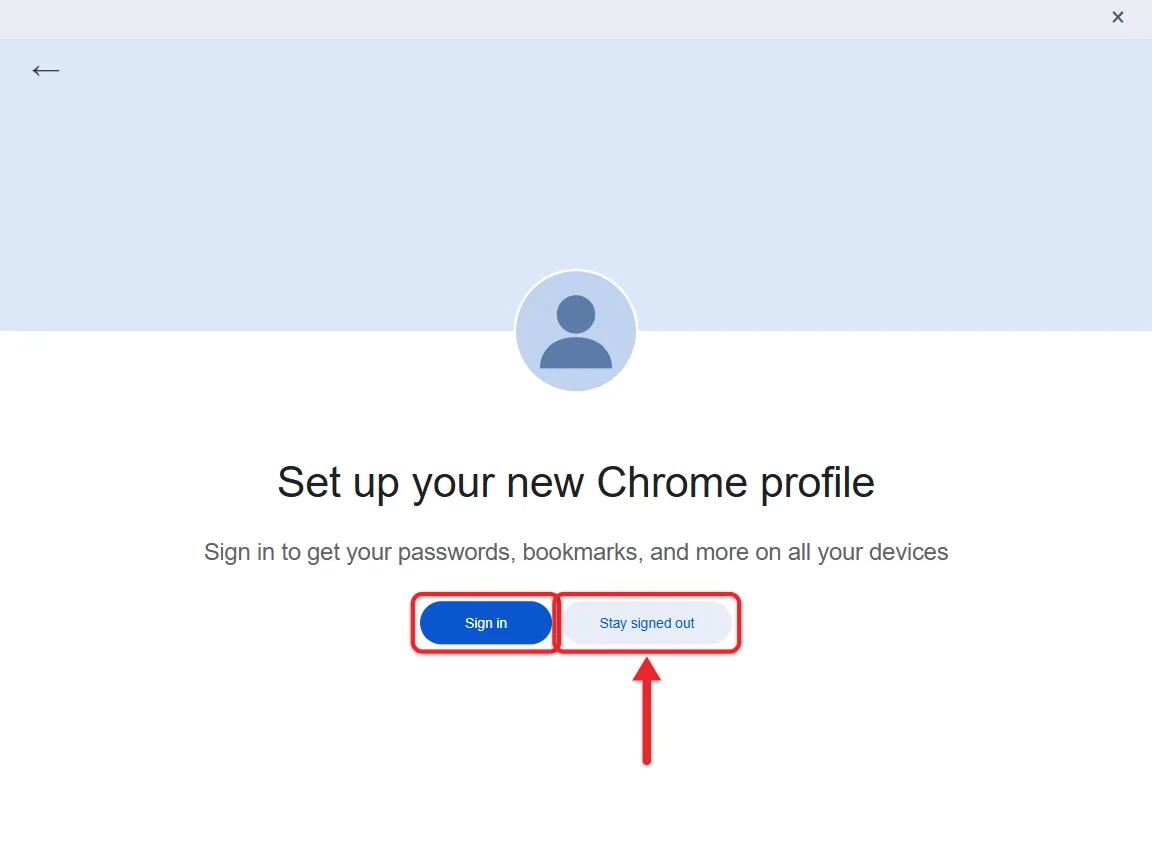
- Click Sign in to use a Google Account, or Continue without an account to keep the profile on this computer only.
- If you signed in, enter the account’s email and password. The profile name then becomes your account name.
- Choose a name and color, then click Done.

The new profile opens in its own Chrome window and starts empty. Your other profiles are not changed. If you sign in, your bookmarks, passwords, and other settings are saved to your account so you can use them on other devices where you’re signed in.
To see the logins a signed-in profile has stored, here’s how to find your Google saved passwords.
How to Switch Between Profiles
- Click the Profile icon at the top right.
- Under Other Chrome profiles, click the profile you want.
Chrome opens a window for that profile. Windows for different profiles can stay open side by side.
Why Use Profiles?
- Profiles are ideal for sharing a computer with multiple people.
- They keep work and personal accounts separate, and each profile can stay signed in to a different Gmail account at the same time.
- Extensions are installed per profile, so a work profile can carry only the ones you need for work.
- Each profile has its own bookmarks file. See where Chrome bookmarks are stored if you need to find one.
- Signed-in profiles sync to your other devices. On a computer you share, you can stop that by logging out of your Google Account and signing out of Chrome.
Profiles have no password. Anyone who has your device can switch to any Chrome profile on it and see things like the websites you visited, so only share your computer with people you trust.
How to Manage, Rename, or Delete a Profile
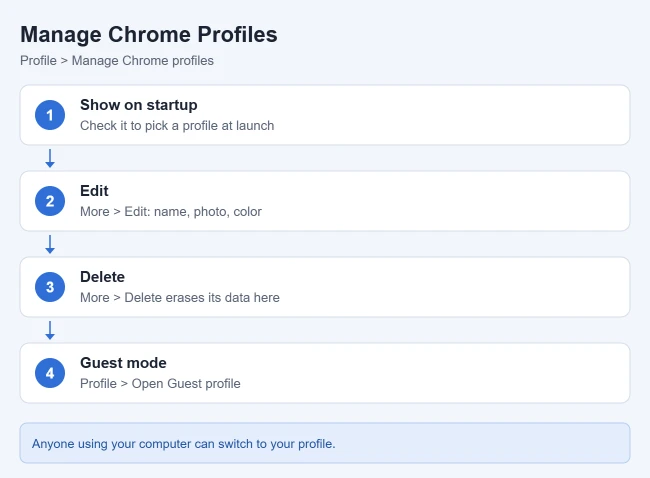
- Show all profiles when Chrome opens: click the Profile icon, select Manage Chrome profiles under “Other Chrome profiles,” and check Show on startup at the bottom. Uncheck it to open your last-used profile instead.
- Change a name, photo, or color: in Manage Chrome profiles, select More > Edit on the profile. For your current profile, you can also use Profile > Customize profile. Changes save automatically.
- Delete a profile: in Manage Chrome profiles, select More > Delete on the profile, then confirm. This erases the profile’s bookmarks, history, passwords, and other settings from the computer, so sync or export anything you need first. Your Google Account itself is not deleted.
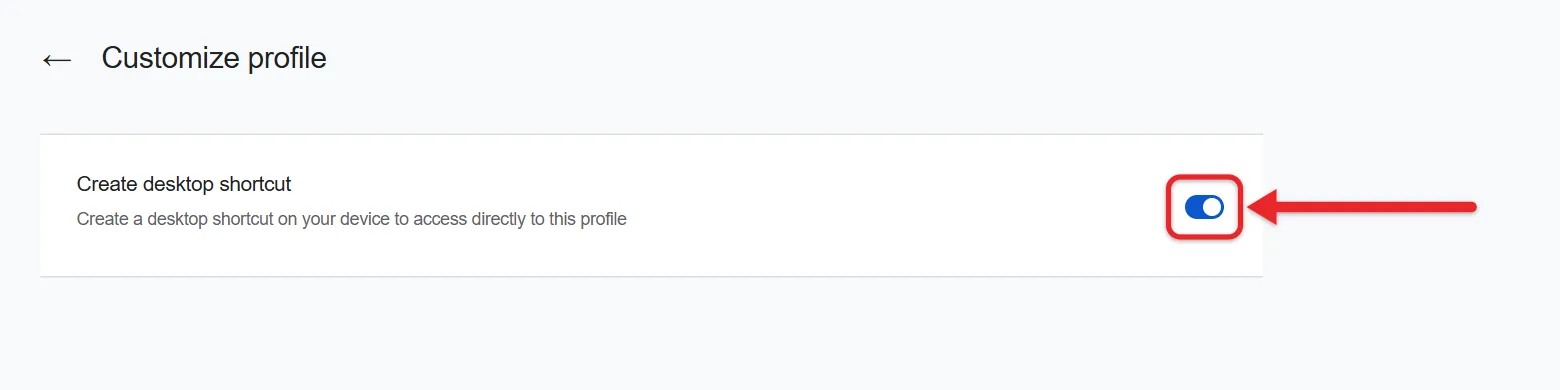
- Desktop shortcut (Windows): open the profile, go to Profile > Customize profile, and turn on Create desktop shortcut at the bottom. The switch appears only when you have more than one profile.
Use Guest Mode Instead for a Quick Visitor
If someone just needs to borrow your computer, Guest mode is a better fit than a full profile. Click the Profile icon and select Guest profile. A Guest window can’t see or change other profiles, and its history, cookies, and site data are deleted when you exit. To close it, click the Profile icon and select Close guest.
For private browsing on your own profile, use Incognito mode instead.
Chrome on Android and iPhone
- Android: you can only have one Chrome profile on an Android device. To share it, add the other person as a user in Android settings and switch to that user.
- iPhone and iPad: tap your account at the top right of Chrome, tap Add account, and sign in. Open the same menu to switch accounts.
If Add Chrome Profile Is Missing
If Add Chrome profile is missing or grayed out, the browser is probably managed by a work or school. Google’s Chrome Enterprise policies let administrators block adding profiles and turn off Guest mode. Ask that administrator, or use a personal computer. If you can’t find the Profile icon, look for a round icon with your photo, initial, or a person outline next to the three-dot menu.
Chrome Profile Questions
Do I need a Google Account to add a Chrome profile?
No. Choose Continue without an account. The profile still keeps its own bookmarks and history, but only on that computer. Signing in is what syncs them to other devices.
Is a Chrome profile the same as a Windows user account?
No. A Chrome profile only separates Chrome data. For privacy between people, give each person their own Windows or Mac user account.
How many Chrome profiles can I have?
Google doesn’t publish a limit. Each open profile window uses memory, so keep only the ones you use.
To have Chrome open each time you turn on your computer, set it to start automatically.
Related Guides
- How to manage saved passwords in Chrome
- How to change your Chrome startup page
- How to set Gmail as the default email in Chrome
- How to remove an extension from Google Chrome

Matthew Burleigh is the founder, head writer, and editor of Solve Your Tech, which he launched in 2012. He has written technology tutorials since 2008 and worked in IT since 2003, including small-business support, IT management, and consulting. He holds Bachelor’s and Master’s degrees in Computer Science from Arizona State University.
Matthew writes practical guides for Windows, iPhone and iPad, Microsoft Office, Outlook, Google apps, and Android. Solve Your Tech’s guides are checked step by step against the device or app maker’s own documentation and tested on his own devices whenever he has the hardware or software, with clear steps, sources, and update dates.
Read more about Matthew and how Solve Your Tech writes and updates its guides, or report a correction.