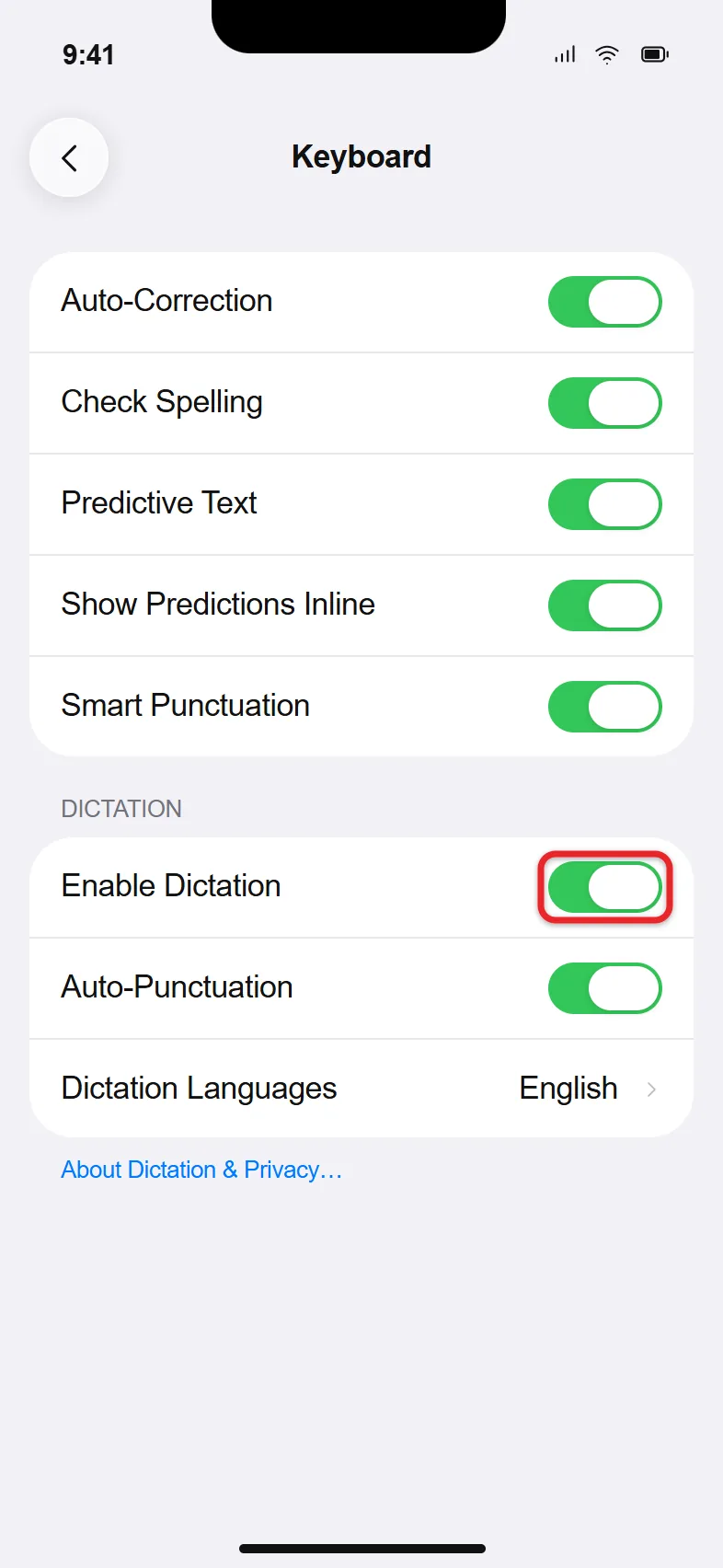
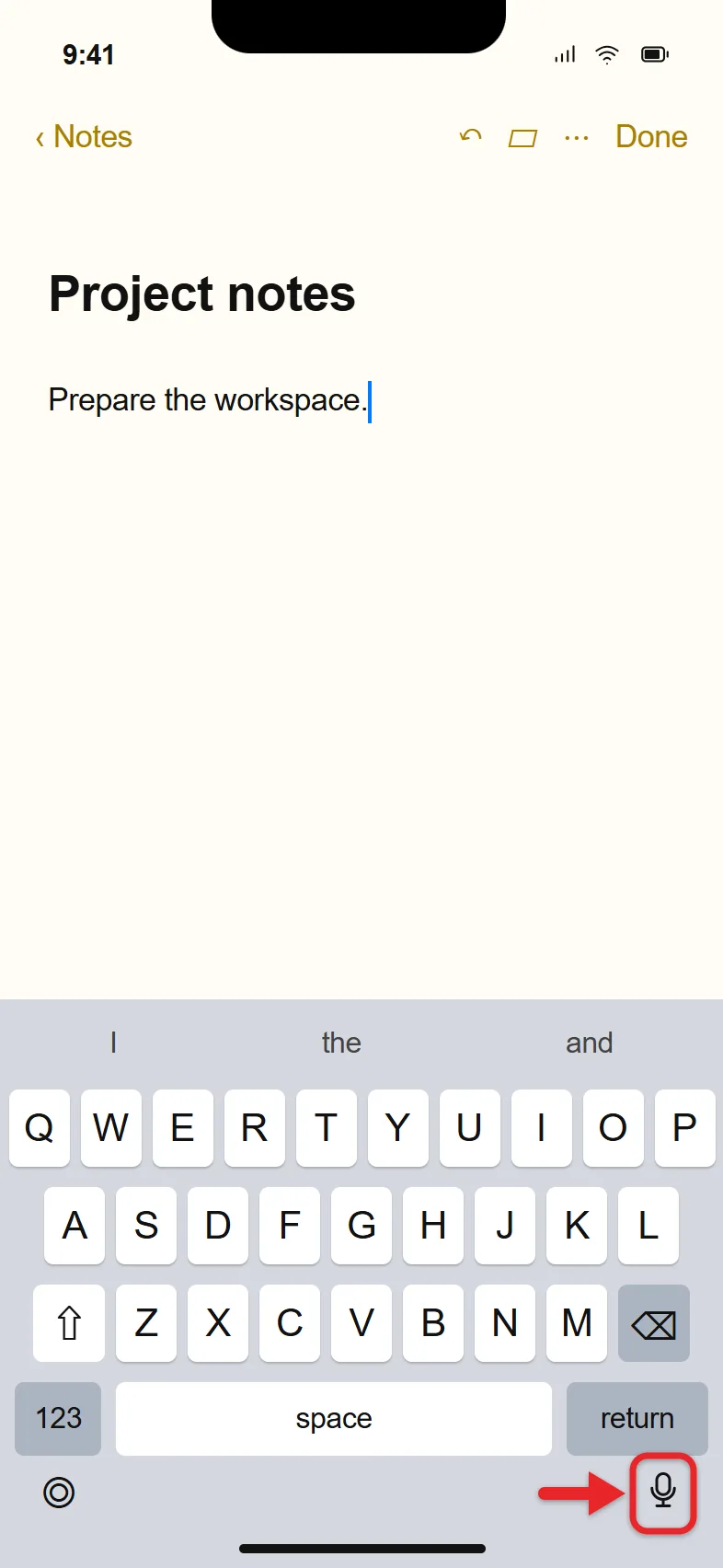
To turn dictation on or off on an iPhone 13, open Settings, tap General, tap Keyboard, and switch Enable Dictation on or off. When it’s on, a microphone button appears on the keyboard so you can speak instead of type. When it’s off, that microphone button goes away.
These steps are for iOS 26 and iOS 27 on the iPhone 13 and every newer iPhone. Apple covers the feature in its Dictate text on iPhone guide.
The Enable Dictation switch only controls typing with your voice on the keyboard. It doesn’t turn off Siri, and it doesn’t change microphone permissions for other apps.
Turn On Dictation
- Open the Settings app.
- Tap General.
- Tap Keyboard.
- Scroll down to the dictation section and turn on Enable Dictation. The switch turns green.
- If a message about dictation appears, tap Enable Dictation to confirm.
To check that it worked, open Notes or Messages and tap in a text field. The keyboard now shows a microphone button, usually in the lower-right corner below the keys.
Turn Off Dictation
- Open Settings.
- Tap General, then tap Keyboard.
- Turn off Enable Dictation. The switch turns gray.
- If a confirmation message appears, tap the option to turn dictation off.
Open any text field to confirm the microphone button is gone from the keyboard. Your keyboard layout, autocorrect, and other typing settings stay the same, and you can turn dictation back on with the same switch at any time.
How to Use Dictation Once It’s On
- Tap in any text field, such as a new note or a message.
- Tap the microphone button on the keyboard. The microphone icon turns into a sound wave or a stop button while the iPhone is listening.
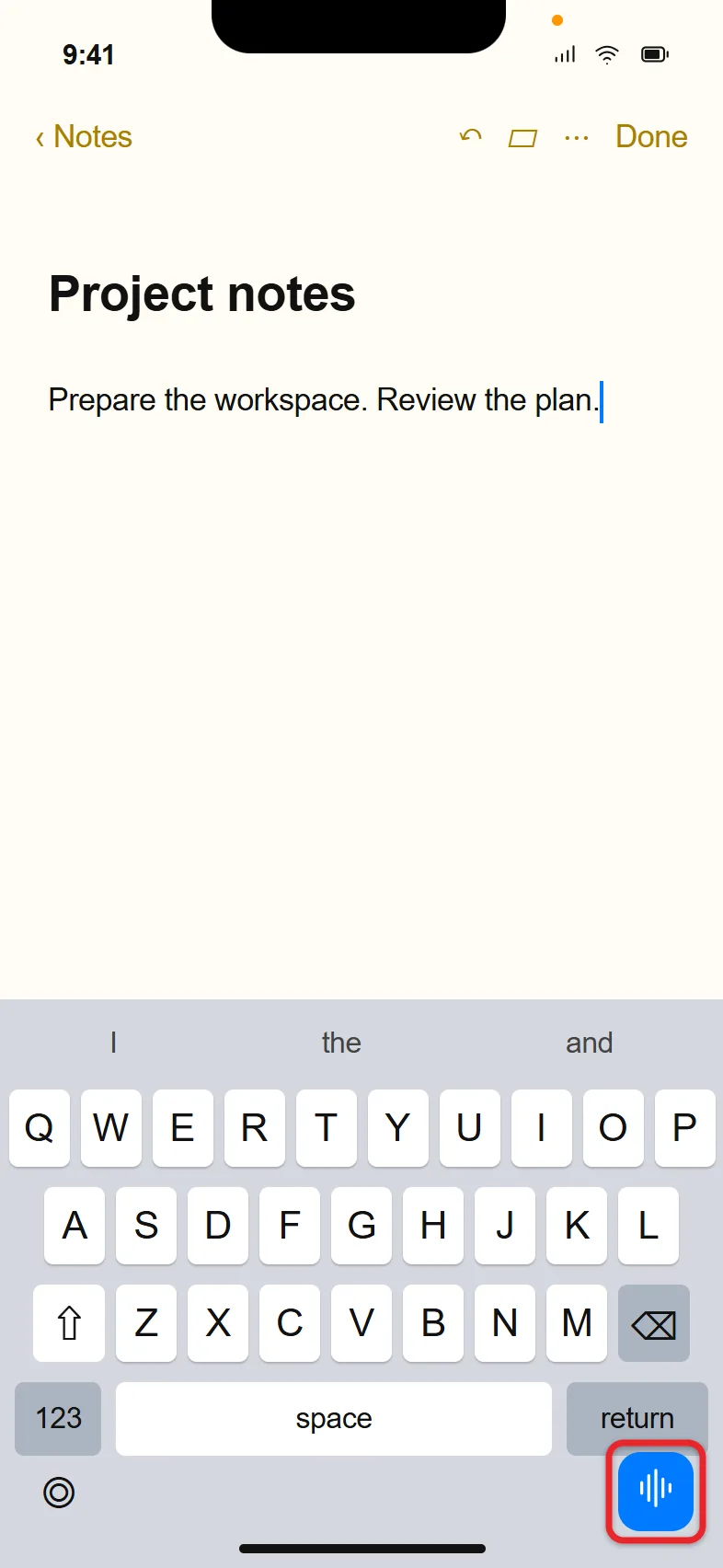
- Speak normally. Words appear as you talk.
- Tap the microphone button again when you’re done. Dictation also stops on its own after you stop talking for a while.
The keyboard stays open while you dictate, so you can type a correction or tap a word to fix it without stopping. Say punctuation out loud, such as “comma,” “period,” or “question mark.” Say “new line” or “new paragraph” to break up the text.
To hear your text read back before you send it, turn on Speak Selection and adjust the speaking rate on iPhone to a pace you can follow.
For text you enter often, such as an email address, you can also set up a Text Replacement shortcut on iPhone and type a few letters instead.
Turn Off Automatic Punctuation
In many languages, the iPhone adds commas, periods, and question marks for you as you dictate. If you’d rather say every punctuation mark yourself, go to Settings > General > Keyboard and turn off Auto-Punctuation. This only changes punctuation. Dictation stays on.
Dictation Privacy and Internet Use
On the iPhone 13 and newer, dictation is processed on the iPhone itself for many languages, and it works without an internet connection in those languages. Some languages still need a connection. If you dictate into a search field, the text you say can be sent to the search provider to run the search, just like typed text.
You can read Apple’s full explanation by tapping About Dictation & Privacy under the Enable Dictation switch in Settings > General > Keyboard.
On a Windows PC, the matching feature is voice typing in Windows 11, which needs an internet connection.
If the Dictation Microphone Is Missing
Enable Dictation is on, but there’s no microphone
Check these in order:
- Voice Control is on. Apple’s regular keyboard dictation isn’t available while Voice Control is turned on. To find that switch, follow the steps for turning Voice Control on or off on iPhone.
- Your keyboard language doesn’t support dictation. Switch to a different keyboard with the globe key, or add a supported one. To add one, follow the steps for adding a keyboard in another language.
- The app hides it. Some fields, such as password boxes, don’t show the dictation button.
The Enable Dictation switch is missing or grayed out
Screen Time can block dictation. Go to Settings > Screen Time > Content & Privacy Restrictions > Allowed Apps & Features and make sure Siri & Dictation is turned on. If the iPhone is managed by a school or employer, a profile may block it. Ask the administrator in that case.
Dictation gets words wrong
Move somewhere quieter, hold the iPhone a bit closer, and speak in short sentences. Remove any case or screen protector that covers the microphones at the bottom of the phone. If names and terms keep coming out wrong, check your other iPhone keyboard settings, such as Auto-Correction, which can change words after you say them.
Dictation Questions
Does turning off dictation turn off Siri?
No. Siri has its own settings in Settings > Siri (called Apple Intelligence & Siri on iPhones that support Apple Intelligence). Turning off Enable Dictation leaves Siri working.
Is dictation the same as sending a voice message?
No. Dictation turns your speech into text that you can edit before you send it. An audio message sends a recording of your voice.
Can I dictate in a different language?
Yes. Add a keyboard for that language, then switch to it with the globe key before you tap the microphone. Dictation listens in the language of the active keyboard.
Does dictation work without Wi-Fi or cellular data?
On the iPhone 13 and newer, it does for many languages because the speech is processed on the phone. Other languages need an internet connection.

Matthew Burleigh is the founder, head writer, and editor of Solve Your Tech, which he launched in 2012. He has written technology tutorials since 2008 and worked in IT since 2003, including small-business support, IT management, and consulting. He holds Bachelor’s and Master’s degrees in Computer Science from Arizona State University.
Matthew writes practical guides for Windows, iPhone and iPad, Microsoft Office, Outlook, Google apps, and Android. Solve Your Tech’s guides are checked step by step against the device or app maker’s own documentation and tested on his own devices whenever he has the hardware or software, with clear steps, sources, and update dates.
Read more about Matthew and how Solve Your Tech writes and updates its guides, or report a correction.