To clear the Safari cache on an iPhone or iPad, open Settings > Apps > Safari and tap Clear History and Website Data. Other browsers and apps keep their own caches, so clear those inside each app or by offloading or reinstalling the app.
These steps cover iOS 27 and iPadOS on current iPhone and iPad models, including the iPhone 13. The same paths work on iOS 18 and later; on iOS 17 and earlier, Safari is listed directly in the main Settings list instead of under Apps.
Clear the Safari Cache in Settings
This is the fastest way to clear Safari’s cache, cookies and history together. It applies to Safari only, not other apps.
- Open Settings and tap Apps. On iOS 17 and earlier, scroll down to Safari in the main Settings list instead.
- Tap Safari. The Safari settings screen opens.
- Scroll down and tap Clear History and Website Data.
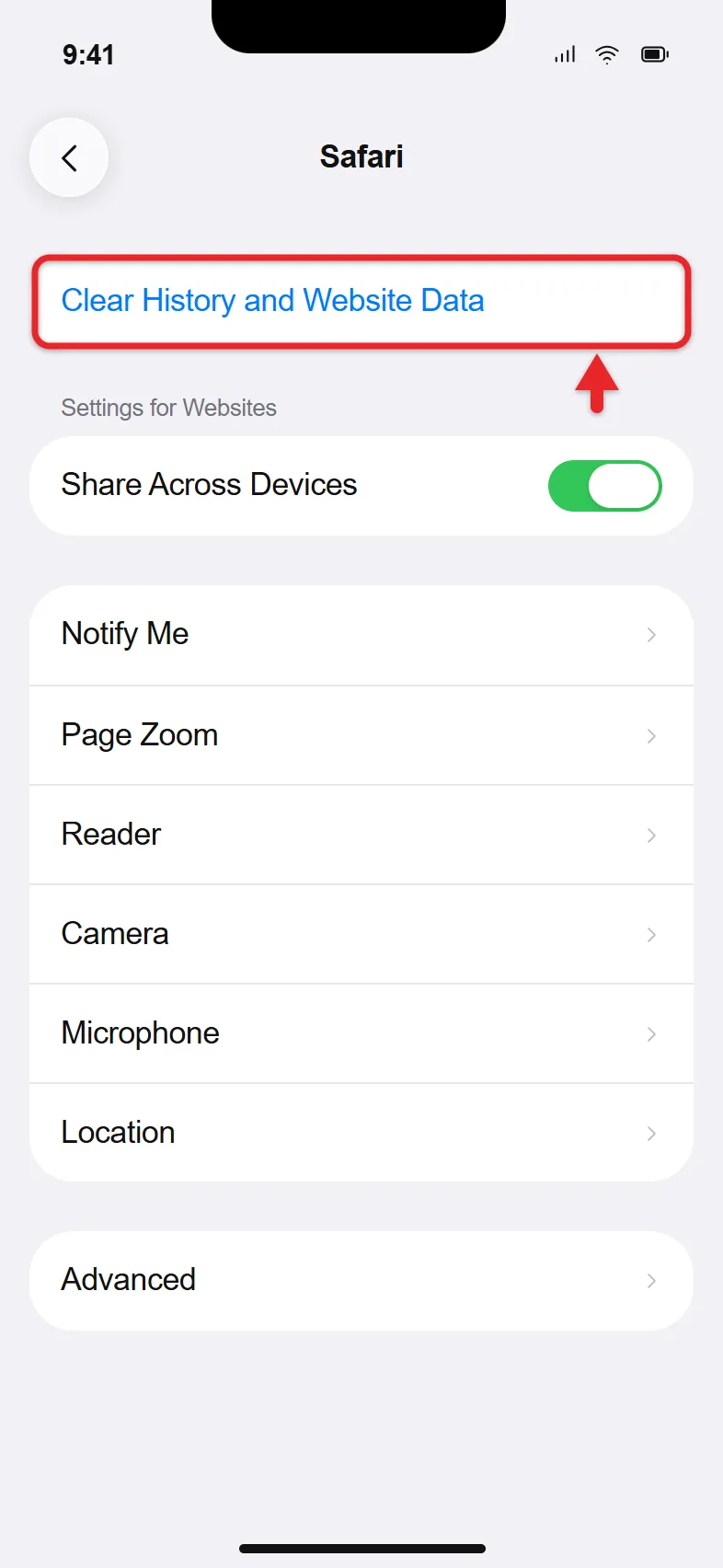
- Choose a timeframe, such as the last hour or all history, then tap Clear History to confirm.
- Open Safari and load a website. Pages may load a little slower the first time because Safari downloads their files again.
To keep your history and clear only cookies and cache, use Advanced > Website Data instead, as described below.
What Cache Means and How to Check Its Storage
A cache stores reusable data, such as images and scripts from webpages you already loaded, so the same content does not have to download again. Cookies are small files websites use to remember you, including whether you are signed in. Clearing either one is safe, and both rebuild as you keep browsing.
A large app total does not mean it is all cache you can delete. Documents, downloads, offline videos and unfinished drafts are different data. Open Settings > General > iPhone Storage (or iPad Storage) and tap an app to see its usage before you choose a cleanup method. Apple’s storage guide notes that cached and temporary data might not count in an app’s figure and that iOS removes cached and temporary files on its own when it needs space. Because caches rebuild during normal use, the space you free may not stay free.
The same screen lists suggestions for the whole phone, and you can view all storage recommendations on iPhone to see what each one removes.
What You Lose and What Stays
Before you clear Safari data, know what changes:
| Action | Removed | Kept |
|---|---|---|
| Clear History and Website Data | History, cache, cookies for the chosen timeframe | Bookmarks, saved passwords, AutoFill, downloads |
| Remove All Website Data | Cache, cookies, site sign-ins | History, bookmarks, passwords |
| Delete one site’s data | That site’s cache and cookies | Everything else |
Apple says AutoFill information is not affected when you clear history. If you use iCloud with Safari turned on, your history syncs, and Apple’s Safari guide for Mac explains that clearing it removes it from your other devices that have Safari turned on in iCloud.
Save the address of any page you need again first; a bookmark is more reliable than History. To bookmark it in Safari, use the Share button. If you only want to sign out of one website, use that site’s own sign-out control, since clearing Safari data is much broader.
Clear Safari History and Website Data in Safari
You can also clear history from inside Safari itself.
- Open Safari.
- Open History from the bookmarks or sidebar controls.
- Tap More, then Clear History.
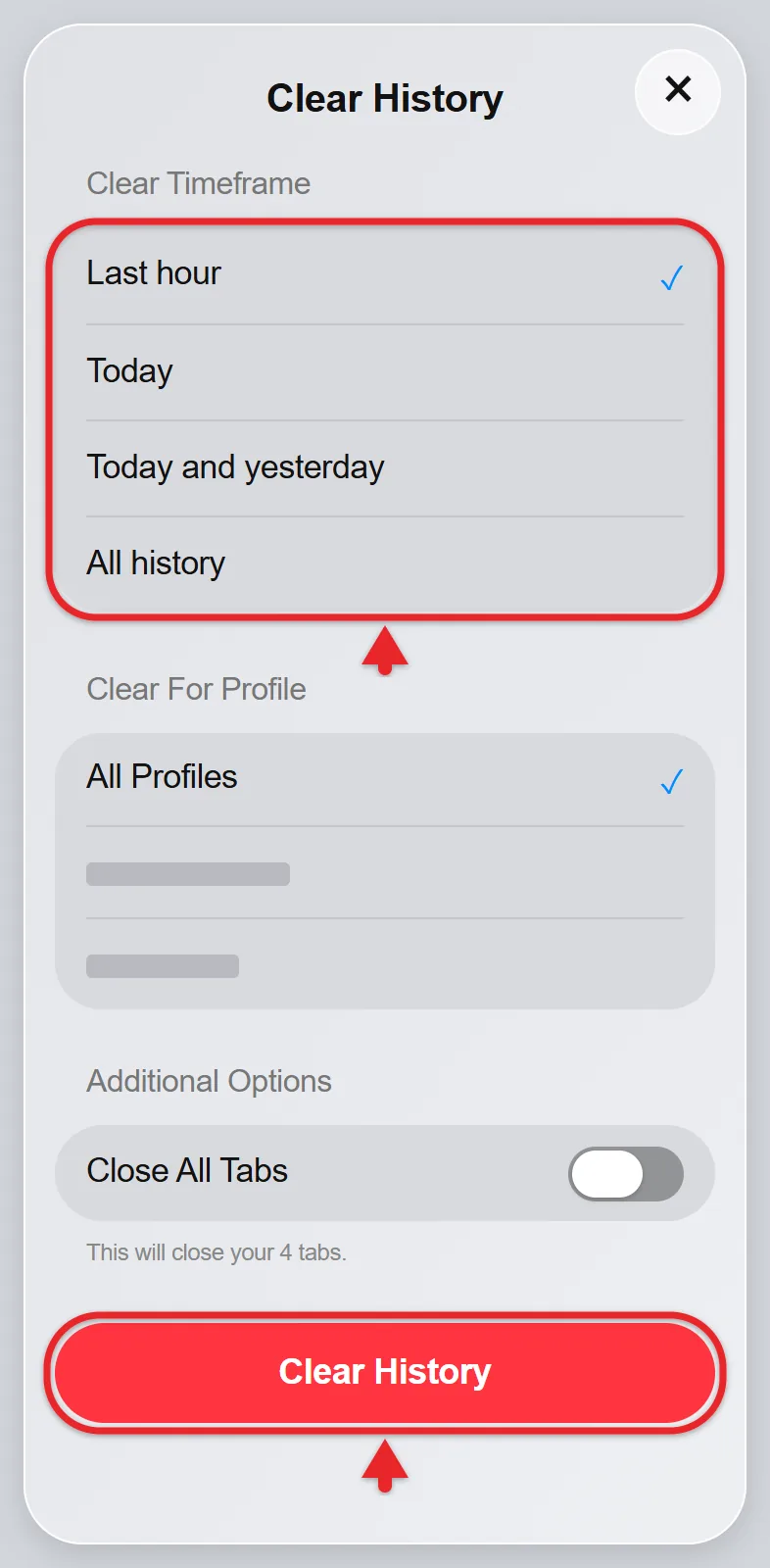
- Choose the time period you want to remove. If Safari profiles are enabled, choose the applicable profile or all profiles.
- Tap Clear History to finish.
Decide how much data to clear
Safari asks for a Clear Timeframe. A short range is enough when a page started misbehaving recently. If you use Safari profiles, choose the affected profile or All Profiles. Clearing removes cookies, so expect to sign in to some sites again.
Clear Cookies and Cache While Keeping History
- Go to Settings > Apps > Safari.
- Scroll down and tap Advanced, then Website Data. A list of sites that stored data appears, with their sizes.
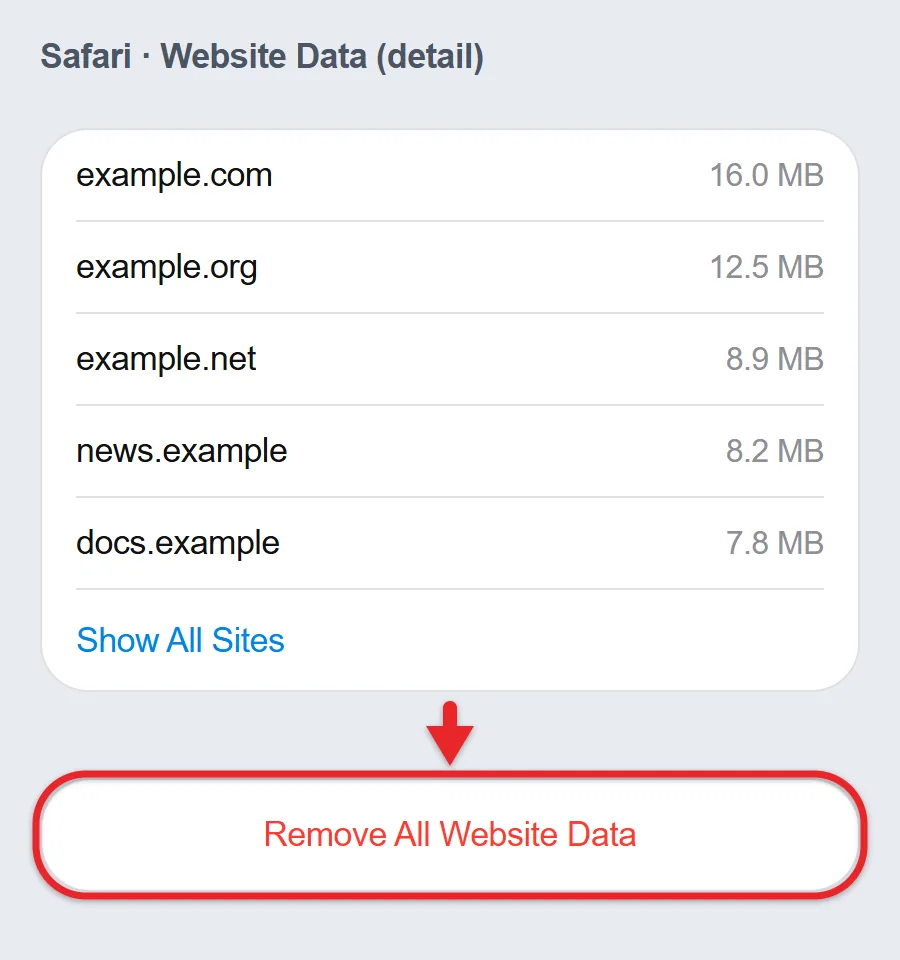
- Tap Remove All Website Data.
- Tap Remove Now. The list empties, and your History list stays as it is.
To clear one site only, search for it at the top of the Website Data list, swipe left on it, and tap Delete. This is the gentlest fix when a single site shows old content or will not sign in. To remove a site from History instead, open Safari History, tap More > Select Websites, select the site, and tap the trash button.
What Clearing Does Not Do
Clearing Safari data does not remove downloaded files from the Files app, erase bookmarks, clear Chrome’s cache, or delete the information held in your account on a website. It also may not make a slow website fast; a poor network connection, a server problem, or a broken extension can cause similar symptoms. If the site still looks stale, close and reopen its tab (or close all open tabs), check your connection, and try the site in a private tab to compare before clearing more data.
A restart does not empty Safari’s cache or app caches either, though it does clear temporary memory and can fix a phone that feels sluggish.
On an iPad, clearing website data is also one of the first steps to reduce System Data on iPad.
Saved payment cards also stay put. To stop Safari from offering them, turn off credit card AutoFill on your iPhone.
Clear Chrome Cache on iPhone or iPad
Chrome keeps a separate cache, so clearing Safari does not touch it.
- Open Chrome and tap More (three dots).
- Tap Delete Browsing Data.
- Set the Time Range. The default is a short recent window, so pick a longer range if the problem is older.
- Tap Browsing Data, select Cached Images and Files, and leave other types unselected if you want to keep them.
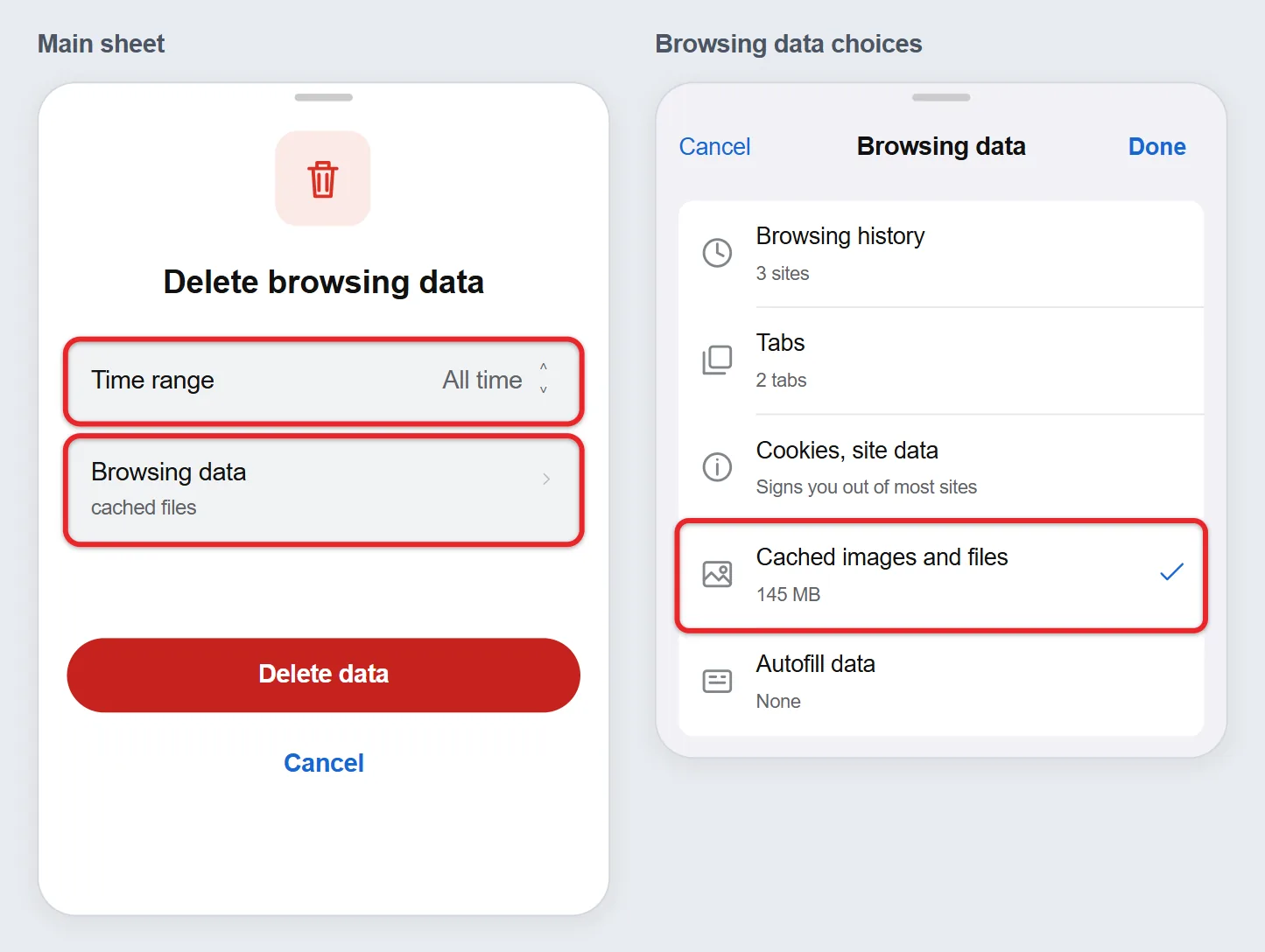
- Tap Confirm, then Delete Browsing Data.
Selecting Cookies and Site Data also signs you out of websites. If you are signed in to Chrome with sync, deleted data types are removed from your Google Account and your other signed-in devices too. Chrome’s help page on clearing browsing data lists the same controls for iPhone and iPad.
To remove the list of sites you visited too, follow the steps to delete Chrome history on iPad. Microsoft Edge and other browsers have a similar clear browsing data option in their own settings.
Clear Firefox Cache on iPhone or iPad
- In Firefox, tap the menu button (bottom of the screen on iPhone, top right on iPad), then Settings.
- Under Privacy, tap Data Management.
- Review the data types, keep Cache selected, and turn off anything you want to keep.
- Tap Clear Private Data and confirm. This cannot be undone.
For one website, open Website Data in the same screen, select the site, and tap Clear Items. Firefox’s other data-management options are on Mozilla’s history-clearing page for iOS.
Clear App Cache: Facebook, YouTube, and Other Apps
iPhone Settings has no universal Clear Cache switch for every app, unlike some Android phones. Use these options in order, from least to most disruptive.
Use the app’s own cache control
Check the app’s settings for a storage, data or cache option first. Snapchat has its own Clear Cache button, which can help when you need to fix Snapchat support code C14A and other login errors. Spotify has one too, and you can learn how to clear the Spotify cache. Facebook and YouTube may not offer a matching button, and app menus change with updates.
When an app is acting up and you don’t want to clear anything yet, close and restart the app first.
Offload or delete the app
- Open Settings > General > iPhone Storage and tap the app.
- Tap Offload App to remove the app but keep its documents and data, then tap Reinstall App. This frees the app’s own size but does not reset its data.
- To fully reset the app, tap Delete App instead. This removes the app and its local data, including cached files.
- Reinstall it from the App Store and sign in again.
Before deleting, export or sync anything you need, including drafts, offline downloads and saved playlists, and make sure you know your password. Deleting the app does not erase your online account.
For Instagram, follow the steps for resetting Instagram app data on iPhone, which include a draft-loss warning. Apple’s page about offloading versus deleting apps compares the two options. On a tablet, the same choices apply when clearing app cache on iPad.
Let iOS manage space
In iPhone Storage, look at the recommendations at the top of the screen. Offload Unused Apps removes apps you have not used in a while and keeps their data, so they reinstall with your data intact. iOS also clears its own cached and temporary files when storage runs low, so you do not need to clear caches on a schedule.
When Clear History Is Grayed Out
Clear History and Website Data is grayed out. This happens when there is no history or website data to clear, or when Screen Time web content restrictions are on. Check Settings > Screen Time > Content & Privacy Restrictions. If someone else manages your Screen Time, you need their passcode.
Sites keep signing you out or say cookies are required. Check Settings > Apps > Safari > Advanced. If Block All Cookies is on, many sites cannot keep you signed in. Turn it off, then try the site again.
The same problem returns. Test the page in a private tab or on another connection. If the page loads but its mobile layout is missing a button or menu, try to request the desktop site on iPhone. If pages show plain text or buttons do nothing, see whether you need to turn JavaScript back on in Safari. A content blocker may also be the cause, and you can disable a Safari extension on iPhone.
Storage barely changed. Safari’s cache is often small compared with photos, videos, messages and offline media. Check the largest items in iPhone Storage and use its recommendations.
How to Confirm It Worked
Go back to Settings > Apps > Safari > Advanced > Website Data. After a full clear, the list is empty or shows only sites you opened since. In iPhone Storage, the Safari entry should show less space used. Reopen the site that was misbehaving; if you are asked to sign in again, the cookies were cleared.
iPhone Cache Questions
Will clearing Safari cache delete my photos or messages?
No. Safari website data is separate from Photos and Messages. The main inconvenience is losing website sessions, recent history, and site-specific permissions.
Will clearing the cache delete my saved passwords?
No. Passwords saved in the Passwords app and Safari AutoFill stay in place. You may need to let AutoFill sign you in again on each site.
Why does a site ask me to sign in again?
A website can use cookies to remember your session. Clearing those cookies makes the site treat your next visit like a new session.
How often should I clear the cache?
There is no need for a schedule. Clear it when a site shows old content, will not load correctly, or when you want to remove browsing data for privacy.
Can I stop Safari from building up so much history?
Yes. You can have Safari automatically close tabs after one week. Private Browsing also keeps new visits out of your history.
For a more comfortable reading view after the reset, try Safari Reader mode. Apple’s cache and cookies instructions and its Safari data support page give the current Safari routes.

Matthew Burleigh is the founder, head writer, and editor of Solve Your Tech, which he launched in 2012. He has written technology tutorials since 2008 and worked in IT since 2003, including small-business support, IT management, and consulting. He holds Bachelor’s and Master’s degrees in Computer Science from Arizona State University.
Matthew writes practical guides for Windows, iPhone and iPad, Microsoft Office, Outlook, Google apps, and Android. Solve Your Tech’s guides are checked step by step against the device or app maker’s own documentation and tested on his own devices whenever he has the hardware or software, with clear steps, sources, and update dates.
Read more about Matthew and how Solve Your Tech writes and updates its guides, or report a correction.