To CC someone in Gmail on a computer, click Compose, click Cc at the right end of the To line, and type the person’s email address in the Cc field. In the Gmail app on Android, iPhone or iPad, tap the small arrow at the right of the To row to show the Cc field.
These steps are for Gmail in a web browser (Chrome, Edge, Firefox or Safari on Windows, Mac or ChromeOS) and the Gmail app for Android, iPhone and iPad. They work the same for a personal Gmail address and a Google Workspace work or school account.
Everyone on the email can see who was CC’d. If you want to copy someone without the other recipients seeing their address, use Bcc instead, as explained below.
How to CC Someone in Gmail on a Computer
- Open Gmail in your web browser and click Compose at the top left. A New Message window opens at the bottom right of the screen.
- Type your main recipient’s address in the To field. Gmail suggests matching contacts as you type, and you can press Enter or click a suggestion to add one.
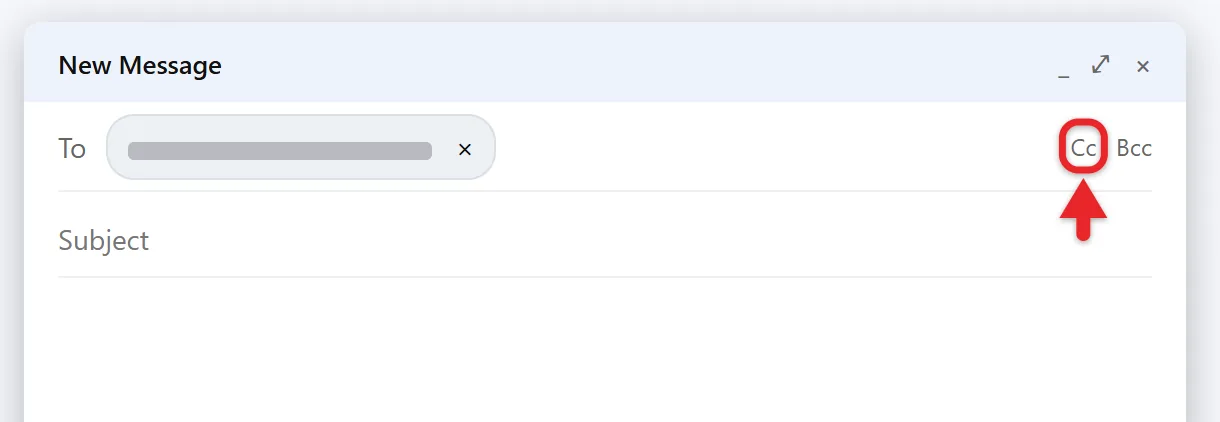
- Click Cc on the right side of the recipient line. A separate Cc row appears under To.
- Type the email address of the person you want to copy. Each address turns into a small rounded name chip once it’s added.
- Add a subject and message, then click Send.
The message goes to everyone in To and Cc, and each recipient can see the full list of To and Cc addresses. Google’s Send or unsend Gmail messages help page describes the Cc field this way: anyone in it sees the other recipients of the message.
Gmail suggests addresses from your Google Contacts as you type; if the right person doesn’t appear, check your Google Contacts list.
Add Several People or a Whole Group
- More than one address: Google says to put a comma between each name or email address. Pressing Enter after each address works too.
- A group email address: if your team or club has a shared address (for example, a Google Group), you can type that one address in Cc and everyone in the group gets a copy.
- A contact label: if you’ve grouped people under a label in Google Contacts, start typing the label’s name in the Cc field and select it from the list. Gmail adds every member. To create a label, open Google Contacts, click Create label next to Labels, type a name, and click Save.
To take someone off the Cc line before you send, click the X on their name chip.
Use the Keyboard Shortcut
While you’re writing a message, press Ctrl + Shift + C on Windows or ChromeOS (⌘ + Shift + C on a Mac) to open the Cc field. Ctrl + Shift + B (⌘ + Shift + B) opens Bcc. Both are on Google’s Gmail keyboard shortcuts list.
If the shortcut doesn’t respond, click inside the message window first so Gmail knows which draft you mean. You can also turn on Gmail’s shortcuts in Settings > See all settings > General > Keyboard shortcuts on, then click Save Changes at the bottom. The steps for enabling keyboard shortcuts in Gmail cover that setting and the most useful keys.
How to CC in the Gmail App (Android, iPhone and iPad)
The Gmail app hides the Cc and Bcc rows until you open them. These steps work in the Gmail app for Android, iPhone and iPad:
- Open the Gmail app and tap Compose at the bottom right.
- Type your main recipient in the To field.
- Tap the small down arrow at the right of the To row. Some app versions show the text Cc/Bcc instead of an arrow. The Cc and Bcc rows appear under To.
- Tap the Cc row and type the address.
- Add a subject and message, then tap Send (the paper airplane icon) at the top of the screen.
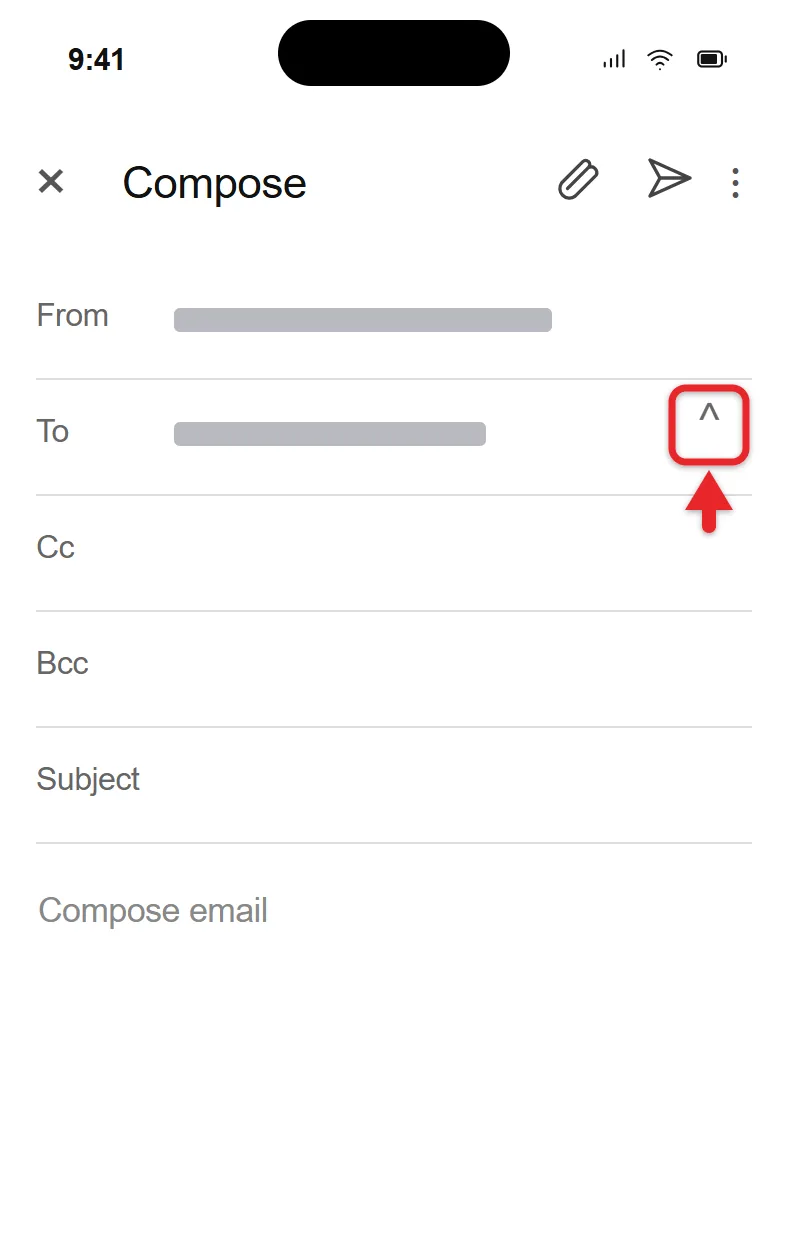
The app doesn’t have a setting to keep Cc showing all the time, so you’ll tap the arrow each time you need it. If the arrow doesn’t appear, tap inside the To field first; it shows up at the right end of that row.
How to CC Someone When Replying or Forwarding
The person you add sees the earlier conversation quoted below your reply, so check that nothing in the thread is private before you copy someone new.
On a computer:
- Open the email and click Reply, Reply all or Forward under the message.
- Click the recipient names at the top of the reply box. The To line opens with Cc and Bcc links on the right.
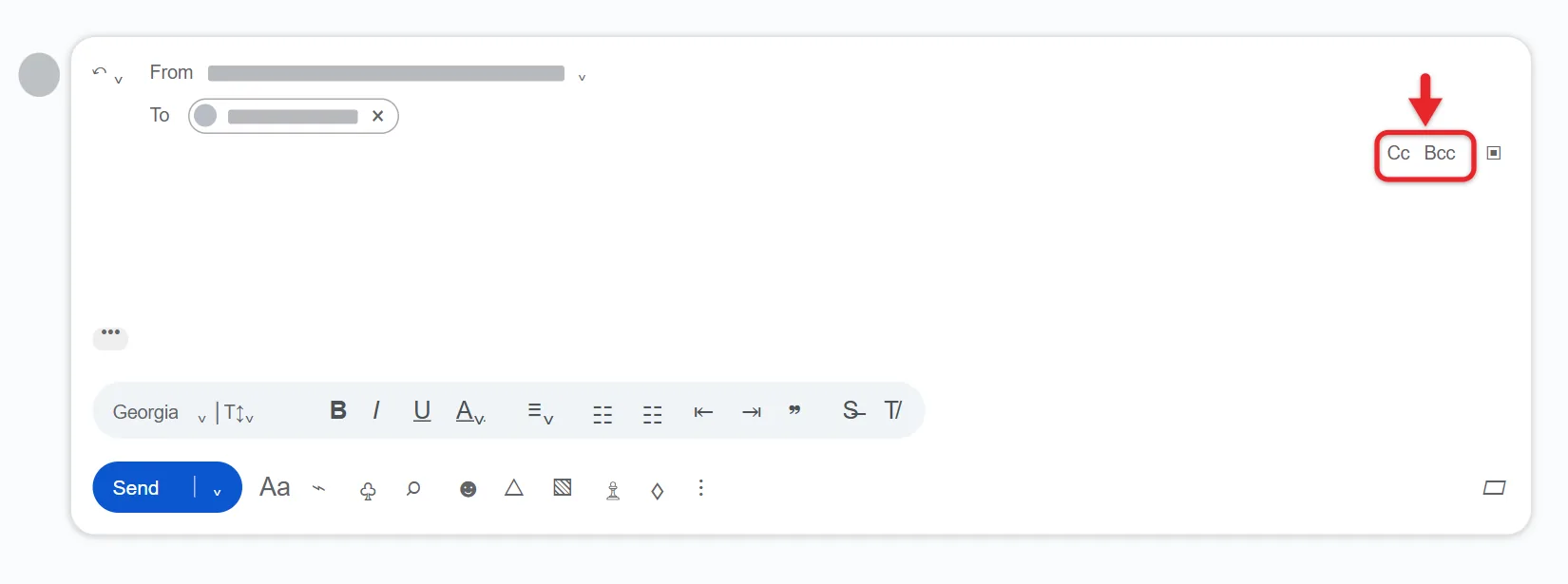
- Click Cc and type the address.
- Write your reply and click Send.
In the Gmail app, tap Reply or Reply all (or open the three-dot menu at the top right of the message for more choices), then tap the arrow at the right of the To row to show Cc.
Reply goes only to the sender, while Reply all keeps everyone who was in To and Cc. If you usually want the whole group, you can make Reply all the default in Gmail. When the conversation has moved on to a new topic, you can also change the subject line in Gmail as you add new people.
CC vs. BCC: Which Should You Use?
| Field | Who sees the address | Typical use |
|---|---|---|
| To | Everyone on the email | The people who need to read and act on it |
| Cc (carbon copy) | Everyone on the email | People who should stay informed but don’t need to act |
| Bcc (blind carbon copy) | Only you and that person | Copying someone privately, or emailing a large group whose addresses should stay private |
A few more details about Bcc:
- Other recipients aren’t told that you used Bcc. People in Bcc can see that they were added that way, but they can’t see one another.
- If someone clicks Reply all, people in Bcc won’t get that reply.
- Recipients who don’t use Gmail may not see that they were added in Bcc.
A quick way to decide: use Cc when the people on the email already know each other and it helps them to see who else is in the loop, such as copying a manager on a note to a client. Use Bcc for newsletters, event announcements or any message to people who haven’t shared their addresses with each other. If you also use an AOL address, here’s how to BCC someone in AOL Mail.
How Many People Can You CC in Gmail?
The limit counts everyone in To, Cc and Bcc together, not each field on its own.
| Account | Recipients per message | Messages per day |
|---|---|---|
| Free Gmail account | 500 | 500 |
| Google Workspace account | 2,000 (no more than 500 outside your organization) | 2,000 |
The free Gmail numbers come from Google’s sending limits help page, and the Workspace numbers from Google’s Gmail sending limits in Google Workspace page. If you go over a limit, you should be able to send again within 1 to 24 hours. For a group you email often, create a Google Group and send to the group’s address instead of listing everyone.
How to Check Who Was CC’d
To confirm a copy went out, open your Sent folder and open the message. Click the small down arrow under your name at the top of the message to see the full to and cc lines.
To find emails by their Cc line, type a search operator in the Gmail search box. Google’s search operators list includes cc: and bcc:. For example, cc:jamie@example.com finds messages where that address was CC’d. Bcc searches only work on messages you sent, because the Bcc line isn’t shared with other recipients.
If you read Gmail in Apple’s Mail app on an iPhone, you can also show To and Cc labels in the iPhone inbox to spot messages you were only copied on.
Troubleshooting CC in Gmail
- There’s no Cc link in a reply. Gmail hides it in the small reply box. Click the recipient names at the top of the reply to open the full To line with Cc and Bcc.
- The keyboard shortcut does nothing. Click inside the draft first, then check that Keyboard shortcuts on is selected and saved in Settings > See all settings > General.
- You can’t find Cc in the app. Tap inside the To field, then look for the arrow or Cc/Bcc at the right end of that row.
- The email bounced or was blocked. Check the address for typos. On a work or school account, your administrator can restrict mail to outside addresses, so ask your IT team if messages to external Cc recipients won’t send. A “limit” message means you hit a sending limit from the table above.
- You want Gmail to CC someone on every email. Gmail doesn’t have a setting that adds a Cc or Bcc address to every message automatically. Gmail filters work on mail you receive, so they can’t copy outgoing messages either. Add the address each time.
- You forgot to CC someone. You can’t add a Cc recipient to a message that’s already sent. Click Undo right away if the notice is still on screen, or forward the message to that person.
Gmail CC Questions
Can I CC myself in Gmail?
Yes. Type your own address in the Cc field like any other recipient, and the copy arrives in your inbox. Gmail already saves every message you send in your Sent folder, so you only need to CC yourself if you want the copy in your inbox too.
Can I unsend an email if I CC’d the wrong person?
Yes, briefly. You’ll see “Message sent” with an Undo option right after you send on a computer, and “Sent” with Undo in the app. On a computer, you can set that window to 5, 10, 20 or 30 seconds under Settings > See all settings > Undo Send, then click Save Changes. After that, the message can’t be pulled back. You can also read about how to recall an email in Gmail.
Does the person I CC know they were copied?
Yes. Their address appears on the Cc line, and the To and Cc recipients can all see it.
Can CC recipients see who was BCC’d?
No. Bcc addresses are hidden from everyone in To and Cc, and from other Bcc recipients.
Do CC recipients get replies to the email?
Only when someone clicks Reply all. A plain Reply goes back to the sender alone.
To keep a running list of everyone you email, you can also automatically create contacts in Gmail so their addresses autocomplete the next time you add them to Cc.
More Gmail Guides
- How to reply all by default in Gmail
- How to automatically create contacts in Gmail
- How to recall an email in Gmail
- How to set Gmail as the default email in Chrome

Matthew Burleigh is the founder, head writer, and editor of Solve Your Tech, which he launched in 2012. He has written technology tutorials since 2008 and worked in IT since 2003, including small-business support, IT management, and consulting. He holds Bachelor’s and Master’s degrees in Computer Science from Arizona State University.
Matthew writes practical guides for Windows, iPhone and iPad, Microsoft Office, Outlook, Google apps, and Android. Solve Your Tech’s guides are checked step by step against the device or app maker’s own documentation and tested on his own devices whenever he has the hardware or software, with clear steps, sources, and update dates.
Read more about Matthew and how Solve Your Tech writes and updates its guides, or report a correction.