To stop the taskbar from hiding, turn off auto-hide: right-click the taskbar, select Taskbar settings, open Taskbar behaviors, and clear the Automatically hide the taskbar check box. The taskbar stays on screen from that moment, with no restart needed.
These steps cover current Windows 11 releases (versions 24H2, 25H2 and 26H2) and Windows 10, with a short note for Windows 7. They follow Microsoft’s Customize the taskbar in Windows guide. If the box is already clear and the taskbar still vanishes, skip to the troubleshooting section.
Hidden Taskbar or Missing Taskbar?
Auto-hide is a setting, not a fault. When it is on, the taskbar slides off the screen whenever you are not using it and comes back when you point to its edge. Before changing anything, move the pointer to the very bottom of the screen (or touch the bottom edge on a touch screen):
- The taskbar slides up. Auto-hide is on. Follow the steps below to turn it off.
- Nothing appears. The taskbar may be on another edge or another monitor, covered by a full-screen app, or frozen. See the troubleshooting section.
How to Stop the Taskbar From Hiding in Windows 11
- Point to the bottom edge of the screen so the taskbar appears.
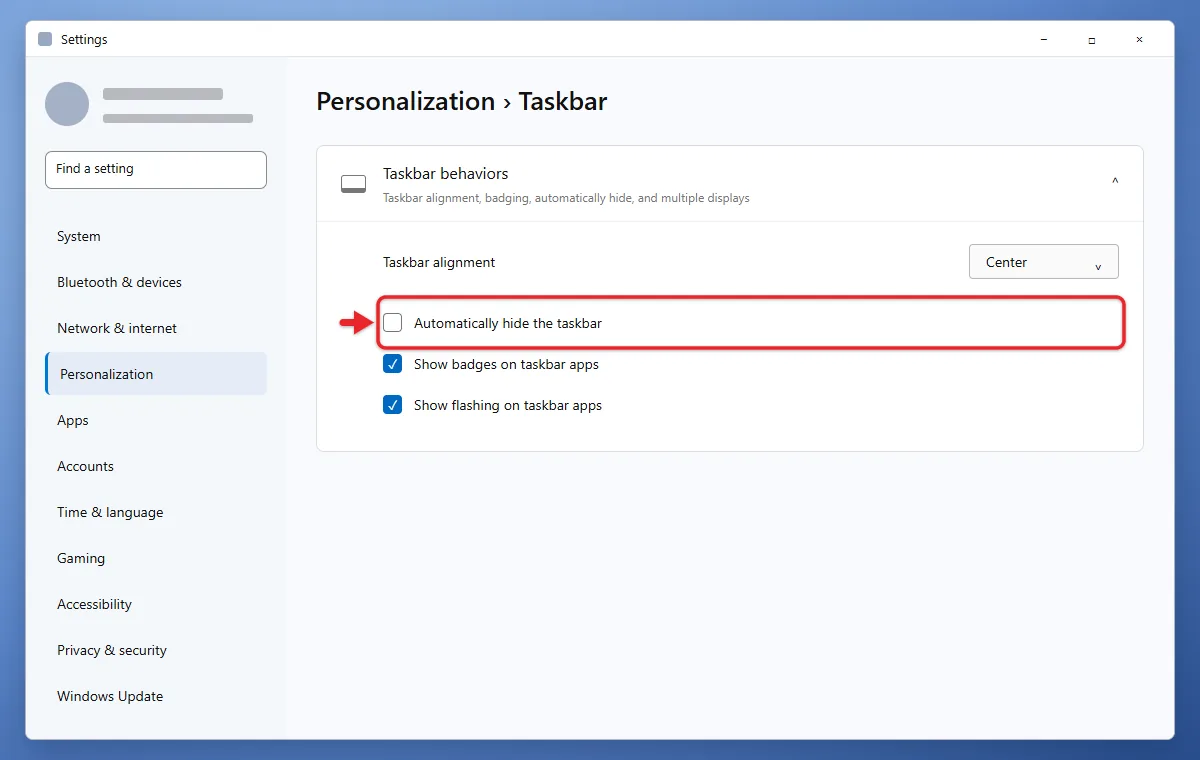
- Right-click an empty spot on the taskbar and select Taskbar settings. The Personalization > Taskbar page opens in Settings. You can also get there with Windows + I, then Personalization > Taskbar.
- Scroll to Taskbar behaviors. If the section is collapsed, select it to expand it. Microsoft’s August 2026 preview update (KB5120998) shows it expanded by default.
- Clear the check box next to Automatically hide the taskbar.
- Close Settings and move the pointer to the middle of the screen.
The taskbar stays visible. There is no Save or Apply button; the change takes effect as soon as the box is cleared. To hide it again later, select the same check box.
If your PC has the newer Taskbar position setting in the same section and the bar is set to Top, Left or Right, auto-hide works the same way at that edge, so point to that edge instead of the bottom. Microsoft is rolling the position setting out gradually, so many PCs still have a bottom-only taskbar. The steps for changing the taskbar location in Windows 11 cover that setting.
How to Stop the Taskbar From Hiding in Windows 10
Windows 10 reached the end of support on October 14, 2025, but its taskbar settings still work. Windows 10 has separate switches for desktop and tablet modes:
- Right-click an empty spot on the taskbar and select Taskbar settings.
- Turn off Automatically hide the taskbar in desktop mode.
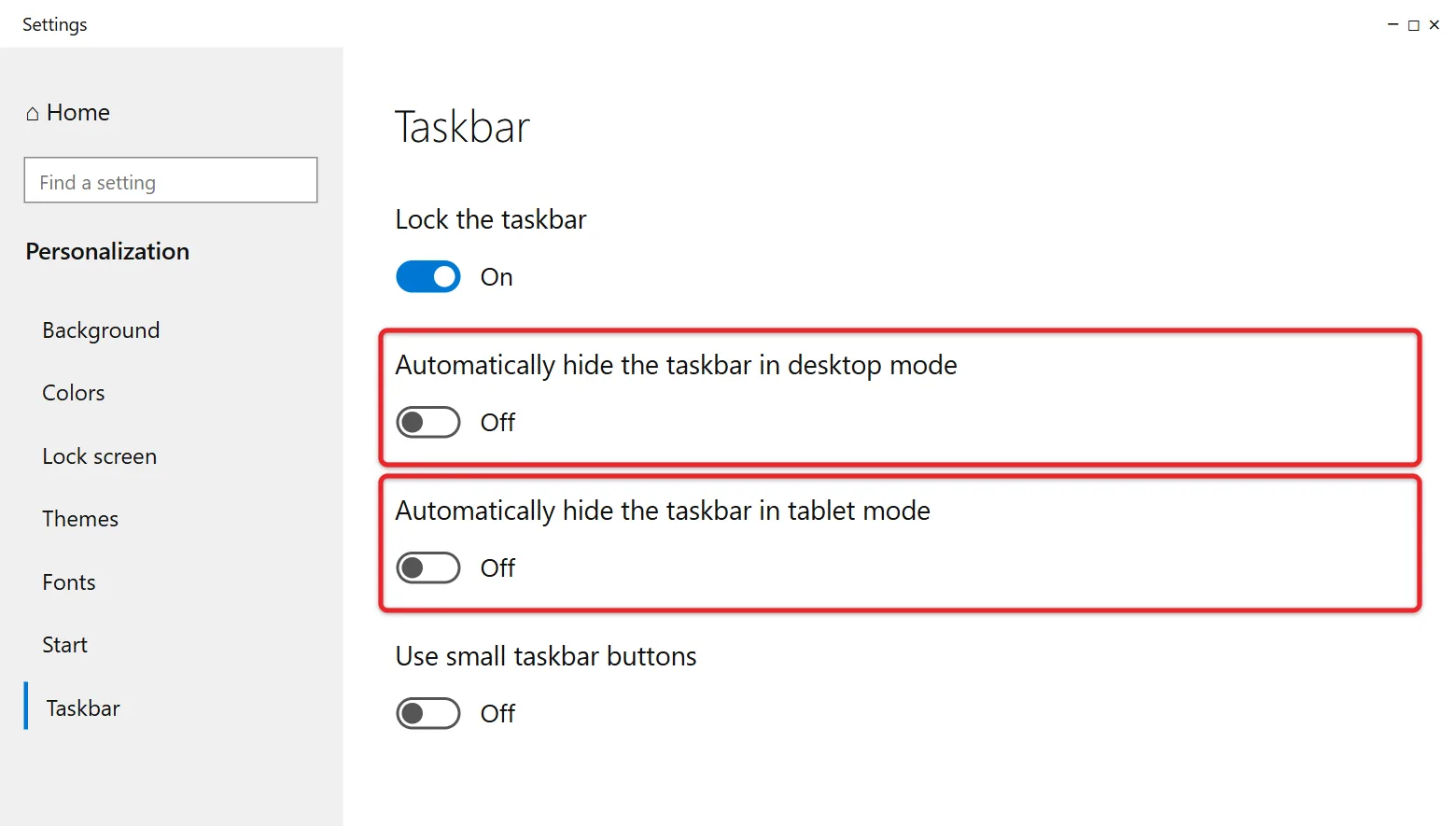
- If you use your PC as a tablet, also turn off Automatically hide the taskbar in tablet mode.
The switch shows Off, and the taskbar stays on screen in that mode. If you only turned off the desktop-mode switch and the bar still hides, check whether the PC is in tablet mode: the Tablet mode tile in Action Center (Windows + A) is highlighted when it is on.
The same page has a Lock the taskbar switch that stops the bar from being dragged or resized by accident. That switch exists only in Windows 10; for Windows 11, check whether you can lock or unlock the taskbar in Windows 11.
Windows 7 (Legacy)
On Windows 7, right-click the taskbar, choose Properties, clear Auto-hide the taskbar on the Taskbar tab, and click Apply, then OK. Windows 7 no longer gets security updates, so use these steps only on an offline or legacy PC.
Taskbar Still Disappearing? Try These Fixes
Start with the symptom that matches yours, then work down the list. Each fix targets a different cause.
| What you see | Most likely cause | Try first |
|---|---|---|
| Bar disappears only in videos, games or browsers | Full-screen mode | Leave full-screen mode |
| Box is clear but the bar still slides away | Stuck setting or Explorer glitch | Reapply the setting, then restart Windows Explorer |
| Thin strip at the bottom of a 2-in-1 | Tablet-optimized taskbar | Clear the touch optimization setting |
| Bar missing on one screen | Multi-monitor setting | Show the taskbar on all displays |
| Check box is grayed out | Work or school policy | Ask your IT department |

Leave Full-Screen Mode
Videos, games and browsers in full-screen mode cover the whole display, including the taskbar. That is the app, not auto-hide. Press Esc or F11, or use the app’s own full-screen button, and the taskbar returns.
Reapply the Setting
Select Automatically hide the taskbar, wait about five seconds, then clear it again. This resets the setting if Windows stored it incorrectly. If the box turns itself back on after an update or after waking from sleep, clear it again and keep reading.
Restart Windows Explorer
Windows Explorer draws the taskbar, Start and the desktop. Restarting it fixes a taskbar that is stuck, frozen or blank.
- Press Ctrl + Shift + Esc to open Task Manager. There are other ways to open Task Manager too.
- On the Processes page, select Windows Explorer. Type its name in the search box if the list is long.
- Select Restart task at the top, or right-click the entry and select Restart.
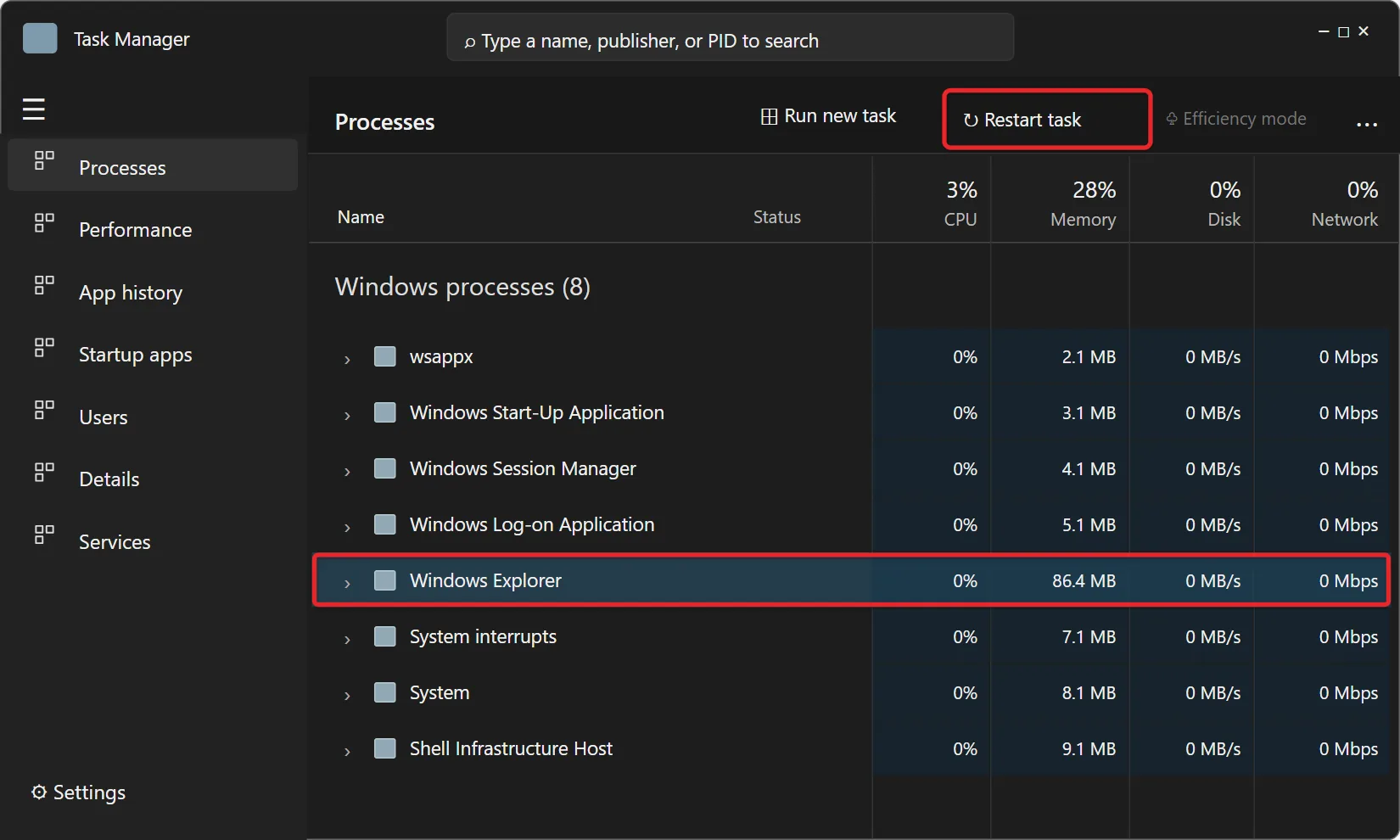
The screen and taskbar flicker for a moment and come back. Open File Explorer windows close, but other apps keep running. If Windows Explorer is not in the list, select Run new task, type explorer.exe, and select OK, as Microsoft describes in its blank screen troubleshooting guide.
Check the Tablet Taskbar on a 2-in-1
A 2-in-1 is a laptop whose keyboard detaches or folds back so it works as a tablet. On these devices, Windows 11 collapses the taskbar into a thin strip when you use the device as a tablet, and you swipe up from the bottom to expand it. This looks like auto-hide but is a separate setting. To keep the full taskbar, clear Optimize taskbar for touch interactions when this device is used as a tablet under Taskbar behaviors. This setting appears only on 2-in-1 devices with tablet functionality, so you will not see it on a regular desktop.
Check Every Monitor
With more than one display, the taskbar may be on your main monitor only, or on a screen you are not looking at. In Taskbar behaviors, select Show my taskbar on all displays to put a taskbar on every monitor. If auto-hide keeps switching back on after sleep with external monitors, update your graphics driver, one of the fixes Microsoft community moderators suggest for that problem. Unplugging the second display for a moment is a quick way to test whether it is involved.
Repair System Files
If the setting still won’t stay put, repair Windows system files. In one Microsoft Q&A case where the taskbar kept hiding on a 2-in-1 with auto-hide off, this was the fix that worked.
- Right-click Start, select Terminal (Admin), and select Yes.
- Type DISM /Online /Cleanup-Image /RestoreHealth and press Enter. It can take 15 minutes or more.
- Type sfc /scannow and press Enter.
- Restart the PC when the scan finishes.
Restart and Update
Restart the PC, then install anything waiting in Settings > Windows Update. Taskbar bugs are often fixed in monthly updates.
Grayed-Out Setting on a Work or School PC
If the check box is grayed out or the Taskbar settings page will not open, your organization may manage the PC. Microsoft’s Lock all taskbar settings policy, for example, blocks users from opening taskbar settings. Only an administrator can change it, so ask your IT department rather than trying to work around it.
When the Taskbar Won’t Stay Hidden
Sometimes the opposite happens: you want auto-hide, but the taskbar pops up and stays. An app that needs attention usually causes it. An app icon flashes and stays highlighted until you select it or open the app. Open any highlighted app, check the hidden icons arrow near the clock, and clear notifications with Windows + N.
To stop icons from flashing for attention, clear Show flashing on taskbar apps in Taskbar behaviors. A pointer resting on the bottom edge also keeps the bar up, so move it away. The full auto-hide setup is in hiding the taskbar in Windows 11.
The small numbers on app icons are a separate setting, and you can remove the numbers from taskbar icons if they bother you.
Fixes We Don’t Recommend
Some guides suggest editing the StuckRects3 registry value byte by byte, running scripts that rewrite it, deleting registry keys, or re-registering every Windows app with PowerShell. Microsoft’s taskbar guide does not document these, and a mistake can break other parts of the desktop. Some guides also suggest turning off transparency effects; Microsoft does not list that as a taskbar fix. The Settings check box does the same job safely.
Taskbar Hiding Questions
How do I see a hidden taskbar?
Move the pointer to the bottom edge of the screen, or touch that edge on a touch screen. The Windows key opens Start, Windows + T moves through taskbar apps, and Windows + B jumps to the system tray, even while the bar is hidden.
Why did my taskbar start hiding on its own?
Usually someone selected the auto-hide box, or a 2-in-1 switched to the tablet taskbar. Check both settings in Taskbar behaviors. On Windows 10, check the tablet-mode switch as well.
Is there a keyboard shortcut to turn auto-hide off?
No. Windows’ documented keyboard shortcuts include none that toggles auto-hide. Use Windows + I to open Settings, then go to Personalization > Taskbar.
Can I keep the taskbar on all my monitors?
Yes. In Windows 11, expand Taskbar behaviors and select Show my taskbar on all displays.
Can I make the taskbar take up less room instead of hiding it?
Yes. Under Taskbar items, set Search to Search icon only or Hide, and turn off Task view and Widgets. PCs with the August 2026 update may also show a Taskbar size option in Taskbar behaviors; choose Small.
Does turning off auto-hide affect my apps or pins?
No. It only controls whether the bar stays visible. Pinned apps, open windows and system tray icons are unchanged.
Folders, files, websites and more can also be pinned to the taskbar in Windows 11.
If the taskbar is gone completely rather than hiding, get the taskbar back in Windows 11 instead.

Matthew Burleigh is the founder, head writer, and editor of Solve Your Tech, which he launched in 2012. He has written technology tutorials since 2008 and worked in IT since 2003, including small-business support, IT management, and consulting. He holds Bachelor’s and Master’s degrees in Computer Science from Arizona State University.
Matthew writes practical guides for Windows, iPhone and iPad, Microsoft Office, Outlook, Google apps, and Android. Solve Your Tech’s guides are checked step by step against the device or app maker’s own documentation and tested on his own devices whenever he has the hardware or software, with clear steps, sources, and update dates.
Read more about Matthew and how Solve Your Tech writes and updates its guides, or report a correction.