To watch YouTube on your TV from your iPhone, connect both to the same Wi-Fi network, open YouTube on the TV, play a video in the YouTube app on your iPhone, tap the Cast icon, and choose your TV. If they’re on different networks, use Link with TV code instead.
These steps are for the current YouTube app on iOS 26 and iOS 27 and follow YouTube’s help article Watch YouTube on your smart TV. The same steps work on an iPad.
Where the Watch on TV Option Went
The YouTube app once put Watch on TV front and center for connecting to a TV. Today you start a TV connection from the Cast button in the video player. YouTube’s help still lists a Watch on TV page under your profile picture > Settings > General, but it’s only for TVs you’ve already linked with a code: reconnecting to one or deleting them. If you don’t see it in your version of the app, use Cast for everything below.
Use the YouTube App on Your iPhone
- The YouTube app on your iPhone. You can’t cast from youtube.com in Safari or another mobile browser.
- A smart TV, streaming stick, game console, or Chromecast that runs the YouTube app.
- Local Network access turned on for YouTube on the iPhone (covered below).
- For the TV code method and the phone-as-remote prompt, the TV and iPhone should be signed in to the same Google Account.
How to Cast YouTube From Your iPhone to a TV
- Connect your iPhone and your TV or streaming device to the same Wi-Fi network.
- Open the YouTube app on the TV.
- Open the YouTube app on your iPhone and go to the video you want to watch.
- Tap the Cast icon at the top of the video player. It looks like a small screen with Wi-Fi waves in the corner. The first time, iOS may ask to let YouTube find devices on your local network; tap Allow.
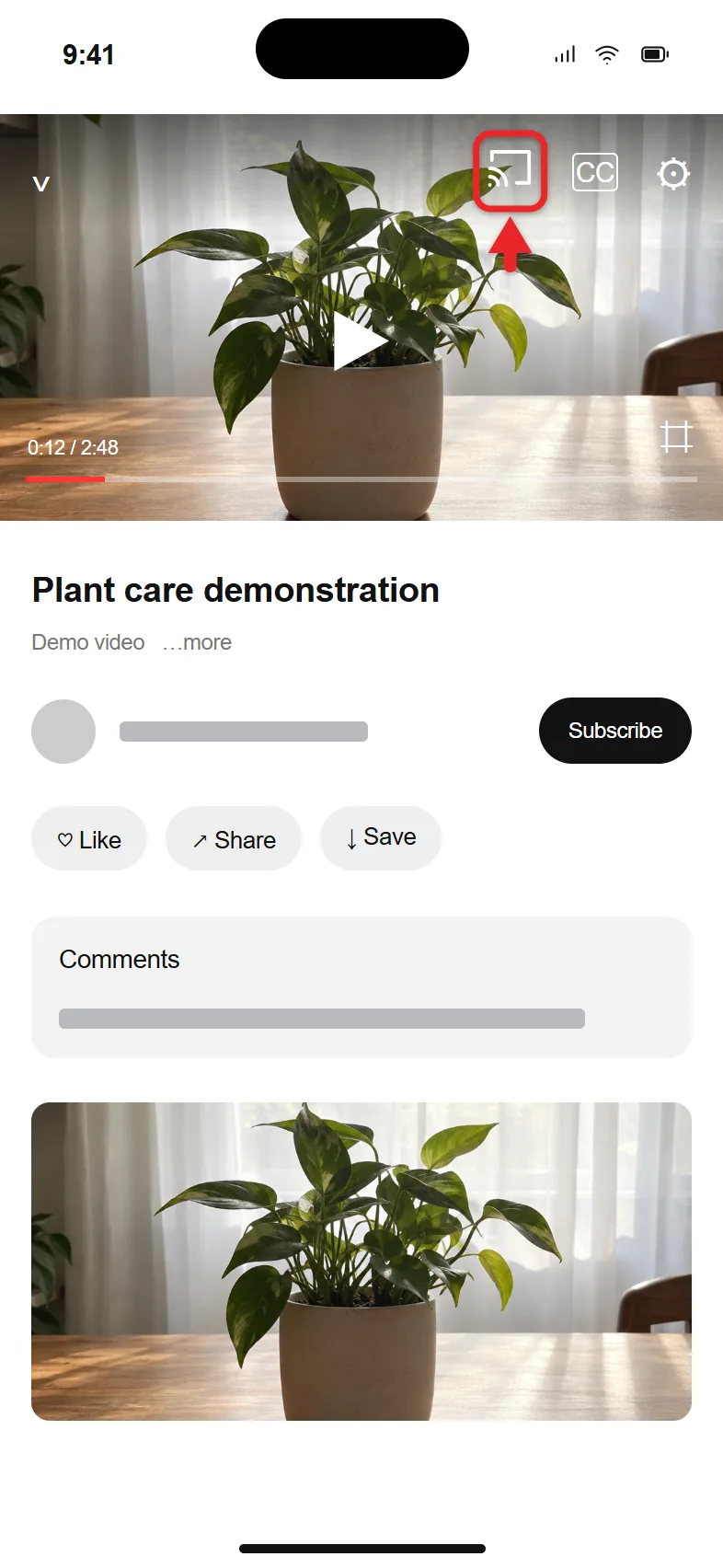
- Choose your TV from the list. After a few seconds, the video starts playing on the TV.
Your iPhone now works as a remote. You can pause, skip, adjust volume, and add videos to the queue from the phone while the TV plays them. You can also lock your phone or use other apps without stopping playback.
If the TV keeps starting new videos after yours ends, turn off YouTube Autoplay on your iPhone or in the queue.
This works for live game streams too. Need something to watch? Here’s where to find YouTube gaming videos on iPhone.
Switch TVs or Stop Casting
- Move the video to another TV: tap Cast and pick the other device. The video moves there.
- Stop casting: tap Cast again and tap This device. The video moves back to your iPhone.
Use Your iPhone as a Remote Without Casting
If you started a video with the TV’s own remote, you can still control it from your phone.
- Sign in to the same Google Account on the TV and in the YouTube app on your iPhone.
- While the video plays on the TV, open YouTube on your iPhone.
- Tap Connect when the prompt appears. If it doesn’t show up, or you dismissed it, use Cast or a TV code instead.
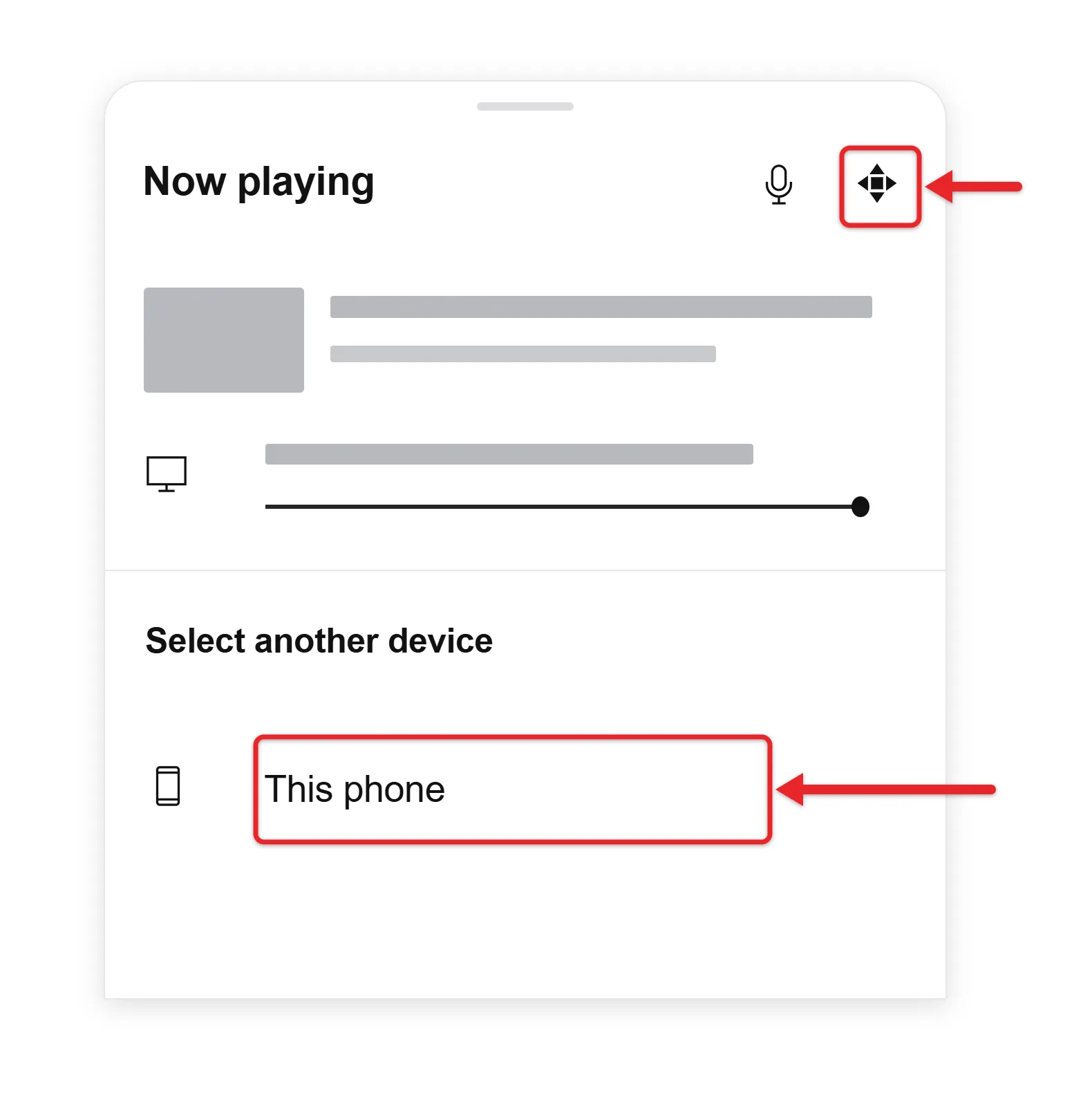
Once connected, tap Cast, then Remote, for on-screen controls. Some TVs also let you tap the microphone there to search by voice. To disconnect, tap Cast and choose This device.
How to Link Your TV With a TV Code
Use this method if your iPhone and TV can’t be on the same Wi-Fi network, or if your TV doesn’t show up in the Cast list. Some versions of the TV app call this option Add a device.
On the TV:
- Open the YouTube app.
- Go to Settings (the gear icon in the left menu).
- Select Link with TV code. A blue code made of numbers appears on the screen.
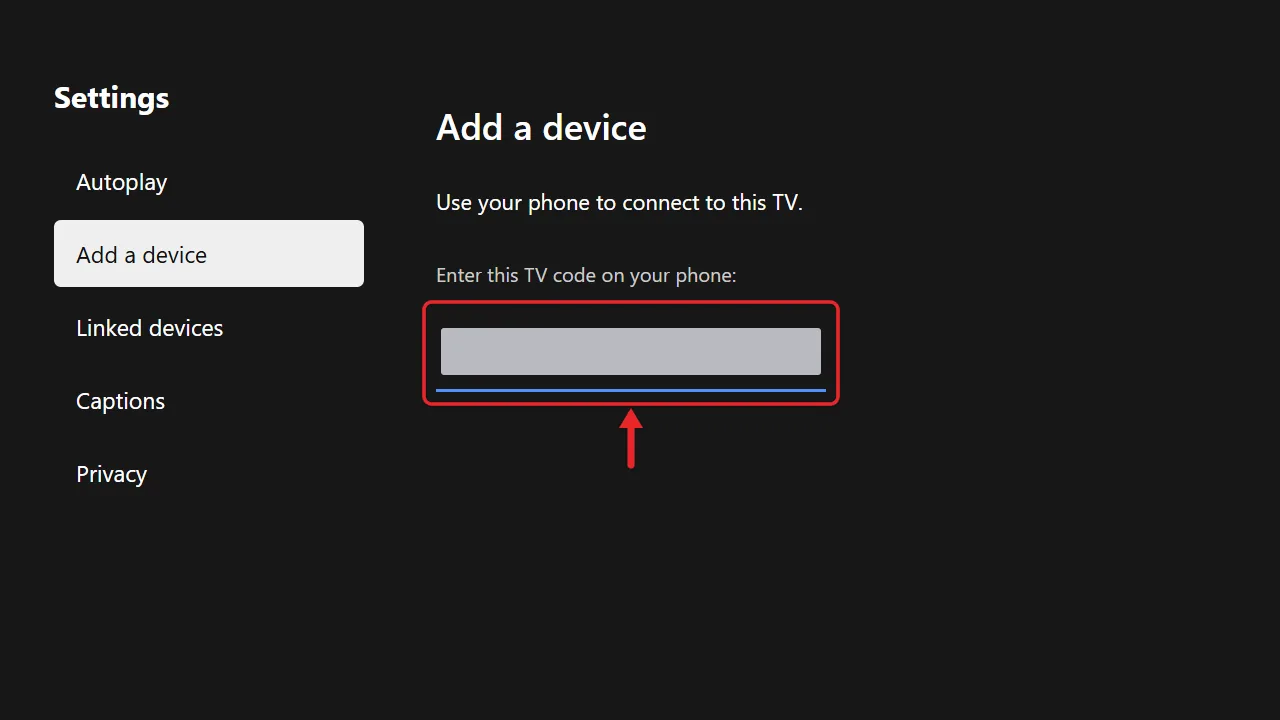
On your iPhone:
- Open the YouTube app and tap Cast.
- Tap Link with TV code.
- Type the blue code from the TV and tap Link.
Your TV now appears in the Cast list, and you can send videos to it the same way as in the casting steps above. TV codes don’t work with computers; a computer can only receive a video through Cast.
Next time, open YouTube on the TV, then on your iPhone tap your profile picture > Settings > General > Watch on TV, find the TV, and tap Link.
How to Allow Local Network Access
On iOS 14 and later, YouTube needs permission to find devices on your Wi-Fi network. If this is off, casting won’t work and the Cast icon may not find your TV.
- Open the iPhone Settings app.
- Scroll down and tap Apps, then tap YouTube.
- Turn on Local Network.
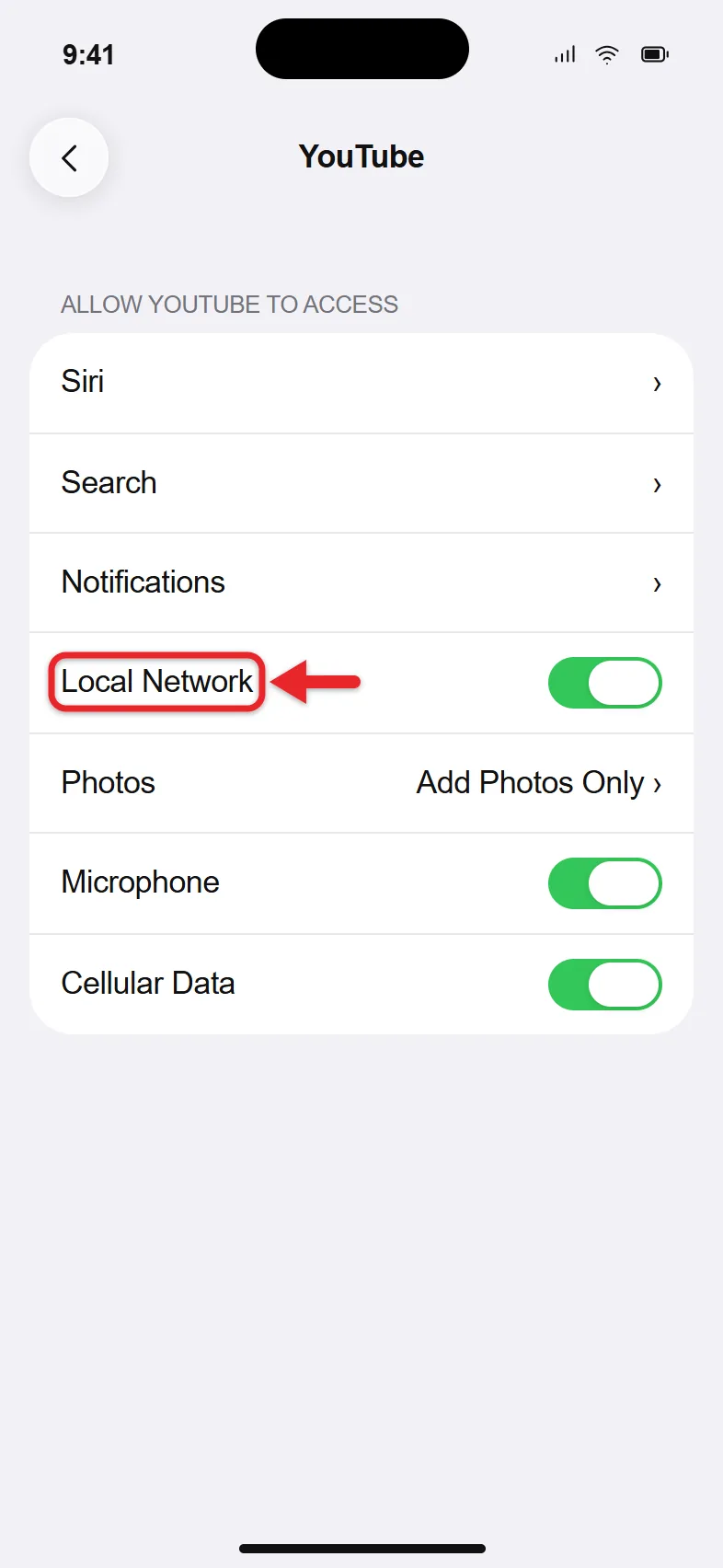
On older iOS versions, YouTube is listed directly in Settings. You can also find the same switch under Settings > Privacy & Security > Local Network. If you use YouTube Music, YouTube Kids, or YouTube TV, turn this on for each of those apps too, since each app has its own permission. Or tap Cast in YouTube and follow the prompt to allow access.
Watching YouTube on an Apple TV or AirPlay TV
The Apple TV has its own YouTube app, and casting from your iPhone works the same way as above. Here’s how to watch YouTube on the Apple TV with an iPhone using either option. For a Roku, here’s how to watch YouTube on a Roku, and for a Chromecast or Google TV Streamer, here’s how to cast your iPhone to Chromecast.
If your TV supports AirPlay but you’d rather not use its YouTube app, mirror your whole screen instead. Apple’s AirPlay guide lists the steps:
- Connect the iPhone to the same Wi-Fi network as the Apple TV or AirPlay-compatible smart TV.
- Swipe down from the upper-right corner of the screen to open Control Center.
- Tap Screen Mirroring and choose your TV.
- If an AirPlay passcode appears on the TV, enter it on your iPhone.
Turn the iPhone sideways and play the video full screen in the YouTube app. The TV shows everything on your iPhone screen, so close anything private first. To stop, open Control Center, tap Screen Mirroring, then Stop Mirroring. If the Apple TV doesn’t appear, check that AirPlay is turned on for the Apple TV.
If There’s No Cast Icon
- No Cast icon. Make sure the iPhone and TV are on the same Wi-Fi network, the YouTube app is open on the TV, and Local Network is on. Close and reopen YouTube on the iPhone, and update it from the App Store.
- The TV isn’t in the list. Restart the TV or streaming device and your router, then try again. If it still doesn’t show, use Link with TV code.
- The TV has no YouTube app. Very old TV models may no longer run it. YouTube keeps a list of unsupported models in its TV help. Use a streaming stick or AirPlay instead.
- A casting error on the TV. If the TV is signed in to a YouTube Kids profile, switch to a different profile and try again.
- Some features are missing. Supervised Google Accounts can’t use every casting feature.
- The TV remote doesn’t control YouTube. Most remotes work with no setup. If yours doesn’t, check your TV’s manual for HDMI-CEC and turn it on.
- You want to remove linked TVs. On the iPhone, tap your profile picture > Settings > General > Watch on TV > Delete Devices. On the TV, open Settings > Linked devices > Unlink all devices. YouTube can’t unlink devices one at a time, so this removes every link, and you’ll need a new TV code to link again.
Casting YouTube Questions
What happened to the Watch on TV option in YouTube?
It’s no longer how you start a connection. The Cast button and Link with TV code do that job, and Watch on TV under Settings > General is now only for reconnecting to or deleting TVs you linked with a code.
Can I cast YouTube from Safari on my iPhone?
No. YouTube doesn’t support casting from youtube.com in a mobile browser. Use the YouTube app.
Does my iPhone have to stay on while the video plays?
No. Once the video is playing on the TV, you can lock the iPhone or open other apps. Use the YouTube app on the phone to control playback.
Can I use my phone as a remote for YouTube on the TV?
Yes. When you’re watching on the TV and signed in to the same account, tap Connect when YouTube offers it, then use Cast > Remote to search, queue videos, and control playback.

Matthew Burleigh is the founder, head writer, and editor of Solve Your Tech, which he launched in 2012. He has written technology tutorials since 2008 and worked in IT since 2003, including small-business support, IT management, and consulting. He holds Bachelor’s and Master’s degrees in Computer Science from Arizona State University.
Matthew writes practical guides for Windows, iPhone and iPad, Microsoft Office, Outlook, Google apps, and Android. Solve Your Tech’s guides are checked step by step against the device or app maker’s own documentation and tested on his own devices whenever he has the hardware or software, with clear steps, sources, and update dates.
Read more about Matthew and how Solve Your Tech writes and updates its guides, or report a correction.