To see how many songs are on your iPhone, open Settings, tap General, then tap About. The number next to Songs is the count of songs stored on the phone, and the same screen shows how many videos, photos, and apps you have.
These steps were written for iOS 26 and also match iOS 27 and iOS 18. The About screen has listed media counts for many years, so older iPhones show the same rows. Apple describes this screen in its Get information about your iPhone guide.
Check Your Song Count in Settings
- Open the Settings app (the gray gear icon) on your Home Screen.
- Scroll down and tap General. A list of options opens with About at the top.
- Tap About. You’ll see your iPhone’s name, iOS version, model, and serial number near the top.
- Look for Songs in the list below the model details. The number to the right is your song count.
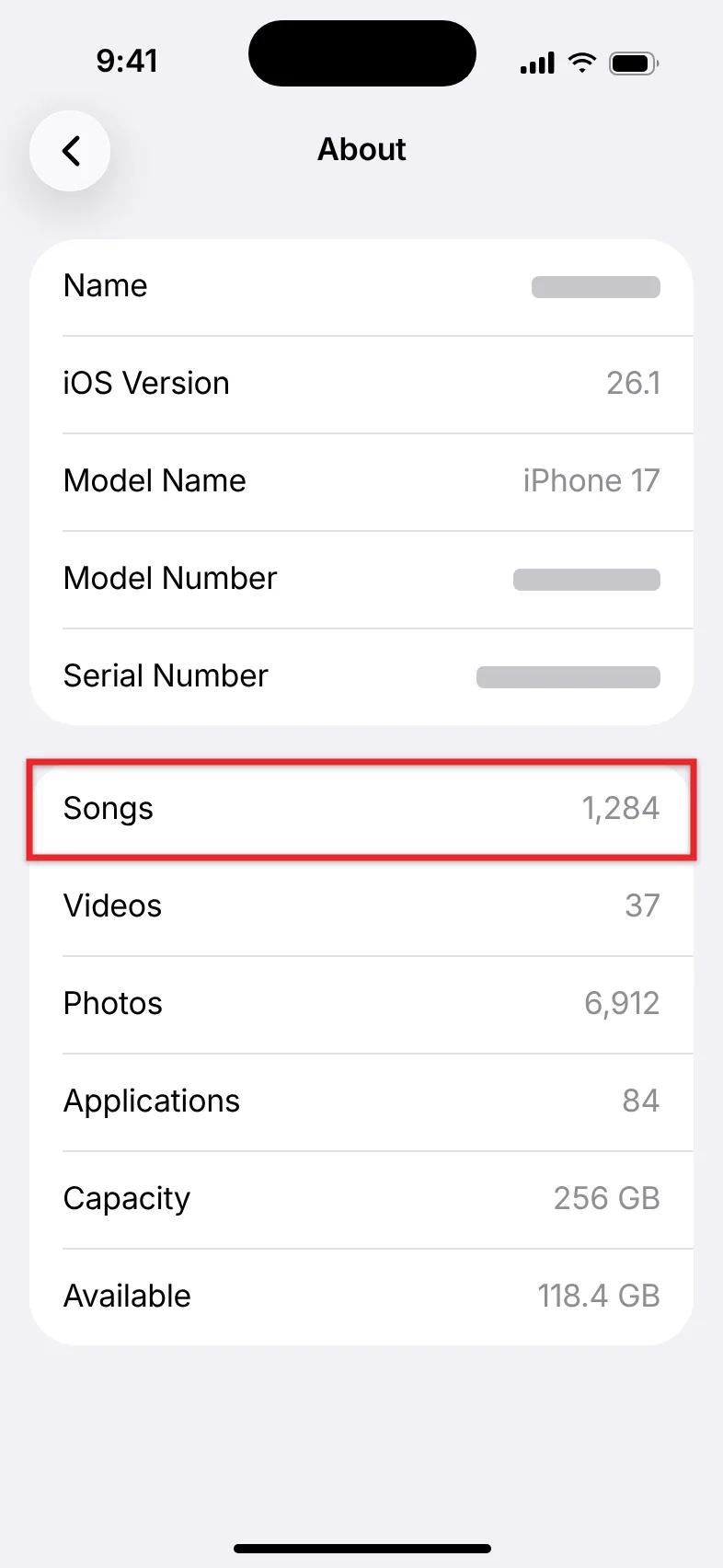
Right below Songs you’ll see Videos, Photos, and Applications, followed by Capacity (the phone’s total storage) and Available (the free space left).
These counts are read-only. They update on their own after you download or remove music.
What the Songs Number Counts
The Songs count on the About screen covers songs stored on your iPhone. That includes:
- Songs you’ve downloaded from Apple Music or from your purchases
- Songs you synced from a computer with a cable or over Wi-Fi
It doesn’t include songs you can only stream. With an Apple Music subscription and Sync Library turned on, your library can hold thousands of songs that live in the cloud and play over the internet. Those songs show up in the Music app, but they aren’t on the phone until you download them.
That’s why many people see a smaller number than they expect. If you’ve added 2,000 songs to your library but only downloaded 300, About shows 300. If you’ve never downloaded anything, About can show 0 even though your Music app is full.
See Which Songs Are Downloaded
To match the About number to actual songs, check the downloaded list in the Music app.
- Open the Music app.
- Tap Library at the bottom of the screen.
- Tap Downloaded. Only music saved on your iPhone appears here, sorted into Playlists, Artists, Albums, and Songs.
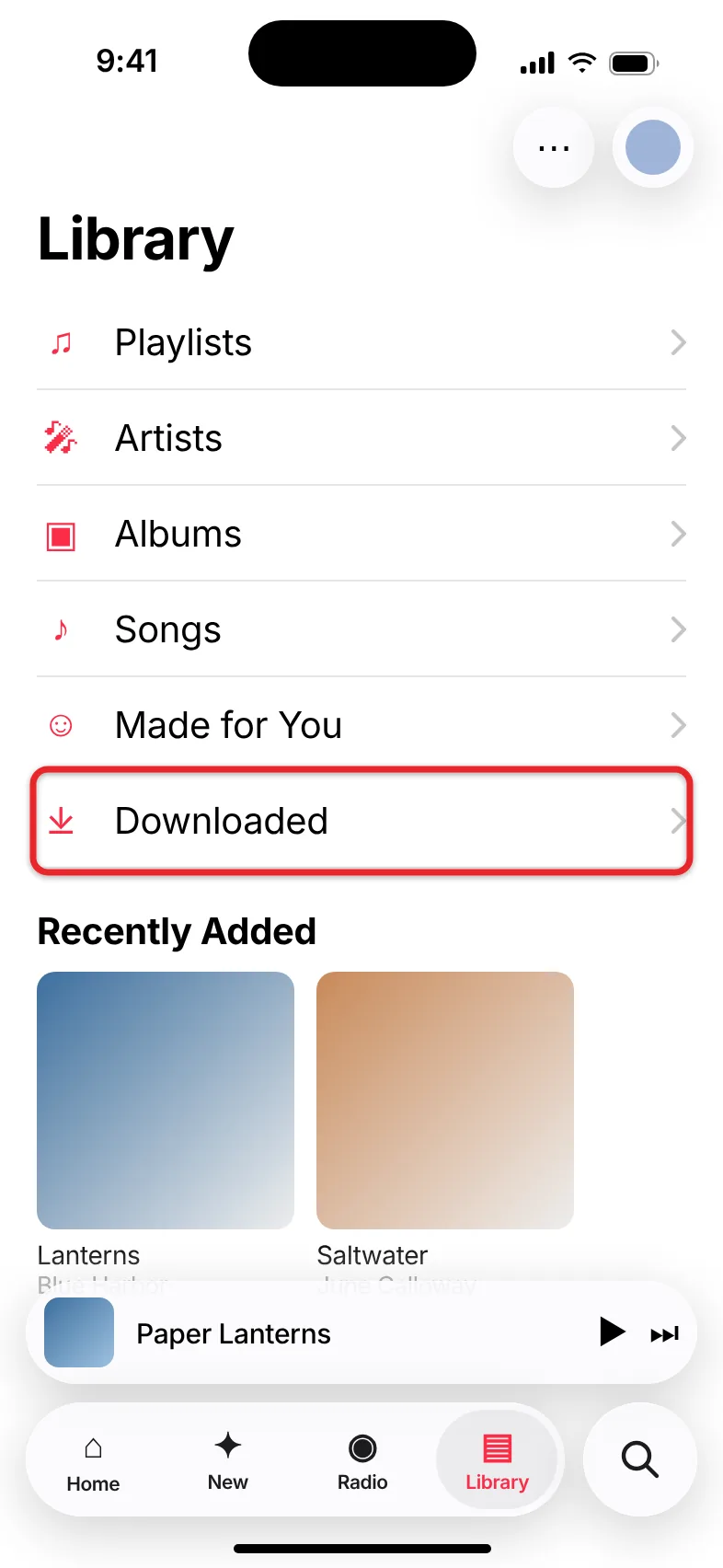
- Tap Songs to see every downloaded track in one list.
The Music app doesn’t show a running total for your library on iPhone, so the About screen is still the fastest way to get a number.
You can also see downloaded music grouped by artist in Settings. Go to Settings > Apps > Music > Downloaded Music. Each artist shows how much storage their songs use. On iOS 17 and earlier, the path is Settings > Music > Downloaded Music.
If you want a song available offline, touch and hold it in the Music app and tap Download. Apple covers downloading in its Add music to iPhone and listen offline guide. To set up automatic downloads, read about listening to Apple Music offline.
The same menu also lets you add a song to a playlist in Apple Music, which keeps your library organized.
Count Your Whole Library on a Mac or PC
If you want the total number of songs in your music library, including songs you haven’t downloaded to the phone, a computer gives you a real count.
On a Mac:
- Open the Music app.
- Click Songs in the sidebar under Library.
- In the menu bar, choose View > Show Status Bar.
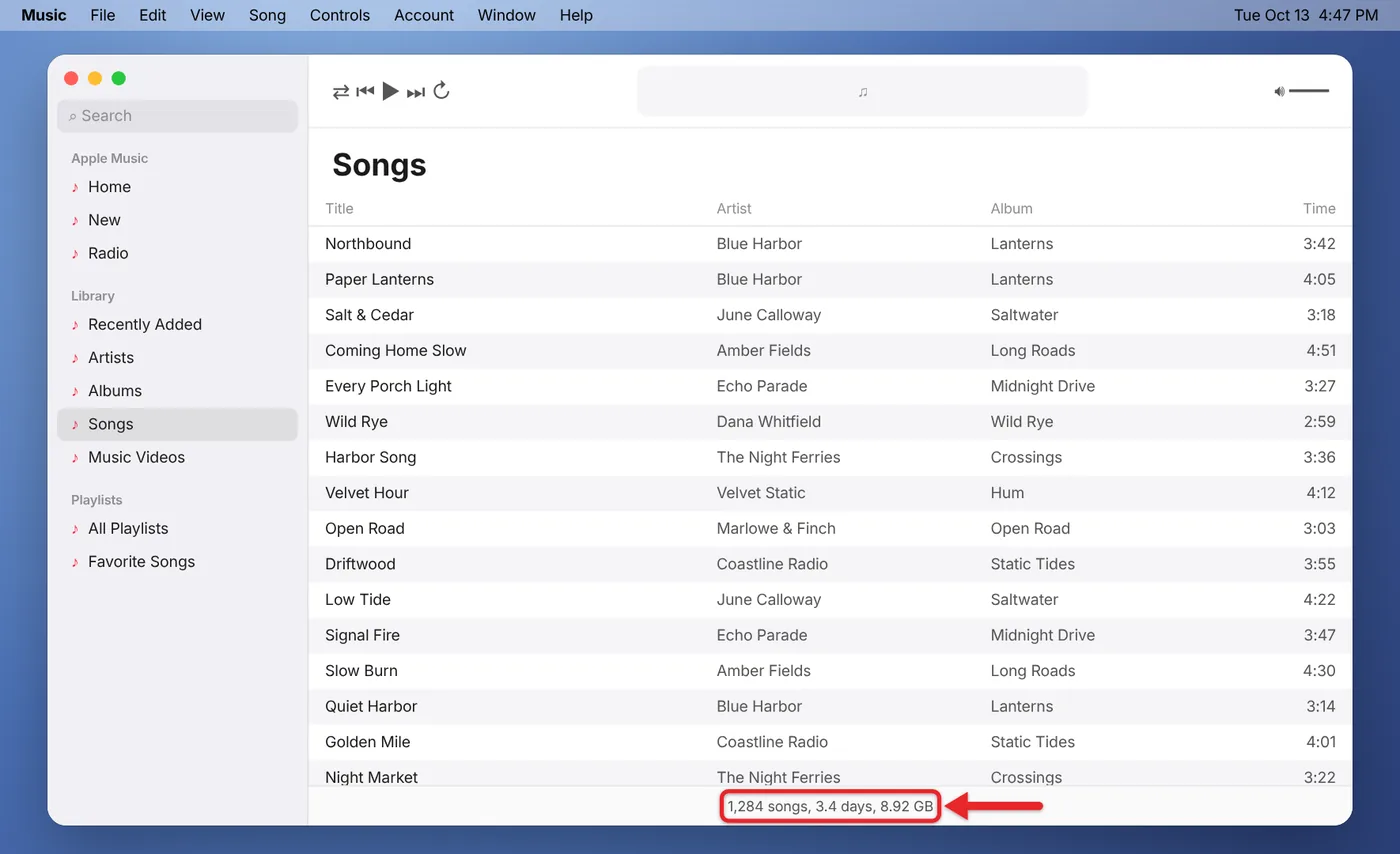
A bar appears at the bottom of the window with the number of songs, the total playing time, and the size. Turning on the status bar is a one-time change, and it stays on for every list you open. Click a playlist and the bar shows that playlist’s count instead.
On a Windows PC with iTunes:
- Open iTunes and choose Music from the menu near the top left.
- Click Songs under Library.
- Choose View > Show Status Bar, or press Ctrl+/.
The count shows at the bottom of the window. For the library on the computer to match the one on your iPhone, Sync Library needs to be on in both places and you need to be signed in with the same Apple Account.
On a Windows PC with the Apple Music app: The Apple Music app for Windows is Apple’s current music app for Windows 10 and 11, and it takes over music from iTunes once you install it. Open it, sign in with the same Apple Account, and click Songs in the sidebar to see your whole library in one list. Apple’s Apple Music for Windows guide covers setup.
See How Much Space Your Music Uses
A song count tells you how many tracks you have, but storage is usually what matters when the phone fills up.
- Go to Settings > General > iPhone Storage.
- Wait for the bar at the top to load. It shows how your storage is split between apps, photos, media, and the system.
- Scroll the app list and tap Music. The screen shows how much space the app and its downloaded songs use.
To free space, you have three good options:
- Remove one download: In the Music app, touch and hold a song, album, or playlist and tap Remove Download. It stays in your library and you can stream it later.
- Remove by artist: Go to Settings > Apps > Music > Downloaded Music, tap Edit, and tap the red minus button next to an artist or All Songs.
- Let the iPhone do it: Turn on Optimize Storage under Settings > Apps > Music. When storage runs low, the iPhone removes downloaded music you haven’t played in a while. You can also set a minimum amount of music to keep.
Remove Download and Delete from Library are different. Remove Download only frees space on your iPhone. Delete from Library takes the song out of your library on every device that uses Sync Library. For more ways to clear music, read about deleting songs on an iPhone.
If the Count Looks Wrong
- The Songs count is 0 or very low. Your music is probably streaming, not downloaded. Check Library > Downloaded in the Music app. If that list is empty, nothing is stored on the phone.
- Songs from your computer or another device aren’t in your library. Go to Settings > Apps > Music and make sure Sync Library is on. This option appears only if you subscribe to Apple Music or iTunes Match.
- Purchased songs are missing. Open the Music app, tap Library, and tap Edit to make sure the sections you need are turned on. For other fixes, read about purchased music not showing in the iPhone Music app.
- The count didn’t change after downloading. Let any downloads finish in the Music app, then close Settings and open the About screen again.
- The Mac or PC total doesn’t match the iPhone. That’s normal. The computer counts the whole library, while the iPhone counts only songs stored on the phone.
iPhone Music Library Questions
Where do I see how many photos and videos I have on my iPhone?
The same Settings > General > About screen shows Photos and Videos counts right next to Songs. These numbers cover what’s stored on the iPhone, so if you use iCloud Photos with Optimize iPhone Storage, some items may be saved as smaller versions.
Can I see how many songs are in my Apple Music library on iPhone?
Not as a single number. The About screen counts only downloaded songs, and the Music app doesn’t show a library total on iPhone. Use the Music app on a Mac, or iTunes on Windows, with the status bar turned on to see the full count. On Windows, the Apple Music app lists your whole library under Songs.
Does removing a download delete the song from my library?
No. Remove Download takes the file off your iPhone but keeps the song in your library so you can stream or download it again. Choose Delete from Library only if you want it gone from all your devices.
How many songs can my iPhone hold?
It depends on your free space and the audio quality. A typical song at standard quality takes about 3 to 10 MB, while lossless files are several times larger. Check Available on the About screen to see how much room you have left.

Matthew Burleigh is the founder, head writer, and editor of Solve Your Tech, which he launched in 2012. He has written technology tutorials since 2008 and worked in IT since 2003, including small-business support, IT management, and consulting. He holds Bachelor’s and Master’s degrees in Computer Science from Arizona State University.
Matthew writes practical guides for Windows, iPhone and iPad, Microsoft Office, Outlook, Google apps, and Android. Solve Your Tech’s guides are checked step by step against the device or app maker’s own documentation and tested on his own devices whenever he has the hardware or software, with clear steps, sources, and update dates.
Read more about Matthew and how Solve Your Tech writes and updates its guides, or report a correction.