To do a reverse image search on an iPhone, open the free Google app, tap the Google Lens camera icon in the search bar, tap the Photo picker icon, and choose the picture you want to search. Google shows similar images, the websites that use the image, and results for objects it recognizes in the photo.
These steps follow Google’s help page for searching with an image on iPhone and work on the iPhone 13 and other models running iOS 27, as well as iOS 26 and iOS 18. You can also search from google.com in Safari or from Chrome without installing the Google app, and iPhone 15 Pro and newer models with Apple Intelligence have a built-in Image Search button for screenshots.
Which Method to Use
A reverse image search uses a picture as your search instead of words. People use it to find where a photo came from, find a larger or sharper copy, check whether a profile or listing photo has been used somewhere else, or figure out what an object is and where to buy it.
| Method | Works on iPhone 13 | Best for |
|---|---|---|
| Google app (Google Lens) | Yes | Most searches; has the most options |
| google.com in Safari or Chrome | Yes | Searching without the Google app |
| Touch and hold an image in Chrome or the Google app | Yes | Pictures already on a web page |
| Visual Look Up in Photos | Yes (iOS 15 or later) | Naming a plant, animal, landmark, or artwork |
| Bing Visual Search or TinEye | Yes | A second opinion, or finding the oldest copy |
| Visual intelligence Image Search | No (iPhone 15 Pro or later) | Searching a screenshot without another app |
If you want to find pictures by typing words, that’s a regular image search. For that, read how to image search on iPhone.
Reverse Image Search a Photo With the Google App
You need the Google app from the App Store. It’s free, and you don’t have to sign in to a Google account to use Lens. Google recommends keeping the app updated, because Lens options change with new versions.
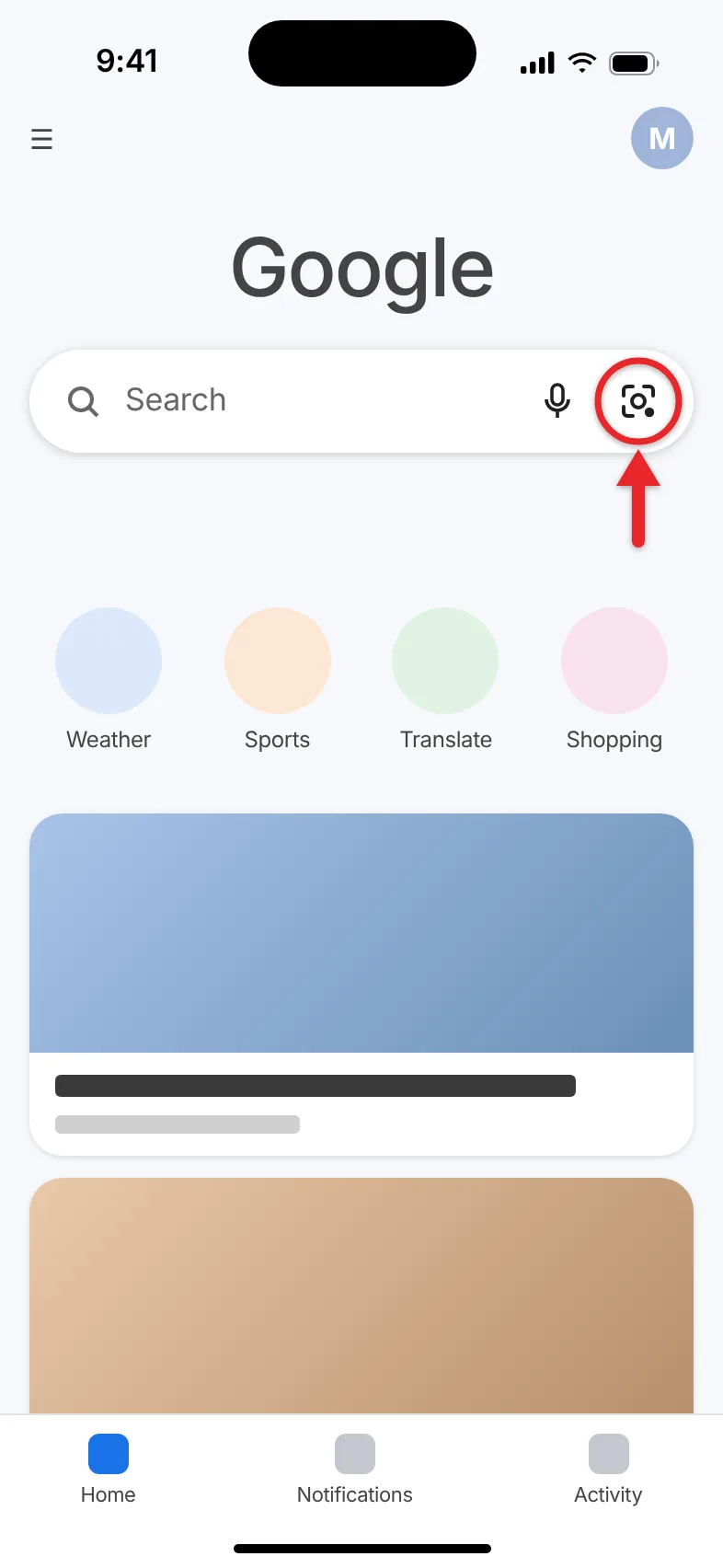
- Open the Google app. The search bar is near the top of the screen.
- Tap the Google Lens icon, the multicolored camera icon at the right end of the search bar. The Lens screen opens with a live camera view. The first time, the app asks for camera access. You can allow it, or tap Don’t Allow if you only want to search saved photos.
- Tap the Photo picker icon (a small picture icon next to the shutter button). Your recent photos and screenshots appear.
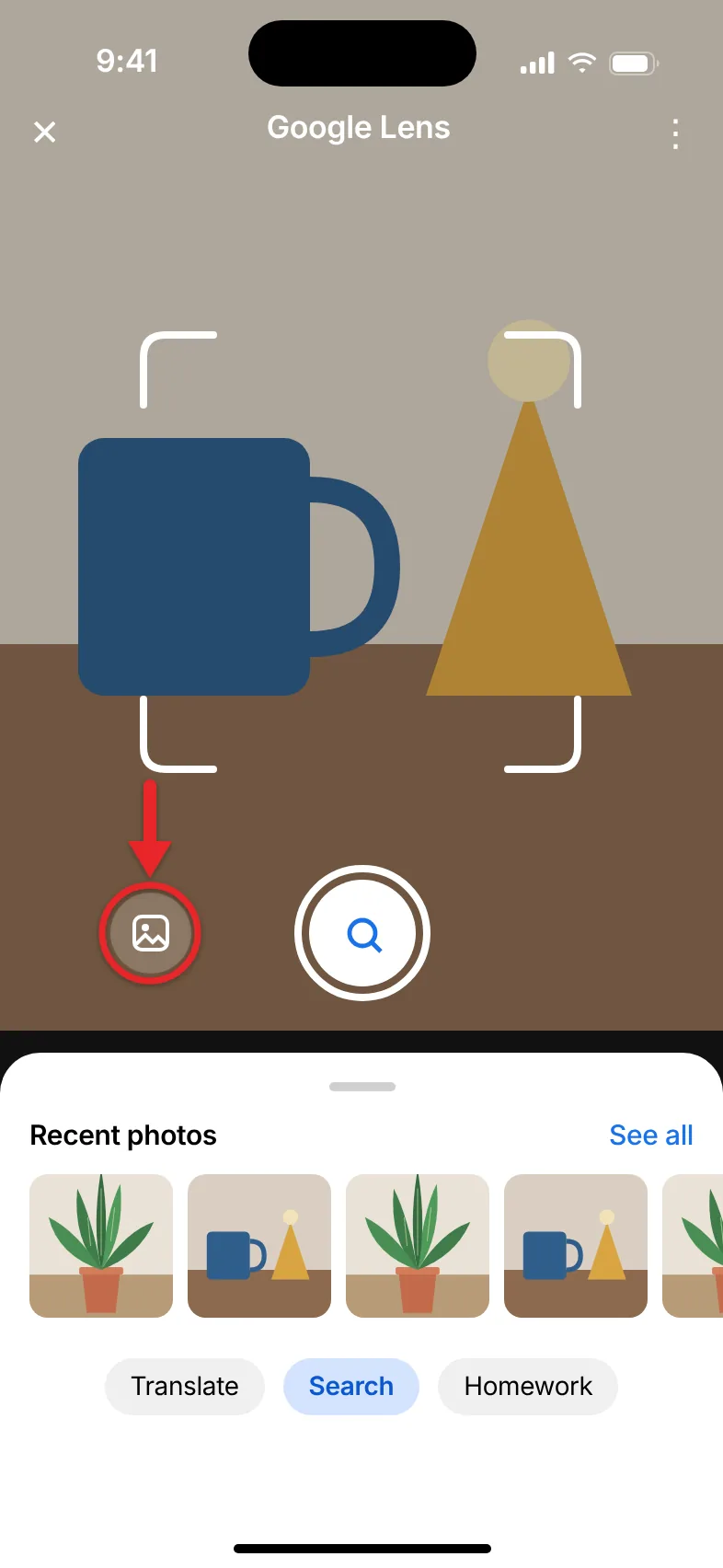
- Tap the photo you want to search. If the app asks for photo access, choose Limited Access to share only the photos you pick, or Allow Full Access to see your whole library. Lens loads the photo and shows results below it.
- To focus on one part of the picture, drag the corners of the white selection box around it. The results update right away. A tight box around a lamp in a living room photo, for example, gets you lamp results instead of couch results.
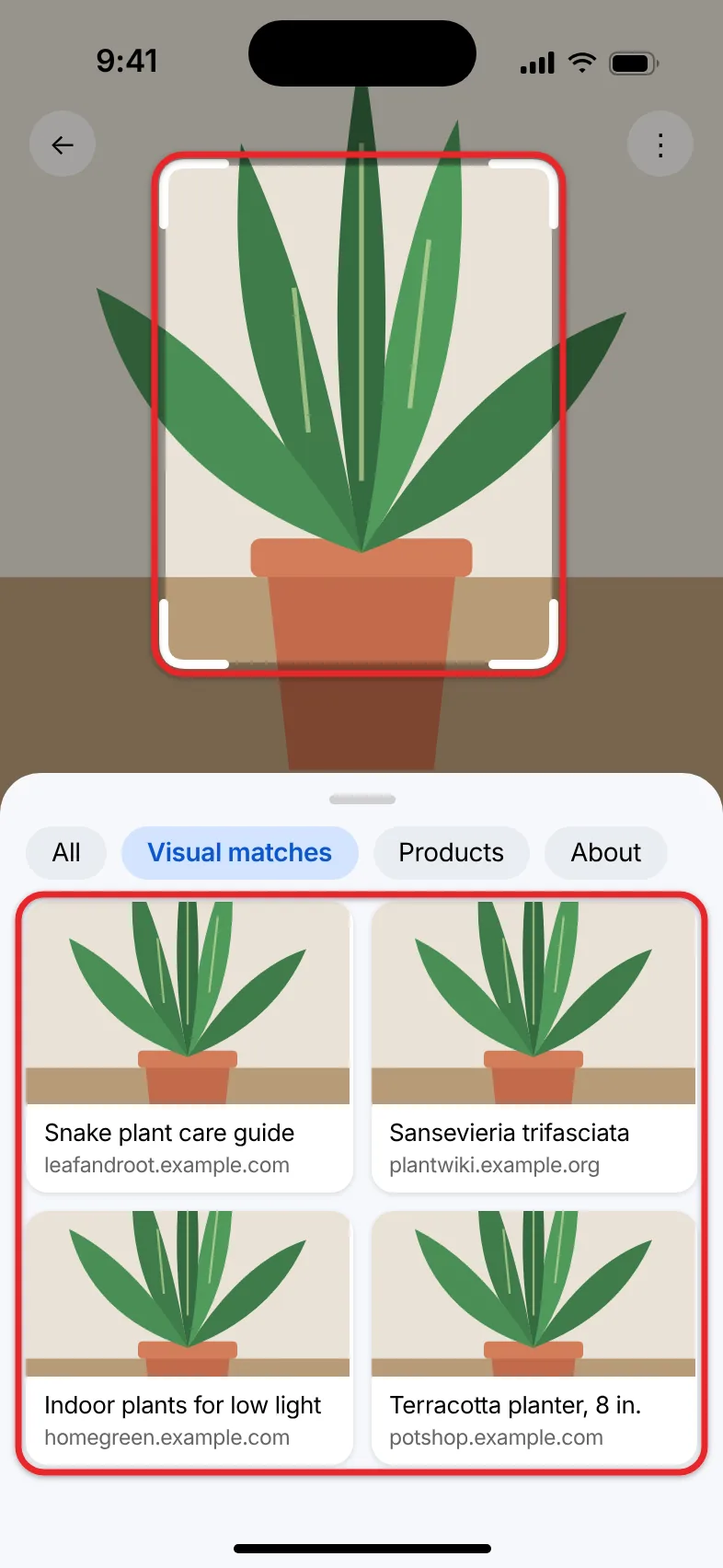
- Swipe up on the results panel to see everything. Depending on the picture, Google can show an AI overview, results for objects in the image, similar images, and websites that use the same or a similar image.
- To narrow the results, tap Add to your search and type a word such as a color, brand, or “original.” Lens combines the picture with your words. This option is only in the Google app.
Tap any result to open the page it came from. That’s how you find the original source of a photo, a higher-resolution copy, or more information about the item in it. To do something else with the picture, touch and hold it on the Lens screen for options such as Share and Save to collection. Once you reach that page, you can save the picture from Safari on your iPhone with a long press.
Search With Your Camera Instead of a Saved Photo
If the thing you want to identify is in front of you, you don’t need to take a picture first. At step 3, skip the photo picker, point the camera at the object, and tap the Search (shutter) button. Lens freezes the frame and shows results the same way.
You can also ask a question out loud: press and hold the shutter button, ask something like “what kind of shoe is this,” and let go. Spoken questions work in English only.
Reverse Image Search in Safari or Chrome
These steps work without the Google app. Google does the searching, so they work whether or not Google is your Safari search engine.
Use google.com in Safari
- Open Safari and go to google.com.
- Tap the Google Lens camera icon in the search box. The Lens screen opens.
- Tap the option to upload or pick a photo, then choose your picture from your Photos library. Safari may ask whether to allow access; choose the option that lets you pick the photo.
- Drag the corners of the selection box if you want to search only part of the image, then scroll through the results.
If the camera icon is missing, or tapping it sends you to the App Store to get the Google app, load the desktop version of the page. Tap the page menu button on the left side of the address bar (it may look like aA or a small page icon, depending on your Safari layout), tap Request Desktop Website, then go to images.google.com and tap the camera icon. On the desktop page you can also choose Upload a file or paste an image link.

You don’t have to change Safari’s default search engine to do any of this. If you want typed searches in the Safari address bar to go to Google too, change the iPhone’s Safari search engine to Google.
Use the Chrome App
- Open Chrome and tap the Google Lens icon in the search box on the New Tab page.

- Tap the Photo picker icon and choose your picture, or point the camera at something and tap Search.
- Adjust the selection box and scroll through the results.
The Add to your search box is only in the Google app. In Safari and Chrome, you can still type a new search on the results page.
Search an Image You Find on a Website
You don’t need to save a picture to your phone before you search it.
- In Chrome: open the page, touch and hold the image, and tap Search image with Google. This option appears only when Google is Chrome’s default search engine. To check, tap the three dots at the bottom right, then Settings > Search Engine, and choose Google.
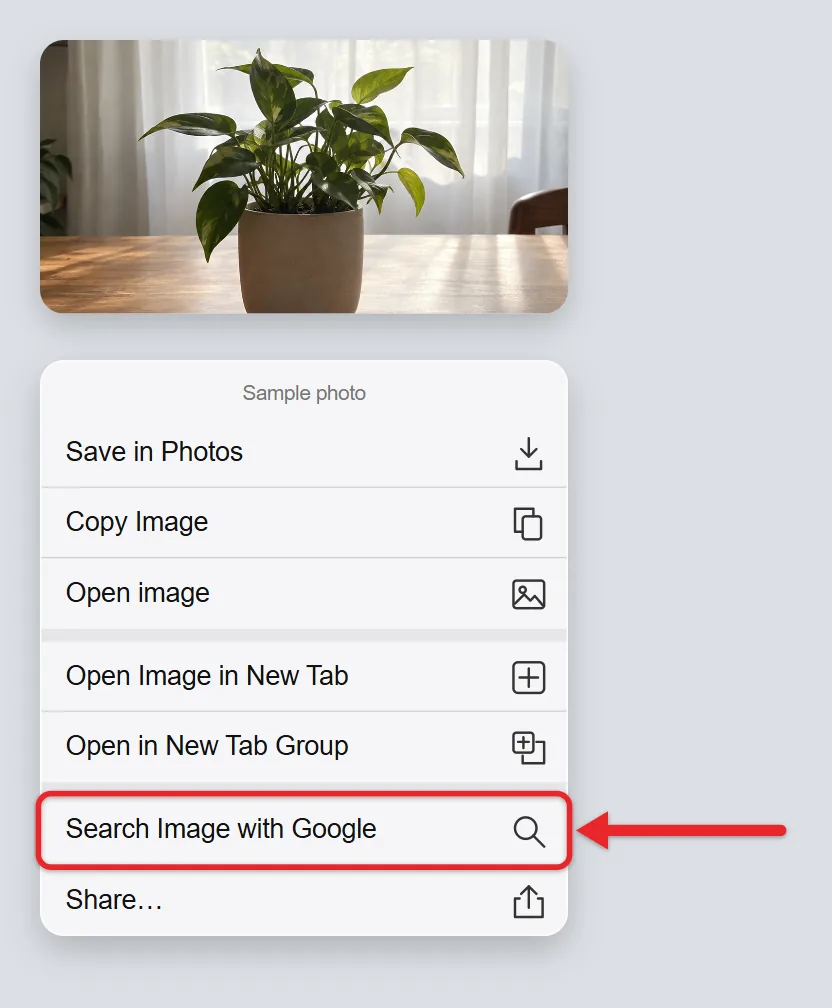
- In the Google app: open the page inside the app, touch and hold the image, and tap Search image with Google Lens or Search inside image, whichever your version shows.
- In Google Images results: tap a picture to open the larger view, then tap the Google Lens icon at the bottom left of the image to find more like it.
- In Safari: touch and hold the image and tap Save to Photos, then search the saved copy with any method above. Safari’s own menu may show Look Up, which is Apple’s Visual Look Up. It names what’s in the picture but doesn’t list other websites that use it.
A screenshot works too, and it’s handy for images inside apps such as Instagram or Facebook Marketplace that don’t let you save pictures. Crop the screenshot to the image before you search so the app’s buttons and text don’t confuse the results.
Identify a Plant, Pet, or Landmark With Visual Look Up
The iPhone has a built-in tool called Visual Look Up that can name some things in your photos without any extra app. It doesn’t find other copies of a picture on the web, so it isn’t a full reverse image search, but it’s quick when you want to know what kind of flower or dog breed is in a picture. Apple’s Visual Look Up support page lists iOS 15 or later as the requirement, so it works on an iPhone 13. It isn’t available in every country or language.
- Open the Photos app and tap a photo to view it full screen.
- Look at the Info button (a lowercase “i” in a circle). If it has a small star on it, Visual Look Up found something it recognizes.
- Tap the Info button. An icon such as a leaf or a paw print appears on the photo, or a Look Up line appears below it.
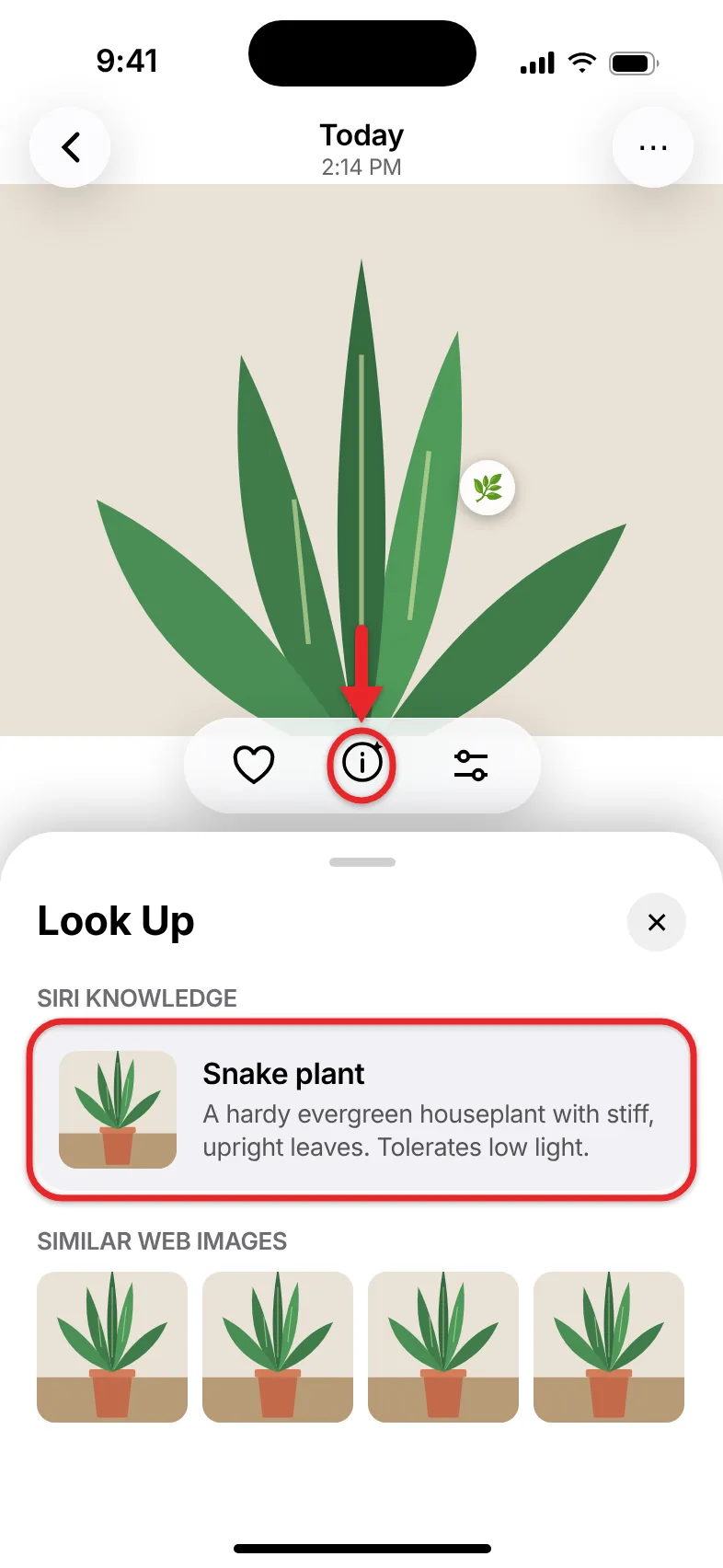
- Tap the icon or Look Up to see results from Siri Knowledge and the web.
Visual Look Up also works on pictures in apps such as Messages, Mail, and Notes: touch and hold the image, then tap the Info button or Look Up. If the Info button has no star, Visual Look Up didn’t recognize anything in that photo. Use Google Lens instead.
Use Image Search on an iPhone 15 Pro or Newer
If you upgrade from your iPhone 13, newer models with Apple Intelligence can send a screenshot to Google without opening another app. This needs an iPhone 15 Pro, iPhone 15 Pro Max, or a newer model that supports Apple Intelligence, running iOS 26 or later with Apple Intelligence turned on. The iPhone 13 can’t use this feature.
- Press the Side button and Volume Up button at the same time to take a screenshot. The screenshot opens full screen.
- If you see markup tools, tap the pen icon at the top to turn them off.
- Tap Image Search at the bottom right. Results from Google appear in a panel, and you can tap a result to open it.
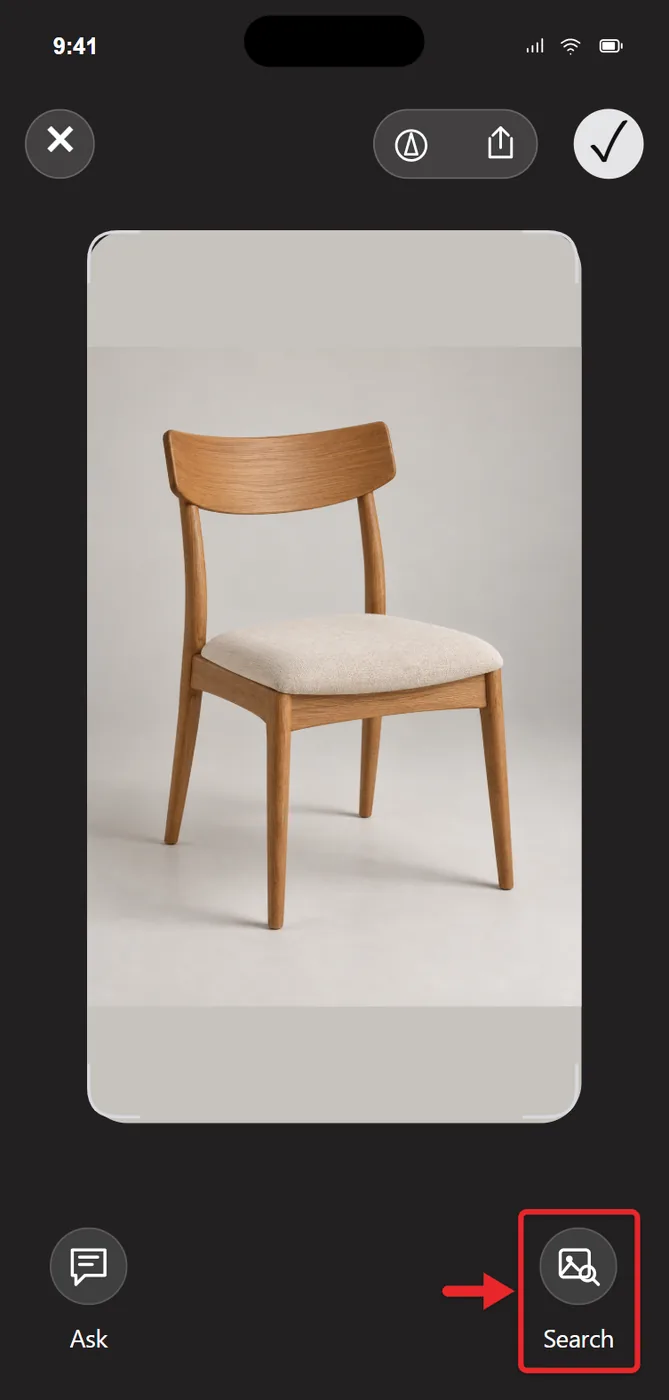
- To search only one part of the screen, draw over that part with your finger first, then tap Image Search.
Apple’s guide to visual intelligence on the iPhone screen covers the other buttons on this screen, such as Ask.
Other Reverse Image Search Sites
Google isn’t your only choice, and a second engine sometimes finds a source the first one missed.
- Bing Visual Search: go to bing.com/images in Safari, tap the camera icon in the search box, and choose Take photo, upload a picture, or paste an image link. Bing Visual Search finds similar images, shopping matches, and details about objects, plants, animals, and landmarks. The Bing app has the same visual search icon.
- TinEye: go to tineye.com and tap the upload button, or paste an image link. TinEye looks for exact and edited copies of an image rather than identifying objects, and it can sort results by oldest first, which helps when you’re looking for where a photo first appeared.
You don’t need a paid reverse image search app from the App Store. The free tools above do the same job.
Check Where and When a Photo First Appeared
If you want to know whether a picture is old, edited, or being shared out of context, Google’s About this image tool helps. Search for the image in Google, open it in the image viewer, tap the info icon, then About, and choose the option to learn more about the image.
It can show roughly when Google first saw the image, other sites that use it, earlier uses, and, when available, whether it was made with a camera or generated with AI. The tool is only available in some regions, and since image details can be edited, check other sources too.
A match on another website isn’t proof of who owns a photo. The oldest or most detailed page, such as a photographer’s portfolio or a news outlet, is often the original source, but check the page itself before you rely on it.
A Note About Searching Photos of People
Lens, Bing, and TinEye match whole images. They can find a picture of a person only when that same picture, or a close copy, is already on a public web page. They aren’t designed to name a stranger from a photo of their face.
Think before you upload a picture of someone else. The photo is sent to the search service to get results, and the person in it didn’t agree to that. Searching to check whether a dating or marketplace profile uses a stolen photo is reasonable, but avoid services that claim to identify people by their face, and don’t use a search to track down someone who hasn’t shared their identity with you. The same goes for documents: don’t search screenshots that show IDs, bank details, or other private information.
If Reverse Image Search Isn’t Working
- Your photo doesn’t show up in the picker. You may have given the app limited photo access. Open Settings > Apps > Google > Photos and choose Full Access, or keep Limited Access and add the photo you need. For Chrome, it’s Settings > Apps > Chrome > Photos.
- The camera view is black. The app doesn’t have camera permission. Go to Settings > Apps > Google (or Chrome) and turn on Camera. Allowing Chrome to use the camera on iPhone walks through that setting.
- You don’t see the Lens icon. Update the Google or Chrome app in the App Store. In Safari, make sure you’re on google.com itself, or use Request Desktop Website as described above.
- “Search image with Google” is missing in Chrome. Set Google as Chrome’s default search engine under Settings > Search Engine in Chrome. Some websites also block touch-and-hold on their images; take a screenshot instead.
- The results are about the wrong thing. Shrink the selection box around the object you care about. If a close crop loses too much context, widen it again, or add a word with Add to your search.
- You get similar pictures but not the exact one. The photo may not be widely posted, or it was cropped, flipped, filtered, or shrunk. Search the largest, uncropped copy you have, and try TinEye or Bing as a second opinion.
- Nothing loads at all. Every method here needs an internet connection. Switch between Wi-Fi and cellular data and try again.
Reverse Image Search Questions
Can I reverse image search on an iPhone without an app?
Yes. Go to google.com in Safari, tap the Google Lens camera icon in the search box, and upload your photo. If the icon doesn’t appear, request the desktop website first. Bing and TinEye also accept uploads from Safari.
Is reverse image search on iPhone free?
Yes. Google Lens, Visual Look Up, Bing Visual Search, and TinEye’s basic search are free. You don’t need a Google account to search with Lens.
Does Google keep the photos I search?
Google processes the photo to give you results, and Lens searches can be saved to your Google activity if you’re signed in. Avoid searching pictures of private documents or personal information you don’t want to share with a search service.
Can I reverse image search a video?
Not directly. Pause the video on the frame you want, take a screenshot, crop it, and search the screenshot with any method in this guide.
Does reverse image search work on an iPad?
Yes. The Google app, Chrome, and Safari steps are the same on an iPad. Safari on an iPad usually loads the desktop version of google.com automatically, so the upload option is easier to find.
If you mainly want to know what’s in a picture, start with Visual Look Up in Photos; if you want to know where else it appears online, start with Google Lens and then check Bing or TinEye.

Matthew Burleigh is the founder, head writer, and editor of Solve Your Tech, which he launched in 2012. He has written technology tutorials since 2008 and worked in IT since 2003, including small-business support, IT management, and consulting. He holds Bachelor’s and Master’s degrees in Computer Science from Arizona State University.
Matthew writes practical guides for Windows, iPhone and iPad, Microsoft Office, Outlook, Google apps, and Android. Solve Your Tech’s guides are checked step by step against the device or app maker’s own documentation and tested on his own devices whenever he has the hardware or software, with clear steps, sources, and update dates.
Read more about Matthew and how Solve Your Tech writes and updates its guides, or report a correction.