This post contains affiliate links. As an Amazon Associate, solveyourtech.com earns from qualifying purchases, at no extra cost to you.
The cheapest way to watch Netflix on a TV is to use hardware you already own: a smart TV’s built-in Netflix app, a game console, or a laptop connected with an HDMI cable. If you need to buy something, a basic streaming stick such as the Amazon Fire TV Stick HD or Roku Streaming Stick is the cheapest dependable option. Pair it with Netflix’s $8.99 Standard with ads plan.
Prices are US list prices. Netflix no longer lets you cast from a phone to most TVs, so a phone plus a cheap Chromecast is no longer a bargain.
What You Need Before You Start
Every method needs the same three things:
- A Netflix plan. Netflix doesn’t have a free plan or a free trial in the US.
- Home internet. Netflix recommends at least 5 Mbps for 1080p (Full HD) video and 15 Mbps for 4K.
- A way to get the Netflix app onto the TV, either built in or through a device plugged into an HDMI port.
Netflix keeps a list of compatible devices where you can look up your TV brand, console, or streaming player before you spend anything.
Option 1: Use What You Already Have (Free)
Before you buy anything, check whether one of these is already in your home.
A smart TV. Most TVs sold in the last several years from Samsung, LG, Sony, Vizio, TCL, Hisense, and others run Roku, Google TV, Fire TV, or the maker’s own software, and all of those have a Netflix app. Many remotes have a dedicated Netflix button. Press it, or open the TV’s app list, choose Netflix, and sign in.
A game console. PlayStation and Xbox consoles have a Netflix app in their stores. If the console is already hooked up to the TV, it costs nothing extra.
A laptop and an HDMI cable. You can watch Netflix in a web browser and send the picture to the TV. An HDMI cable costs about $10 if you don’t have one. Many newer laptops, including most MacBook Air models, only have USB-C ports, so you’d need a USB-C to HDMI adapter or cable instead.
How to Watch Netflix on a TV From a Windows Laptop
- Plug one end of the HDMI cable into the laptop and the other into an open HDMI port on the TV. Note the port number printed next to it, such as HDMI 2.
- Use the TV remote’s Input or Source button to choose that HDMI port. You should see your laptop’s desktop on the TV within a few seconds.
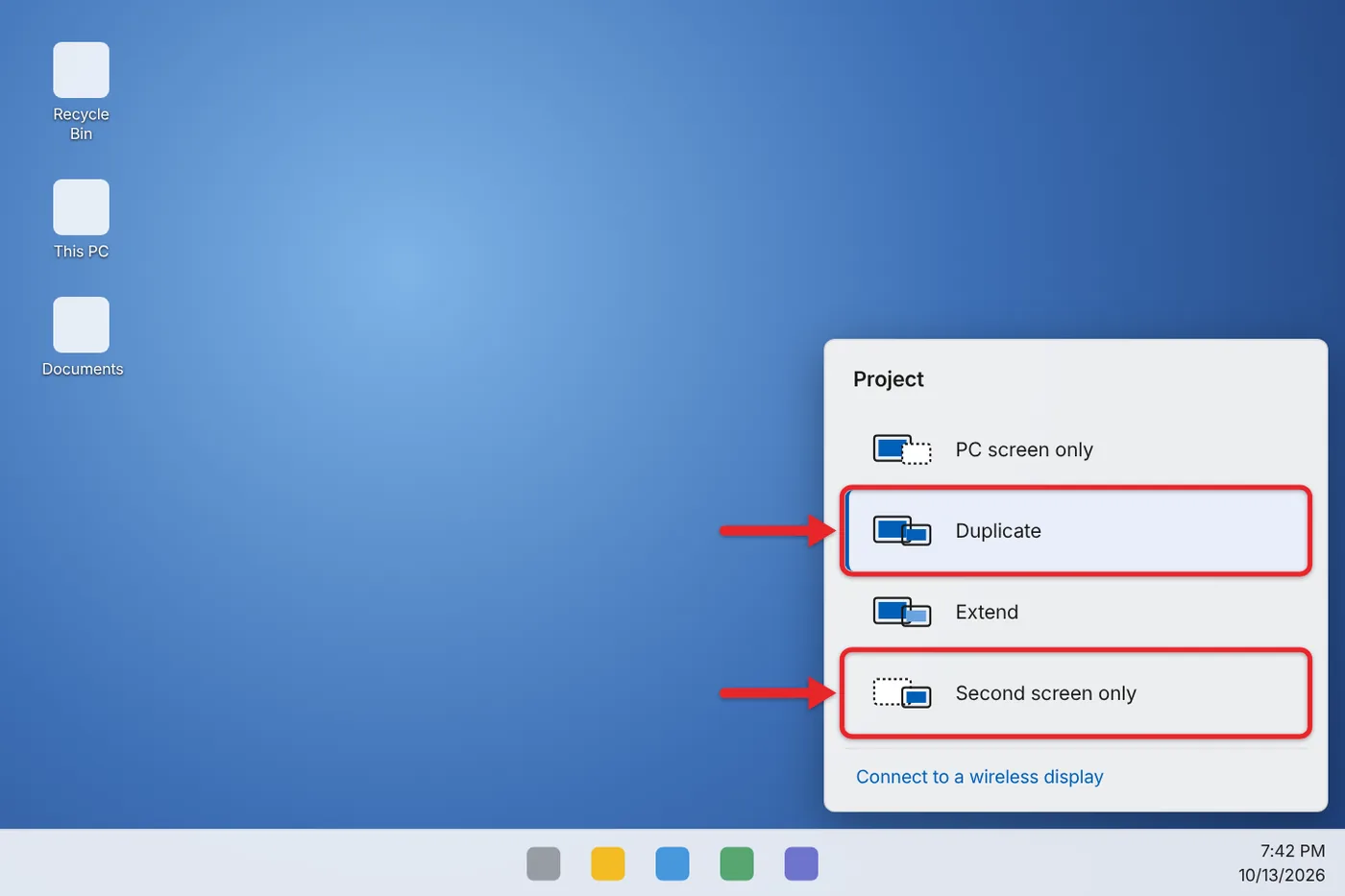
- If the TV stays blank or shows only your wallpaper, press the Windows logo key + P on the laptop and choose Duplicate or Second screen only. The multiple displays support page explains each of these options.
- Open Chrome, Edge, or Firefox, go to netflix.com, and sign in.
- Start a show and click the full-screen button in the bottom right corner of the player.
Sound should switch to the TV speakers automatically. If it doesn’t, click the speaker icon in the Windows taskbar and pick the TV as the output device.
On a Mac, connect the cable the same way and the TV usually shows up as a second display on its own. Go to System Settings > Displays if you want to mirror the Mac’s screen instead of extending it.
The downside of this method is convenience. You have to get up to pause, the laptop has to stay near the TV, and you can’t do anything else on it while it plays. It’s a great free option for occasional viewing, but most people who watch nightly end up buying a stick.
Option 2: Buy a Basic Streaming Stick
A streaming stick is a small device that plugs into the TV’s HDMI port and comes with its own remote. It’s the cheapest way to get a full Netflix app on a TV that doesn’t have one, and it’s much easier to live with than a laptop.
Here’s what the main options cost at list price in the US as of fall 2026:
| Device | List price | Best picture | Good for |
|---|---|---|---|
| Amazon Fire TV Stick HD | $39.99 | 1080p | Lowest-cost Netflix on a 1080p or 720p TV |
| Roku Streaming Stick | $39.99 | 1080p | Simple menus, easy for non-techy family members |
| Walmart Onn 4K Streaming Stick | About $40 (varies by store) | 4K | Google TV software at a low price |
| Amazon Fire TV Stick 4K Select | $49.99 | 4K | 4K TVs, if you plan to use Premium |
| Google TV Streamer | $149.99 | 4K | Replacement for the discontinued Chromecast |
| Apple TV 4K | $199 | 4K | People already using an iPhone and Apple services |
Prices checked October 2026. Amazon, Roku, and Walmart raised prices on several of these in mid-2026, the Apple TV 4K went up in June 2026, and Google raised the Google TV Streamer to $149.99 in August 2026. For today’s list prices, see Roku’s streaming players page and Apple’s Apple TV 4K page.
Fire TV and Roku sticks still go on sale often, sometimes for around $20, especially around Prime Day and Black Friday. If you’re not in a hurry, waiting for a sale is the easiest way to save.
Do You Need a 4K Stick?
Probably not if you’re trying to spend as little as possible. Both of Netflix’s cheaper plans top out at 1080p, so a 4K stick won’t make Netflix look any sharper unless you pay for Premium at $26.99 a month. A 1080p stick like the Fire TV Stick HD or Roku Streaming Stick is all you need for the Standard with ads or Standard plans. Spend more for 4K only if you have a 4K TV and plan to use Premium, or if you watch other services in 4K.
How to Set Up a Streaming Stick and Netflix
These steps follow the Fire TV Stick HD. Roku and Onn sticks work almost the same way.
- Put the batteries in the remote, then connect the power cable to the stick and its power adapter.
- Plug the stick into an open HDMI port on the TV, and plug the power adapter into a wall outlet. Use the wall adapter instead of a USB port on the TV, which may not provide enough power.
- Turn on the TV and press Input or Source on the TV remote to select that HDMI port. The Fire TV setup screen appears.
- If the remote doesn’t pair on its own, press and hold its Home button for about 10 seconds until the screen tells you to press Play/Pause.
- Connect to your Wi-Fi network, either with the remote or by scanning the QR code on the screen with your phone.
- Sign in to your Amazon account, either by scanning the QR code or by going to amazon.com/code on your phone and entering the code shown on the TV. Then answer the remaining setup questions.
- On the home screen, open Netflix. If it isn’t there, search for it and choose Get or Download.
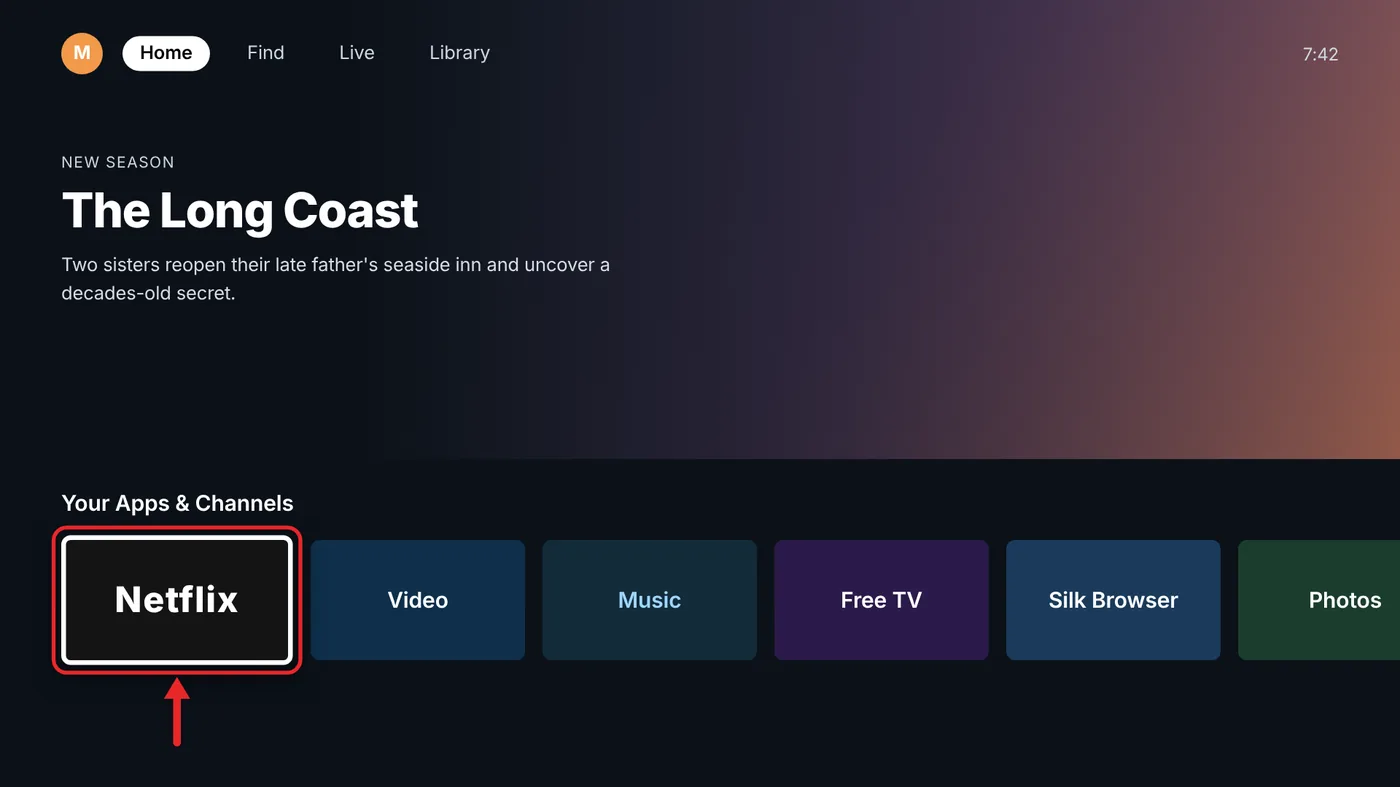
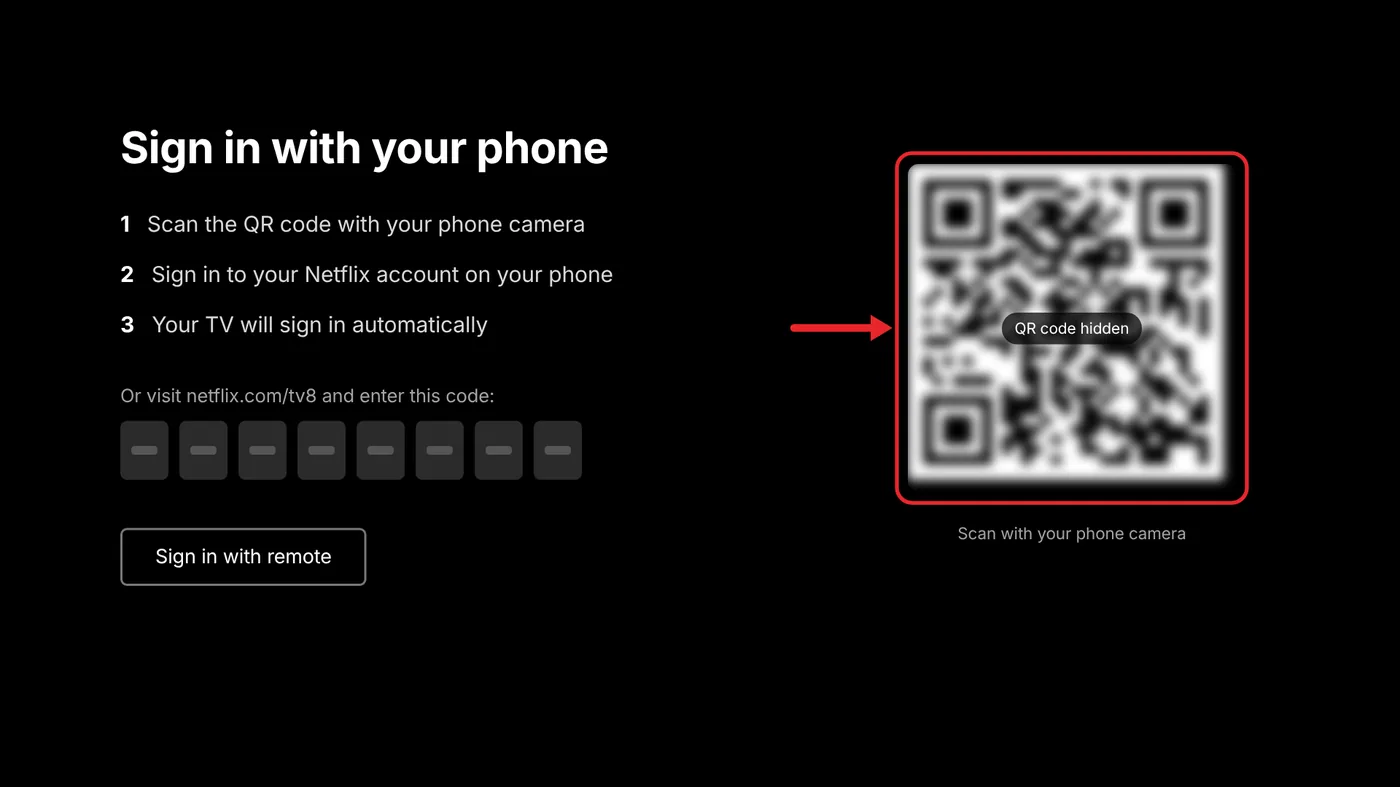
- Select Sign In in the Netflix app. Sign in with the remote, or scan the QR code with your phone to sign in faster. Pick your profile, and you’re ready to watch.
If trailers start playing while you scroll, you can turn off Netflix autoplay on the stick from your profile settings.
A Roku asks you to create or sign in to a free Roku account during setup instead of an Amazon account. You don’t need to give Roku a payment method to use Netflix.
Option 3: Connect a Phone With an Adapter
Netflix still supports plugging a phone or tablet into the TV with a video cable or adapter. This works on any Netflix plan, including Standard with ads.
- Android phones and iPhone 15 or later use a USB-C port. Many of these phones can send video through a USB-C to HDMI adapter, but not every Android phone supports video out, so check your phone’s specs first.
- iPhone 14 and earlier need Apple’s Lightning Digital AV Adapter plus an HDMI cable.
Connect the adapter, plug in the HDMI cable, switch the TV to that input, and play the show in the Netflix app. This is handy for travel or a hotel TV, but it ties up your phone and the adapters, especially Apple’s, can cost as much as a streaming stick. For everyday use, a stick is the better deal.
Pick the Cheapest Netflix Plan
The device is a one-time cost. The plan is what you’ll pay every month, so it matters more over time. These are the US prices:
| Plan | Price per month | Ads | Screens at once | Best quality |
|---|---|---|---|---|
| Standard with ads | $8.99 | Yes | 2 | 1080p |
| Standard | $19.99 | No | 2 | 1080p |
| Premium | $26.99 | No | 4 | 4K with HDR |
Prices and features come from Netflix’s plans and pricing page, and taxes may be added. How Netflix streaming works explains the differences between the plans in more detail.
Here’s what the first year costs with the cheapest combinations:
- Smart TV you already own + Standard with ads: $107.88 ($8.99 x 12)
- Laptop and a $10 HDMI cable + Standard with ads: about $118
- $39.99 streaming stick + Standard with ads: about $148
- $39.99 streaming stick + Standard: about $280
After the first year, the device is paid for, and you’re only paying for the plan. Going from Standard with ads to Standard costs $132 more per year, which is more than three streaming sticks.
Also check your phone and internet bills. Some wireless and broadband plans include Netflix at no extra charge, which would make the plan free for you.
If you also watch on your phone, how much Netflix costs on the iPhone explains why there is no separate phone charge.
What About Chromecast and Casting?
The Google Chromecast was once the cheapest way to get Netflix on a TV. Two things have changed:
- Google discontinued the Chromecast. Its replacement, the Google TV Streamer, now costs $149.99 and works like a regular streaming box with its own remote and Netflix app. Chromecast’s discontinuation and what to buy instead covers the alternatives.
- Netflix removed casting for most devices in late 2025. According to Netflix’s casting help page, you can still cast from a phone only to older Chromecasts that came without a remote (3rd generation or earlier), the Google Nest Hub, and select Vizio and Compal TVs. Casting also requires the Standard or Premium plan, so it doesn’t work on Standard with ads.
If you already own an older Chromecast and pay for Standard or Premium, keep using it. Otherwise, use the Netflix app on the TV or streaming device itself. Netflix also hasn’t supported AirPlay from its iPhone app since 2019, so you can’t AirPlay Netflix to an Apple TV or AirPlay-compatible TV.
Troubleshooting
- The TV says “No Signal.” Make sure the TV is set to the same HDMI input the device is plugged into, and that the stick is getting power from the wall adapter.
- The Netflix app says “Netflix is no longer available on this device.” Older smart TVs and players eventually lose Netflix support. Your account is fine. Plug a current streaming stick into that TV’s HDMI port instead.
- Your TV has no HDMI port. Current streaming sticks only use HDMI. For a very old TV with red, white, and yellow inputs, you’d need an HDMI-to-composite converter, and the picture will look soft. A cheap new TV with Netflix built in may be the better buy.
- You can’t find the Cast button in the Netflix app. That’s expected on most devices now. See the Chromecast section above.
- The video buffers or looks blurry. Move the router closer, use the HDMI extender that comes with Fire TV sticks to get the stick out from behind the TV, or restart your router and the device.
- Netflix won’t play on the laptop. Update your browser. If you see an HDCP error on the TV, try a different HDMI cable or TV port. Netflix needs a copy-protected (HDCP) connection, and some adapters and older ports don’t provide one.
For the HDMI-to-composite converter setup, follow connecting an Apple TV to a TV without HDMI.
Frequently Asked Questions
Can I watch Netflix on a TV for free?
You can avoid buying a device by using a smart TV, console, or laptop you already have, but you still need a paid Netflix plan. Netflix doesn’t offer a free plan or a free trial in the US.
Is a Fire TV Stick or a Roku cheaper for Netflix?
Their basic 1080p models have the same $39.99 list price, and both show Netflix the same way. Fire TV sticks tend to go on sale more often, while many people find Roku’s menus simpler. Pick whichever is cheaper on the day you buy.
Does the Standard with ads plan work on a streaming stick?
Yes. Standard with ads works in the Netflix app on smart TVs, streaming sticks, consoles, phones, and computers. The main limit is casting from a phone, which requires an ad-free plan.
Can I still use my old Chromecast for Netflix?
Yes, if it’s a 3rd-generation or older model with no remote and you’re on Standard or Premium. Open the Netflix app on your phone on the same Wi-Fi network and tap the Cast icon. The steps for watching Netflix on a Chromecast from an iPhone show the whole process.

Matthew Burleigh is the founder, head writer, and editor of Solve Your Tech, which he launched in 2012. He has written technology tutorials since 2008 and worked in IT since 2003, including small-business support, IT management, and consulting. He holds Bachelor’s and Master’s degrees in Computer Science from Arizona State University.
Matthew writes practical guides for Windows, iPhone and iPad, Microsoft Office, Outlook, Google apps, and Android. Solve Your Tech’s guides are checked step by step against the device or app maker’s own documentation and tested on his own devices whenever he has the hardware or software, with clear steps, sources, and update dates.
Read more about Matthew and how Solve Your Tech writes and updates its guides, or report a correction.