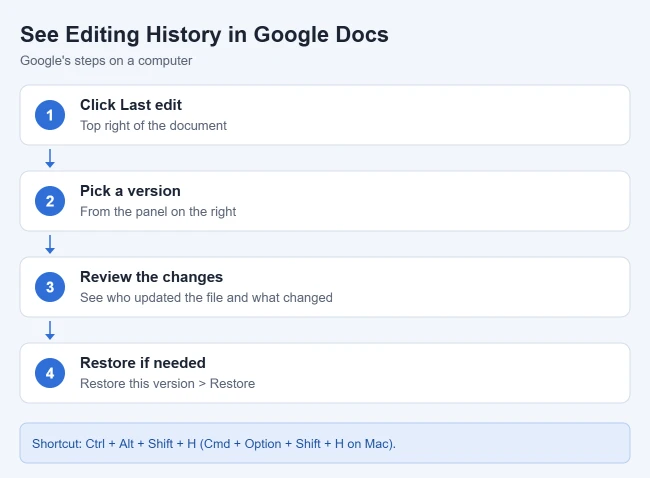
To see editing history in Google Docs, open the document on a computer and click Last edit at the top right, or press Ctrl + Alt + Shift + H (Cmd + Option + Shift + H on a Mac). A panel lists earlier versions with who made changes and when, and you can select one to review it or choose Restore this version to go back to it.
These steps cover Google Docs in a web browser on Windows, Mac and Chromebook, with a personal Google account or a Google Workspace account. They follow Google’s Find what’s changed in a file help page. The same panel works in Google Sheets and Slides.
You Need Edit Access
- You need edit access. You need permission to edit a file to see its version history. If you can only view or comment, the history won’t open. Ask the owner to make you an Editor.
- Use a computer. To see version history, open the document at docs.google.com on a computer. The Google Docs app on a phone or tablet doesn’t show it.
- Know the terms. A version is a saved state of the document, marked with a date, a time and the names of the people who edited it. Google saves versions automatically as people type, so you don’t have to save anything yourself.
How to See Who Edited a Google Doc Last
Hover over Last edit at the top right of the document. This shows who last updated the file and when. If the icon has a blue dot, someone changed the file since you last viewed it.
How to Open Version History in Google Docs
- Open the document in Google Docs on a computer.
- At the top right, click Last edit. You can also press Ctrl + Alt + Shift + H, or click File > Version history > See version history. The document switches to a read-only history view and a panel opens on the right.
- In the panel, click a version. The document shows how it looked at that time, and the edits made in that version are highlighted, with each editor’s name listed under the version.
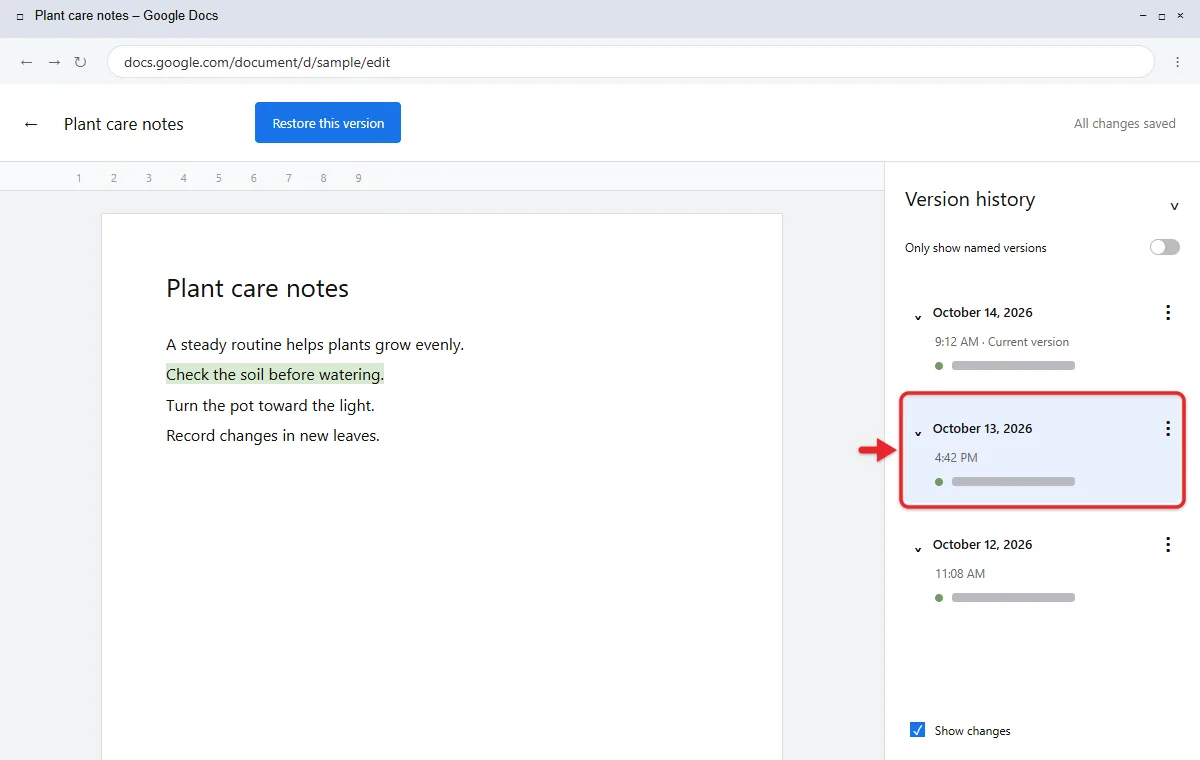
- To find versions that are grouped together, click Expand next to an entry in the right panel.
- To return to the current document without changing anything, click Back at the top left.
Looking at a version doesn’t change the document. Nothing happens to the file until you restore a version.
New versions appear because Google Docs saves as you type. The article on how Google Docs saves your document has the details.
Move Between Edits With the Keyboard
While you are viewing history, Google’s keyboard shortcuts for Google Docs let you jump between edits. On Windows and Chromebook, Ctrl + Alt + K moves to the next edit and Ctrl + Alt + J moves to the previous one. On a Mac, hold Ctrl + Cmd and press N then R for the next edit, or P then R for the previous one.
How to Restore an Older Version
Restoring changes the shared file for everyone who has access, so tell your collaborators before you do it.
- Click Last edit at the top right.
- In the right panel, choose the earlier version you want.
- At the top, click Restore this version, then Restore. The document returns to normal editing with the older content.
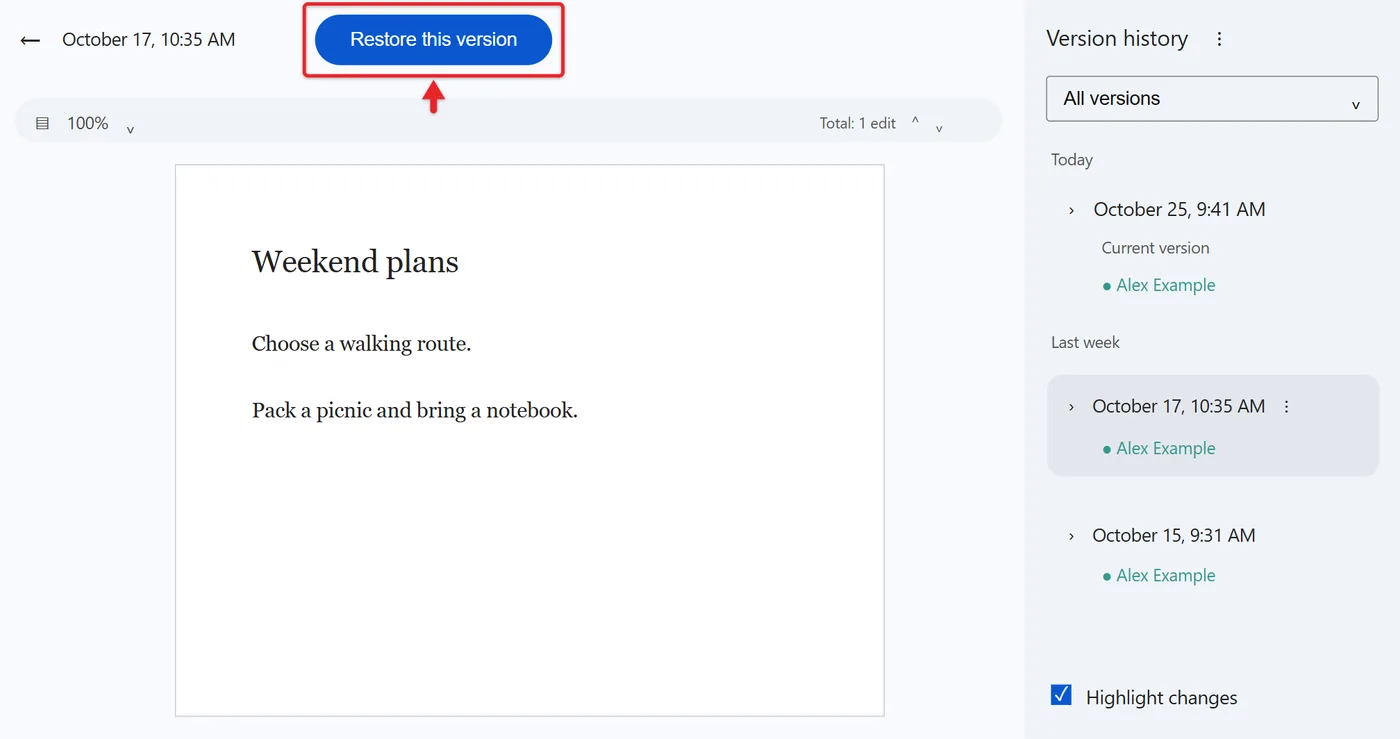
Restoring doesn’t erase the newer versions. They stay in the history, so you can open the panel again and restore a later version if you change your mind. A document that was deleted rather than edited can usually be restored from the Google Docs Trash. For Trash, version history and permanently deleted files in one place, see how to recover a deleted Google Doc.
Version history is also the safety net for a Replace all that went too far, so step through the matches first when you find and replace words in Google Docs.
How to Copy an Older Version
If you want to keep the current document as it is but work from an earlier draft, make a copy of that version:
- Click Last edit.
- Next to the version you want, click More (the three dots) > Make a copy.
- Enter a name and choose where to save it.
- Check Share it with the same people if you want the same sharing settings, then click OK.

The copy is a separate file with its own history. This is the safer choice when you only need one paragraph back, because you can copy that text from the old version and paste it into the current document. Copies work the same way for any Drive file, as shown in making a copy of a file in Google Drive.
How to Name Important Versions
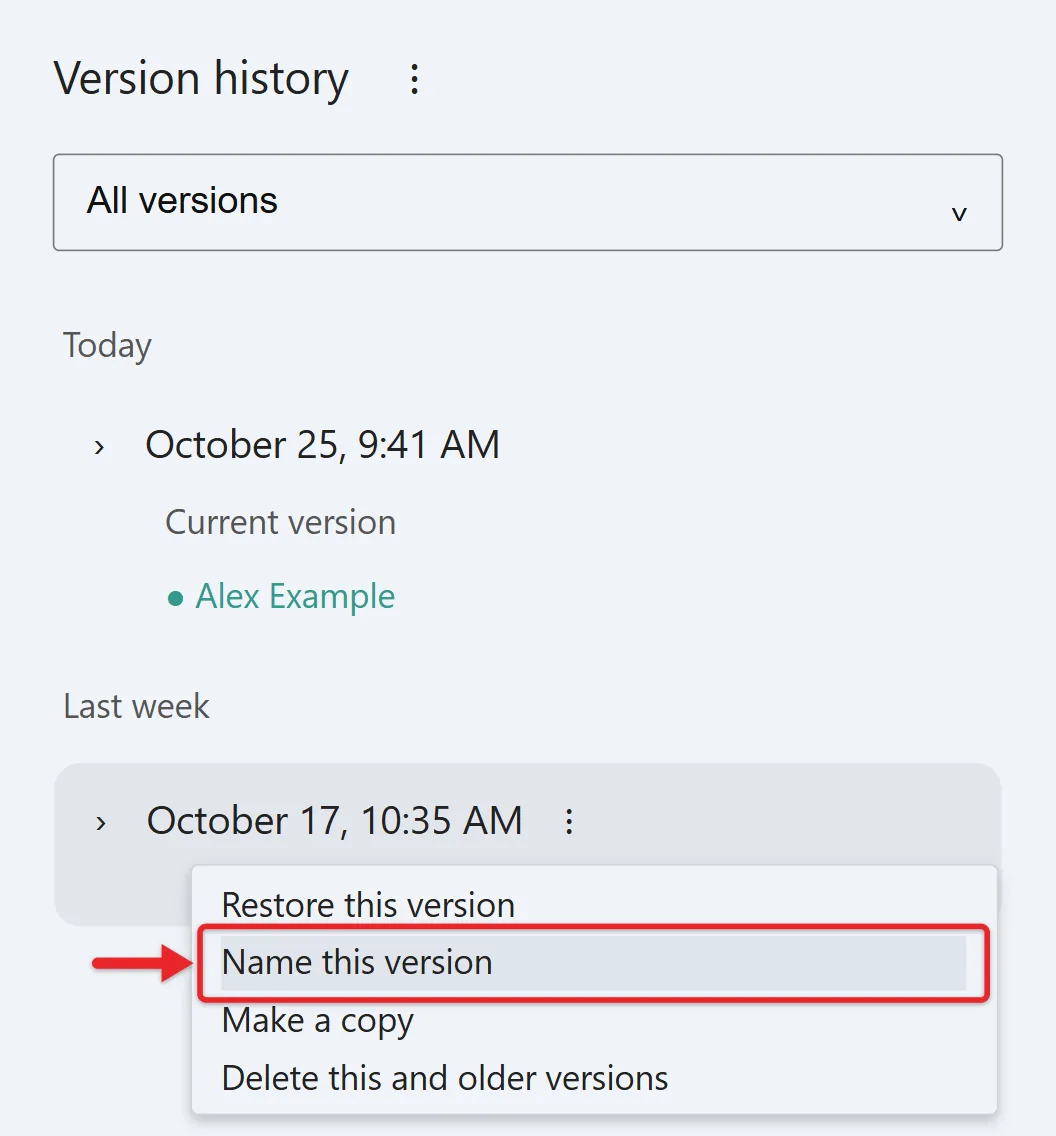
Named versions are not merged with other versions, so they are easy to find later. In the version history panel, choose a version, click More, and select Name this version. To label the document as it is right now, click File > Version history > Name current version.
You can add up to 40 named versions per document. Turn on Only show named versions to hide the rest. The full process, with screenshots, is in naming a version in Google Docs.

How to See Who Wrote a Specific Part
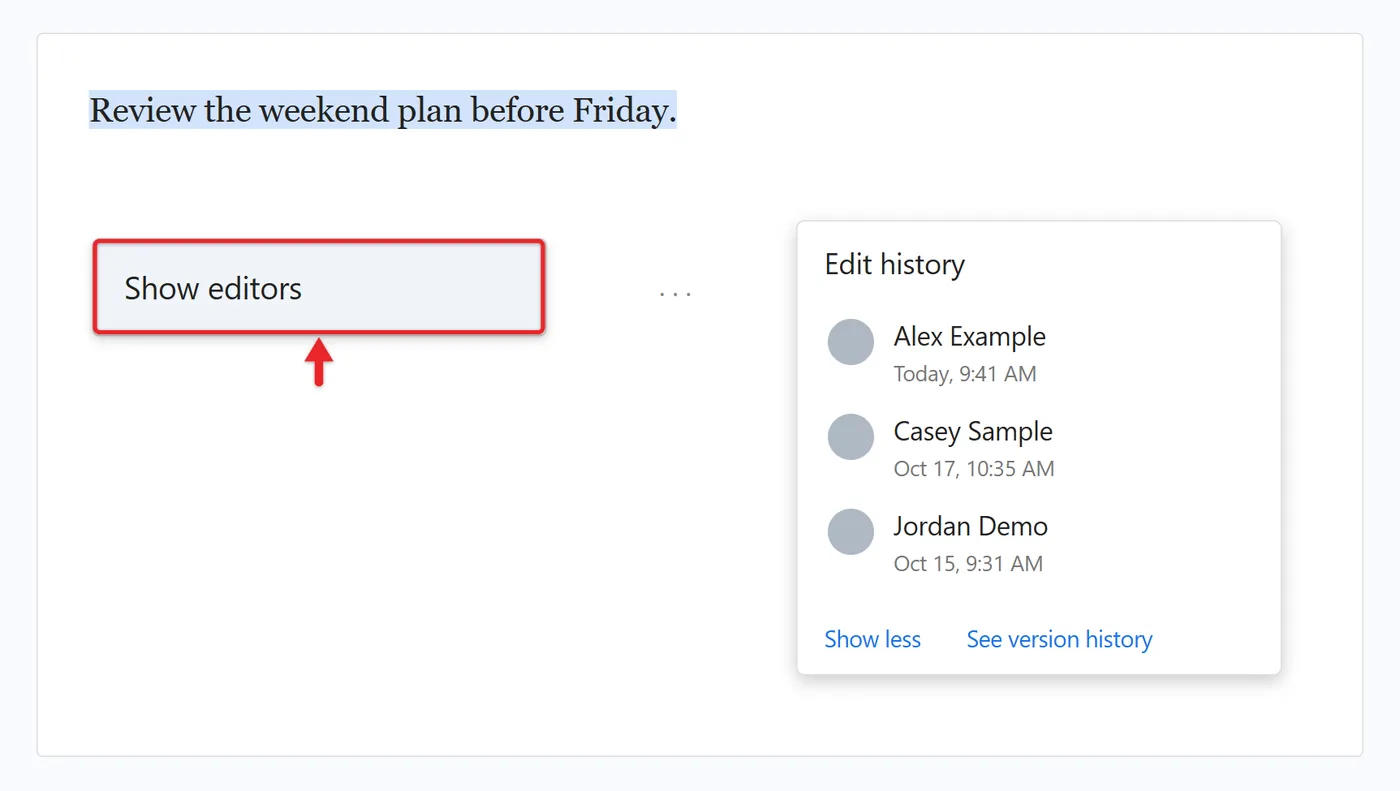
Select part of the document, right-click it, and choose Show editors. This feature is only available to Google Workspace Business Standard, Business Plus, Enterprise Standard, Enterprise Plus and Education Plus customers, so it won’t appear on a personal Google account. Everyone else can step through versions and look for the highlighted text with that editor’s name.
Version History, Suggesting Mode and the Activity Dashboard
These three features answer different questions:
| Feature | What it shows | Who can use it |
|---|---|---|
| Version history | Past versions, what changed and who changed it | Anyone with edit access |
| Suggesting mode | Proposed edits that others accept or reject, like Track Changes in Word | Anyone with edit access, and commenters can suggest |
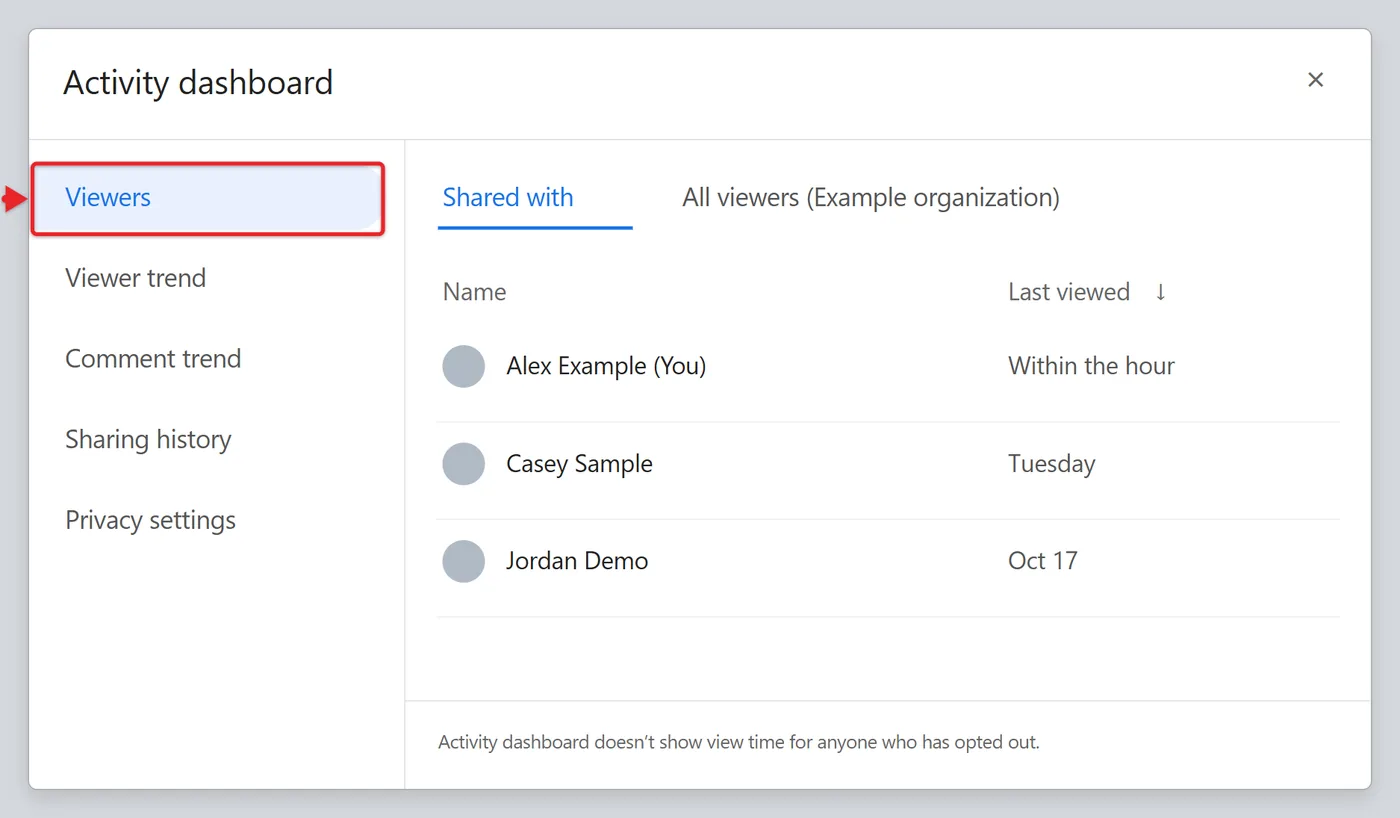
| Activity dashboard (Tools > Activity dashboard) | Who viewed the file and when | Mainly work and school accounts |
Version history records changes after they happen. To review each edit before it becomes part of the document, ask collaborators to use Suggesting mode, which you pick when you switch viewing modes in Google Docs. Version history doesn’t show who opened the file without editing it. View history is only tracked for files owned by a work or school account, as the Activity dashboard help explains. The article on checking who viewed your Google Doc covers the rest.
How to Delete Version History
File owners can remove old versions. Deleting version history is permanent and can’t be undone. Named versions are not removed. The option only appears for owners on personal Google Accounts, and deleting version history in Google Docs covers what to do on a work or school account.
- Delete all unnamed versions: click Last edit, click More at the top of the version history panel, select Delete history, then click Delete forever.
- Delete older versions: select the newest version you want to remove, click More next to it, choose Delete this and older versions, then Delete forever. That version and every older unnamed version are deleted.
What to Do If You Can’t See Version History
- Last edit is missing or does nothing: Check your access. With view or comment access, version history isn’t available. Ask the owner for edit access.
- You’re on a phone: Open the document in a browser on a computer instead. Google doesn’t offer version history in the Docs app.
- An edit you expected isn’t listed: Google may occasionally merge revisions. Click Expand on nearby entries, and turn off Only show named versions if it’s on.
- Old versions are gone: The owner may have used Delete history. That can’t be reversed, but named versions stay.
- The file is a PDF or image: For uploaded files like these, Google Drive uses Manage versions instead, which may delete older versions after 30 days or once there are 100 newer ones. Google’s Check activity and file versions page explains it.
How to See Resolved Comments
Version history shows edits to the text, not old comments. To read a comment thread someone marked as resolved, click Show all comments (the speech bubble icon) at the top right, open the All types filter, and choose Resolved. Open the thread and click Reopen if you want it back in the margin. You don’t need to restore an older version to read it. Google’s comments guide explains the filter.
In Google Slides, you can also copy a link to one comment thread and send it to the person who needs to answer it.
Google Docs Edit History Questions
Can viewers see version history?
No. Only people with edit access can browse earlier versions. Viewers and commenters see the current document only.
Can I turn off version history?
No. Google Docs saves versions automatically and there’s no setting to stop it. The owner can delete unnamed versions, but new ones keep appearing as people edit.
Can other people see that I looked at version history?
Opening the panel doesn’t change the file or create a new version, so it doesn’t appear in the history. On work and school accounts, the Activity dashboard can still show that you viewed the file.
Does version history work in Google Sheets too?
Yes. The same Last edit panel works in Sheets, and you can right-click a cell and choose Show edit history. Sheets also lets you restore an older version of a file the same way.
How far back does version history go?
Google’s help page doesn’t give a time limit for Docs. It says revisions may occasionally be merged and that owners can delete history, so name any version you know you’ll need again.
Next step: name the version you trust most right now, so you can find it quickly the next time something changes.

Matthew Burleigh is the founder, head writer, and editor of Solve Your Tech, which he launched in 2012. He has written technology tutorials since 2008 and worked in IT since 2003, including small-business support, IT management, and consulting. He holds Bachelor’s and Master’s degrees in Computer Science from Arizona State University.
Matthew writes practical guides for Windows, iPhone and iPad, Microsoft Office, Outlook, Google apps, and Android. Solve Your Tech’s guides are checked step by step against the device or app maker’s own documentation and tested on his own devices whenever he has the hardware or software, with clear steps, sources, and update dates.
Read more about Matthew and how Solve Your Tech writes and updates its guides, or report a correction.