How you change your user name in Windows 11 depends on the account type. For a local account, open Control Panel > User Accounts > User Accounts and select Change your account name. For a Microsoft account, change your name at account.microsoft.com, and Windows picks it up after you sign out and back in. Neither method renames your C:\Users folder.
Windows actually has two names for a local account: the display name shown on the lock screen, sign-in screen, and Start menu, and the user name you would type to sign in. The steps below show how to change each one, and they work the same way in Windows 10.
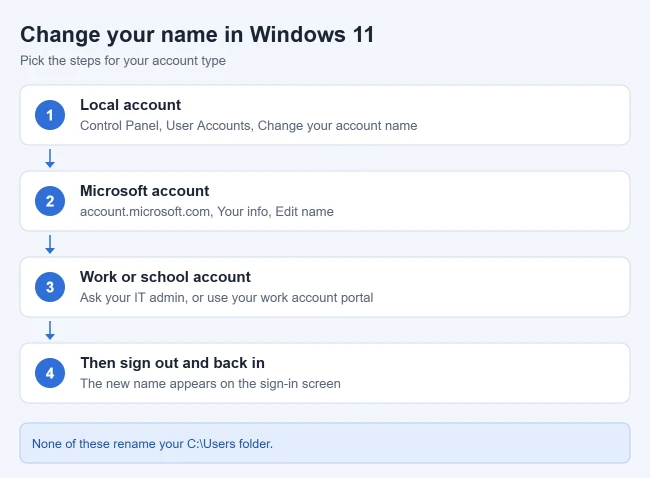
Check Which Type of Account You Have
- Press Windows key + I to open Settings.
- Select Accounts.
- Look at the top of the page. An email address under your name means a Microsoft account (or a work or school account). Local account means a local account.
Change the Name of a Local Account
- Select Start, type Control Panel, and open it.
- Select User Accounts, then User Accounts again.
- Select Change your account name.
- Type the new name and select Change Name.
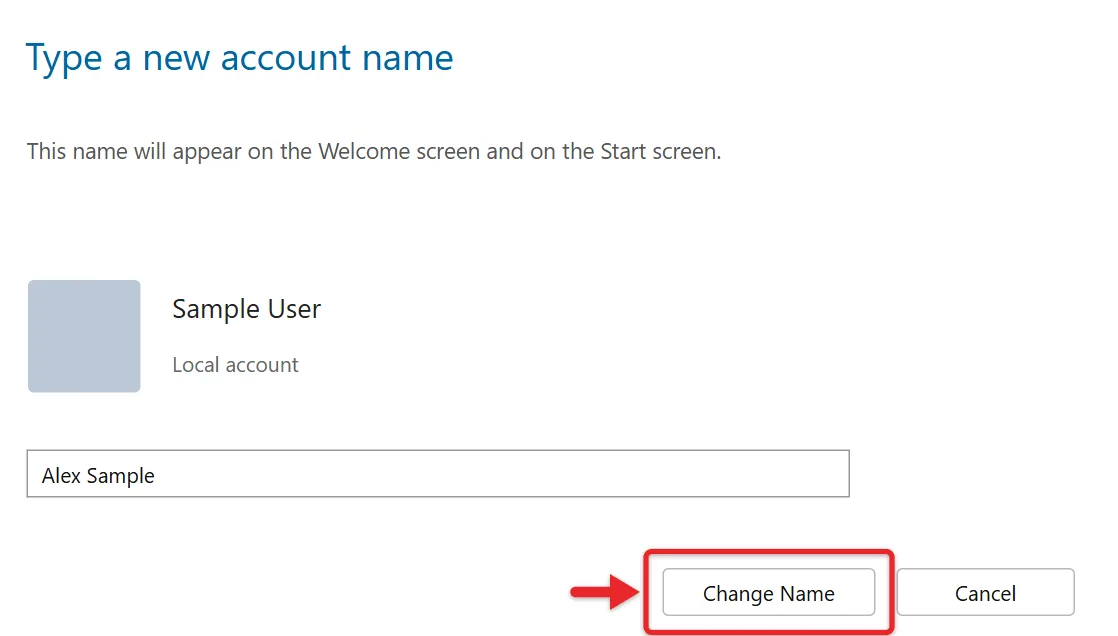
- Sign out and back in to see the new name on the sign-in screen.
To rename a different local account, select Manage another account instead, pick the account, and select Change the account name. You need administrator rights for this.
Other way: the netplwiz tool
- Press Windows key + R, type netplwiz, and press Enter.
- Select the local account in the list, then select Properties.
- Edit User name (the name you sign in with) or Full name (the name shown on the sign-in screen).
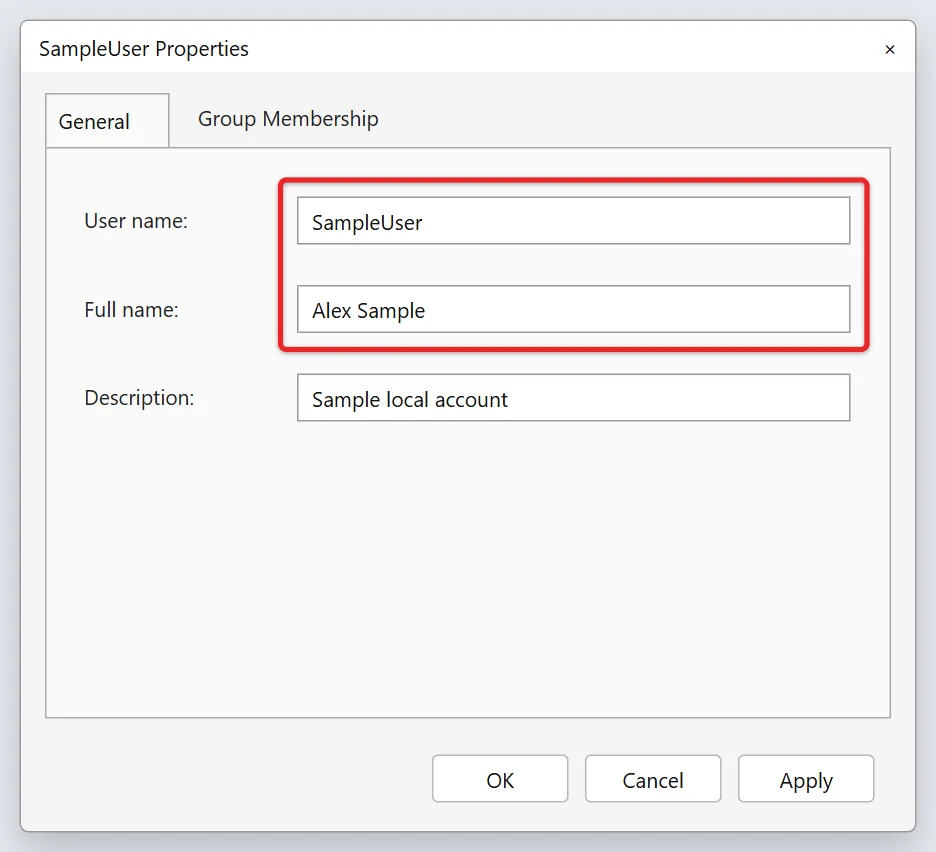
- Select OK, then sign out and back in.
The Control Panel method only changes the display name. netplwiz can change the sign-in user name too, which matters if you type your user name to sign in.
Other way: Computer Management (Pro and higher)
- Right-click Start and select Computer Management.
- Open Local Users and Groups > Users.
- Right-click the account and select Rename to change the user name, or Properties to change the full name.
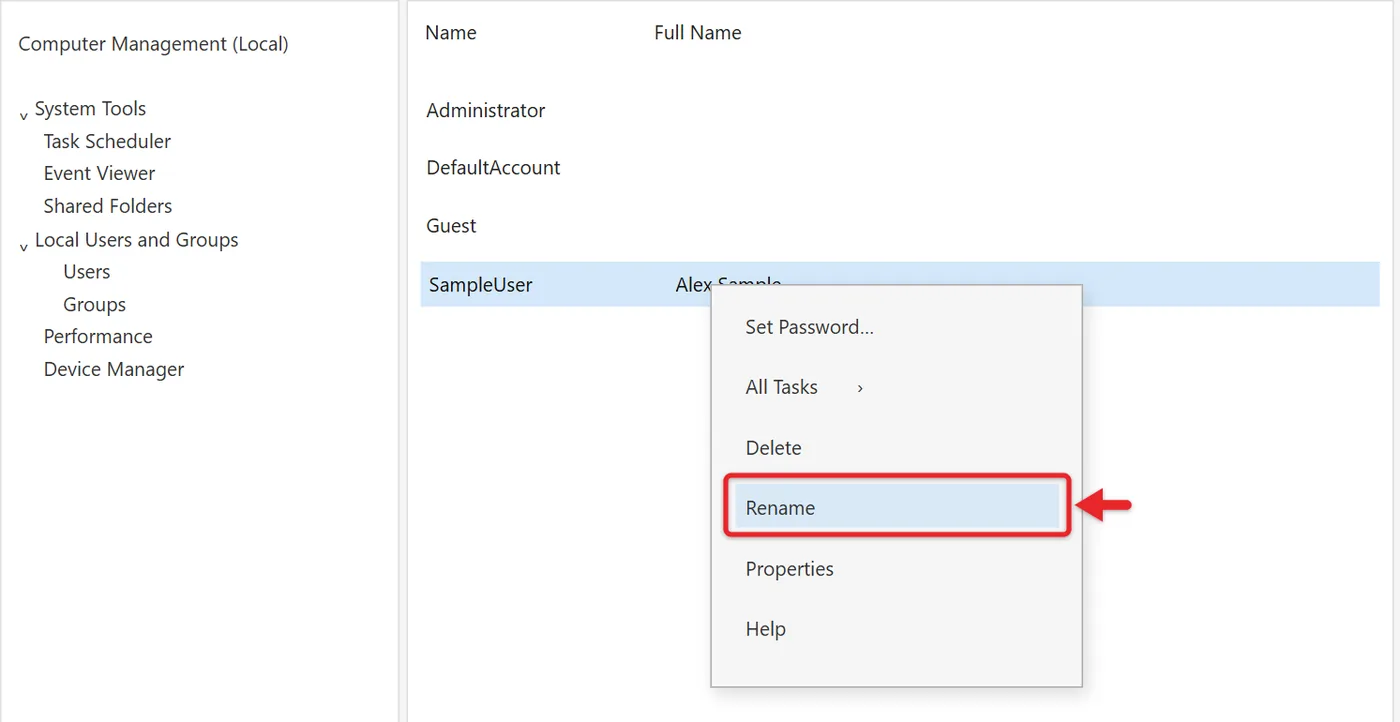
Local Users and Groups isn’t included in Windows 11 Home, so use Control Panel or netplwiz there.
Other way: PowerShell
- Right-click Start and select Terminal (Admin).
- Run this command, using your current and new user names:
Rename-LocalUser -Name "OldName" -NewName "NewName"This renames the local sign-in user name, as described in Microsoft’s Rename-LocalUser reference. It doesn’t work for Microsoft accounts.
Change the Name of a Microsoft Account
- Go to account.microsoft.com/profile and sign in.
- Select Edit name.
- Enter the new first and last name, type the verification characters if asked, and select Save.
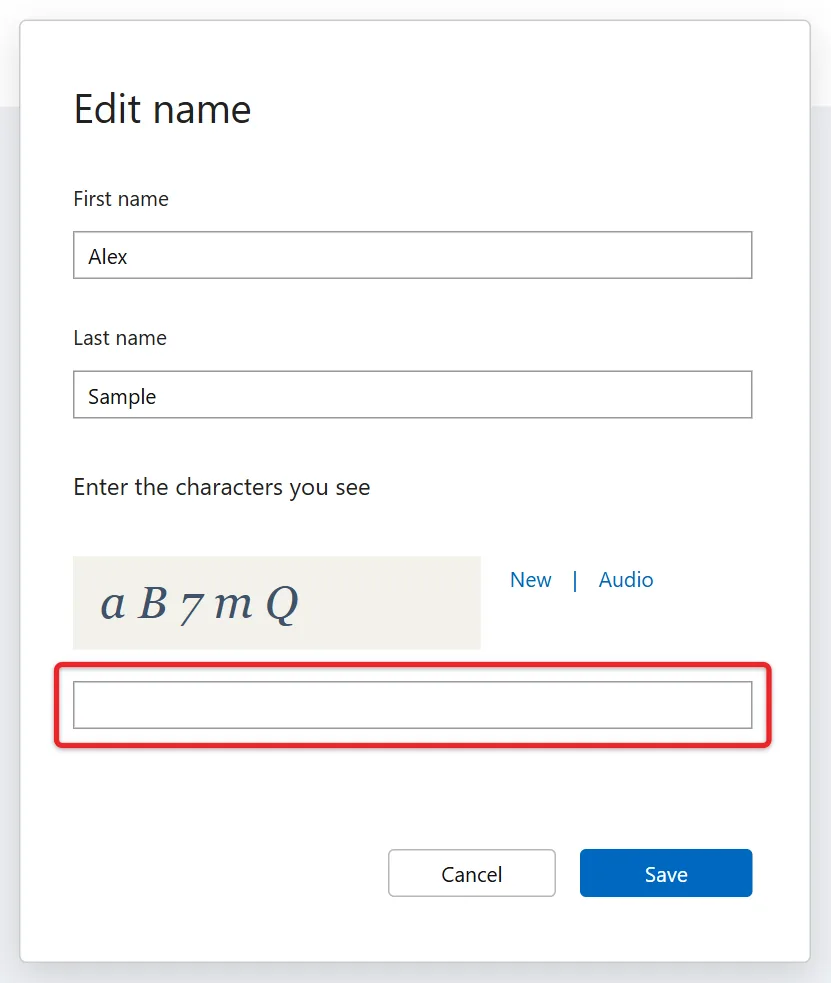
- Sign out of Windows and sign back in.
The name change can take up to 24 hours to show everywhere. It also changes your name in Outlook, Teams, and other Microsoft services, but not your Xbox gamertag.
Example: When Your Email Shows Up Instead of a Name
On an Alienware m16 R2 running Windows 11 Home 25H2 (OS build 26200.9711) signed in with a Microsoft account, Settings > Accounts > Your info showed the account’s email address in capital letters where a name would normally be, with Administrator underneath. That usually happens when no first and last name is saved on the Microsoft account.
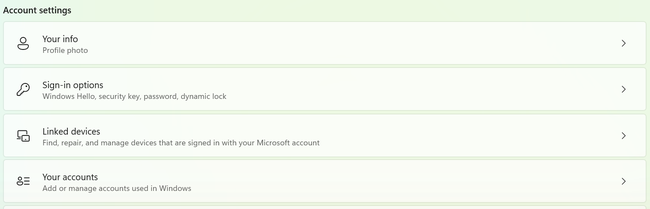
The same page listed Microsoft account under Account settings, with a Sign in with a local account instead link, and an Accounts link marked with an arrow icon, which opens the account website in a browser. So for a Microsoft account, the fix is the profile steps above, not a setting on this page.
Change the email address instead
The email address is the account’s sign-in name, so it can’t be edited like the display name. Instead, add a new email address as an alias in your Microsoft account settings, make it the primary alias, and then use that address to sign in to Windows.
For each screen of that alias process, follow the walkthrough on changing the administrator email on Windows 11.
To sign in with a different Microsoft account altogether, switch the Microsoft account on Windows 11.
Change the Name of a Work or School Account
Your organization controls the name on a work or school account. Sign in at myaccount.microsoft.com and edit your personal info if that option is there. Many organizations make the name read-only. If you can’t change it, ask your IT admin. Renaming a personal Microsoft account does not change a work account.
If Windows Still Shows the Old Name
Work through these checks in order:
- Make sure the account you edited matches the one shown in Settings > Accounts > Your info.
- For a Microsoft account, keep the PC online and allow up to 24 hours for the change to show.
- Save your work, sign out, and sign back in. Locking and unlocking with Windows key + L doesn’t end your session.
- On a work or school PC, contact IT if the old name stays.
What About the User Folder Name?
Windows doesn’t rename the C:\Users\YourName folder when you change the account name. Renaming that folder by hand can break apps and settings. If the folder name matters to you, the safe route is a new account:
- Create a new account with the name you want. Here’s how to create a local account on Windows 11.
- Make the new account an administrator in Settings > Accounts > Other users.
- Sign in to the new account and copy your files from the old user folder.
- Once everything works, remove the old account by deleting a user profile in Windows 11.
If you’d rather stop using a Microsoft account altogether, here’s how to switch to a local account.
To take the Microsoft account off the PC completely, follow these steps to remove a Microsoft account from Windows 11.
Want to Rename the PC Instead?
The PC name (shown as Device name in Settings > System > About) is separate from your account name and your user folder. To change it, select Rename this PC on that page, enter a new name, and restart. Microsoft’s device-renaming instructions cover the details. The registered owner name shown in winver is separate too, and you can change the registered owner name in Windows 11 in Registry Editor.
Windows User Name Questions
Why doesn’t Change your account name appear in Control Panel?
That option only appears for local accounts. With a Microsoft account, Control Panel sends you to your Microsoft account online.
Can I change my name without signing out?
The change is saved right away, but the sign-in screen and Start menu update after you sign out and back in.
Not sure of the fastest route? Here is how to sign out of Windows 11 from the Start menu or the keyboard.
Does changing my name change my password or files?
No. Your password, PIN, files, and apps stay the same. To pick a new PIN, change your PIN on Windows 11 separately.
How do I change the name on the lock screen?
The lock and sign-in screens show your account’s display name above the password or PIN box, so the steps above change it. To hide your email address there, open Settings > Accounts > Sign-in options and turn off Show account details such as my email address on the sign-in screen.

Matthew Burleigh is the founder, head writer, and editor of Solve Your Tech, which he launched in 2012. He has written technology tutorials since 2008 and worked in IT since 2003, including small-business support, IT management, and consulting. He holds Bachelor’s and Master’s degrees in Computer Science from Arizona State University.
Matthew writes practical guides for Windows, iPhone and iPad, Microsoft Office, Outlook, Google apps, and Android. Solve Your Tech’s guides are checked step by step against the device or app maker’s own documentation and tested on his own devices whenever he has the hardware or software, with clear steps, sources, and update dates.
Read more about Matthew and how Solve Your Tech writes and updates its guides, or report a correction.