To block the App Store on an iPhone running iOS 27, open Settings > Screen Time > Apps & Websites > App Store, tap Installing Apps, and choose Blocked. On iOS 26 and earlier, go to Settings > Screen Time > Content & Privacy Restrictions > iTunes & App Store Purchases and set Installing Apps to Don’t Allow.
Either way, the App Store icon disappears and nobody can install apps until you allow it again. Add a Screen Time passcode so the block can’t be undone easily.
These steps cover iOS 27 and iOS 26 and work the same on an iPad. On an old iPhone 5 (iOS 10), use Settings > General > Restrictions and turn off Installing Apps.
Check Your iOS Version
- Check your iOS version. Open Settings > General > About and look at iOS Version. Apple redesigned Screen Time in iOS 27, so the menu names differ from iOS 26.
- Turn on Screen Time. The App Store settings live inside Screen Time, so it has to be on.
- Decide whose iPhone it is. For your own phone or a phone without its own child account, change the setting on that phone. For a child in your Family Sharing group, you can change it from your own iPhone.
- Know the trade-off. While the App Store is hidden, you can’t open it to install updates by hand. Plan to allow it again now and then to update apps.
Block the App Store in iOS 27
- Open Settings and tap Screen Time.
- If Screen Time is off, tap Manage Screen Time, then tap Turn On App & Website Activity.
- Tap Apps & Websites. Enter your Screen Time passcode if you already have one.
- Tap App Store. You’ll see the store settings, including Installing Apps, App Clips, In-app Purchases, and Require Password.
- Tap Installing Apps and choose Blocked.
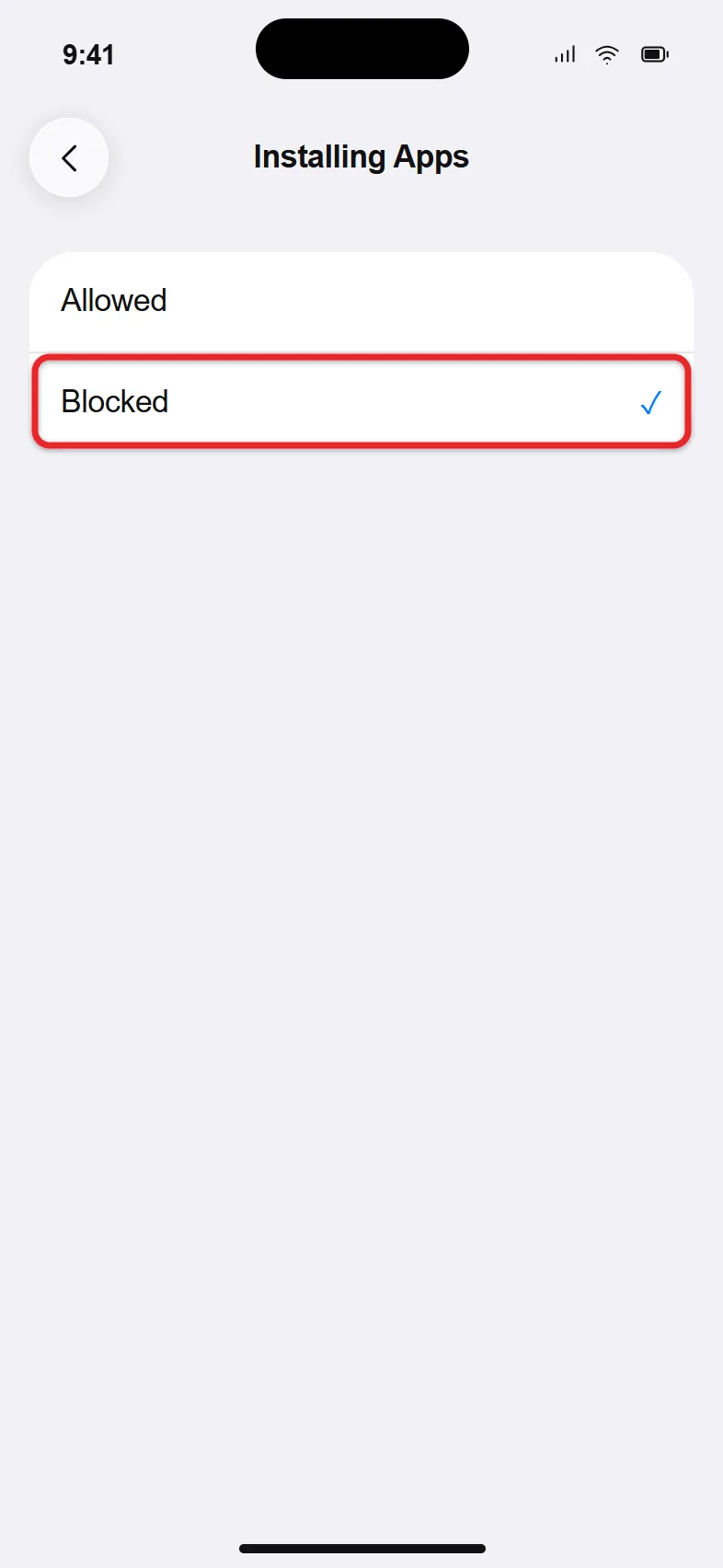
- Go to the Home Screen. The App Store icon is gone.
Apple’s article on blocking in-app purchases with Screen Time shows the same Apps & Websites > App Store screen. If you don’t see App Store on the Apps & Websites screen, tap Restrictions and look for the installing apps setting there.
Block the App Store in iOS 26 and Earlier
- Open Settings and tap Screen Time. Turn it on if it’s off.
- Tap Content & Privacy Restrictions and turn on the Content & Privacy Restrictions switch at the top.
- Tap iTunes & App Store Purchases.
- Tap Installing Apps and choose Don’t Allow.
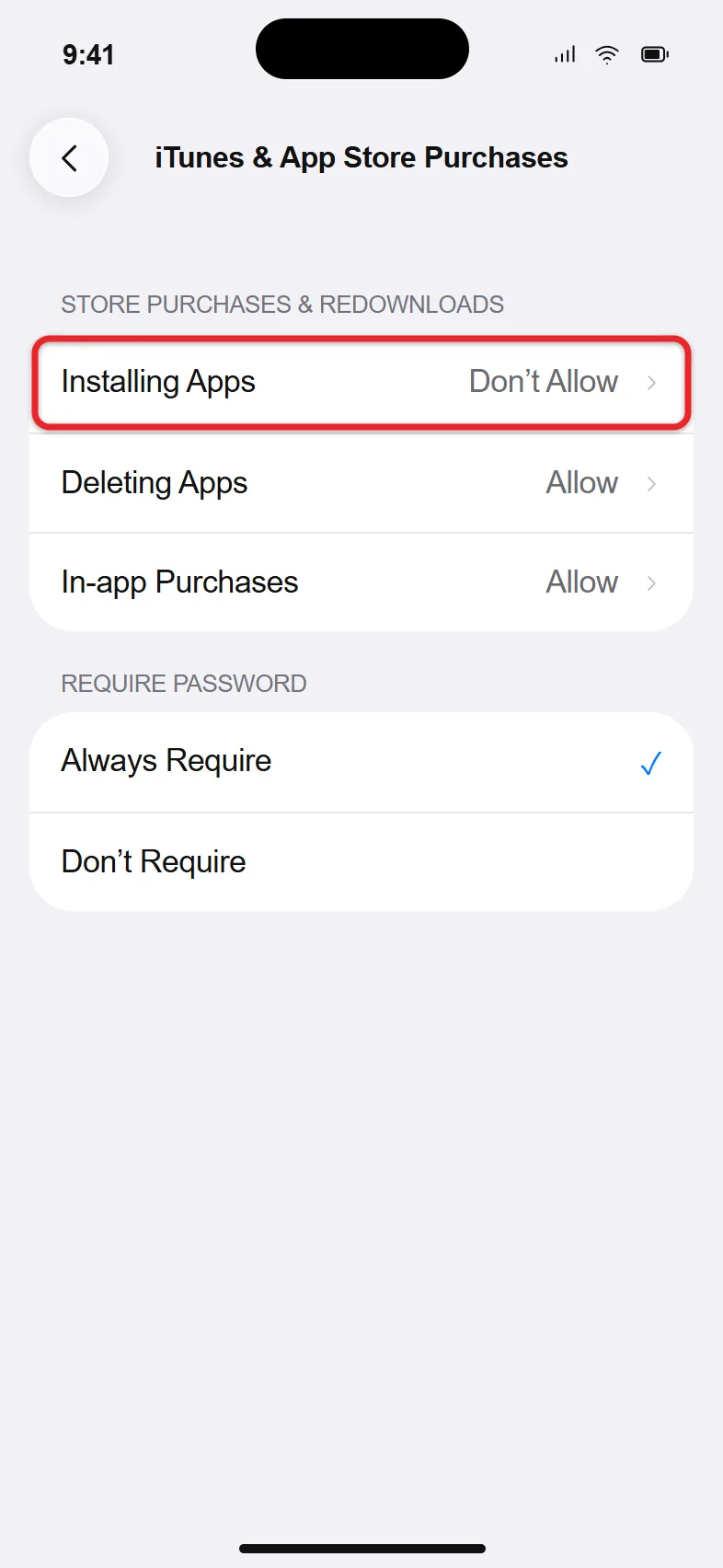
- Go to the Home Screen and check that the App Store icon has disappeared.
In regions where Apple allows apps from outside the App Store, such as the EU, step 3 may be labeled App Installations & Purchases, with a separate App Store setting on that screen. Choose Don’t Allow for it the same way.
Lock the Setting With a Screen Time Passcode
Without a Screen Time passcode, anyone can go back into Settings and allow the App Store again. The Screen Time passcode is a four-digit code that’s separate from your iPhone’s unlock code. Use a different number.
- Open Settings > Screen Time.
- Tap Lock Screen Time Settings. In iOS 27, it’s inside Manage Screen Time. On some older versions it’s called Use Screen Time Passcode.
- Enter a four-digit passcode, then enter it again.
- Enter your Apple Account details when asked to set up Screen Time Passcode Recovery, so you can reset the code if you forget it.
Apple covers changing and removing the code in its Screen Time passcode guide.
Block the App Store on a Child’s iPhone
If your child has their own Apple Account in your Family Sharing group, and you’re the organizer or a parent or guardian, you can do this from your own iPhone with iOS 27.
- Open Settings, tap Family, then tap your child’s name.
- Tap Apps & Websites and enter your Screen Time passcode if asked.
- Tap App Store, then tap Installing Apps.
- Choose Blocked.
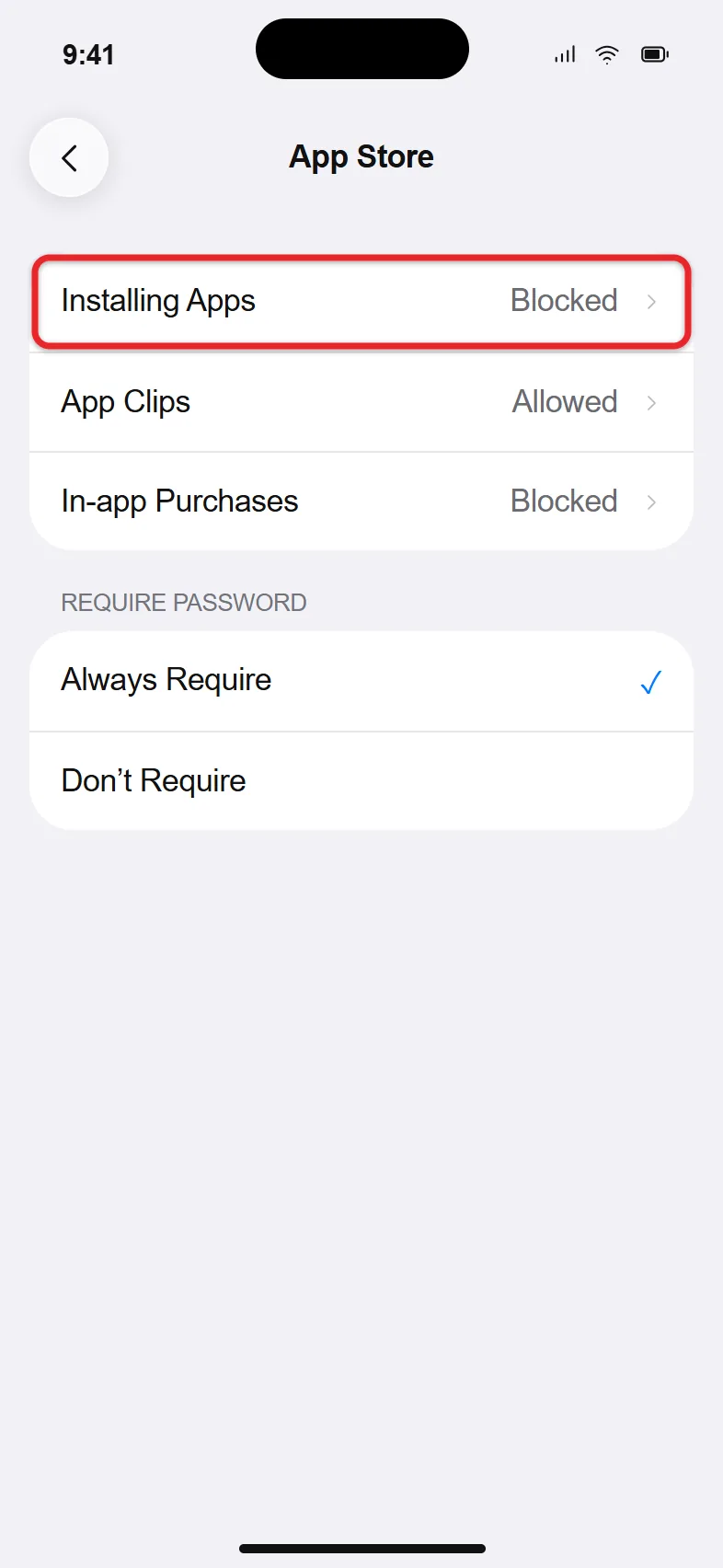
Apple’s parental controls guide says the new family controls need every device in the family group on iOS 27 or the matching software. If a device can’t be updated, use the iOS 26 steps directly on the child’s iPhone.
A Lighter Option: Ask to Buy
Blocking installs completely is a blunt tool. Ask to Buy leaves the App Store in place but sends you a request each time your child tries to get an app or make a purchase, including free apps. Go to Settings > Family > your child’s name > Apps & Websites > Restrictions > Ask to Buy and turn on Require Purchase Approval. Ask to Buy needs a family group, so set up Family Sharing on the iPhone and add your child first.
According to Apple’s Ask to Buy guide, you don’t get a request when a child redownloads an earlier purchase, installs an update, or redeems a code. In some regions Ask to Buy is on by default for younger children.
The living room box has its own setting, so also block purchases and rentals on Apple TV if kids use it.
Other Settings on the Same Screen
You may not need to hide the whole store. These settings sit next to Installing Apps and handle narrower problems:
- In-app Purchases: blocks purchases inside apps but still allows downloads.
- Require Password: asks for your Apple Account password for every purchase. Learn more about requiring a password for App Store purchases.
- Deleting Apps (iOS 26 and earlier): stops apps from being removed.
- App Clips: blocks the small app previews that open from links and codes.
To block one app instead of the store, follow the example to block YouTube with Screen Time, or read the overview of iPhone restrictions.
If you’re only handing your iPhone to a child for a few minutes, you can lock your iPhone to one app with Guided Access instead.
Before you block anything, you can check Screen Time on iPhone to see which apps take the most time.
How to Turn the App Store Back On
Go back to the same screen and enter the Screen Time passcode if asked.
- iOS 27: Settings > Screen Time > Apps & Websites > App Store > Installing Apps, then choose Allowed.
- iOS 26 and earlier: Settings > Screen Time > Content & Privacy Restrictions > iTunes & App Store Purchases > Installing Apps, then choose Allow.
The App Store icon comes back. If you don’t see it on the Home Screen, swipe down on the Home Screen and search for “App Store,” or look in the App Library. Install any waiting updates before you block it again.
When the Menus Don’t Match or Are Gray
The menus don’t match these steps
You’re probably looking at the other iOS version. If Apps & Websites appears on the Screen Time screen, use the iOS 27 steps. If you only see Content & Privacy Restrictions, use the iOS 26 steps.
The options are gray
On iOS 26 and earlier, the store options stay gray until the Content & Privacy Restrictions switch is on. On any version, Screen Time itself must be turned on.
The iPhone asks for a passcode you don’t know
That’s the Screen Time passcode, not the unlock code. Apple’s forgotten Screen Time passcode article explains how to reset it with your Apple Account. A parent resets a child’s code from their own iPhone.
The App Store is missing and you didn’t block it
Someone may have set this restriction, or the iPhone is managed by a school or employer. Check the Installing Apps setting above. On a managed device, ask the organization’s IT administrator.
App Store Restriction Questions
Does blocking the App Store delete my apps?
No. It stops new installs and hides the store. Apps already on the iPhone stay put, along with their data.
Does blocking the App Store stop app updates?
You can’t open the App Store to update apps by hand while it’s blocked. Apple doesn’t say whether automatic updates keep running, so don’t count on them. If you only want to control updates, turn automatic app updates on or off instead.
Can I block new downloads but still allow updates?
Not with this setting. For a child, Ask to Buy comes closest: new downloads need your approval, while updates don’t trigger a request.
Does this work on an iPad?
Yes. iPadOS 27 matches the iOS 27 steps, and iPadOS 26 and earlier match the older steps.

Matthew Burleigh is the founder, head writer, and editor of Solve Your Tech, which he launched in 2012. He has written technology tutorials since 2008 and worked in IT since 2003, including small-business support, IT management, and consulting. He holds Bachelor’s and Master’s degrees in Computer Science from Arizona State University.
Matthew writes practical guides for Windows, iPhone and iPad, Microsoft Office, Outlook, Google apps, and Android. Solve Your Tech’s guides are checked step by step against the device or app maker’s own documentation and tested on his own devices whenever he has the hardware or software, with clear steps, sources, and update dates.
Read more about Matthew and how Solve Your Tech writes and updates its guides, or report a correction.