The best cursive font in Microsoft Word depends on the look you want. Brush Script MT is a good all-around choice for a casual handwritten style, Edwardian Script ITC works well for formal invitations, and Segoe Script is one of the easiest cursive-style fonts to read. With a Microsoft 365 subscription, all of these are available in Word without buying extra fonts.
This guide covers Word for Microsoft 365 on Windows and Mac, plus recent versions of Word. It lists the cursive and script fonts Microsoft provides, which ones suit which jobs, how to switch to one, why one might be missing, and how to make sure your cursive text looks right on someone else’s computer. Font availability comes from Microsoft’s typography font list and its Cloud fonts in Office article, checked in October 2026.
Our Top Picks
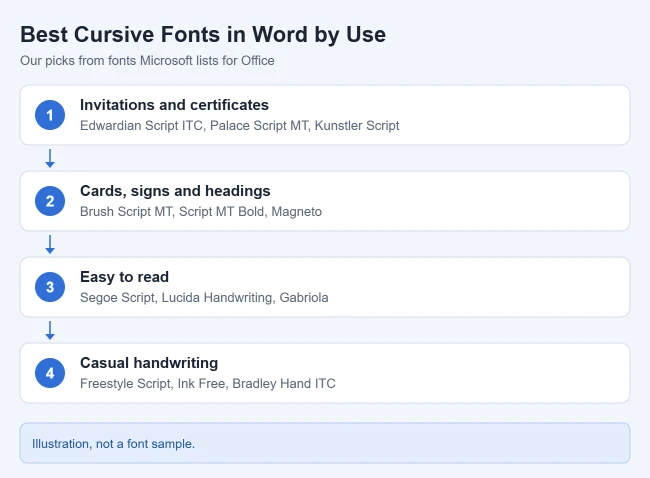
- Best all-around: Brush Script MT. Bold, flowing and easy to recognize.
- Most formal: Edwardian Script ITC. Elegant, with fancy capitals.
- Easiest to read: Segoe Script. Clean and modern, and it comes with Windows.
- Best for body text: Lucida Handwriting. Connected letters that stay legible at smaller sizes.
Formal Script Fonts in Word
These have looping, connected letters and work best for invitations, certificates and anything that should feel elegant.
- Edwardian Script ITC: elegant and formal, with fancy capital letters. Best for wedding invitations and certificates.
- Palace Script MT: delicate and slanted, like formal penmanship. Use it large.
- Kunstler Script: very ornate. Use it large, because it gets hard to read when small.
- French Script MT and Vladimir Script: classic calligraphy styles for names and titles.
Bold and Brush Script Fonts
These stand out in headings, cards, flyers and signs.
- Brush Script MT: a bold, flowing brush-pen style. Great for headings, cards and signs.
- Script MT Bold: a heavier script that stands out in titles.
- Magneto and Rage Italic: retro, energetic scripts for posters and logos.
- Mistral: a loose, marker-like script with lots of personality.
Easy-to-Read Cursive and Handwriting Fonts
Choose these when people need to read more than a word or two.
- Segoe Script: a clean, modern handwriting style that comes with Windows.
- Lucida Handwriting: connected but easy to read, even at smaller sizes.
- Gabriola: a graceful, calligraphy-inspired font that’s still readable. It comes with Windows.
- Lucida Calligraphy and Monotype Corsiva: italic, pen-style lettering that reads well in short paragraphs.
Casual Handwriting Fonts
- Freestyle Script: loose and informal, like quick handwriting.
- Ink Free: looks like neat marker handwriting. It comes with Windows.
- Bradley Hand ITC, Segoe Print, Kristen ITC and Viner Hand ITC: friendly, printed-handwriting styles for notes, classroom material and kids’ projects.
- Gigi and Pristina: whimsical scripts for party invitations.
Microsoft lists all of the fonts above in its cloud fonts table, so Microsoft 365 subscribers can use them in Word. Browse every font in Microsoft’s font list.
How to Change to a Cursive Font in Word
- Select the text you want to change. Result: the text is highlighted.
- On the Home tab, click the font name box. Result: the font list opens.
- Type the name of the font, such as Brush Script MT, or scroll to find it. Result: the font appears in the list.
- Press Enter. Result: your text changes to the cursive font.
Cursive fonts usually look small, so try bumping the font size up a few points. To make a heading stand out even more, see how to use small caps in Word or add a page border in Word.
If a Cursive Font Is Missing

Most of these script fonts are cloud fonts. Microsoft says cloud fonts are hosted by Microsoft 365, downloaded when you use them, and then available in all your Office apps. If one doesn’t show up:
- Check your subscription. Microsoft says cloud fonts are available to Microsoft 365 subscribers. Older or one-time-purchase versions of Word may not list every script font.
- Get online. Your device needs an internet connection to download cloud fonts.
- Turn on connected experiences. In Word on Windows, go to File > Account, select Manage Settings under Account Privacy, and turn on Optional connected experiences. Microsoft says turning this off also turns off cloud fonts.
- Ask IT. On a work computer, Microsoft says to make sure your administrator hasn’t blocked fs.microsoft.com.
Make Sure Others See Your Cursive Font
If the person opening your file doesn’t have the same font, Word swaps in a different one and your design changes. Microsoft says documents using cloud fonts render the same for others using the latest Office apps. For older versions or custom fonts, Microsoft recommends embedding fonts:
- Click File, then Options. Result: the Word Options window opens.
- Select Save. Result: the save options appear.
- Under Preserve fidelity when sharing, check Embed fonts in the file, then click OK. Result: the fonts travel with the document.
Microsoft notes that choosing Embed only the characters used keeps the file smaller but limits editing with that font. Saving as a PDF is another way to lock in the look.
Tips for Using Cursive Fonts
- Use cursive for short text such as names, titles and headings. Long paragraphs are tiring to read.
- Avoid all caps. Script capitals are designed to start words, not fill them.
- Pair a script heading with a plain font for body text so the page stays readable.
- Print a test page. Thin scripts can look lighter on paper than on screen.
Frequently Asked Questions
Does Word have a built-in cursive font?
Yes. Windows includes Segoe Script, Gabriola and Ink Free, and Microsoft 365 adds many more script fonts as cloud fonts.
What is the most formal cursive font in Word?
Edwardian Script ITC is the usual choice for wedding invitations and certificates. Palace Script MT and Kunstler Script are also formal.
Can I type math or symbols in a cursive font?
Script fonts aren’t designed for equations. For math, see how to type an exponent in Word.

Matthew Burleigh has been writing tech tutorials since 2008. His writing has appeared on dozens of different websites and been read hundreds of millions of times.
After receiving his Bachelor’s and Master’s degrees in Computer Science he spent several years working in IT management for small businesses. However, he now works full time writing content online and creating websites.
His main writing topics include iPhones, Microsoft Office, Google Apps, Android, and Photoshop, but he has also written about many other tech topics as well.