To stop an iPhone 11 from joining a hotspot automatically, go to Settings > Wi-Fi > Auto-Join Hotspot and choose Never or Ask to Join. If the problem is a public Wi-Fi hotspot your iPhone has joined before, such as one at a coffee shop or hotel, tap the Info button next to that network in Settings > Wi-Fi and turn off Auto-Join, or tap Forget This Network.
These steps are for iOS 27, the current version, and they match iOS 26 and earlier versions back to iOS 16. Apple’s iOS 27 update supports the same iPhones as iOS 26, including the iPhone 11 series, so an iPhone 11 shows the same menus as newer models. The steps also match on iPad. Auto-Join Hotspot has been in the Wi-Fi settings since iOS 13, and the Edit list of known networks arrived in iOS 16.
Which Setting Do You Need?
Your iPhone has three separate controls with similar names, plus one on the other device. Pick the one that matches what’s happening:
- Your iPhone joins another iPhone’s or iPad’s Personal Hotspot (yours or a family member’s): use Auto-Join Hotspot on your iPhone.
- Your iPhone reconnects to a public or store Wi-Fi network it has used before: turn off Auto-Join for that network, or forget it.
- Your iPhone keeps showing pop-ups about new networks: change Ask to Join Networks.
- Other people’s devices keep joining your hotspot: change the settings on your own iPhone under Settings > Personal Hotspot.
Method 1: Stop Joining Personal Hotspots Automatically
When no Wi-Fi network is around, an iPhone can connect on its own to the Personal Hotspot of a nearby iPhone or iPad. Apple calls this Instant Hotspot. According to Apple’s guide to Instant Hotspot and Auto-Join Hotspot, it works when both devices have Wi-Fi and Bluetooth turned on and are signed in to the same Apple Account, or are in the same Family Sharing group. It can quietly use up the other device’s cellular data and battery.
- Open Settings on the iPhone that keeps connecting.
- Tap Wi-Fi.
- Scroll to the bottom and tap Auto-Join Hotspot.
- Choose an option:
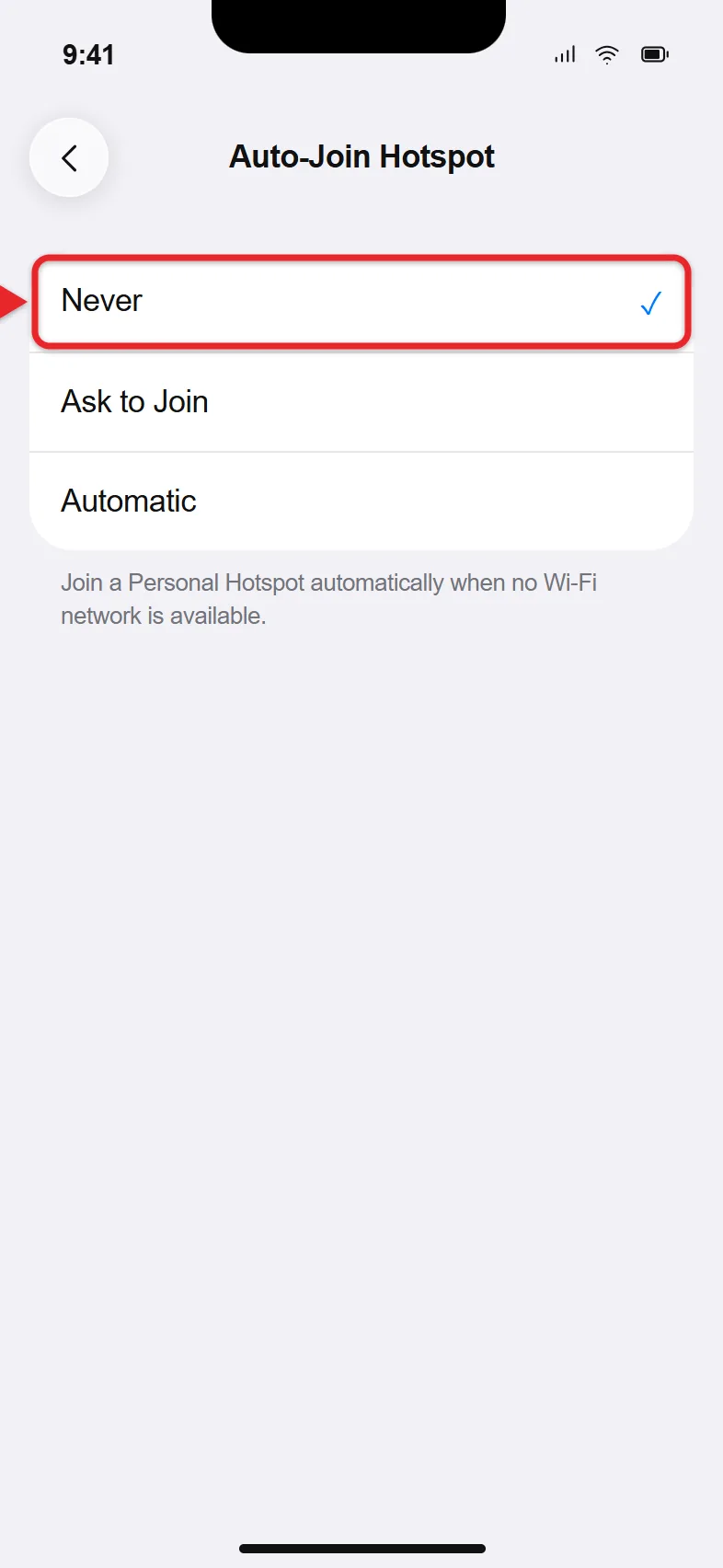
- Never stops automatic connections completely.
- Ask to Join shows a prompt each time a hotspot is available, so you can say yes or no.
- Automatic turns the old behavior back on.
You can still join a hotspot on purpose. Open Settings > Wi-Fi and tap the other device’s name under Personal Hotspots. This setting only affects the iPhone you change it on. It doesn’t turn off the hotspot on the other device. Apple lists these choices in its guide to managing Wi-Fi settings on iPhone.
If you have an iPad or Mac signed in to the same Apple Account, change the setting there too. Each device has its own switch.
Method 2: Turn Off Auto-Join for a Wi-Fi Network
Use this for a public Wi-Fi hotspot your phone remembers. Your iPhone keeps the network’s password but waits for you to tap it before connecting.
- Open Settings and tap Wi-Fi.
- Find the network. If you’re connected, it’s at the top. If you’re not near it, tap Edit in the upper-right corner to see your known networks, and confirm with Face ID or your passcode if asked. The iPhone 11, iPhone 11 Pro, and iPhone 11 Pro Max all use Face ID.
- Tap the Info button (the letter “i” in a circle) next to the network name.
- Turn off Auto-Join.
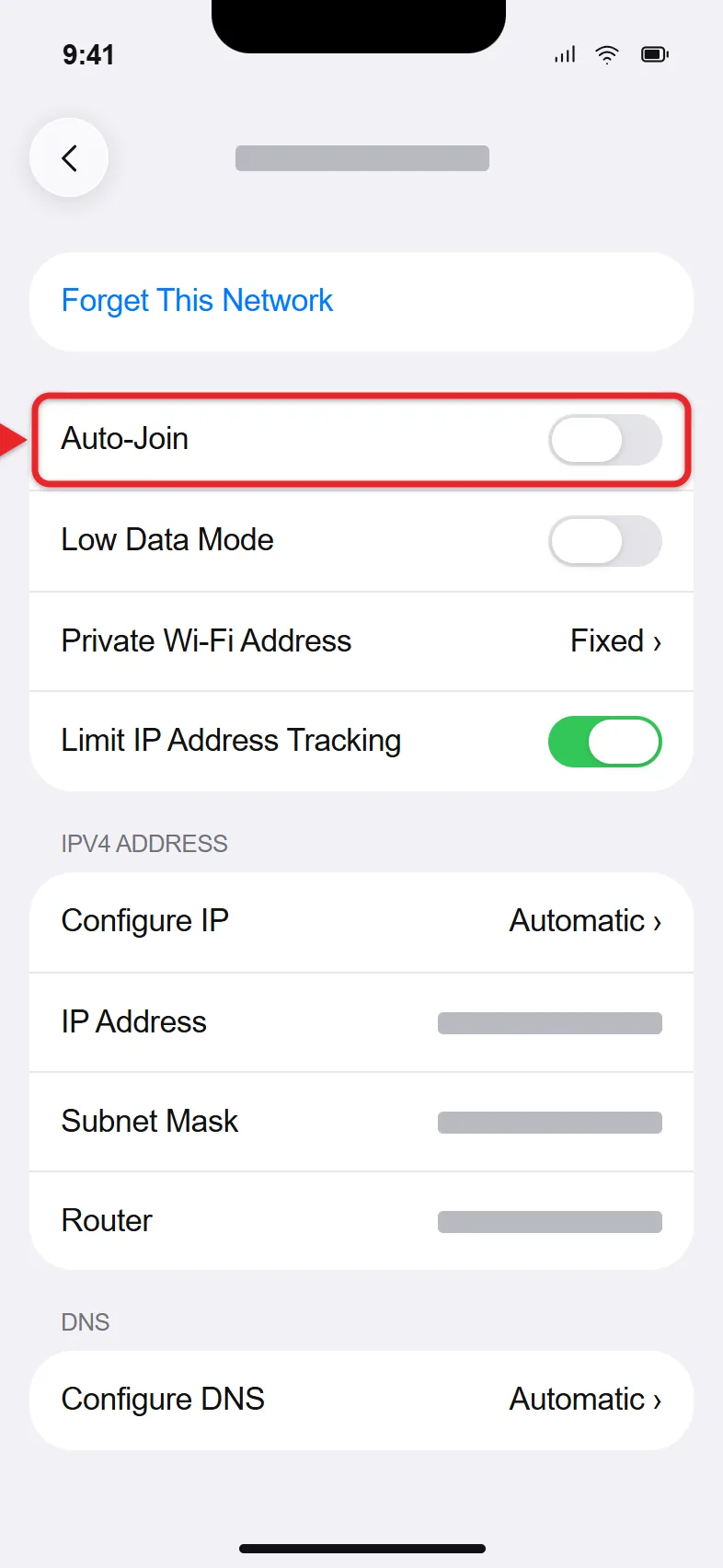
Your iPhone won’t connect to that network again unless you tap its name in Settings > Wi-Fi. Your home and work networks keep connecting as usual.
The same Info screen has a Low Data Mode switch. If you do join a hotspot on purpose, turning it on cuts background data, pauses automatic downloads and backups, and lowers streaming quality, according to Apple’s page on Low Data Mode. That helps when the hotspot runs on someone’s cellular plan.
Method 3: Forget a Hotspot Network
If you’ll never use a network again, forget it instead. This removes the saved network and its password.
- Go to Settings > Wi-Fi and tap Edit in the upper-right corner.
- Tap the Info button next to the network.
- Tap Forget This Network, then tap Forget to confirm.
Three things to know before you forget a network, all from Apple’s article on how to forget a Wi-Fi network:
- If you use iCloud Keychain, forgetting a network on your iPhone also removes it from your other Apple devices signed in to the same Apple Account, such as your iPad or Mac. If you only want the iPhone to stop, use Method 2 instead.
- The network can still show up in the list of available networks. Forgetting it means your iPhone won’t join it without you.
- On some supervised devices and managed networks, such as a work phone, the Forget This Network and Auto-Join options may be missing.
If you’ll need that network later, make sure you know its password first. Fixing a wrong Wi-Fi password on iPhone shows how to rejoin a forgotten network.
Stop Prompts to Join New Networks
Ask to Join Networks doesn’t control networks your iPhone already knows. It only decides what happens when you’re somewhere with no known network and new ones are in range.
- Go to Settings > Wi-Fi.
- Tap Ask to Join Networks.
- Choose Off (no prompts, join new networks manually), Notify (a notification lets you know networks are available), or Ask (a prompt lists nearby networks to choose from).
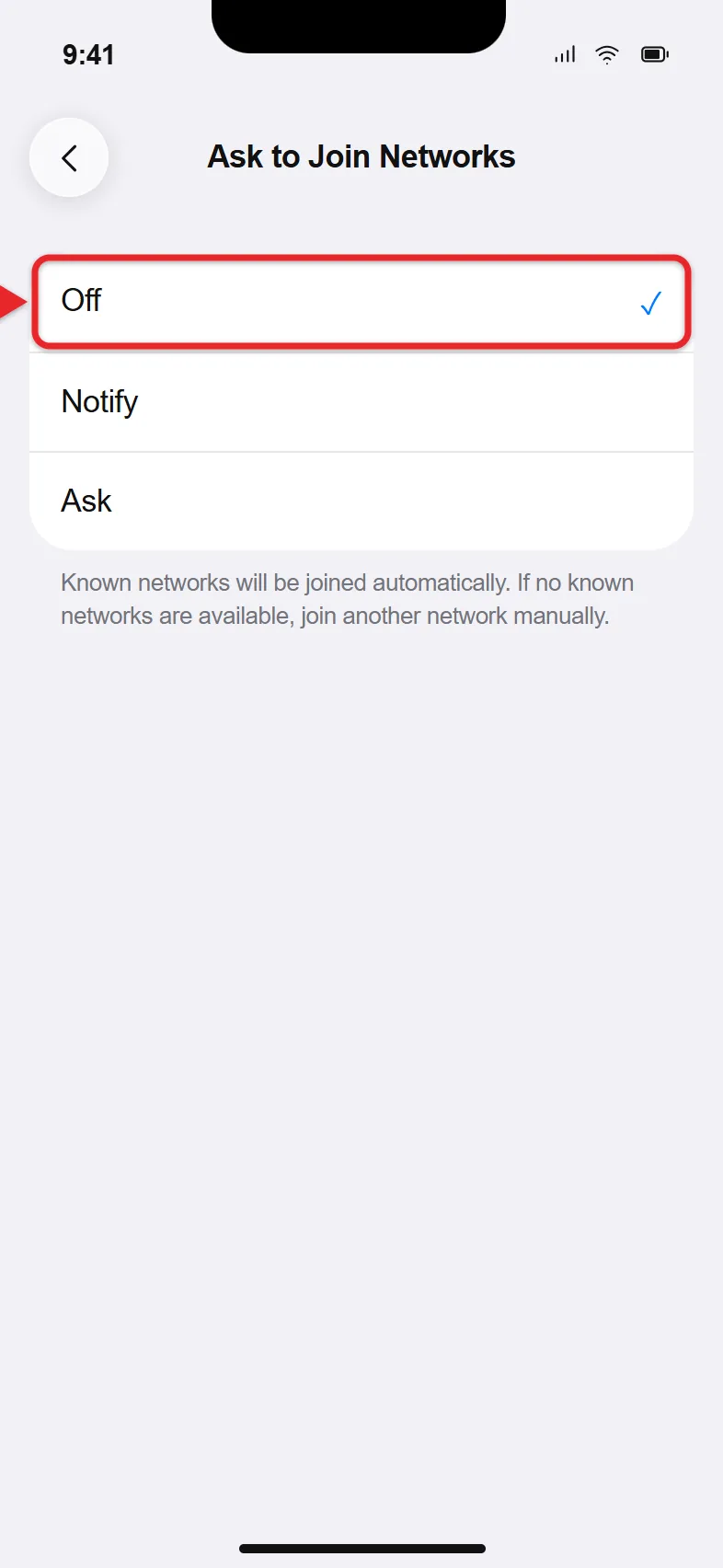
None of these choices makes your iPhone join a new network on its own. You still pick the network and enter its password the first time.
Stop Other Devices From Joining Your Hotspot
If the problem runs the other way and family members or your own devices keep connecting to your iPhone’s hotspot, change it on your iPhone. Apple’s Instant Hotspot guide covers these settings.
- Open Settings and tap Personal Hotspot.
- Tap Family Sharing.
- Tap a family member’s name and choose Ask for Approval. Your iPhone now asks you each time that person’s device tries to join. To stop all family members, turn off Family Sharing on this screen.
- Go back to Personal Hotspot and check Allow Others to Join. Turn it off to block devices that aren’t signed in to your Apple Account or in your family group, such as a friend’s phone or a Windows laptop.

Devices signed in to your own Apple Account can still find your hotspot, so change Auto-Join Hotspot on each of them as in Method 1. If someone outside your account knows the password, change the Personal Hotspot password so they have to ask again.
Hotspot use counts against your cellular plan. For more ideas, read ways to reduce cellular data usage on an iPhone.
Stop Your Mac From Joining Your iPhone’s Hotspot
A Mac signed in to the same Apple Account can also join your iPhone’s hotspot. Apple’s steps: click Wi-Fi in the menu bar or Control Center, choose Wi-Fi Settings, scroll to Ask to join hotspots, and pick the option you want. The Automatic choice needs macOS Tahoe 26 or later. If your Mac doesn’t offer Never, choose Ask to Join so it asks first.
If Your iPhone Still Connects on Its Own
- It’s a different network with a similar name. Airports, hotels, and stores often broadcast several networks, like “Hotel_Guest” and “Hotel_Guest_5G.” Open Settings > Wi-Fi while it’s connected and check the exact name, then turn off Auto-Join for that one too.
- Another of your devices shares the network. With iCloud Keychain, a network you joined on your Mac or iPad can show up on your iPhone. Turning off Auto-Join on the iPhone keeps it from connecting there.
- It’s a carrier Wi-Fi network. Some carriers and cable companies set up their own hotspot networks on your phone. Turn off Auto-Join for that network in the same way, or check Settings > General > VPN & Device Management for a profile that adds it.
- It’s a work or school iPhone. Your organization can install Wi-Fi networks that you can’t change. Ask the IT department.
- You need a quick break from all Wi-Fi. Turn off Wi-Fi in Settings. Turning it off in Control Center only disconnects you until the next day or until you move, so Settings is the more reliable switch.
If a work or school network asks you to register your phone before it can join, look up the MAC address on your iPhone for that network.
If your iPhone won’t connect to Wi-Fi at all after these changes, follow fixing Wi-Fi that doesn’t work on iPhone.
How to Check That It Worked
Go somewhere your iPhone used to join the hotspot on its own, or turn on the other device’s hotspot nearby. Open Settings > Wi-Fi. With Auto-Join Hotspot set to Never, the hotspot may be listed, but there’s no check mark next to it until you tap it. With Ask to Join, you see a prompt instead.
Frequently Asked Questions
Does turning off Auto-Join Hotspot stop me from using my own hotspot?
No. You can still share your iPhone’s connection with other devices through Settings > Personal Hotspot, and you can still join another device’s hotspot by tapping its name. The setting only stops automatic connections.
Will these settings turn off cellular data?
No. They only change how Wi-Fi and hotspot connections work. Cellular data keeps working when you’re away from Wi-Fi.
How do I undo these changes?
Set Auto-Join Hotspot back to Automatic, or turn Auto-Join back on for a network. If you forgot a network, tap it in Settings > Wi-Fi and enter the password again.
Is there one switch to block all public Wi-Fi hotspots?
No. iOS handles each saved network separately. Turn off Auto-Join or forget each public network you don’t want, and leave your home network alone.
Do these steps work on an iPhone that isn’t an iPhone 11?
Yes. Every iPhone that runs iOS 16 or later has the same Wi-Fi menus, including the Edit button for known networks.

Matthew Burleigh is the founder, head writer, and editor of Solve Your Tech, which he launched in 2012. He has written technology tutorials since 2008 and worked in IT since 2003, including small-business support, IT management, and consulting. He holds Bachelor’s and Master’s degrees in Computer Science from Arizona State University.
Matthew writes practical guides for Windows, iPhone and iPad, Microsoft Office, Outlook, Google apps, and Android. Solve Your Tech’s guides are checked step by step against the device or app maker’s own documentation and tested on his own devices whenever he has the hardware or software, with clear steps, sources, and update dates.
Read more about Matthew and how Solve Your Tech writes and updates its guides, or report a correction.