To make incoming calls show the caller’s picture full screen on your iPhone, open Settings, tap Apps, tap Phone, tap Incoming Calls, and choose Full Screen. The caller’s photo or Contact Poster then fills the screen even while you’re using your iPhone, instead of appearing in a small banner at the top.
These steps are for iOS 27, the current version, and they’re the same on iOS 26 and iOS 18, where Phone settings live under Settings > Apps. On iOS 17 and earlier, the path is Settings > Phone > Incoming Calls. Apple’s guide to changing your Phone settings on iPhone covers the other options on the same screen.
Why Calls Show Up as a Banner
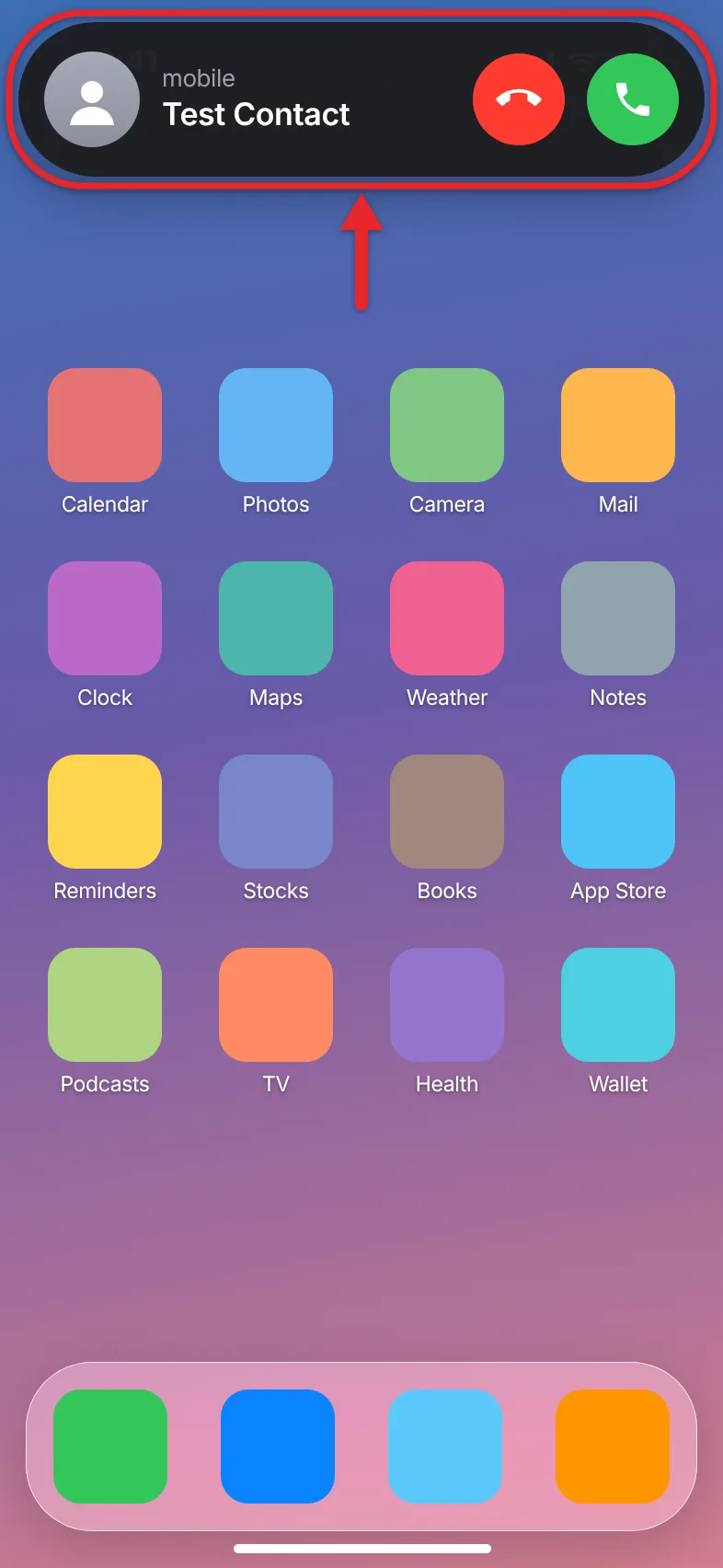
Since iOS 14, an iPhone you’re actively using shows an incoming call as a compact banner at the top of the screen, so the call doesn’t cover whatever you were doing. The banner shows only a tiny version of the caller’s picture.
This setting only controls calls that arrive while your iPhone is unlocked. When your iPhone is locked, a call always takes over the whole screen, so you’ll see the caller’s picture there no matter which option you pick.
Turn On Full-Screen Incoming Calls
- Open the Settings app from your Home Screen.
- Scroll to the bottom of the main Settings list and tap Apps. You’ll see an alphabetical list of the apps on your iPhone.
- Tap Phone. You can type “Phone” in the search field at the top of the list to find it faster.
- Tap Incoming Calls. It sits near the top of the Phone settings and shows your current choice, which is usually Banner.
- Tap Full Screen. A check mark moves next to it.
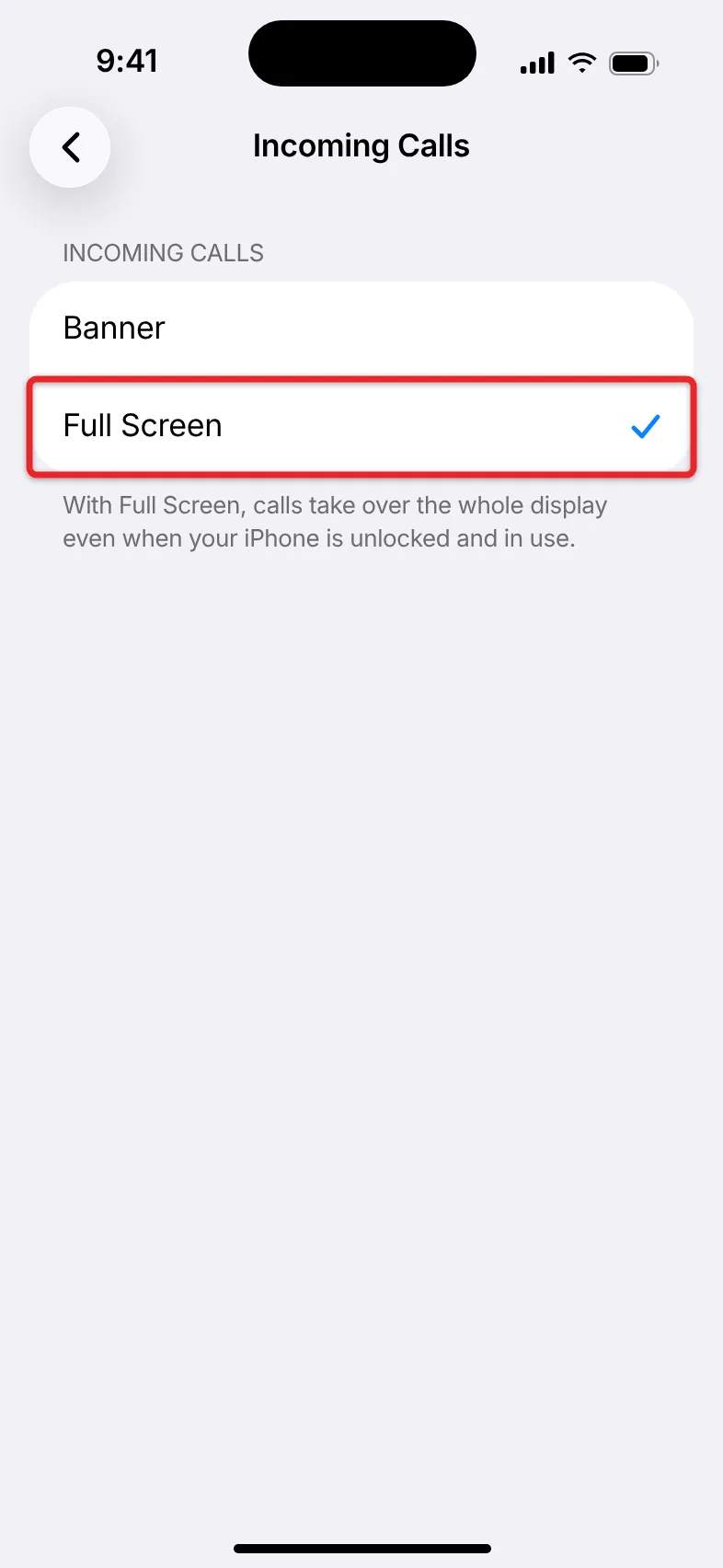
There’s no save button. The change takes effect right away, and the next call you get while using your iPhone will fill the screen with the caller’s picture, name, and large buttons to answer or decline.
To go back to the compact style, repeat these steps and choose Banner.
This one setting covers Phone and FaceTime calls, and apps that ring like regular calls, such as WhatsApp, use the same screen. You can’t set FaceTime to full screen and regular calls to banners, for example.
To place and answer video calls, learn how to use FaceTime on your iPhone.
Expand a Single Call Without Changing the Setting
If you like banners most of the time, you can keep Banner selected and expand one call when you want to:
- Swipe down on the call banner to switch that call to the full-screen view.
- Swipe up on the banner to move it out of the way. Apple notes that this declines the call and sends it to voicemail, so only swipe up when you don’t want to answer.
- Tap the green or red button on the banner to answer or decline right from the banner.
Apple’s guide to answering or declining incoming calls on iPhone covers the other call options, such as replying with a text or setting a reminder to call back.
Add a Picture So the Caller Has Something to Show
Full screen only looks like a photo if the contact has one. Without a picture, the screen shows the caller’s name or number over a plain background. You can add a picture for anyone in your contacts. It’s stored on your iPhone, and the other person doesn’t see it.
- Open the Contacts app. You can also open Phone and tap Contacts at the bottom of the screen.
- Tap the person’s name, then tap Edit in the upper-right corner.
- Tap Add Photo under the empty picture circle (or Edit under an existing picture).
- Choose a photo from your library or take a new one with the camera. Pinch and drag to frame the person’s face, then confirm the crop.
- Check the Contact Poster, which is the full-screen version of the picture shown on calls. On iOS 26 and iOS 27, tap Poster at the top of the editing screen to see and adjust it, then tap Done. On iOS 17 and iOS 18, your iPhone offers a matching poster after you pick the photo; tap Continue to accept it.
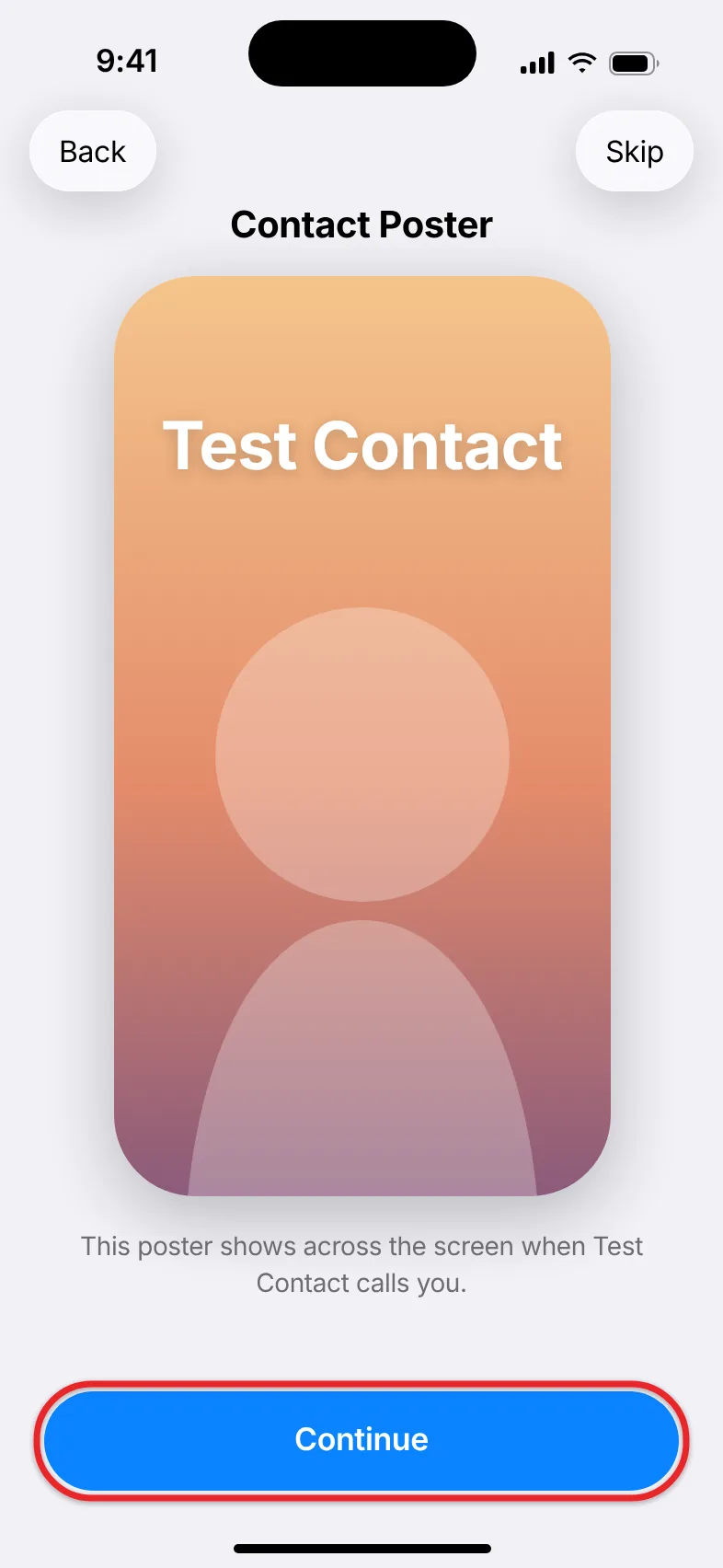
- Tap Done on the preview and then on the contact card to save.
A clear, high-resolution photo with the face near the middle works best, because the poster is cropped to the tall shape of your iPhone screen. To change other contact details, learn how to edit a contact on iPhone.
Contact Posters Shared by Other People
Since iOS 17, iPhone owners can design their own Contact Poster and share it through Name & Photo Sharing on their own contact card. If a friend shares a poster with you, your iPhone can show it when they call. They control what it looks like, and they need iOS 17 or later to create one. Shared posters travel over iMessage, so a friend who only texts you by SMS or RCS won’t send one. If you’ve already set a picture for that person, your iPhone may ask whether you want to keep yours or use theirs.
If the Picture Still Isn’t Full Screen
- You see a small circle on a blurred background. That contact probably has only a round photo and no Contact Poster. Edit the contact’s photo using the steps above and set up the poster too.
- The screen is plain with just a name or number. The contact has no picture, the call came from a number that isn’t saved on that contact card, or the caller hid their number. Check that the exact number calling you is on the card.
- The call still appears as a banner. Go back to Settings > Apps > Phone > Incoming Calls and make sure Full Screen has the check mark. If it already does, choose Banner, then Full Screen again, and restart your iPhone.
- The phone never rings or shows anything. A Focus such as Do Not Disturb, or the Screen Unknown Callers option in Phone settings set to Silence, can send calls straight to voicemail without showing them. On iOS 18 and earlier, the same setting is a single Silence Unknown Callers switch. To find that setting and choose Never, read about silencing unknown callers on iPhone.
- A third-party app shows a different picture. Some calling apps use the profile photo from their own app instead of the one in your Contacts. Change the photo inside that app if you want it to match.
Full-Screen Caller Photo Questions
Does this setting change how calls look on the Lock Screen?
No. Calls on a locked iPhone always appear full screen. The Incoming Calls setting only changes what you see when a call arrives while your iPhone is unlocked and in use.
Will full-screen calls interrupt games and videos?
Yes. With Full Screen selected, an incoming call covers whatever app you’re using until you answer, decline, or the caller hangs up. Choose Banner if you’d rather keep playing or watching and decide from the top of the screen.
Where did the Incoming Calls setting go after an update?
Starting with iOS 18, app settings moved into Settings > Apps, and that’s still where they are on iOS 26 and iOS 27. Tap Apps, then Phone, and you’ll find Incoming Calls there.
Can I use full screen for some contacts and banners for others?
No. The choice applies to every incoming call and every calling app. What you can control per contact is the picture or Contact Poster that appears.
Does the new Phone app layout change this?
No. The Unified layout added in iOS 26 only rearranges calls, favorites, and voicemails. Incoming Calls works the same with either layout.
Can I make every call answer on speaker too?
Yes, that’s a separate setting under Accessibility. It lets you answer iPhone calls on speaker automatically.
To make one person easy to recognize by sound as well as sight, you can also set a ringtone for a contact on iPhone.

Matthew Burleigh is the founder, head writer, and editor of Solve Your Tech, which he launched in 2012. He has written technology tutorials since 2008 and worked in IT since 2003, including small-business support, IT management, and consulting. He holds Bachelor’s and Master’s degrees in Computer Science from Arizona State University.
Matthew writes practical guides for Windows, iPhone and iPad, Microsoft Office, Outlook, Google apps, and Android. Solve Your Tech’s guides are checked step by step against the device or app maker’s own documentation and tested on his own devices whenever he has the hardware or software, with clear steps, sources, and update dates.
Read more about Matthew and how Solve Your Tech writes and updates its guides, or report a correction.