To turn on iCloud Photos on an iPhone, open Settings, tap your name, tap iCloud, tap Photos, and turn on Sync this iPhone. Your photos and videos start uploading to iCloud and appear on your other devices signed in to the same Apple Account. To turn it off, return to the same screen and turn the switch off.
These steps are for iOS 27 and iOS 26 and match Apple’s iCloud Photos setup guide. iOS 18 and iOS 17 use the same Settings path, with small differences noted where they matter. The same switch is called Sync this iPad on an iPad. iCloud Photos was called iCloud Photo Library in older versions of iOS, which is the name some people still search for.
Before You Start
- Sign in with your Apple Account. If your name doesn’t appear at the top of Settings, tap Sign in first. Use the same Apple Account on every device that should share the library.
- Check your iCloud storage. iCloud Photos counts against your iCloud storage. Every Apple Account gets 5 GB free, which fills up quickly with photos and videos. If your library is bigger than the space you have, uploads pause. Here is how to check how much iCloud storage you have left.
- Use Wi-Fi and power for the first upload. A large library can take hours or days to upload the first time. Apple suggests leaving the phone on Wi-Fi and charging overnight.
Turn On iCloud Photos
- Open the Settings app and tap your name at the top.
- Tap iCloud.
- Under Saved to iCloud, tap Photos.
- Turn on Sync this iPhone. The switch turns green and the iPhone starts preparing your library for upload.
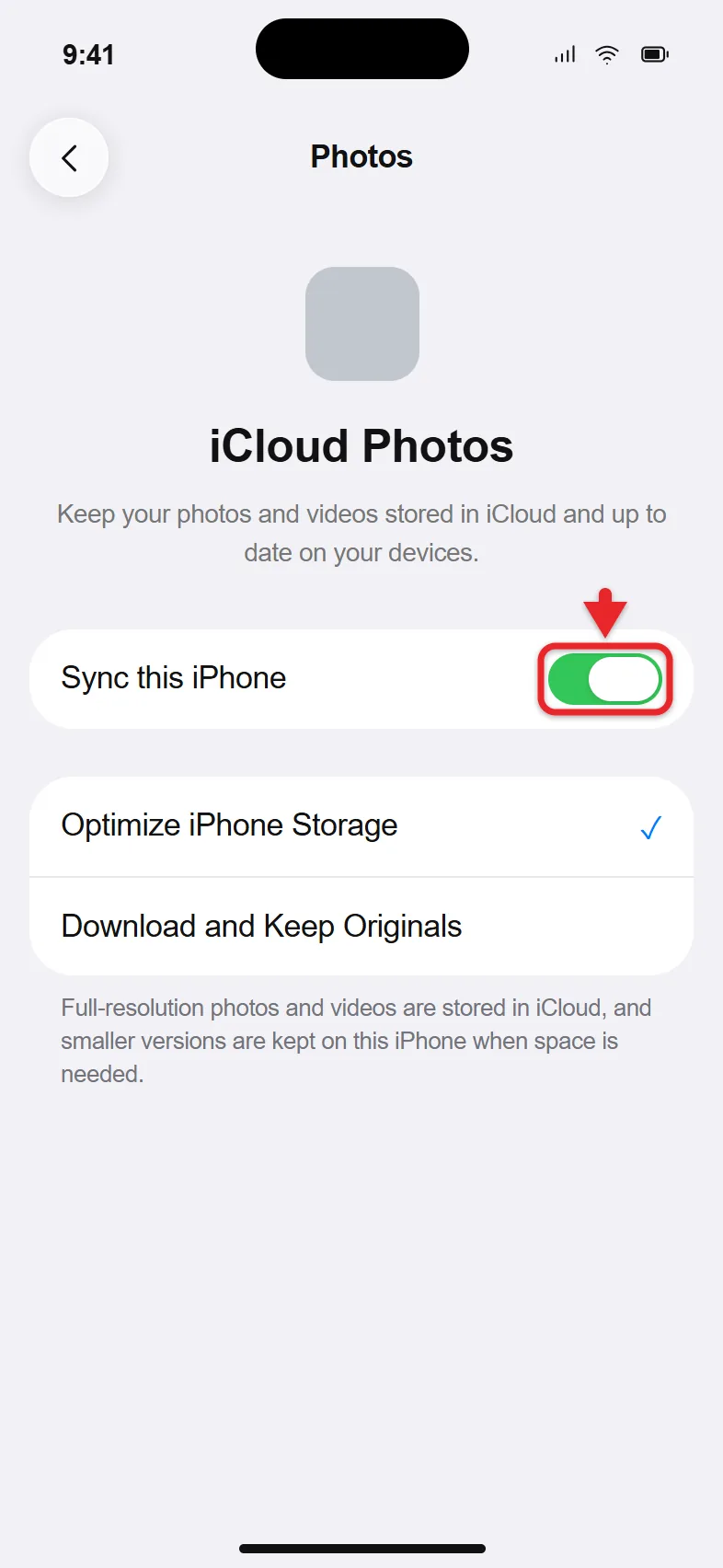
- Choose how to store photos on the iPhone. See the next section for the difference between the two choices.
- Repeat these steps on each iPhone, iPad, or Mac where you want the same library. Turning on iCloud Photos on one device doesn’t turn it on anywhere else.
Photos already in iCloud start appearing on the iPhone, and photos on the iPhone are added to iCloud. Nothing is replaced. iCloud Photos handles common formats, including HEIF, JPEG, RAW, PNG, GIF, TIFF, HEVC, and MP4 files, plus Live Photos, slo-mo, time-lapse, and 4K video.
Check the Upload Status
Open the Photos app, tap Collections, then tap your profile picture in the top-right corner. The status line under your name shows whether Photos is syncing, how many items are left, or why the upload is paused (for example, low battery or not enough iCloud storage). On iOS 18, tap the profile picture at the top of the Photos screen instead. On iOS 17 or earlier, tap Library, tap All Photos, and scroll to the bottom.

You can tap Pause on the same screen to stop uploading for a day, for example when you’re on a cellular connection.
In iOS 27, you can also push uploads to the front of the line. Go to Settings > your name > iCloud > Photos, tap Sync Immediately, and choose For Today. If you let it use cellular data, it may use a lot of your data plan.
Choose Optimize Storage or Download and Keep Originals
iCloud Photos gives you two ways to store the library on your iPhone:
- Optimize iPhone Storage keeps the full-size originals in iCloud and smaller versions on the phone when space runs low. Opening an original downloads it, so you need an internet connection.
- Download and Keep Originals keeps every full-size photo and video on the iPhone as well as in iCloud. It uses much more space on the phone.
To change the choice:
- Go to Settings > your name > iCloud > Photos.
- Tap iPhone Storage, then choose Optimize Storage or the download option.
Step 2 is for iOS 27. In iOS 26 and earlier, the two choices appear directly on the Photos screen.
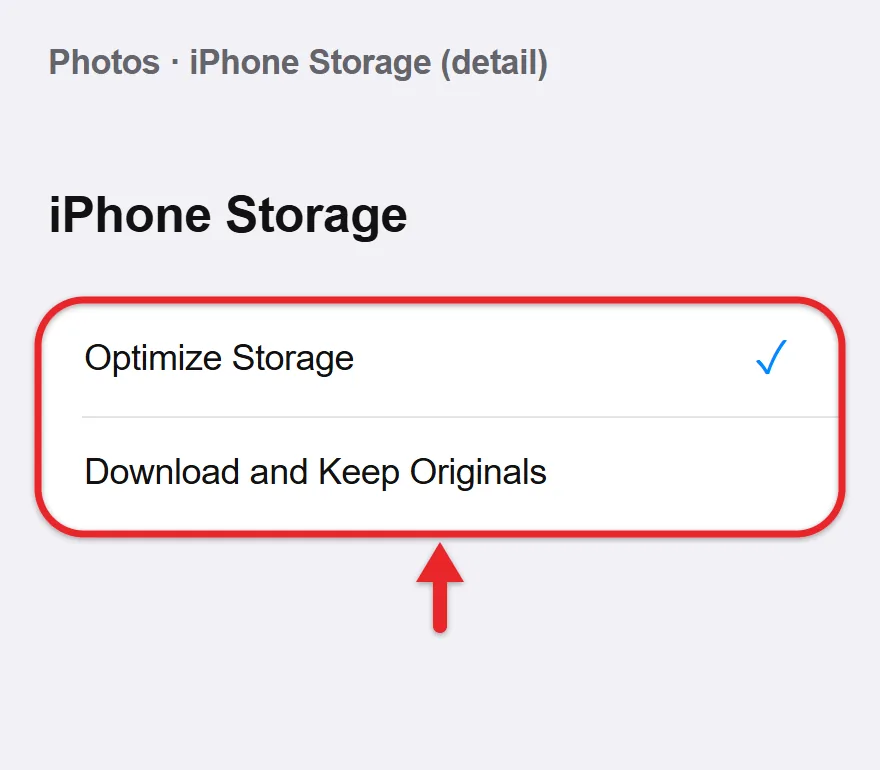
Most people with a big library and a phone that’s short on space should choose Optimize. Space frees up gradually as the iPhone needs it, not all at once.
iCloud Photos is often one of the suggestions when you view all storage recommendations on iPhone in Settings.
Turn Off iCloud Photos on One iPhone
Turning off sync on one device stops new photos, edits, and deletions from syncing between that iPhone and your other devices. Your library stays in iCloud and on your other devices. It also doesn’t free any iCloud storage, because the library is still stored there.
The iPad works the same way. Here is how to delete photos from an iPad but not other devices.
With iCloud Photos off, your photos go into your device backup instead, so it helps to back up your iPhone to iCloud regularly. A big photo library can make that backup large. To keep it in check, read about making your iPhone iCloud backup smaller.
Before you start: if you use Optimize iPhone Storage, the phone may only have small versions of many photos. Switch to Download and Keep Originals first, wait for the originals to download, and make sure the iPhone has room for the full library.
- Go to Settings > your name > iCloud.
- Under Saved to iCloud, tap Photos.
- Turn off Sync this iPhone.
- Choose what happens to the photos on this iPhone. Download Photos & Videos keeps a full copy on the iPhone. Remove from iPhone deletes the iCloud photos from this iPhone only, and they stay in iCloud.
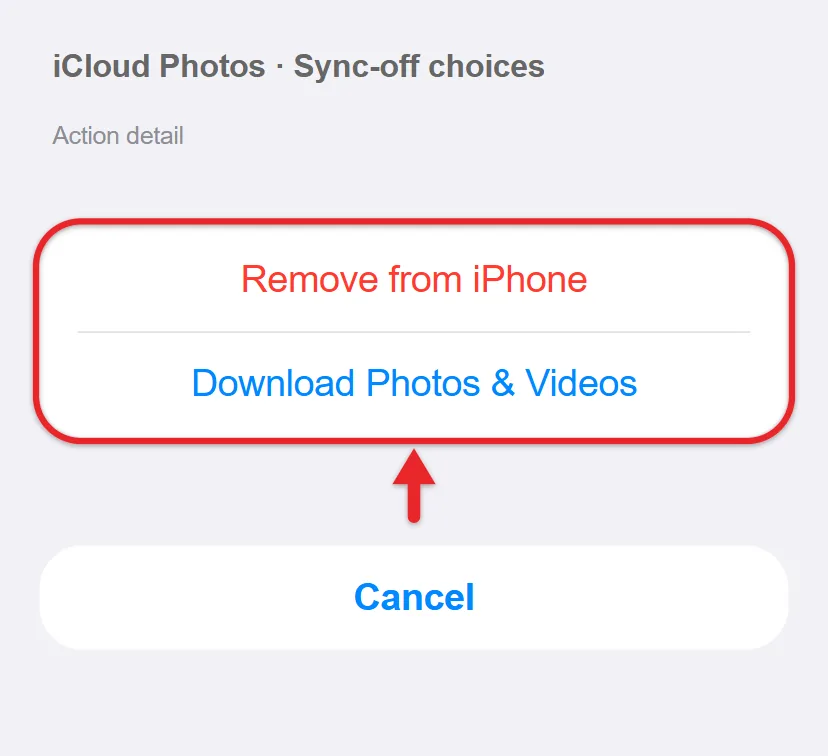
If you aren’t sure, choose Download Photos & Videos. Afterward, open the Photos app and scroll through to confirm your pictures are there. Apple’s guide to turning off iCloud Photos explains both choices.
To turn sync back on later, repeat the steps and turn the switch back on. The iPhone compares its library with iCloud again, which can take a few hours for a large library, and any photos you took while sync was off are uploaded.
Turn Off iCloud Photos Everywhere and Delete the Library
Use this only if you want to stop using iCloud Photos completely and free up the iCloud space. Download your originals to a computer or a device with Download and Keep Originals turned on first. If you own a Shared Photo Library, delete it before you continue.
For the cable and icloud.com methods of saving those originals, read about uploading photos from iPhone to a computer.
- Go to Settings > your name > iCloud.
- Tap Storage (on iOS 17 or earlier, Manage Account Storage).
- Tap iCloud Photos.
- Tap Turn Off and Delete Photos (on iOS 17 or earlier, Turn Off & Delete from iCloud).
Syncing stops on all your devices right away. Apple deletes the photos from iCloud after 30 days. Until then, you can return to the same screen and tap Undo Delete.
Turn iCloud Photos On or Off on a Mac or Windows PC
The library is shared across devices, but the switch is set on each one.
- Mac: Choose Apple menu > System Settings, click your name, click iCloud, click Photos under Saved to iCloud, and turn Sync this Mac on or off.
- Windows PC: Open iCloud for Windows, click Options next to Photos, check or clear iCloud Photos, click Done, then click Apply.
If Photos Aren’t Showing Up on Your Other Devices
- Check the account. Every device must be signed in to the same Apple Account and have iCloud Photos turned on.
- Read the status in Photos. A paused or unfinished upload doesn’t mean a photo is lost. Apple’s iCloud Photos sync troubleshooting page lists what each status means.
- Turn off Low Power Mode and Low Data Mode. Both pause syncing. Syncing also pauses when the battery is below 20 percent or the iPhone is too warm, so plug it in and let it cool.
- Tap Sync Now. If the status mentions optimizing battery, system performance, or a poor network connection, tap Sync Now or wait a few minutes.
- Check iCloud storage. If iCloud is full, uploads stop. Free up space or buy more storage.
- Look for an Unable to Upload album. Items in it couldn’t be uploaded. Edit them or upload them again from that album.
- Check the Shared Library view. If you use iCloud Shared Photo Library, photos you moved there no longer appear in your Personal Library view.
- Don’t switch iCloud Photos off and on to fix it. That restarts the whole sync. Update iOS instead and give it time.
- Don’t delete photos to fix sync. In iCloud Photos, deleting a photo on one device deletes it everywhere.
If you deleted something by mistake, open Photos, tap Collections, scroll to Utilities, and tap Recently Deleted. Items stay there for 30 days before they’re removed for good.
Frequently Asked Questions
Is iCloud Photos a backup?
Not by itself. It’s a sync service, so deletions sync too. Apple also says iCloud Photos aren’t included in your iCloud Backup. Keep a second copy of important photos, for example by backing up your iPhone photos to an external drive.
Google Photos and OneDrive can hold that second copy too. Here is how to upload pictures to the cloud from a computer, iPhone, or Android.
Will turning on iCloud Photos delete photos from my iPhone?
No. Your photos stay on the phone. With Optimize iPhone Storage on, some of them may be replaced by smaller versions while the originals stay in iCloud.
Will turning off iCloud Photos free up iCloud storage?
Not on its own. Turning off sync on one iPhone leaves the library in iCloud. Only Turn Off and Delete Photos, or deleting photos from the library, frees that space.
Do I need Shared Albums or a Shared Photo Library?
No. Shared Albums and iCloud Shared Photo Library are separate features for sharing with other people. You don’t need them to sync your own photos.
To set one up, follow the steps to share albums with friends and family on iPhone.
Can I use iCloud Photos to move pictures between my iPhone and iPad?
Yes. Turn on iCloud Photos on both devices with the same Apple Account. For the full steps, read about syncing pictures between iPhone and iPad with iCloud.

Matthew Burleigh is the founder, head writer, and editor of Solve Your Tech, which he launched in 2012. He has written technology tutorials since 2008 and worked in IT since 2003, including small-business support, IT management, and consulting. He holds Bachelor’s and Master’s degrees in Computer Science from Arizona State University.
Matthew writes practical guides for Windows, iPhone and iPad, Microsoft Office, Outlook, Google apps, and Android. Solve Your Tech’s guides are checked step by step against the device or app maker’s own documentation and tested on his own devices whenever he has the hardware or software, with clear steps, sources, and update dates.
Read more about Matthew and how Solve Your Tech writes and updates its guides, or report a correction.