An iPhone has no touchscreen calibration setting, and no app or reset can recalibrate the touch hardware. When taps land in the wrong place or do not register, the fixes Apple documents are cleaning the screen, removing the case and screen protector, restarting, updating iOS, adjusting Touch Accommodations, and, if nothing helps, getting the display checked.
Your iPhone screen is registering taps in the wrong place, or not at all, and you’ve read that you should recalibrate it. Here is what actually helps, in the order to try it.
Can You Calibrate an iPhone Touchscreen?
No. Unlike some older stylus devices, iOS has no screen where you tap targets to recalibrate touch. Advice that says Reset All Settings “recalibrates” the screen is wrong: that reset restores software preferences, and it does not retune the touch sensor.
The one place you will see the word “Recalibrate” is inside Touch Accommodations, an accessibility feature. Apple lists its Recalibrate Touch Accommodations button alongside Reset Touch Accommodations as a way to redo that feature’s setup; it is meant for people with hand tremors or limited fine motor control, and it does not change how the display hardware reads a finger. It is covered in detail further down, because it can help some readers.
Be wary of App Store or web “calibration” tools. Apple’s own touchscreen fixes do not include any calibration app, and an app is unlikely to have access to the touch hardware at that level.
Quick Fixes to Try First
Apple’s page on what to do if the screen isn’t working on your iPhone or iPad lists these steps for a screen that is unresponsive, too sensitive or works only some of the time:
- Clean the screen. Apple’s instruction is to make sure the screen is clean and free of debris or water. A soft, dry cloth works for most smudges. Dry your hands too, since wet fingers can make taps land oddly.
- Disconnect accessories. Unplug any Lightning or USB-C accessory, including the charger. If the screen only misbehaves while charging, try a different outlet, cable or charger.
- Remove the case and screen protector. A protector with a bubble, a crack or a raised edge, or a case that presses on the edge of the glass, can cause missed or phantom touches.
- Restart the iPhone. Turn it off and back on. Apple lists this first; it is the fastest fix for a temporary glitch. If the screen is too unresponsive to use the slider, use the force restart in the next section.
A simple way to check your progress between steps: open the Notes app, start a drawing, and drag a finger slowly across the whole screen in rows. A gap in the line shows exactly where touches are being missed, which is useful to describe if you end up contacting Apple.
Force Restart a Frozen or Unresponsive Screen
A force restart works even when the screen will not respond to touch. A force restart is not a reset, so your settings and data are not touched. The buttons depend on your model, per Apple’s guide to restarting an unresponsive iPhone.
iPhone with Face ID:
- Press and quickly release the volume up button.
- Press and quickly release the volume down button.
- Press and hold the side button. Keep holding until the Apple logo appears, which can take more than 10 seconds, then let go.
iPhone 7 or iPhone 7 Plus: press and hold the side button and the volume down button together until the Apple logo appears. iPhone 6s and earlier: press and hold the Home button and the side or top button together for about 10 seconds, until the logo appears. For an iPhone SE (2nd or 3rd generation) or iPhone 8, the volume up, volume down, hold side button sequence in Apple’s Force restart iPhone guide is the one to use.
If the iPhone does not turn on at all, Apple suggests charging it for about an hour first. For more detail on newer models, see turning off or force restarting an iPhone 16 or later.
Update iOS
Touch problems that start right after an app or iOS change are sometimes software bugs, and updates often include fixes. Before updating, back up the iPhone, plug it in and connect to Wi-Fi, as Apple’s update instructions recommend.
- Open Settings and tap General.
- Tap Software Update.
- If an update is listed, tap Download and Install and follow the prompts.
If the problem only happens in one app, close and reopen that app, and check the App Store for an update to it, before assuming the screen is at fault. If storage is nearly full, freeing space in Settings > General > iPhone Storage can help apps respond again; this is a general tip, not part of Apple’s touchscreen steps.
Tune How Your iPhone Responds to Touch
If the hardware is fine but the iPhone keeps treating your touches as the wrong gesture (a tap read as a swipe, a long press that does not trigger, several taps read as one), the Touch settings in Accessibility are where to adjust that. Apple describes them in its guide to adjusting how iPhone responds to your touch.
Touch Accommodations
Go to Settings > Accessibility > Touch > Touch Accommodations. The first time, you can use Set Up Touch Accommodations to walk through the options. The settings include:
- Hold Duration: how long you must touch the screen before it counts as a touch. Use the minus and plus buttons to set it.
- Swipe Gestures: options for how swipes are handled while Hold Duration is on.
- Ignore Repeat: treats several quick touches as a single touch, useful if a slight tremor causes double taps.
- Tap Assistance: choose whether a tap counts where your finger first lands (Use Initial Touch Location) or where it lifts off (Use Final Touch Location), with a gesture delay setting.
The same menu has Recalibrate Touch Accommodations and Reset Touch Accommodations buttons. Use Reset if you or someone else turned these options on and taps now feel strange; it should return them to their defaults.
For example, Priya’s iPhone started ignoring taps on the keyboard after a family member borrowed it. Touch Accommodations was on with a long Hold Duration. Turning it off fixed the “calibration” problem with no repair needed.
Haptic Touch and Tap to Wake
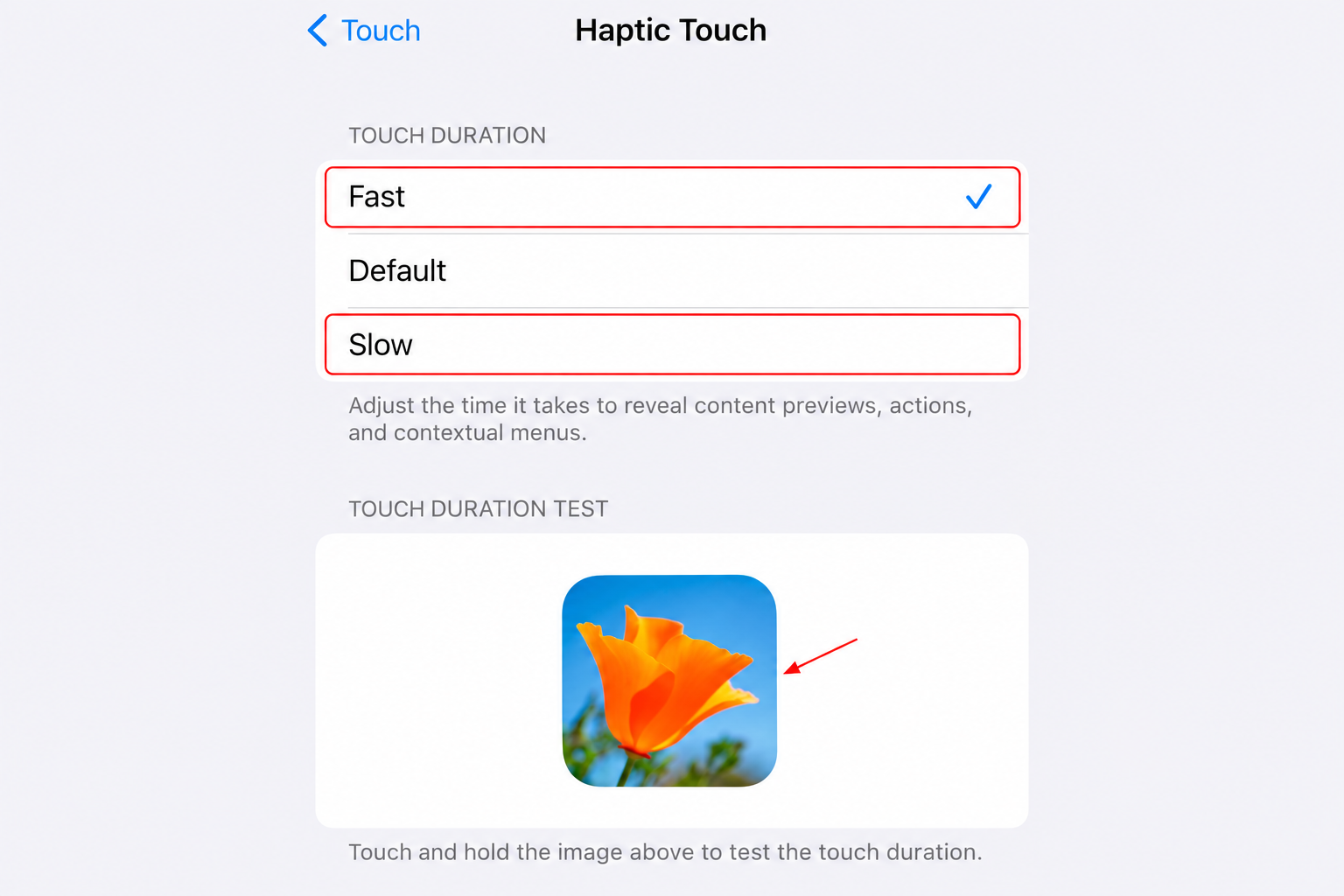
If long presses on app icons or links open too slowly or too easily, go to Settings > Accessibility > Touch > Haptic Touch and choose Fast or Slow. The screen includes a test image so you can try the timing. On the Touch screen you will also find Tap to Wake (on supported models) and Shake to Undo. If the issue is buzzing rather than touch, turning off system haptics handles the vibration side.
Reset All Settings
If you suspect a setting you cannot find is causing the problem, Reset All Settings returns your preferences to their defaults without erasing your apps, photos or other data. It will not recalibrate the screen, but it does undo accessibility changes along with everything else. Apple’s article on resetting iPhone settings lists what it affects, including network settings and Wi-Fi networks, the keyboard dictionary, location and privacy settings, Apple Pay cards, accessibility, display and sound settings, and Home Screen layout. Back up first, and expect to rejoin Wi-Fi networks and re-pair Bluetooth devices afterward.
- Open Settings > General.
- Tap Transfer or Reset iPhone, then tap Reset.
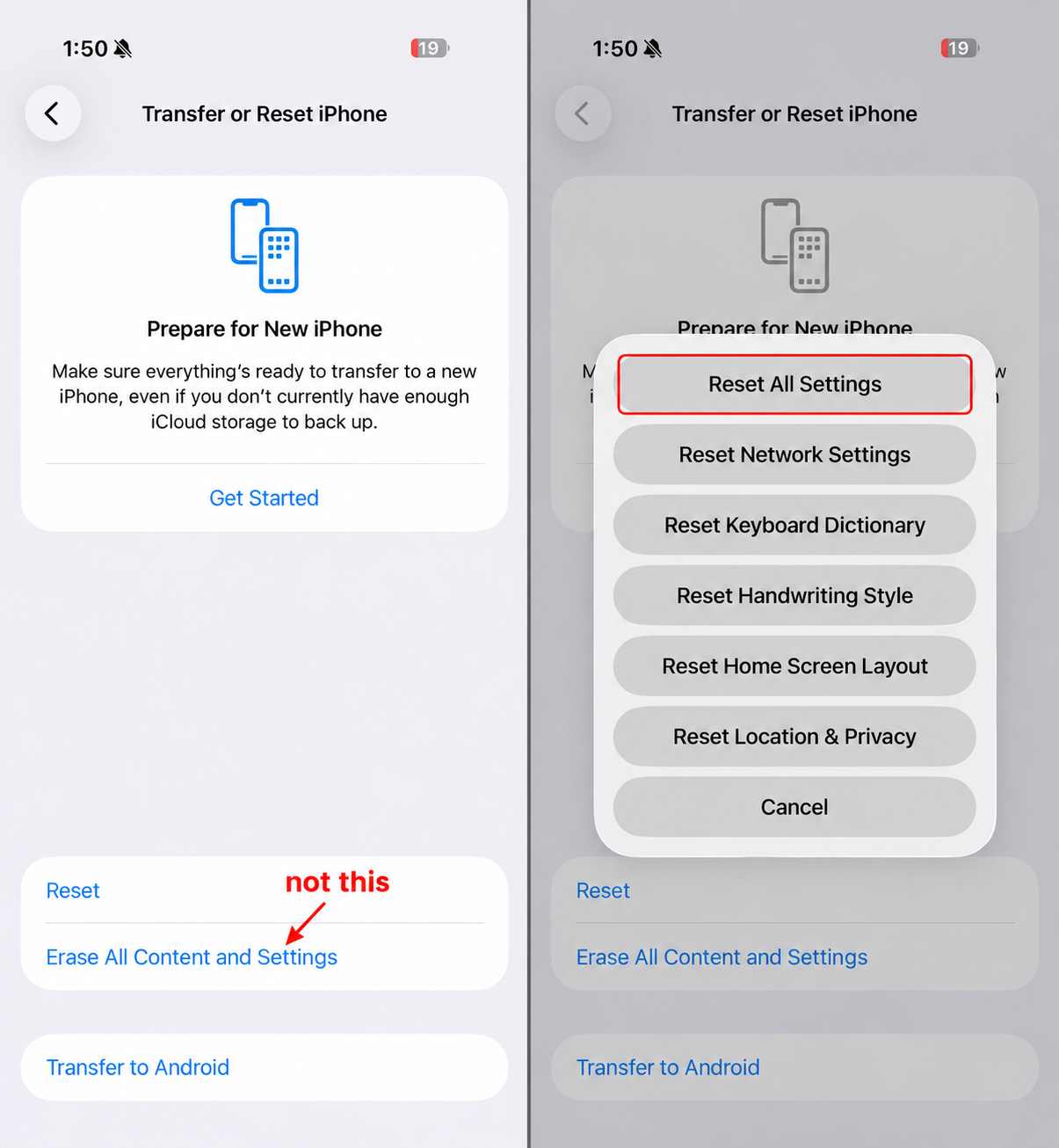
- Tap Reset All Settings, then enter your passcode and confirm if asked.
Be careful not to tap Erase All Content and Settings on the Transfer or Reset iPhone screen; that option deletes your data. If the touch problem continues even after an erase and setup, hardware is the likely cause, and restoring the iPhone from a backup brings your data back while you arrange a repair.
When It Is a Hardware Problem
If touch still fails in the same area after all of the above, or the glass is cracked or the phone has been wet, the display likely needs service. Apple’s last step for a screen that still is not working is to set up service for the device.
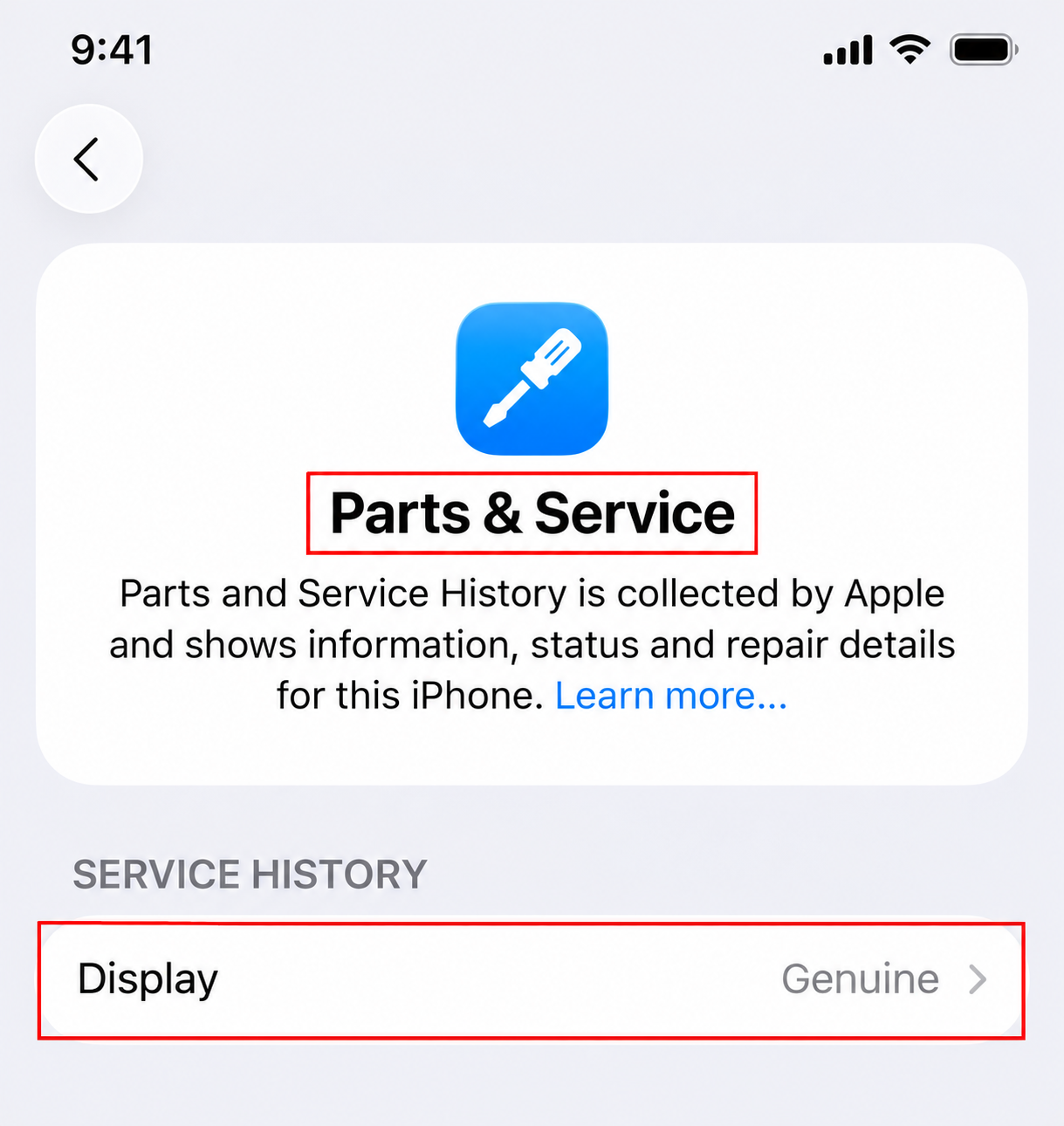
If the screen has been replaced before, check whether the part is genuine. According to Apple’s page about genuine iPhone displays, a non-genuine display might not respond on parts of the screen, might miss touches or register them in the wrong location, might register accidental edge or palm touches, and might register touches or stay on during phone calls. On iPhone 11 models and later (except iPhone SE 2nd and 3rd generation), go to Settings > General > About and scroll to Parts and Service History, which appears only if the iPhone has been repaired. Genuine next to Display means a genuine Apple part; Unknown means the display is not genuine or could not be verified.
Before a repair visit, back up the iPhone and note which steps you already tried and where on the screen touches fail. That shortens the diagnosis.
Touchscreen Questions
Will Reset All Settings delete my photos?
No. Apple states that it resets settings only and does not delete data or media. Erase All Content and Settings is the option that wipes the phone.
Why does only one part of my screen not respond?
A dead strip or corner after cleaning and removing the protector often points to hardware damage or, on a repaired phone, a non-genuine display. Software problems tend to affect the whole screen or a single app.
Can I still use my iPhone while waiting for a repair?
Possibly. Apple’s accessibility features include AssistiveTouch, which puts an on-screen menu in a reachable spot, and Voice Control, which lets you operate the iPhone by speaking. Either can help if a section of the screen will not take taps. You can turn either on in Settings > Accessibility.
Is screen color calibration the same thing?
No. Color, brightness and features like True Tone are display settings and have nothing to do with where touches register. If colors look off, look in the Display & Brightness settings rather than the Touch settings. Apple does note that a non-genuine replacement display may show incorrect color calibration, so color and touch problems together on a repaired phone are worth getting checked.
Start with the cleaning and restart steps; most touch complaints end there, and the rest point clearly toward settings or service.

Matthew Burleigh is the founder, head writer, and editor of Solve Your Tech, which he launched in 2012. He has written technology tutorials since 2008 and worked in IT since 2003, including small-business support, IT management, and consulting. He holds Bachelor’s and Master’s degrees in Computer Science from Arizona State University.
Matthew writes practical guides for Windows, iPhone and iPad, Microsoft Office, Outlook, Google apps, and Android. Solve Your Tech’s guides are checked step by step against the device or app maker’s own documentation and tested on his own devices whenever he has the hardware or software, with clear steps, sources, and update dates.
Read more about Matthew and how Solve Your Tech writes and updates its guides, or report a correction.