To increase text size in Windows 11, select Start > Settings > Accessibility > Text size, drag the Text size slider to the right, and select Apply. That makes text bigger across Windows without enlarging images and apps. If everything on screen is too small, change the display Scale instead, and use Magnifier when you only need to zoom in for a moment.
This guide covers Windows 11 Home and Pro. It walks through the Text size setting, display scaling, custom scaling, Magnifier and contrast themes, and how to fix text that looks cut off or blurry afterward.
How to Increase Text Size in Windows 11
These steps come from Microsoft’s Change the size of text in Windows page.
- Press Windows key + U, or select Start > Settings > Accessibility. Accessibility settings open.
- Under Vision, select Text size. A Text size preview and slider appear.
- Drag the Text size slider to the right. A percentage shows how large the text will be compared with the default of 100%. The preview text grows as you drag.
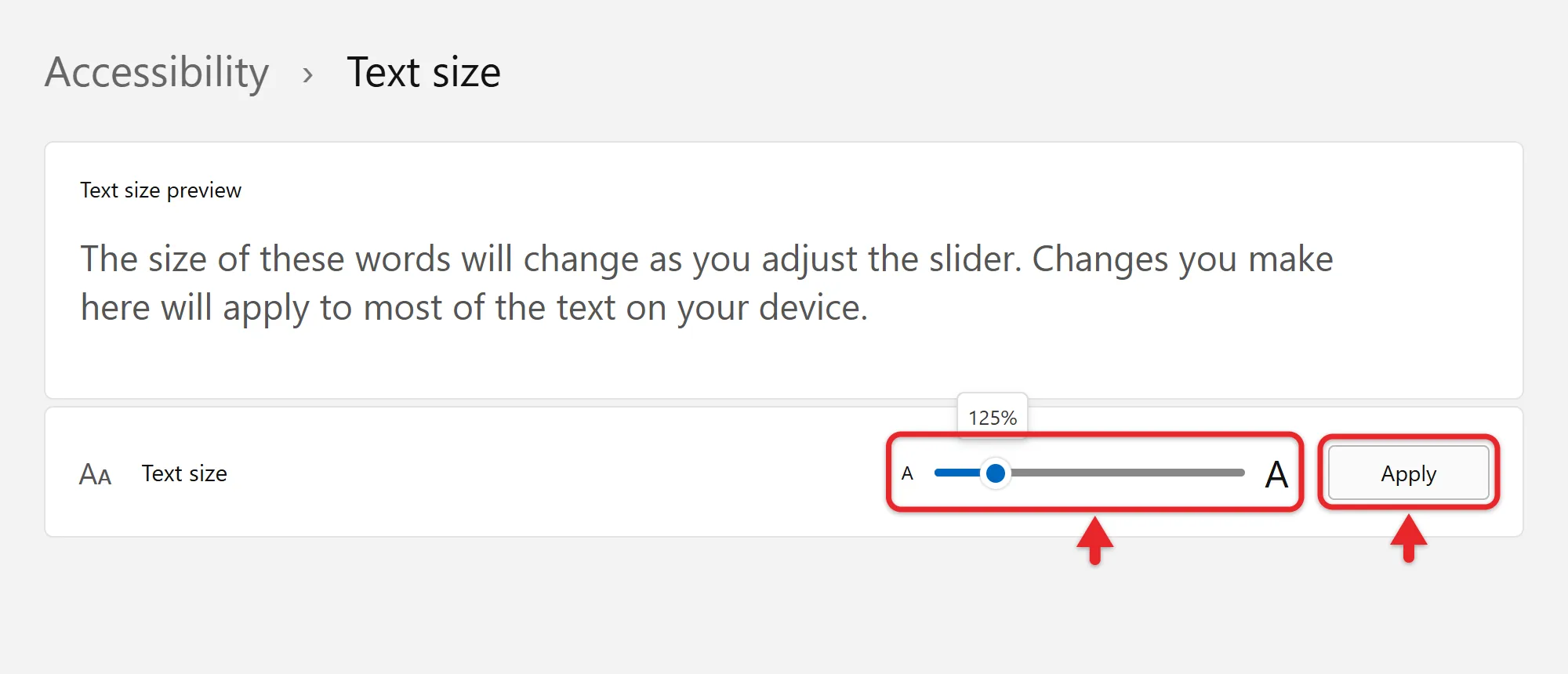
- Select Apply. Windows refreshes, and text in menus, title bars, File Explorer and Settings appears larger.
The new size stays in place after you restart. To go back to normal, return to the same page and set the slider to 100%. The slider goes up to 225%.
If scale, resolution or other screen options have changed too, you can reset display settings in Windows 11.
Text Size vs. Display Scale
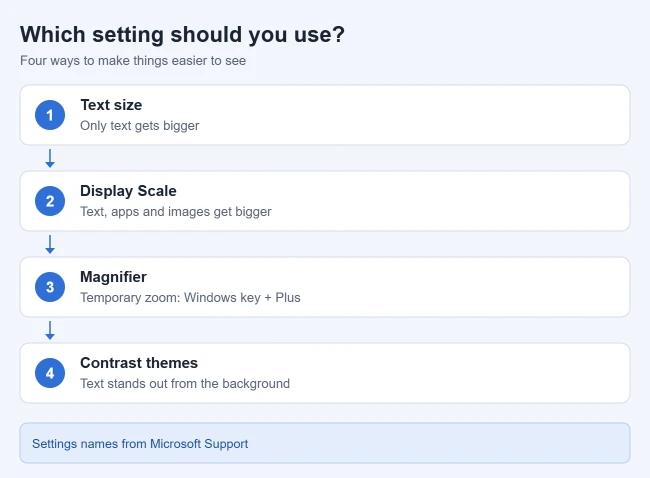
Windows 11 has two main settings for making things bigger, and they do different jobs:
- Text size (Accessibility) makes only text larger. Icons, pictures and app layouts stay the same size.
- Scale (Display) makes everything larger, including text, apps and images. Microsoft points to it when you want everything larger.
Text size may not enlarge text in some menus or on buttons. If that’s your problem, try Scale.
If websites in Chrome are the main problem, you can also use a bigger default font size in Google Chrome.
If only your email is hard to read, you can change the font size in Microsoft Outlook instead.
How to Make Everything Bigger With Display Scale
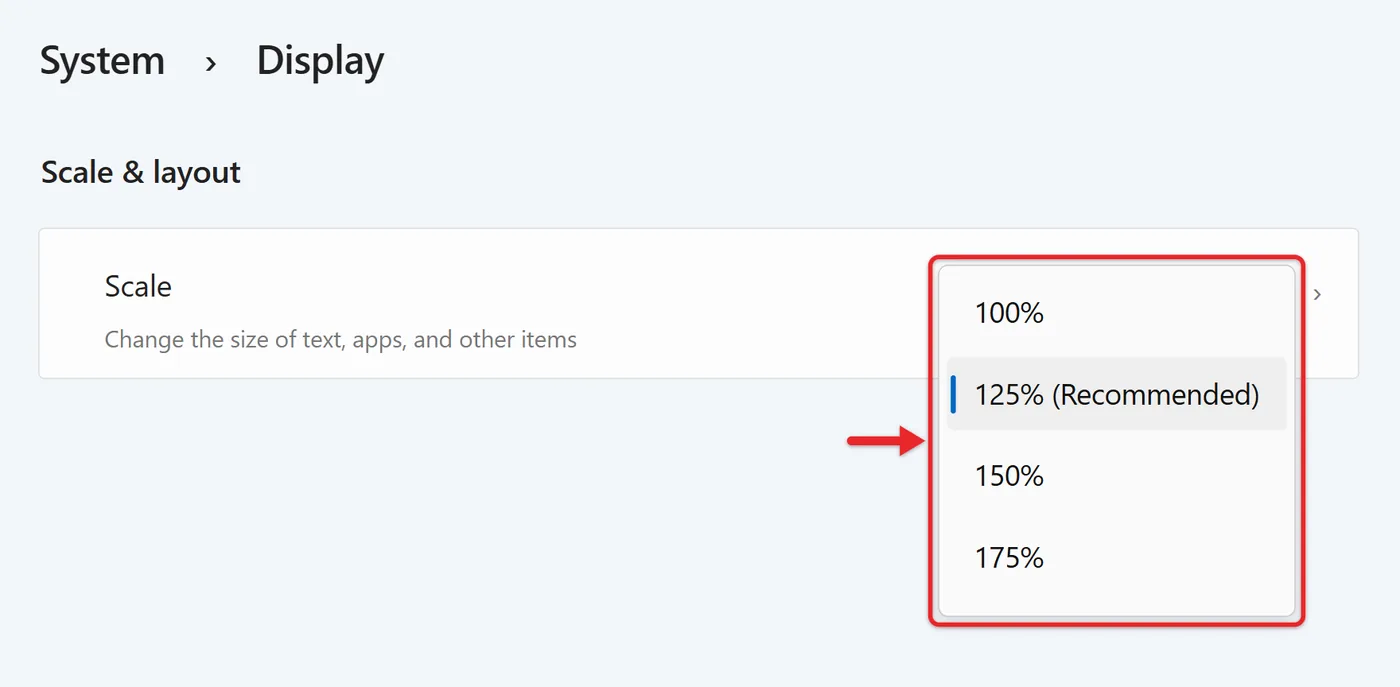
- Open Settings > System > Display. You can also select Display under Related settings on the Text size page. Display settings open.
- Under Scale & layout, open the drop-down menu next to Scale. A list of percentages appears.
- Choose a larger percentage. Text, apps and images get bigger right away.
If you have more than one monitor, select the display you want at the top of the page first, since each screen can have its own scale. Only want bigger desktop icons? Change the icon size in Windows 11 instead.
Custom scaling
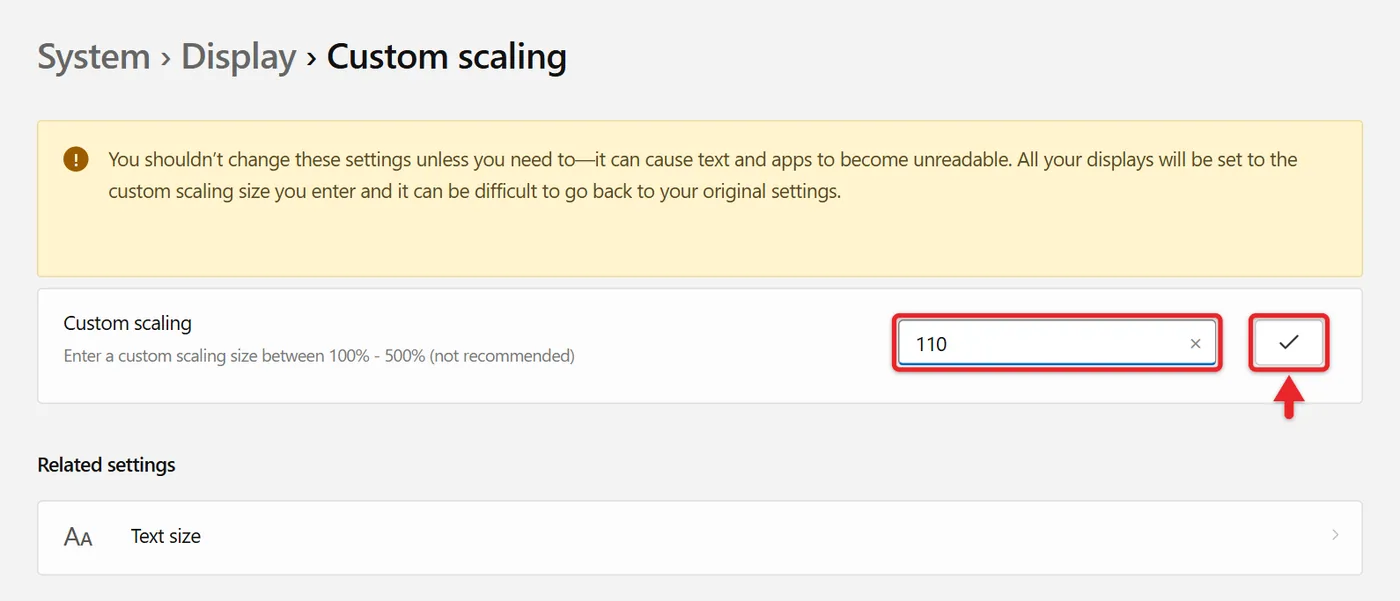
If the preset choices aren’t big enough, select the arrow next to Scale, enter a percentage in the Custom scaling box, and sign out to apply it. Windows warns that some text, apps, and items may not look right at a custom scale, so try the preset values first.
Zoom In Temporarily With Magnifier
Magnifier enlarges part or all of the screen without changing any settings permanently. Microsoft’s Magnifier guide lists these shortcuts:
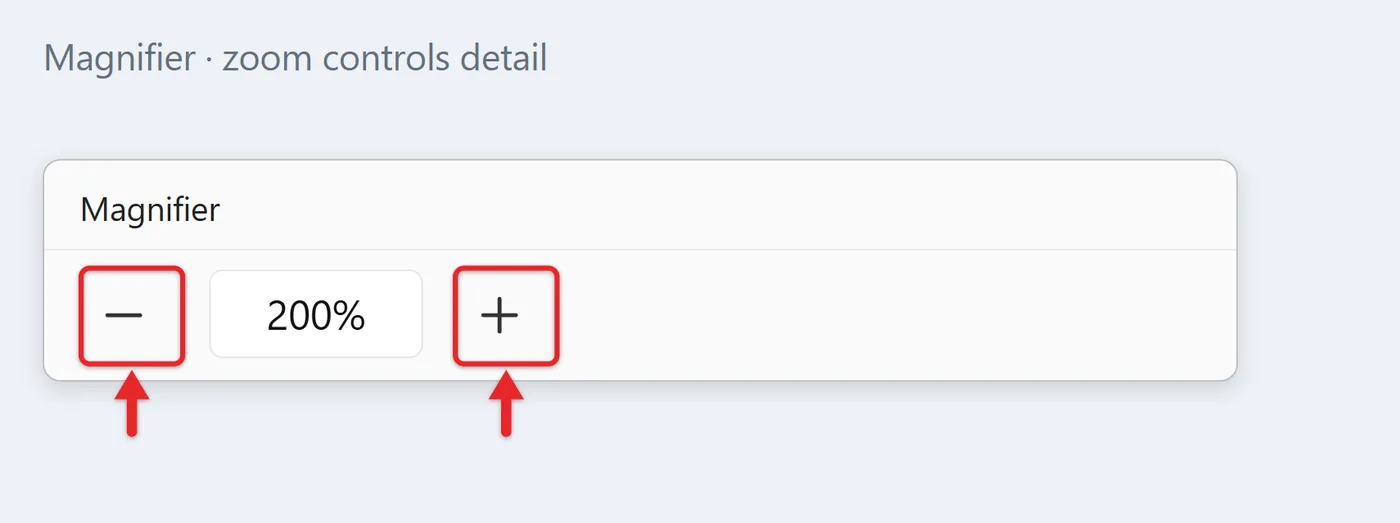
- Windows key + Plus (+) turns Magnifier on and zooms in.
- Windows key + Minus (-) zooms out.
- Windows key + Esc turns Magnifier off.
To change how far it zooms, go to Settings > Accessibility > Magnifier and use the Zoom level buttons. The same page lets you set Magnifier to start automatically before or after you sign in.
There’s more on turning on Magnifier in Windows, including its three views and how to have it read text aloud.
If Text Is Big Enough but Hard to Read
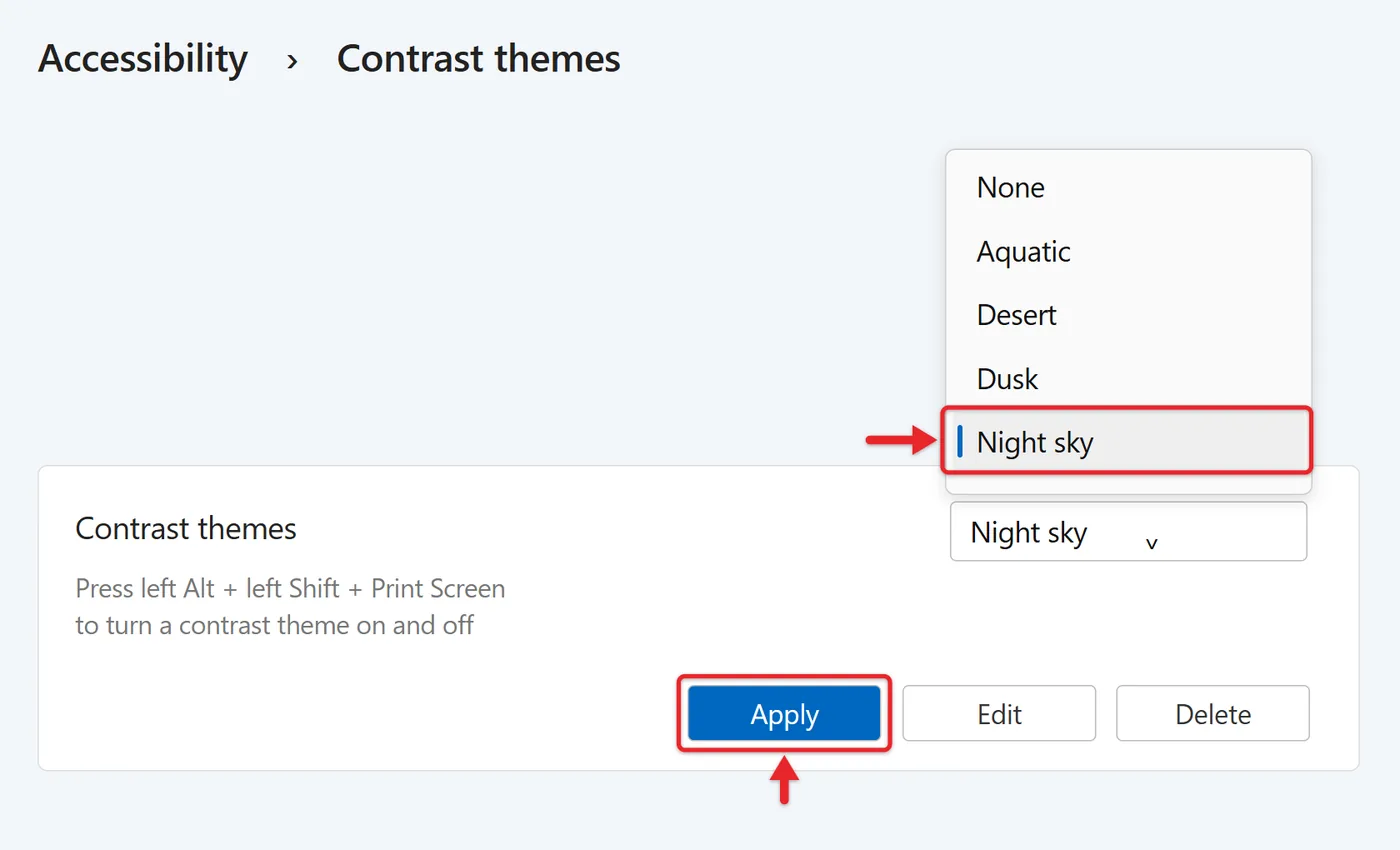
Size isn’t always the problem. Low contrast can make text hard to read at any size. Microsoft’s contrast themes page says to go to Settings > Accessibility > Contrast themes, pick a theme from the drop-down menu and select Apply. To turn it off, choose None. Microsoft also lists a shortcut: left Alt + left Shift + Print Screen toggles high contrast on or off.
A hard-to-see pointer has its own fix: you can change the mouse cursor size and color from the same Accessibility settings.
Still on Windows 10? Follow the older steps for enabling high contrast mode. To swap the typeface itself rather than its size, change fonts in Windows 11.
Fix Text That Looks Wrong After Resizing
- Words are cut off with “…”: Some larger text may not fit the space in an app. Choose a slightly smaller Text size.
- An app didn’t change: some older apps may not follow the Windows text setting. Try display Scale or Magnifier for that app.
- Things look blurry or out of place after changing Scale: signing out and back in can help apps redraw at the new scale.
- Text got huge by accident: go back to Accessibility > Text size and move the slider to 100%, or set Scale back to the recommended value.
Frequently Asked Questions
Does Text size change File Explorer text?
Yes. Text size applies across Windows, including File Explorer, menus and title bars.
How do I make text bigger in a web browser only?
Browsers have their own zoom. In most browsers, press Ctrl + Plus to zoom in and Ctrl + 0 to reset. This doesn’t change Windows text elsewhere.
Where is this setting in Windows 10?
Microsoft’s page lists it under Settings > Ease of Access > Display, using the Make text bigger slider.
Can I make the taskbar text bigger?
Text size doesn’t give you a separate taskbar control. Display Scale enlarges the taskbar along with everything else.
Want a different typeface rather than bigger text? Learn how to install fonts on Windows 11.

Matthew Burleigh is the founder, head writer, and editor of Solve Your Tech, which he launched in 2012. He has written technology tutorials since 2008 and worked in IT since 2003, including small-business support, IT management, and consulting. He holds Bachelor’s and Master’s degrees in Computer Science from Arizona State University.
Matthew writes practical guides for Windows, iPhone and iPad, Microsoft Office, Outlook, Google apps, and Android. Solve Your Tech’s guides are checked step by step against the device or app maker’s own documentation and tested on his own devices whenever he has the hardware or software, with clear steps, sources, and update dates.
Read more about Matthew and how Solve Your Tech writes and updates its guides, or report a correction.