To turn Bluetooth off completely on an iPhone or iPad, open Settings, tap Bluetooth, and turn off the Bluetooth switch. The Bluetooth button in Control Center only disconnects your accessories for a while; Bluetooth itself stays on and reconnects later.
These steps match iOS 27 and iPadOS 27, and they also work on iOS 26, iOS 18, and earlier versions back to iOS 11, when Apple changed how the Control Center button behaves. The behavior of the two controls comes from Apple’s support article Use Bluetooth and Wi-Fi in Control Center.
Turn Bluetooth Off in Settings
This is the only way to switch Bluetooth fully off by hand.
- Open the Settings app on your iPhone or iPad.
- Tap Bluetooth. On an iPhone it’s near the top, below Wi-Fi. On an iPad it’s in the left column.
- Tap the Bluetooth switch at the top of the screen so it turns gray. The list of your devices disappears, and anything connected, such as headphones, a keyboard, or a speaker, disconnects.
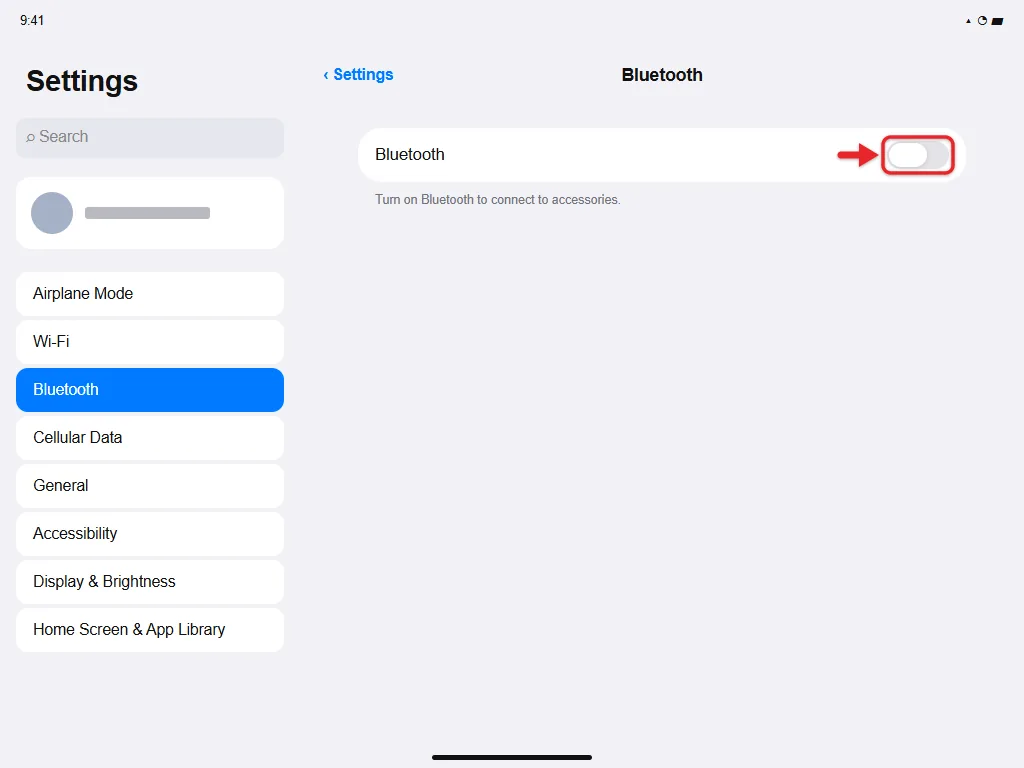
Bluetooth now stays off until you turn it back on yourself. It won’t come back on overnight or after a restart. In Control Center, the Bluetooth button now looks dimmed with a line through it.
Keep in mind that several features rely on Bluetooth. With it off in Settings, AirDrop, Apple Watch, an Apple Pencil, Handoff, Instant Hotspot, and Unlock with Apple Watch stop working until you turn it back on.
Setting up a new tracker needs Bluetooth on as well, for example when you connect an AirTag to your iPhone.
A wireless keyboard needs it too, so turn Bluetooth back on before you use an Apple wireless keyboard with your iPhone.
Fitness trackers depend on it as well. A Fitbit can’t send new steps or sleep data while Bluetooth is off, so turn it back on and sync your Fitbit with your iPhone to catch up.
Turn Bluetooth Back On
- Open Settings and tap Bluetooth.
- Turn on the Bluetooth switch so it turns green. Your paired accessories appear under My Devices, and nearby accessories in pairing mode appear under Other Devices.
- Turn on the accessory you want to use. Devices you’ve paired before usually reconnect on their own within a few seconds. If one doesn’t, tap its name in the list.
You can also turn Bluetooth on from Control Center by tapping the Bluetooth button so it turns blue.
Use the Bluetooth Button in Control Center
Control Center is the quicker option when you want to drop your accessory connections for now, not shut Bluetooth down.
- Open Control Center. On an iPhone with Face ID or on an iPad, swipe down from the top-right corner of the screen. On an iPhone with a Home button, swipe up from the bottom edge.
- Find the group of connection buttons (Airplane Mode, Wi-Fi, Cellular, and Bluetooth), usually at the top left. If you only see part of it, touch and hold the group to expand it.
- Tap the Bluetooth button (the angular “B” icon). It changes from blue to gray or white.
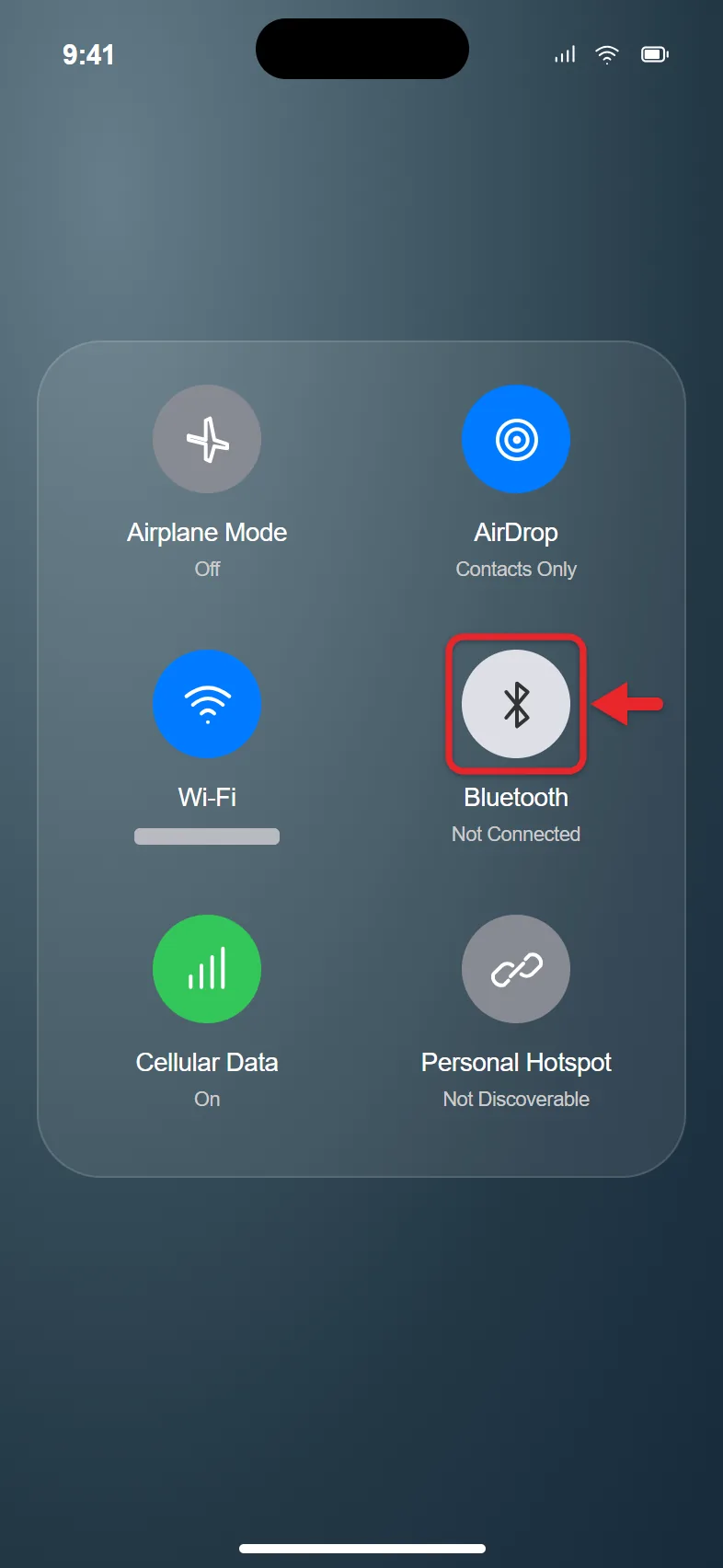
Your accessories disconnect, but Bluetooth stays available. Apple says AirDrop, AirPlay, Apple Pencil, Apple Watch, Unlock with Apple Watch, Handoff, Instant Hotspot, and Location Services keep working.
To choose which apps can use your location, follow the steps to turn Location Services on or off on iPad.
Bluetooth reconnects to your accessories when any of these things happen:
- You tap the Bluetooth button in Control Center again.
- You connect to an accessory in Settings > Bluetooth, or pick a Bluetooth device from the AirPlay audio menu.
- The clock reaches 5 a.m. local time.
- You restart the iPhone or iPad.
Which one should you use? If you want your earbuds to stop grabbing audio for the rest of the day, Control Center is fine. If you want Bluetooth off for good, such as to stop a car or speaker from connecting, or to rule Bluetooth out while troubleshooting, use the switch in Settings.
If calls still land on the loudspeaker with Bluetooth off, check how to stop your iPhone answering calls on speaker.
If the earpiece stays silent with Bluetooth off, here’s how to fix an iPhone that only hears callers on speaker.
Ask Siri
If Siri is set up, you can say “Turn off Bluetooth” or “Turn on Bluetooth.” Siri flips the same switch you’d use in Settings, so “turn off” shuts Bluetooth down fully rather than just disconnecting accessories. If you’re talking to Siri through Bluetooth earbuds or a car, that connection drops too, so use the Settings switch to turn it back on.
Airplane Mode and Bluetooth
On iPhone and iPad, Airplane Mode turns off the cellular and Wi-Fi radios but leaves Bluetooth on, so wireless headphones keep working on a flight. If you turn Bluetooth off while Airplane Mode is on, your device remembers that choice and turns Bluetooth off the next time you use Airplane Mode. To go back to keeping it on, turn Bluetooth back on while you’re in Airplane Mode. Apple’s Use Airplane Mode on your iPhone and iPad article explains this behavior.
Forget a Bluetooth Device
Turning Bluetooth off disconnects everything temporarily. If you want one accessory gone from your list for good, forget it instead.
- Open Settings > Bluetooth. Bluetooth needs to be on to see your devices.
- Tap the More Info button (the “i” in a circle) next to the device.
- Tap Forget This Device, then tap Forget Device to confirm.
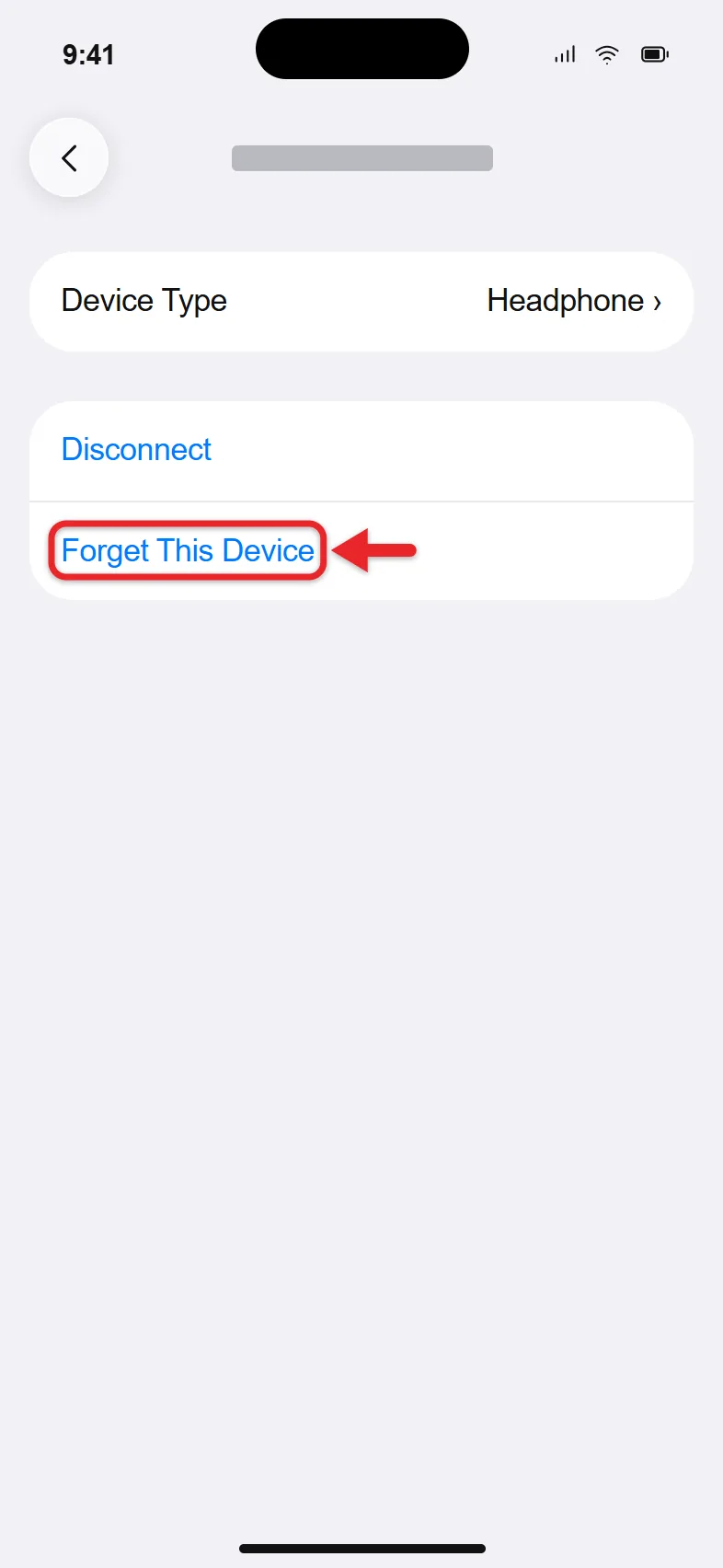
The device disappears from My Devices. To use it again, put it back in pairing mode and pair it from Settings > Bluetooth. If you forget AirPods, they’re also removed from your other devices signed in to the same Apple Account. The steps for forgetting a Bluetooth device on iPhone cover this in more detail.
If Bluetooth Won’t Turn On or a Device Won’t Connect
- The Bluetooth switch is gray and won’t move. Restart the iPhone or iPad and try again. If it’s still stuck, check for an update in Settings > General > Software Update. A switch that stays grayed out is a case for Apple Support.
- Bluetooth keeps coming back on. You probably turned it off from Control Center, which reconnects at 5 a.m. or after a restart. Use the switch in Settings > Bluetooth instead.
- An accessory won’t reconnect. Turn the accessory off and on, make sure it’s charged or has fresh batteries, and keep it close to your device.
- An app can’t find the accessory. Go to Settings > Privacy & Security > Bluetooth and make sure that app is allowed to use Bluetooth.
- It pairs with other devices but not yours. Unpair it from the other phone or computer first, then forget it on your iPhone or iPad, put it in pairing mode, and pair it again.
- Nothing pairs at all. Check with the accessory maker that it works with your iPhone or iPad. If no Bluetooth accessory will connect, contact Apple Support.
Apple’s Bluetooth accessory troubleshooting article lists the same checks and when to contact the accessory maker.
Frequently Asked Questions
Why does Bluetooth turn back on by itself?
You most likely tapped the Bluetooth button in Control Center. Since iOS 11, that button only disconnects accessories until 5 a.m. or your next restart. On older versions such as iOS 7, the Control Center button turned Bluetooth fully off, which is why older guides describe it differently. On current software, use Settings > Bluetooth.
Does turning off Bluetooth disconnect my Apple Pencil?
Turning Bluetooth off in Settings disconnects an Apple Pencil along with everything else. The Control Center button doesn’t disconnect it. If your Pencil needs to be paired again afterward, here’s how to pair and use Apple Pencil on iPad.
Apple Pencil pairs only with an iPad, so if you were hoping to use one with your phone, see whether you can connect Apple Pencil to an iPhone.
Does turning off Bluetooth save battery?
A little, but not much. Bluetooth uses very little power when nothing is connected, and leaving it on is recommended for the best experience. Turning it off makes the most sense when you want accessories to stop connecting, not as a battery fix.
Will turning off Bluetooth stop my iPhone from sharing its hotspot with my iPad?
Turning Bluetooth off in Settings stops Instant Hotspot from working between your devices. If you rely on it to share your iPhone’s internet with your iPad, leave Bluetooth on.

Matthew Burleigh is the founder, head writer, and editor of Solve Your Tech, which he launched in 2012. He has written technology tutorials since 2008 and worked in IT since 2003, including small-business support, IT management, and consulting. He holds Bachelor’s and Master’s degrees in Computer Science from Arizona State University.
Matthew writes practical guides for Windows, iPhone and iPad, Microsoft Office, Outlook, Google apps, and Android. Solve Your Tech’s guides are checked step by step against the device or app maker’s own documentation and tested on his own devices whenever he has the hardware or software, with clear steps, sources, and update dates.
Read more about Matthew and how Solve Your Tech writes and updates its guides, or report a correction.