To turn on Instagram notifications on an iPhone, open Settings, tap Notifications, tap Instagram, and turn on Allow Notifications. Then open Instagram, go to your profile, tap the menu icon (three lines), tap Notifications, and make sure Pause all is off and the alert types you want are turned on.
You need both parts. The iPhone setting decides whether Instagram can send alerts at all, and Instagram’s own settings decide which events (likes, comments, messages, new posts) trigger one. These steps were written for iOS 26 and also apply to iOS 18 and iOS 27, so they work the same on an iPhone 13 and every newer model.
Turn On Instagram Notifications in iPhone Settings
- Open the Settings app (the gray gear icon) on your Home Screen.
- Scroll down and tap Notifications. You’ll see global options at the top, such as Scheduled Summary and Show Previews, and a list of apps under Notification Style.
- Scroll through the app list and tap Instagram. Apps are listed alphabetically. Under the app name you’ll see a short summary such as “Off” or “Banners, Sounds, Badges.”
- Tap the switch next to Allow Notifications so it turns green. More options appear below it as soon as it’s on.
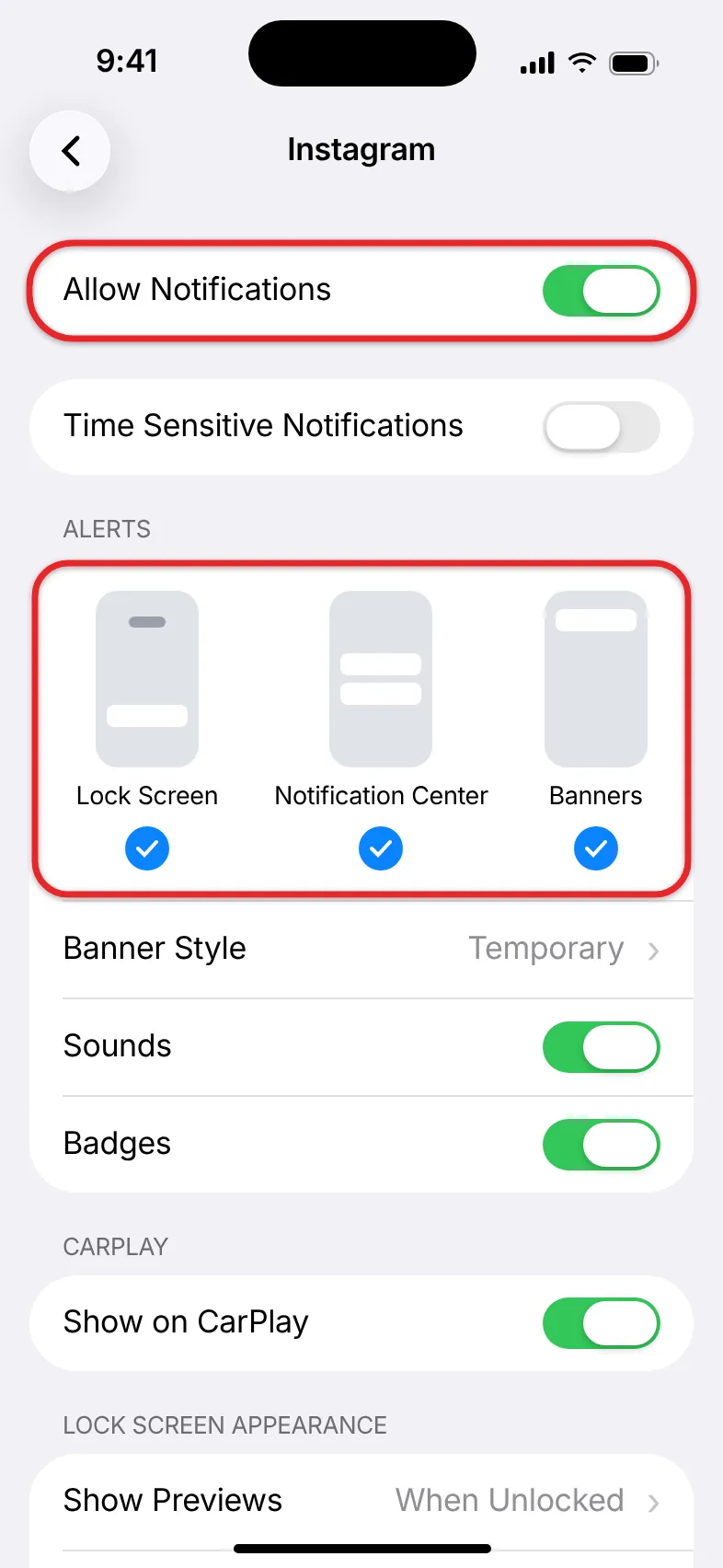
- Under Alerts, make sure Lock Screen, Notification Center, and Banners each have a check mark if you want to see Instagram alerts in all three places.
- Turn on Sounds if you want a tone when an alert arrives, and Badges if you want the red number on the Instagram icon.
There’s no save button. The change takes effect right away, and the next Instagram alert should appear. To check, ask a friend to send you a direct message or like one of your posts.
You can reach the same screen another way: Settings > Apps > Instagram > Notifications. Apple moved third-party app settings into the Apps section in iOS 18, so if you went looking for Instagram near the bottom of the main Settings list and couldn’t find it, that’s why. Apple’s guide to iPhone notification settings covers the Notifications screen in more detail.
If you’ve never seen Instagram in the Notifications list, open the Instagram app once. The first time it runs, it asks whether it can send notifications. Tap Allow and the app is added to the list with notifications on.
Choose How Instagram Alerts Look and Sound
The rest of the Settings > Notifications > Instagram screen controls how alerts appear once they’re allowed. None of these options turns notifications off, but a few can make it look like they’re missing.
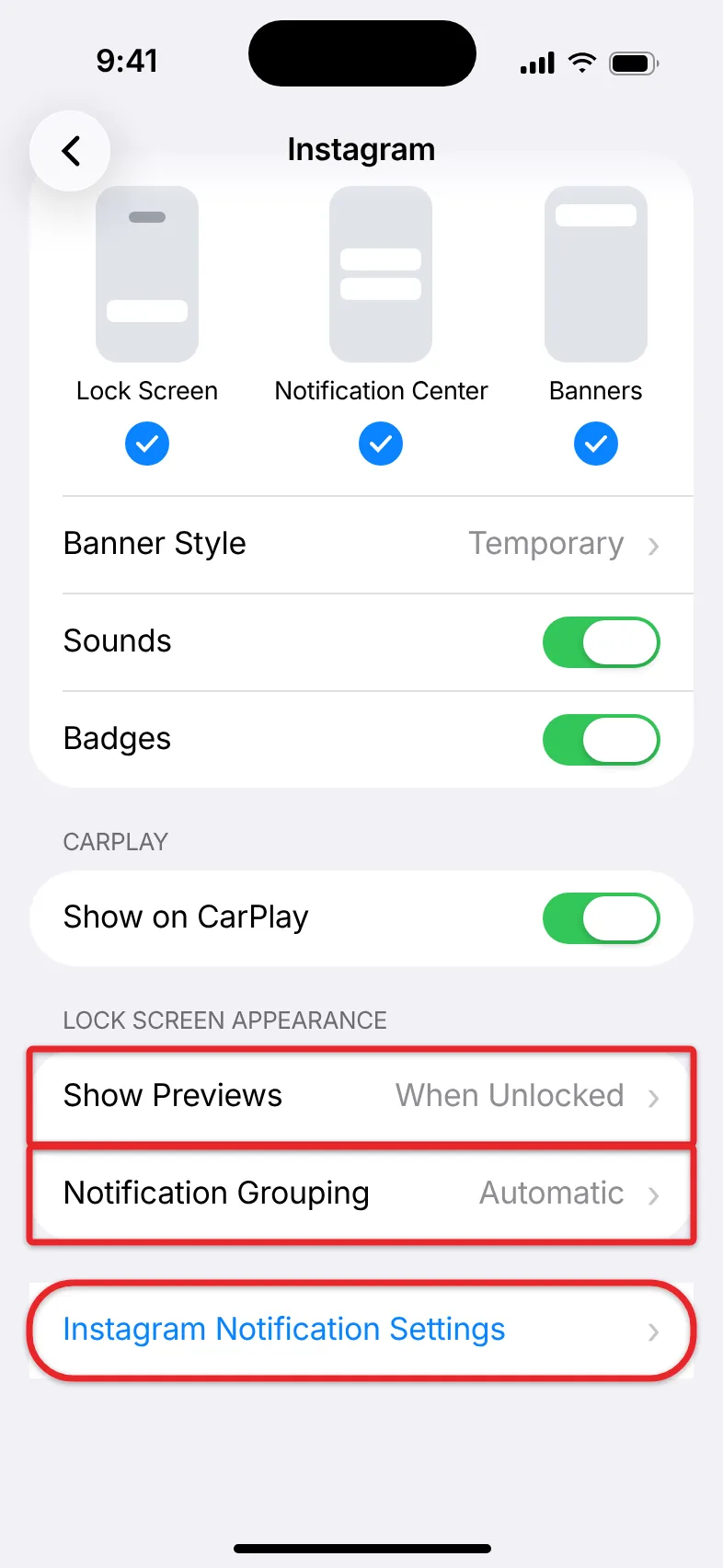
- Banner Style. Temporary banners slide away after a few seconds. Persistent banners stay at the top of the screen until you swipe them away or tap them. Choose Persistent if you tend to miss quick banners.
- Show Previews. This decides whether the alert shows the actual text, such as who commented and what they said. Always shows it on the Lock Screen, When Unlocked shows it only after Face ID unlocks the phone, and Never shows just “Instagram” and “Notification.”
- Notification Grouping. Automatic groups Instagram alerts by topic, such as one conversation. By App puts every Instagram alert into a single stack. Off shows each alert separately. If you get a lot of likes and comments, Automatic or By App keeps Notification Center tidy. Grouped alerts still arrive; tap the stack to expand it.
- Notification Delivery. This appears only when Scheduled Summary is turned on under Settings > Notifications. Choose Immediate Delivery if you want Instagram alerts the moment they happen. With Scheduled Summary, they wait for the next summary time you’ve set.
- Time Sensitive Notifications. If you see this switch, leave it on. It lets alerts the app marks as time-sensitive come through during a Focus that allows them.
- Instagram Notification Settings. This link at the bottom of the screen opens the notification settings inside the Instagram app, covered next.
To make Instagram alerts stand out from your other apps, you can also change the app’s notification sound.
Some built-in apps have their own switches too, such as the Weather app’s rain and snow notifications.
Turn On Notifications Inside the Instagram App
Instagram has its own notification switches for each kind of activity. If the iPhone setting is on but you only get some alerts, or none, check these.
- Open the Instagram app.
- Tap your profile picture in the bottom-right corner. Your profile opens.
- Tap the menu icon (three horizontal lines) in the top-right corner. The Settings and activity screen opens.
- Tap Notifications. It’s near the top, in the section about how you use Instagram.
- Make sure the Pause all switch is off. When it’s on, Instagram holds all push notifications for the period you chose, up to 8 hours.
- Tap each category and choose the alerts you want. Most options have Off and On choices, and some also let you pick From people I follow or From everyone.
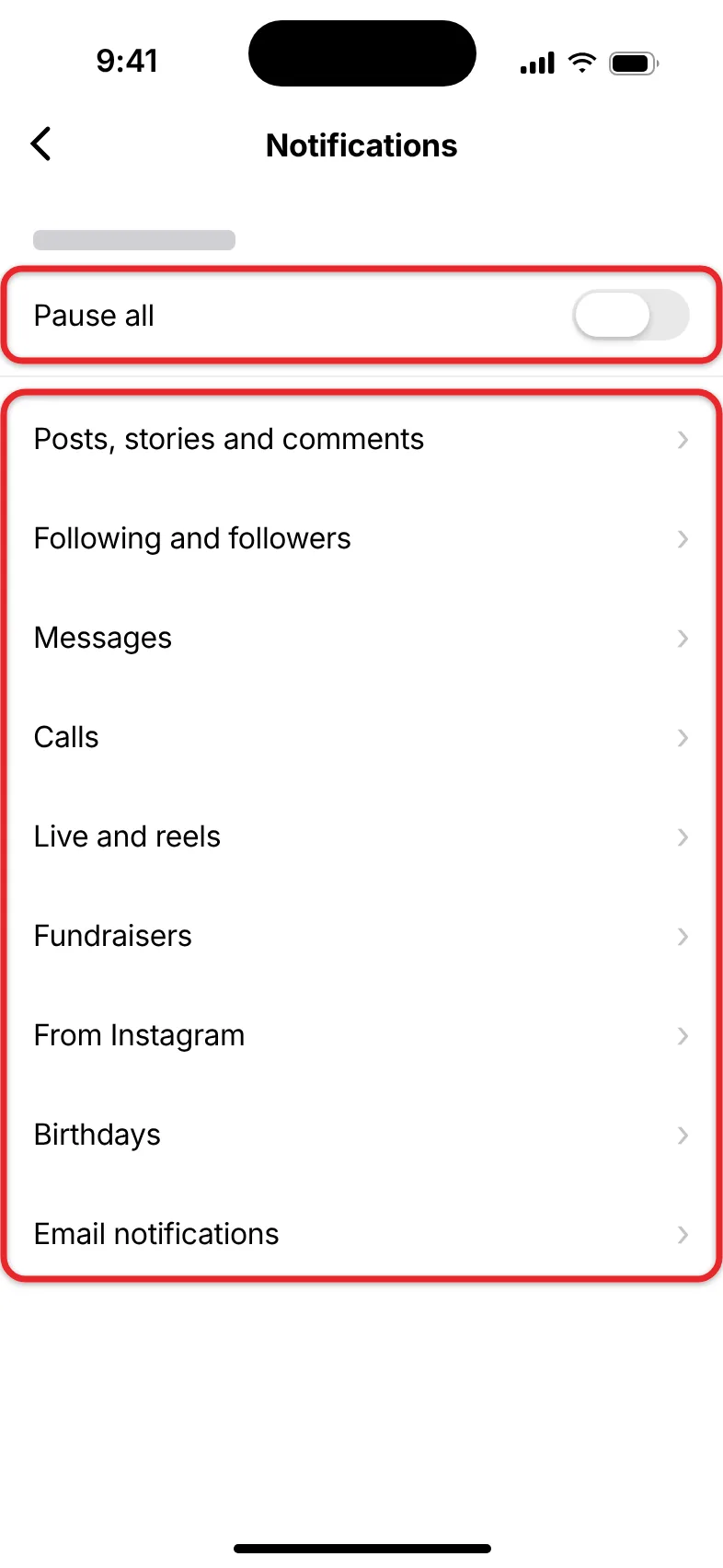
The categories you’ll typically see are:
- Posts, stories and comments: likes, comments, comment likes, and photos you’re tagged in.
- Following and followers: new followers, accepted follow requests, and friends joining Instagram.
- Messages (shown as Messages and calls in some versions): direct messages, message requests, and group chats.
- Live and reels: live videos and new reels.
- Fundraisers and From Instagram: fundraiser updates and product announcements.
The same screen may also have Quiet mode (called Sleep mode on teen accounts). It silences Instagram notifications during the hours you set and sends an auto-reply to people who message you. Turn it off, or change its schedule, if alerts stop at the same time every night.
Instagram updates its menus often, so a label may be worded a little differently in your version of the app. The Notifications screen is always reached through the menu icon on your profile, and the Instagram Help Center covers the current notification settings.
Get Notified When a Specific Account Posts
Instagram doesn’t alert you about every post from everyone you follow. To get an alert when one particular account posts, turn it on from that account’s profile.
- Open the profile of the account you want alerts for. You need to follow it first.
- Tap the bell icon in the top-right corner of the profile. On some versions, tap the Following button and then Notifications instead.
- Turn on the content you want: Posts, Stories, Reels, or Live videos.
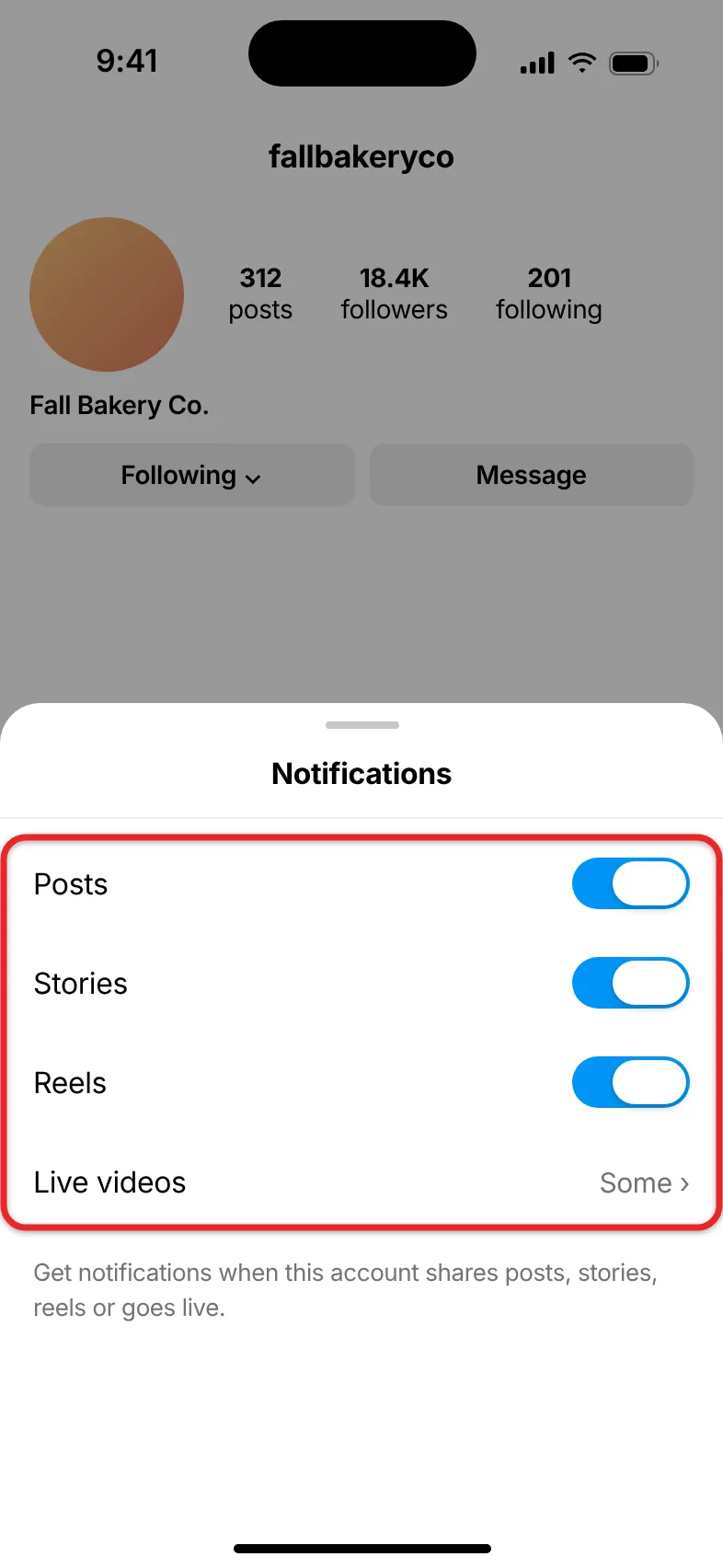
Repeat this for each account. To stop these alerts later, go back to the same menu and turn the switches off.
If Instagram Notifications Still Don’t Show Up
Work through these in order. The first three cause most missing-notification problems.
- A Focus is on. Focus modes, including Do Not Disturb and Sleep, hold back alerts from apps that aren’t on their allowed list. Swipe down from the top-right corner to open Control Center and turn off any Focus that’s lit up. To keep a Focus but let Instagram through, go to Settings > Focus, tap the Focus, tap Apps under Allow Notifications, and add Instagram. Apple explains this in its guide to allowing notifications during a Focus. Our post on fixing “Notifications Silenced” on iPhone covers this in more detail.
- Instagram is in your Scheduled Summary. Alerts are delivered, but only at the summary times. Set Instagram to Immediate Delivery as described above.
- Pause all or Quiet mode is on in Instagram. Both are in the app’s Notifications screen.
- You turned off a single category. For example, if Messages is off in Instagram, you’ll still get likes and comments but no DM alerts.
- A conversation or account is muted. Open the chat, tap the person’s name, and check whether messages are muted. On a profile, tap Following > Mute to see whether you muted their posts or stories.
- You’re signed in to several accounts. Notifications are set separately for each account. Switch to the other account and check its Notifications screen too.
- The app is out of date. Open the App Store, tap your profile picture, and update Instagram if an update is listed.
- Restart your iPhone. On an iPhone 13 or other Face ID model, press and hold the side button and either volume button until the slider appears, drag it, wait 30 seconds, then hold the side button until the Apple logo appears.
- Delete and reinstall Instagram. Touch and hold the Instagram icon, tap Remove App > Delete App, then reinstall it from the App Store and sign back in. When the app asks to send notifications, tap Allow. Your posts and messages are stored on Instagram’s servers, so you won’t lose them, but unsent drafts on the phone are deleted.
Instagram Alert Questions
Why do I get Instagram likes but not message notifications?
Each type of Instagram activity has its own switch. Open Instagram, tap your profile picture, tap the menu icon, tap Notifications, then Messages, and turn on the message types you want. Also check that the conversation isn’t muted.
Do I need to turn on notifications separately for each Instagram account?
Yes. If you’ve added more than one account to the app, each one has its own notification settings. The iPhone’s Allow Notifications switch covers the whole app, but the Instagram categories have to be set for every account.
How do I turn Instagram notifications back off?
Go to Settings > Notifications > Instagram and turn off Allow Notifications to stop all of them, or turn off individual categories inside the Instagram app to keep only the ones you want. For more detail on both options, read about stopping Instagram notifications on an iPhone.
Are the steps different on an iPhone 13 than on newer iPhones?
No. The notification settings depend on the iOS version, not the model. Any iPhone running iOS 26 shows the same screens, and the iPhone 13 can run it.
Why does Instagram show notifications on my Lock Screen without the message text?
Show Previews is set to When Unlocked or Never. Change it to Always under Settings > Notifications > Instagram if you want the text visible on the Lock Screen. Keep in mind that anyone who picks up your phone can then read it.

Matthew Burleigh is the founder, head writer, and editor of Solve Your Tech, which he launched in 2012. He has written technology tutorials since 2008 and worked in IT since 2003, including small-business support, IT management, and consulting. He holds Bachelor’s and Master’s degrees in Computer Science from Arizona State University.
Matthew writes practical guides for Windows, iPhone and iPad, Microsoft Office, Outlook, Google apps, and Android. Solve Your Tech’s guides are checked step by step against the device or app maker’s own documentation and tested on his own devices whenever he has the hardware or software, with clear steps, sources, and update dates.
Read more about Matthew and how Solve Your Tech writes and updates its guides, or report a correction.