To change your iPhone Lock Screen, unlock the phone with Face ID or Touch ID but stay on the Lock Screen, then touch and hold the Lock Screen. Swipe to another Lock Screen and tap it to switch, tap Customize to edit the one you’re using, or tap the Add button (+) to build a new one with its own wallpaper, clock style, and widgets.
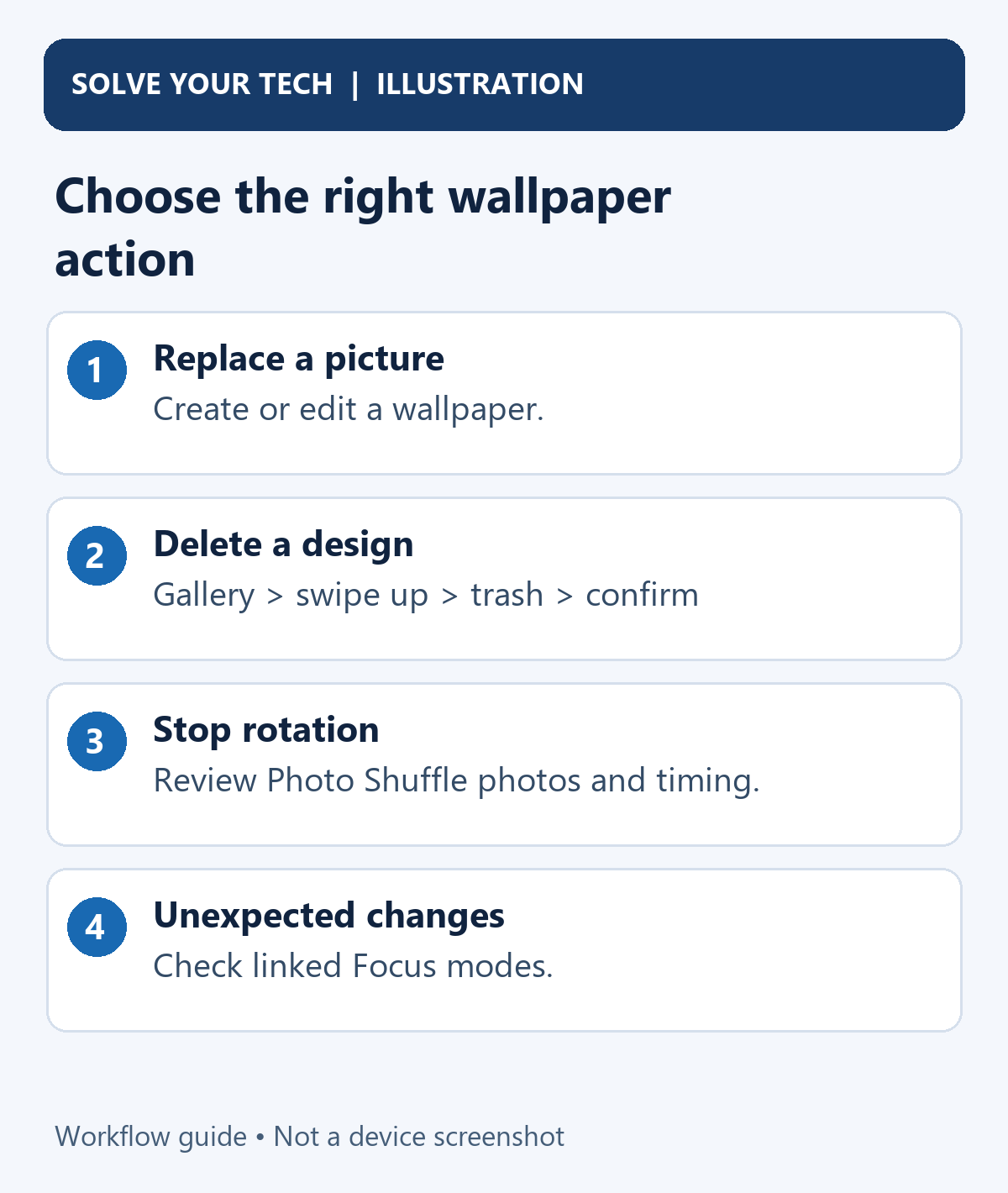
To remove the picture from your Lock Screen, switch to a plain Color wallpaper or delete that design. Neither deletes the photo from your library.
These steps are for iOS 26 and iOS 27 and work the same on any iPhone with iOS 16 or later. Apple covers the editor in its guide to creating a custom iPhone Lock Screen.
Create a New Lock Screen
- Press the side button to wake the iPhone, then let Face ID or Touch ID recognize you. Don’t swipe up.
- Touch and hold an empty part of the Lock Screen. The screen zooms out and shows your saved Lock Screens with Customize at the bottom.
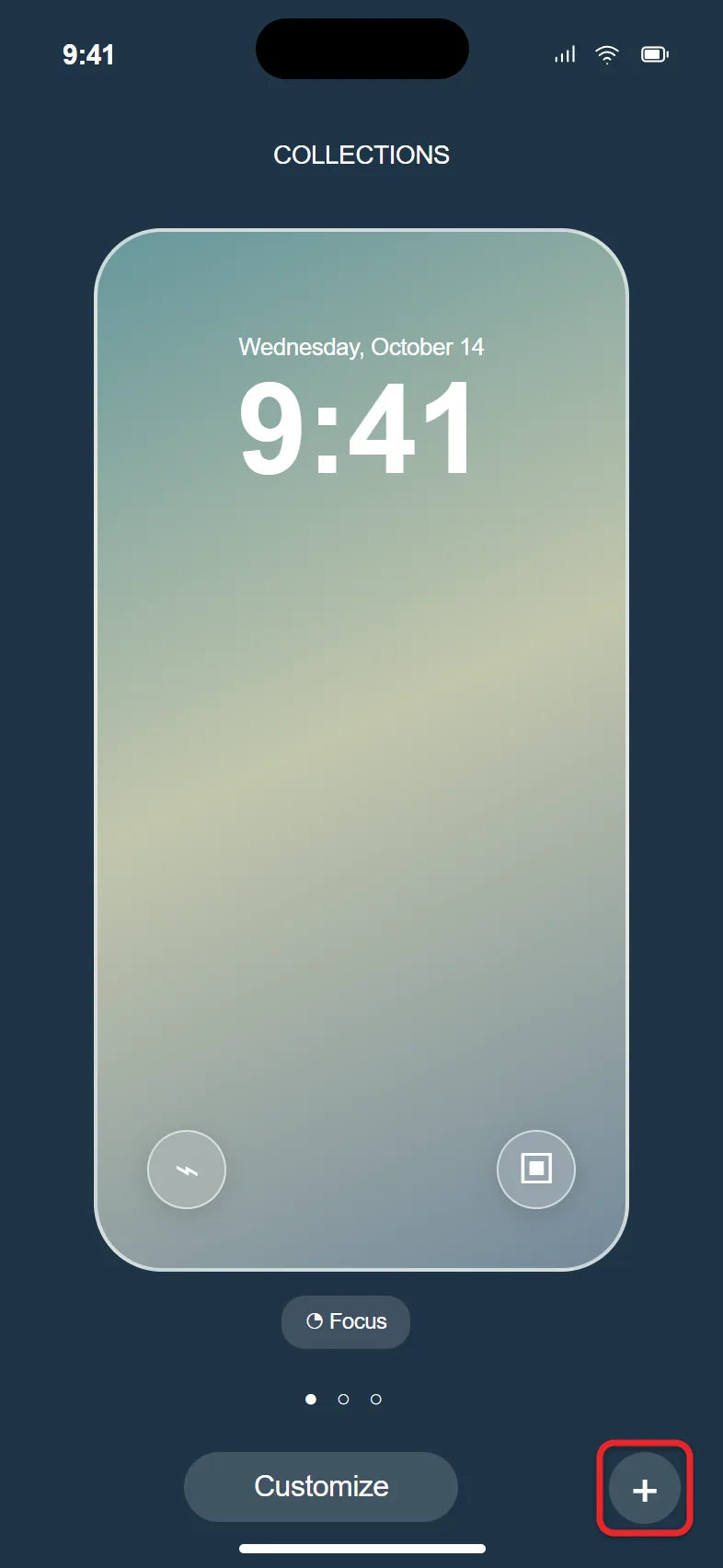
- Tap the Add button (+) in the lower-right corner. The wallpaper gallery opens.
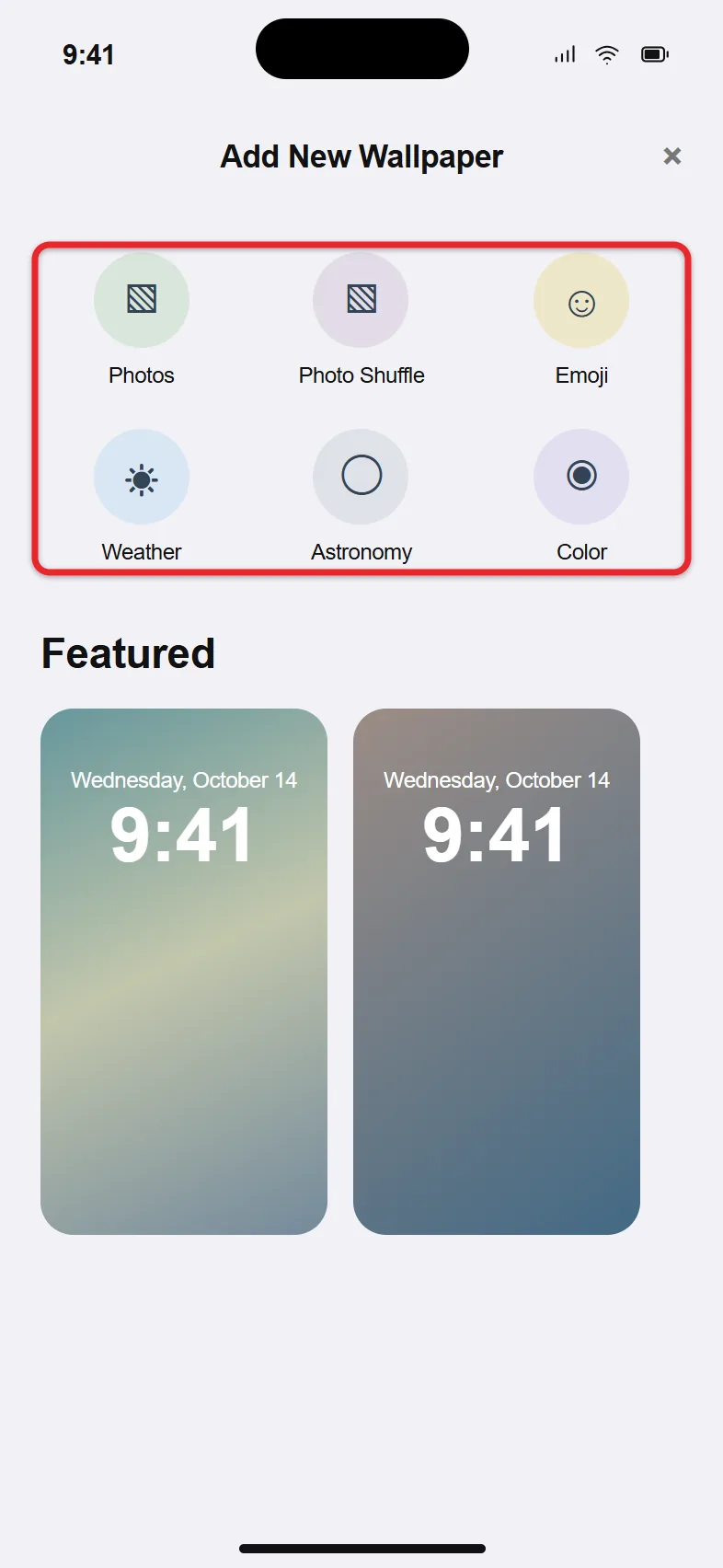
- Pick a wallpaper. The buttons at the top let you choose Photos, Photo Shuffle, Emoji, Weather, Astronomy, Color, and other types, and the sections below show featured designs.
- Adjust the clock, widgets, and photo (see the next section).
- Tap Add in the top-right corner.
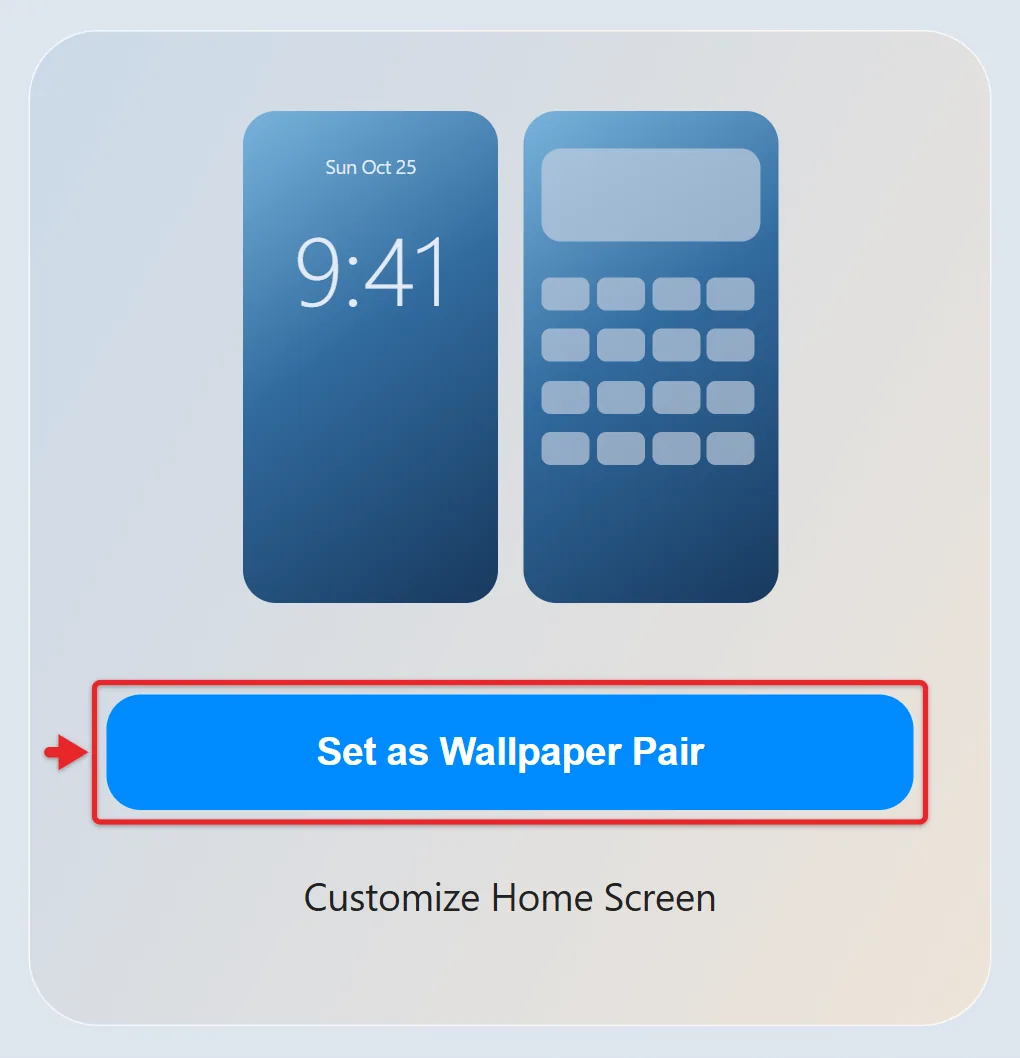
- Tap Set as Wallpaper Pair to use the same image on the Home Screen, or Customize Home Screen to give the Home Screen a different look.
The new design becomes your active Lock Screen. Lock the phone and wake it to see the result.
The order of the Lock Screen date follows your region, which you can review when you change the date format on iPhone.
Edit Your Current Lock Screen
- Touch and hold the Lock Screen until Customize appears.
- Swipe to the Lock Screen you want to edit and tap Customize.
- Tap Lock Screen if you’re asked which screen to edit.
- Make your changes, then tap Done.
Here’s what you can change while editing:
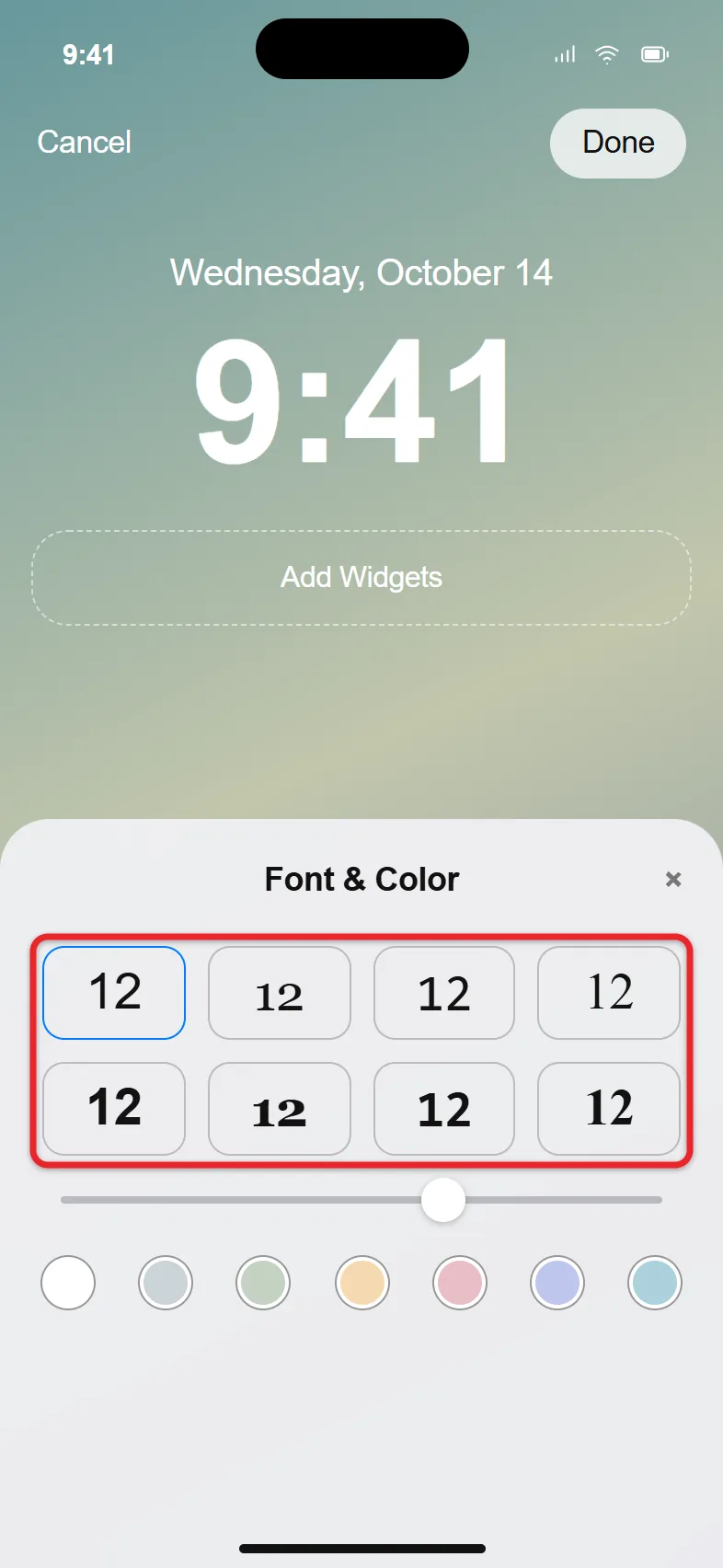
- Clock font and color. Tap the time to open the font and color picker. Pick a font, tap a color, and close the picker (to learn more about fonts, here’s how to change the font on iPhone). On recent versions you can also drag the bottom corner of the clock to make it taller and choose a more see-through style.
- Widgets. Tap Add Widgets or the widget area below the clock, then tap a widget to add it. Tap the minus button on a widget to remove it. You can also tap the date above the clock to swap it for a different widget.
- Controls. The two buttons at the bottom of the screen (Flashlight and Camera by default) can be changed. Tap the minus button on one to remove it, then tap the plus button and choose a different control. If the flashlight has gone missing, you can put it back on the iPhone Lock Screen.
- Photo position. Pinch to zoom and drag with two fingers to frame the picture.
- Style. For photos, swipe left or right to try filters such as Black & White or Duotone.
- Depth Effect. On supported photos, the subject can overlap the clock. Turn this on or off from the More button (three dots) in the bottom-right corner.
- Photo Shuffle. Tap the thumbnail button to change which photos rotate, or use the More button to set how often they change: On Tap, On Lock, Hourly, or Daily.
Remove or Replace the Picture on Your Lock Screen
The Lock Screen always needs a background, so “removing” a picture means swapping it for a plain color or another photo. Changing only the Home Screen won’t take a photo off the Lock Screen, so make sure you edit the Lock Screen itself.
Replace the Picture With a Plain Color or a New Photo
- Open Settings and tap Wallpaper.
- Tap Add New Wallpaper.
- Choose Color to remove the photo entirely, or choose Photos and select a different picture.
- Adjust the preview. With a photo, pinch to zoom and use two fingers to reposition it. With a color, pick a shade that keeps the clock and notifications easy to read.
- Tap Add, then tap Set as Wallpaper Pair or Customize Home Screen.
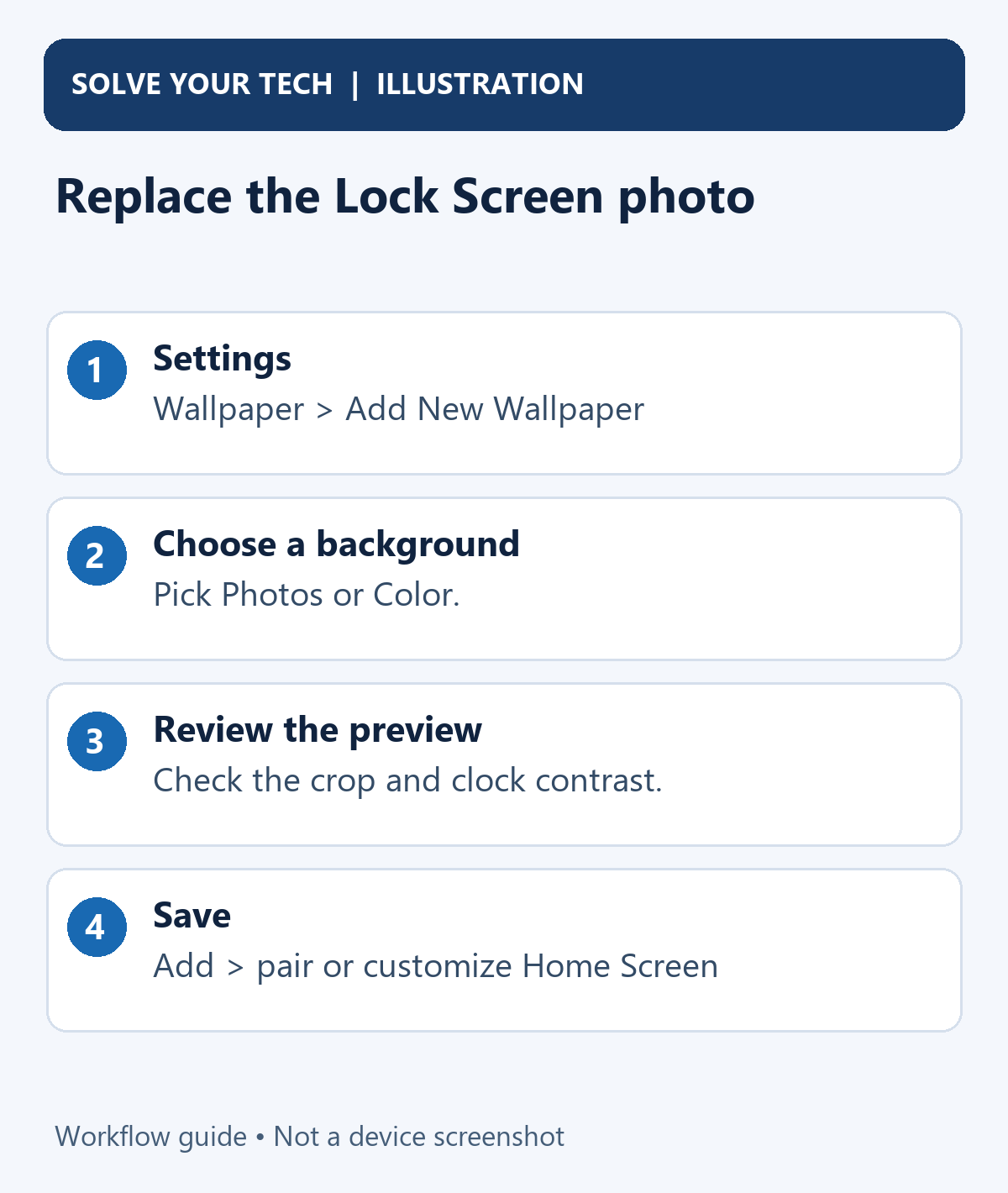
After saving, wake the iPhone and check the Lock Screen, then unlock it and check the Home Screen separately. Once you’re happy with the new design, you can delete the old one (see Delete a Lock Screen below).
Swap the Photo in an Existing Lock Screen
Use this to keep your current clock style and widgets while changing only the picture.
- Touch and hold the Lock Screen, swipe to the design, and tap Customize, then Lock Screen.
- Tap the Photos button in the lower-left corner and choose a different image, then pinch and drag to adjust the crop.
- Tap Done, then tap the finished design in the gallery to select it.
If the design has no Photos button (for example, a Color or Weather design), create a new Photos wallpaper with the Add button (+) or use Settings.
Stop a Photo From Coming Back
With Photo Shuffle, replacing one picture won’t stop the others from appearing, because the wallpaper rotates through a set of photos. To show only one picture, create a normal Photos wallpaper and select it. To keep shuffling but drop one image, customize the Photo Shuffle design and remove that photo from its selection. Changing the shuffle frequency doesn’t remove any photos.
A Lock Screen linked to a Focus can also bring an old picture back when that Focus turns on. Look for a Focus label on the design in the gallery and review the link or the Focus schedule.
Switch Between Lock Screens
Once you have more than one Lock Screen saved, switching takes a few seconds.
- Wake the iPhone and unlock it with Face ID or Touch ID, staying on the Lock Screen.
- Touch and hold the Lock Screen.
- Swipe left or right to the one you want and tap it.
If a Lock Screen is linked to a Focus, switching to it also turns on that Focus.
Change the Lock Screen From Settings
You can also start from the Settings app, which is handy if touching and holding the Lock Screen doesn’t work for you.
- Open Settings and tap Wallpaper.
- Tap Add New Wallpaper to create a new design, or tap Customize under the Lock Screen preview to edit the current one.
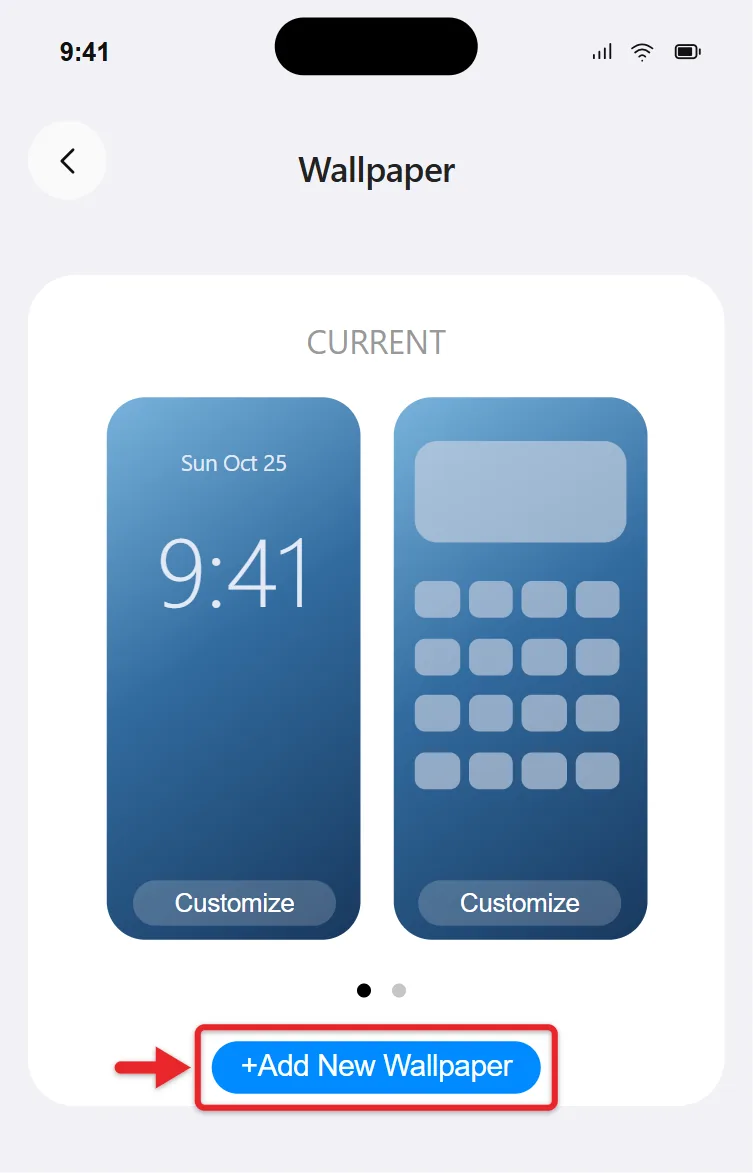
- Choose your wallpaper and options, then tap Add or Done.
- Tap Set as Wallpaper Pair or Customize Home Screen.
Apple’s change the wallpaper guide shows the same flow.
Link a Lock Screen to a Focus
- Touch and hold the Lock Screen.
- Tap Focus near the bottom of the Lock Screen you want to link.
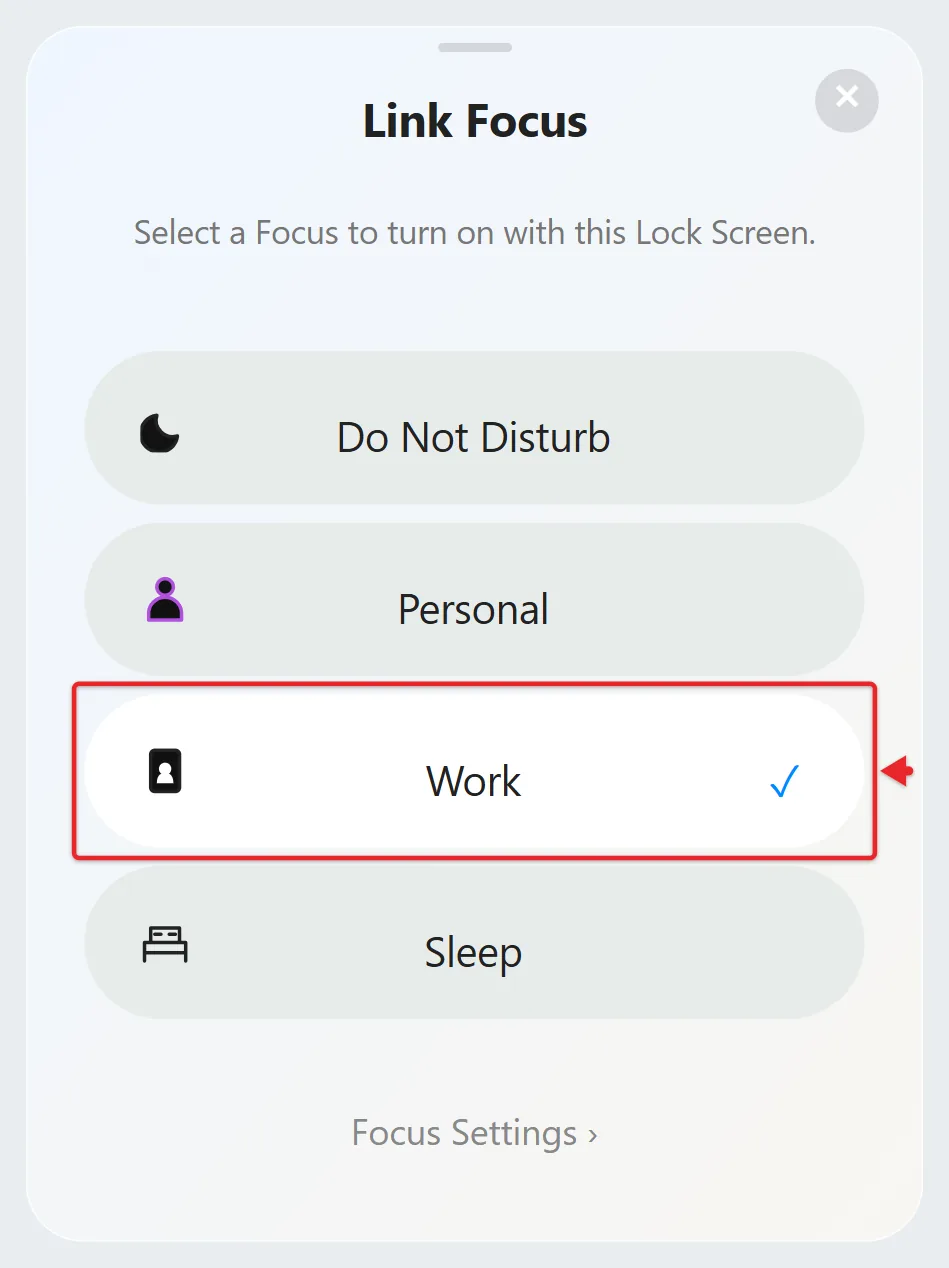
- Choose a Focus, such as Work or Sleep, then close the menu.
From then on, that Lock Screen appears whenever the Focus turns on, including when it turns on by schedule. A Focus can also have an option that darkens the Lock Screen, which is covered in how to turn off the dim lock screen on iPhone 17.
Delete a Lock Screen
Deleting removes the whole saved design, including its picture, clock style, and widgets, and it can’t be undone. Create or select the Lock Screen you want to keep first.
- Touch and hold the Lock Screen.
- Swipe to the Lock Screen you want to remove.
- Swipe up on it and tap the Trash button.

- Tap Delete This Wallpaper.
The matching Home Screen wallpaper is deleted with it. For more detail, read about deleting a wallpaper on iPhone.
The original picture stays in the Photos app, so you can recreate the wallpaper later. Apple covers this in Delete a wallpaper on your iPhone.
If You Can’t Change the Lock Screen
- Touching and holding does nothing. The iPhone hasn’t recognized you yet. Look at the screen or rest your finger on the Home button, then try again. If that fails, touch and hold once more and enter your passcode when asked.
- There’s no Customize or Add button. Check Settings > General > About to confirm your iPhone runs iOS 16 or later. Earlier versions only let you change the wallpaper, not the clock or widgets.
- Only the Home Screen changed. Go to Settings > Wallpaper and look at the Lock Screen preview. Customize that screen or create a new Lock Screen. The Home Screen’s color, photo, and blur choices are separate from the Lock Screen.
- A wallpaper type is missing a download. Some designs, such as Weather and Astronomy, show Get below them. Tap it to download the wallpaper first.
- A work or school iPhone won’t let you edit. A device management profile can lock the wallpaper. Ask your IT department.
- An app icon you don’t recognize appears at the bottom. That’s usually an App Suggestion or Live Activity, not part of your design. See why there’s an app icon on your iPhone Lock Screen.
Changing the Lock Screen on an iPad
iPads running iPadOS 17 or later use the same editor. Wake the iPad with the top button, touch and hold the Lock Screen, and use Customize or the Add button just as you would on an iPhone. Apple’s iPad Lock Screen guide lists the iPad’s options. Widget sizes and positions differ because of the bigger screen. The iPad Lock Screen clock has its own font choices, explained along with other iPad text options in changing the font on an iPad.
Lock Screen Questions
Can I use a different wallpaper on the Home Screen?
Yes. When you finish a Lock Screen, tap Customize Home Screen instead of Set as Wallpaper Pair. You can then pick a different photo, a solid color, or a blurred version of the Lock Screen image.
How many Lock Screens can I have?
Apple doesn’t publish a limit. You can keep several and switch between them by touching and holding the Lock Screen. Deleting ones you no longer use keeps the gallery tidy.
Why does my Lock Screen change on its own?
Either it’s linked to a Focus that turns on by schedule, or you’re using a Photo Shuffle, Weather, or Astronomy wallpaper, which change by design. Remove the Focus link or choose a fixed photo to stop it.
Can I have no Lock Screen picture at all?
The display always needs a background, so choose a plain Color wallpaper for the simplest look. You don’t need to delete anything from Photos to get this result.
Will changing the wallpaper hide messages or remove Camera?
No. Notification previews and Lock Screen shortcuts have their own controls. Learn about showing or hiding Lock Screen messages and opening Camera from the Lock Screen.
How do I change how long the iPhone waits before locking?
That’s a separate setting in Settings > Display & Brightness > Auto-Lock. The steps for changing the Lock Screen timeout explain each option.

Matthew Burleigh is the founder, head writer, and editor of Solve Your Tech, which he launched in 2012. He has written technology tutorials since 2008 and worked in IT since 2003, including small-business support, IT management, and consulting. He holds Bachelor’s and Master’s degrees in Computer Science from Arizona State University.
Matthew writes practical guides for Windows, iPhone and iPad, Microsoft Office, Outlook, Google apps, and Android. Solve Your Tech’s guides are checked step by step against the device or app maker’s own documentation and tested on his own devices whenever he has the hardware or software, with clear steps, sources, and update dates.
Read more about Matthew and how Solve Your Tech writes and updates its guides, or report a correction.