To block ads in Microsoft Edge on an iPhone, open Edge, tap the menu button (…), then go to Settings > Content blockers, turn on Block ads, and tap Done. That blocks most ads. To block the acceptable-ad category too, tap Advanced settings on the same screen and turn off Allow acceptable ads.
These steps are for the current Edge app on iOS 27 and match iPad and earlier iOS versions, as in Microsoft’s Edge for mobile FAQs. The ad blocker is built in and free, and only affects pages you open in Edge.
Edge for iPhone Required
- The Microsoft Edge app: this guide covers Edge for iPhone. The same iOS steps apply to Edge on an iPad.
- A current version of Edge: menus move between releases, so update Edge from the App Store first if your screens look different from the steps below.
- No account required: Microsoft’s instructions do not mention signing in to use the ad blocker.
One term to know: a content blocker is a filter that stops certain parts of a web page, such as ads, from loading. Edge’s content blocker is powered by Adblock Plus, an ad-blocking product that Microsoft built into the mobile app.
How to block most ads in Edge on an iPhone
- Open the Edge app.
- Tap the menu button (…) in the toolbar. In most layouts it is at the bottom of the screen.
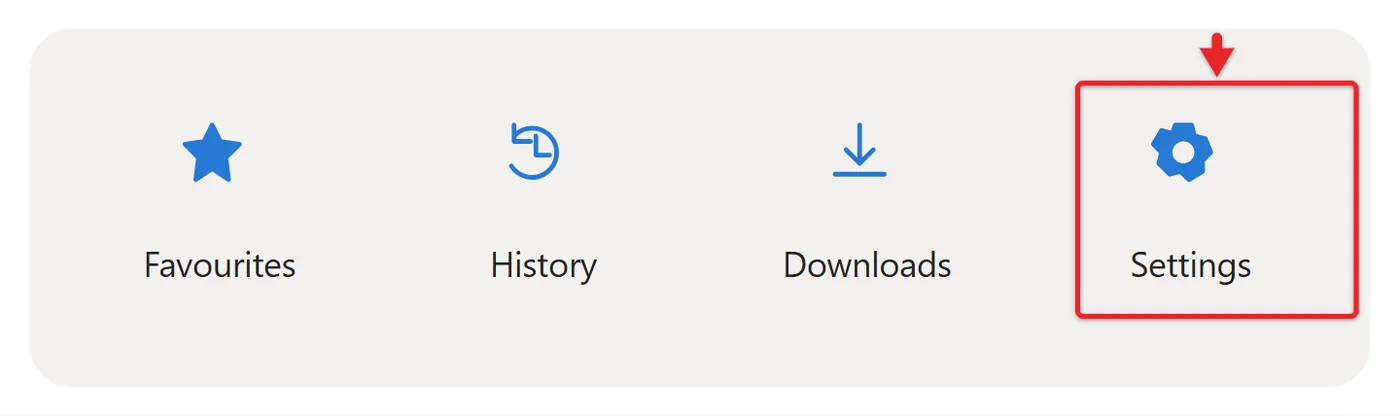
- Tap Settings. The Settings screen opens.
- Tap Content blockers.
- Turn on the Block ads switch. Microsoft places Advanced settings on the same screen for the stricter option.
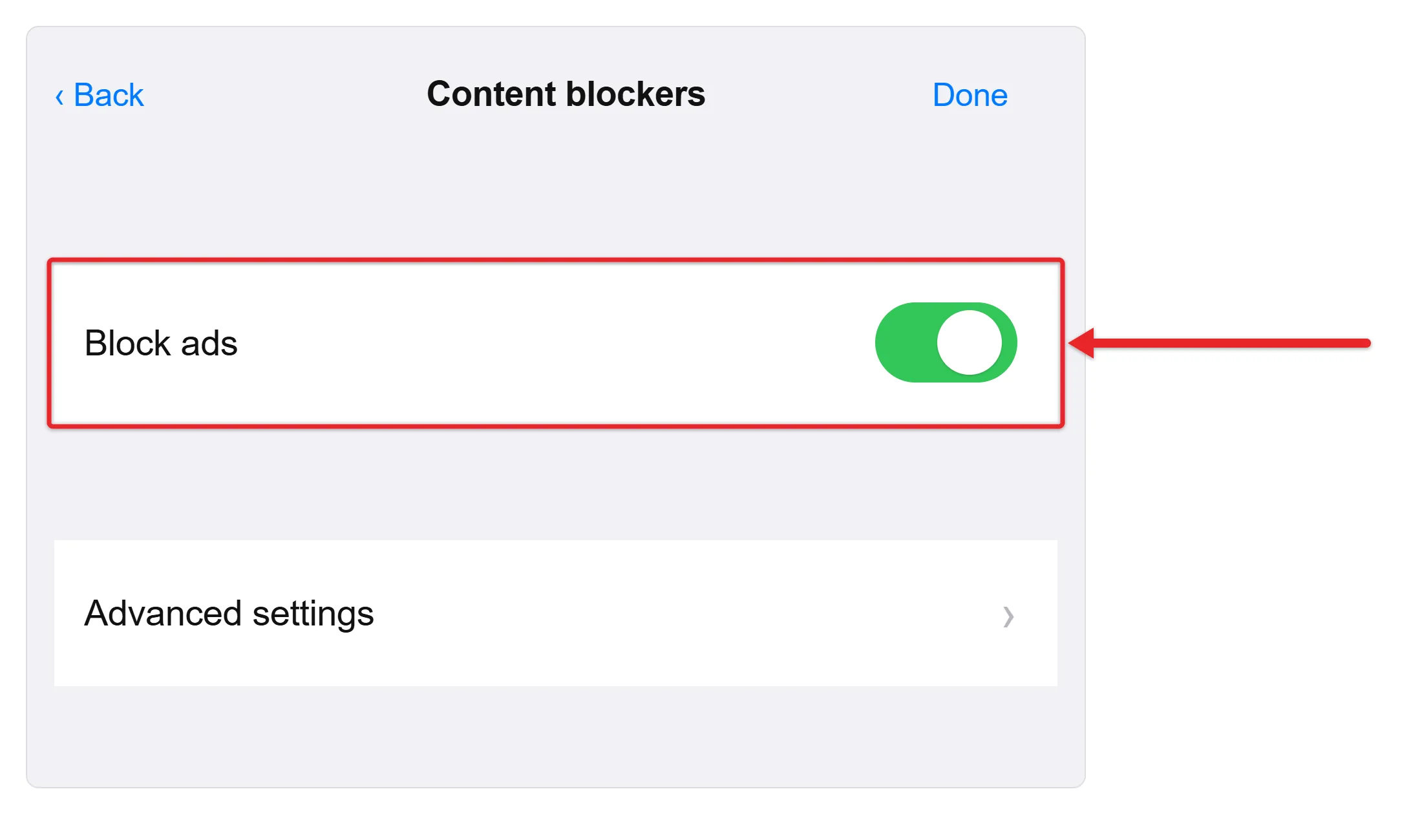
- Tap Done to save the change and close Settings.
Edge now blocks most ads on the pages you load. Microsoft notes that you may still see a few ads that Adblock Plus has determined to be acceptable. If a page was already open, reload it to see the difference.
Turn Off Acceptable Ads
Before you do this, know the trade-off: with more ads blocked, some websites may show a message asking you to turn off your ad blocker, and sites that depend on advertising earn nothing from your visit. You can undo the change at any time.
- In Edge, tap the menu button (…) > Settings > Content blockers.
- Make sure Block ads is turned on.
- Tap Advanced settings.
- Turn off Allow acceptable ads.
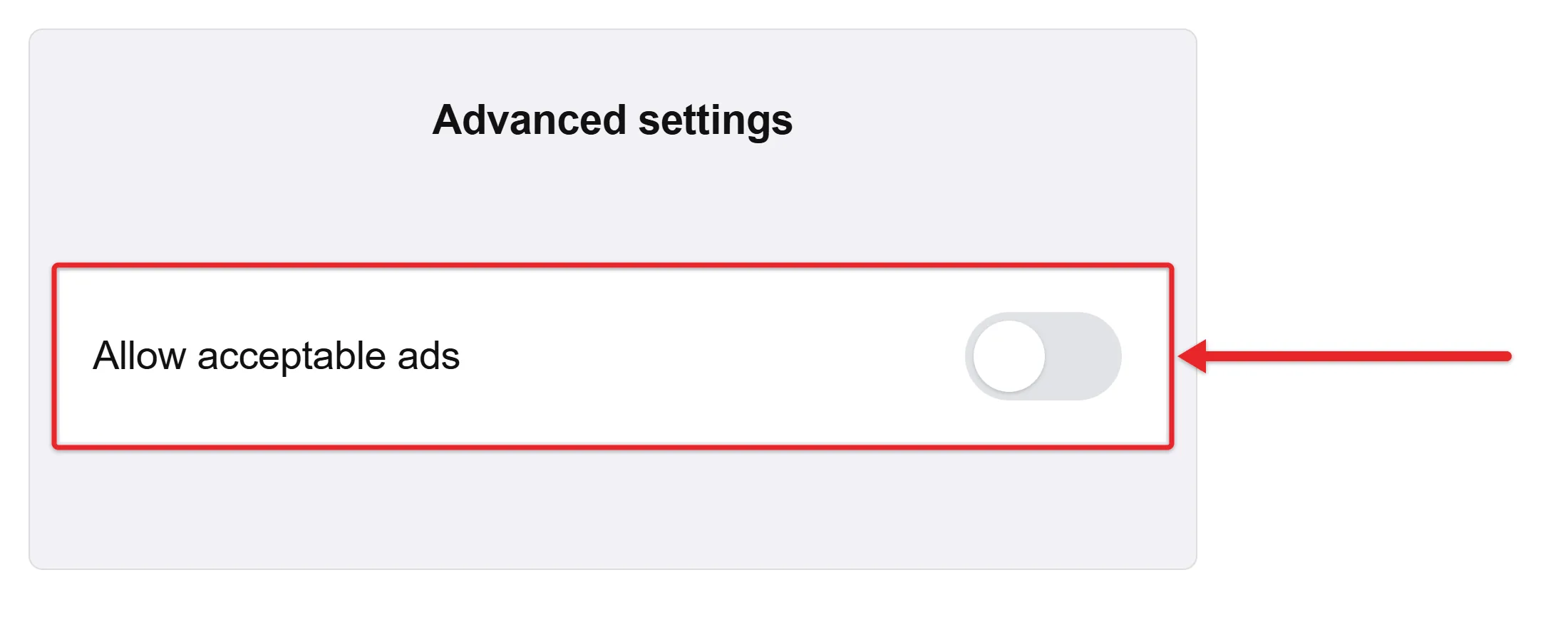
- Tap Done.
Edge now also blocks the ads it would otherwise have let through as acceptable. Microsoft’s Microsoft Edge app help page describes this as the control for turning off acceptable ads. How clean a page looks still depends on how each site delivers its ads.
Most ads or all ads: which setting to pick
| Setting | What Edge does | Good choice if |
|---|---|---|
| Block ads off | Shows pages with their ads | You want sites to load exactly as their owners intended |
| Block ads on, Allow acceptable ads on | Blocks most ads; a few that Adblock Plus considers acceptable can still appear | You want fewer ads but still want to support the sites you read |
| Block ads on, Allow acceptable ads off | Blocks all ads the blocker can detect | You want the cleanest pages and accept that some sites may complain |
“Acceptable ads” is Adblock Plus’s term for ads it lets through because they meet its standards for being less intrusive. Microsoft doesn’t list those standards in its Edge help pages, so read the middle option as “fewer, quieter ads,” not a guarantee about what you will see.

How to confirm it worked, and how to turn it off
To check the setting, go back to the menu (…) > Settings > Content blockers. The Block ads switch should be on. Then reload a page that normally shows banner ads. The spaces where ads appeared should be empty or gone.
To undo it, return to the same screen and turn Block ads off, then tap Done. If you only want to bring back the milder setting, leave Block ads on, tap Advanced settings, and turn Allow acceptable ads back on. Nothing is deleted either way, and you can switch back and forth as often as you like.
Let one site show ads
Microsoft’s iOS instructions don’t include a list of sites where ads are allowed, so the setting applies to every page you open in Edge. If a site you want to support asks you to turn off your ad blocker, turn Block ads off while you read it, then turn it back on when you leave. If the site only objects to the stricter setting, turning Allow acceptable ads back on may be enough.
Block pop-ups in Edge too
Pop-ups are a separate setting from ads. A pop-up is a new window or tab that a website opens on its own. On iOS, the route is:
- Tap the menu button (…) > Settings > Privacy and security.
- Find the pop-up setting. Microsoft’s FAQ calls it Block pop-ups, which you turn on to block them. Edge’s in-app help uses Pop-ups and redirects instead, which you turn off to block them. Use whichever label your version shows.
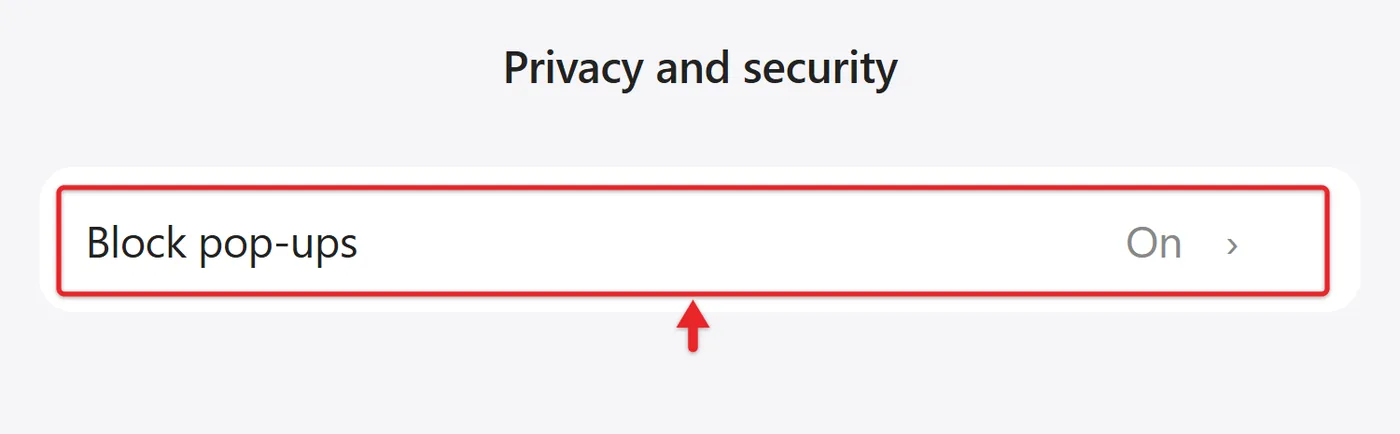
- Tap Done.
Some sign-in pages and payment pages use pop-ups for legitimate reasons. If a site you trust stops working, allow pop-ups for that visit and block them again afterward.
Ads in Safari are a separate setting
Edge’s Block ads switch does nothing in Safari, and Safari’s content blockers do nothing in Edge. Content blockers are extensions that give Safari a set of rules for blocking content, and they come from apps in the App Store. If you also browse in Safari, install a content blocker from a developer you trust, then turn it on in Safari’s extension settings, following Get extensions to customize Safari on iPhone. Safari also has its own Block Pop-ups switch in its settings.
If you still see ads
- Reload the page: a page that was already open may keep showing the ads it loaded before you changed the setting.
- Check which browser opened the link: links you tap in Mail, Messages, and other apps open in your default browser, which is Safari unless you changed it. To switch, go to Settings > Apps > Default Apps > Browser App and choose Edge, as shown in Change your default apps for features on iPhone and iPad.
- Turn off acceptable ads: if the remaining ads are small, labeled banners, they may be the ones the default setting allows. Follow the “Turn Off Acceptable Ads” steps above.
- Remember what a blocker cannot see: sponsored articles, promoted posts inside a social feed, and ads that are part of a video itself are published as regular content, so an ad blocker may not remove them.
- Ads on the new tab page are different: stories on Edge’s new tab page come from the news feed, not from a website. To hide them, go to Settings > New tab page and turn off Show my news feed.
- Ads inside other apps: games and other apps show their own ads, and Edge’s setting can’t reach them.
- Update the app: open the App Store and install the latest version of Edge, then check the setting again.
If the setting is missing or a site stops working
- No Content blockers option: look under Settings > Privacy and security, which is where it sits on Android, then update Edge if it is still not there.
- No Advanced settings option: turn on Block ads first, since the extra option relates to it. In some versions the Allow acceptable ads switch may sit directly on the Content blockers screen.
- A phone managed by work or school: an organization can control Edge settings on devices it manages. If a switch is unavailable on a managed iPhone, ask your IT administrator.
- A site says “ad blocker detected”: turn Allow acceptable ads back on and reload. If the site still will not load and you trust it, turn Block ads off while you use it, then turn it on again.
- A page looks broken: blocked ads sometimes leave gaps or stop a video player from starting. Turning the blocker off for that visit is the quickest test of whether it is the cause.
Other Edge privacy settings worth a look
Blocking ads makes pages cleaner, but it does not hide your browsing from the websites you visit. Edge on mobile also automatically blocks sites and downloads that have been reported as malicious, which is separate from the ad blocker and needs no setup. These guides cover related settings:
- Browse without saving history: open a private browsing tab in Edge on an iPhone. Edge on iOS does not save history or form data for an InPrivate tab.
- Review what Edge has saved: view your history in the Edge iPhone app.
Turn on Block ads, browse for a day with acceptable ads still allowed, and only switch to blocking everything if the remaining ads bother you. That keeps the sites you rely on working while removing most of the clutter. When you find a page worth passing along, you can share a web page link in the Edge iPhone app.
Edge Ad Blocking Questions
Does Microsoft Edge on iPhone have a built-in ad blocker?
Yes. Edge for iPhone includes an ad blocker powered by Adblock Plus. It is turned on from the menu (…) > Settings > Content blockers > Block ads.
Does Edge’s ad blocker work in Safari or other apps?
No. The Block ads setting only applies to pages you open in the Edge app. Safari, Chrome, and ads inside games or other apps are not affected, and each browser has its own settings.
Is the Edge ad blocker free?
Yes. It is a setting inside the Edge app, and Microsoft’s instructions do not mention a subscription or an extra download.
Why do I still see some ads with Block ads turned on?
By default, Edge blocks most ads but still shows the ones Adblock Plus considers acceptable. To remove those too, open Content blockers, tap Advanced settings, and turn off Allow acceptable ads.
Is blocking pop-ups the same as blocking ads?
No. The pop-up setting stops websites from opening new windows or tabs on their own. It does not remove banner ads inside a page. For that you need Block ads. You can use both settings at once.
If a site already opened extra tabs, you can close tabs in Edge on an iPhone.
Do the same steps work on an iPad or an Android phone?
On an iPad, yes, because it uses the same iOS version of Edge. On Android the setting has the same names, but it sits under Settings > Privacy and security > Content blockers.
Will blocking ads keep websites from tracking me?
Not completely. Blocking an ad stops that ad from loading, but the website you are visiting can still see your visit. Microsoft does not describe the ad blocker as a privacy or anonymity tool, so use InPrivate tabs and your iPhone’s privacy settings alongside it.
To keep apps from tracking you across other companies’ apps, limit ad tracking in your iPhone settings.

Matthew Burleigh is the founder, head writer, and editor of Solve Your Tech, which he launched in 2012. He has written technology tutorials since 2008 and worked in IT since 2003, including small-business support, IT management, and consulting. He holds Bachelor’s and Master’s degrees in Computer Science from Arizona State University.
Matthew writes practical guides for Windows, iPhone and iPad, Microsoft Office, Outlook, Google apps, and Android. Solve Your Tech’s guides are checked step by step against the device or app maker’s own documentation and tested on his own devices whenever he has the hardware or software, with clear steps, sources, and update dates.
Read more about Matthew and how Solve Your Tech writes and updates its guides, or report a correction.