To add desktop icons like This PC, Recycle Bin, or Control Panel in Windows 11, open Settings > Personalization > Themes, select Desktop icon settings, check the icons you want, and select OK. To put an app on the desktop, drag it from the Start menu’s All list onto the desktop. If all your icons vanished, right-click the desktop and make sure View > Show desktop icons is checked.
Below are the steps for each type of icon, plus fixes for when icons are missing or out of order. Microsoft covers the same settings in Customize the desktop icons in Windows.
Which Steps Do You Need?
- This PC, Recycle Bin, Network, Control Panel, or your user folder: use Desktop icon settings.
- An app, such as Chrome or Word: drag it from the Start menu. (For quick reminders rather than icons, see how to put sticky notes on your desktop.)
- A file, folder, or website: use Send to or drag it.
- All your icons disappeared: jump to the missing icons section.
How to Add This PC, Recycle Bin, and Other System Icons
- Press Windows key + I to open Settings. You can also right-click an empty area of the desktop and select Personalize.
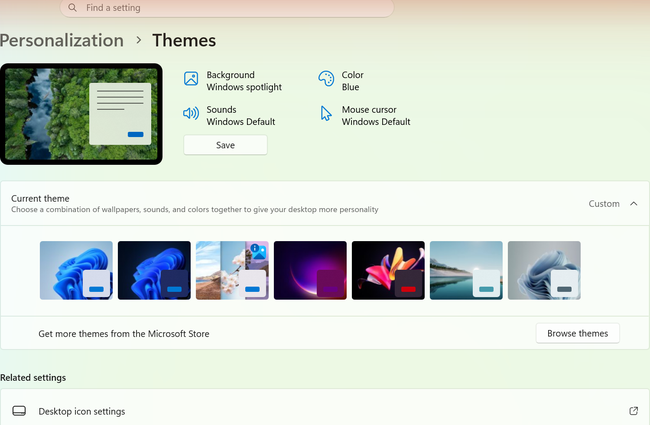
- Select Personalization, then Themes.
- Scroll to Related settings and select Desktop icon settings.
- In the Desktop Icon Settings window, check Computer, User’s Files, Network, Recycle Bin, or Control Panel.
- Select Apply, then OK.
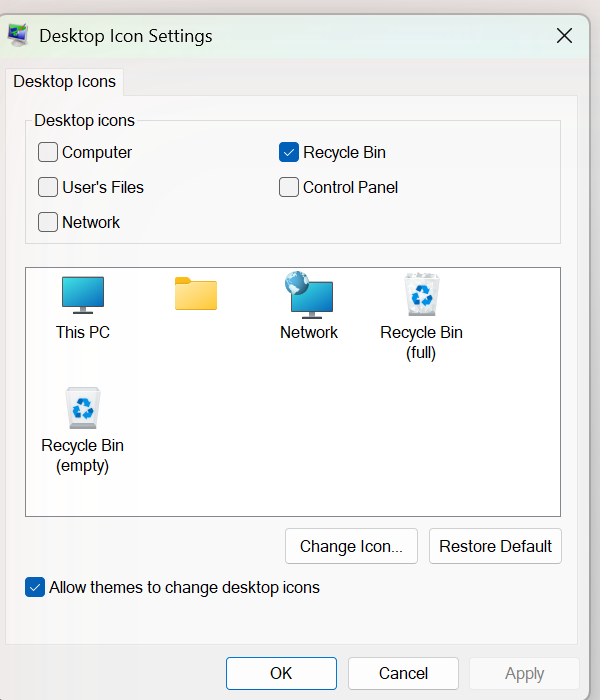
The icons appear on the desktop right away. Computer shows up as This PC (see how to show This PC on the desktop), and User’s Files shows up as a folder with your user name. To remove one later, uncheck it in the same window.
How to Add an App Shortcut to the Desktop
- Select Start, then select All (called All apps on older versions of Windows 11).
- Find the app in the list.
- Drag the app onto an empty spot on the desktop and let go.
Windows creates a shortcut, so the app itself stays installed where it was. Deleting that shortcut later does not uninstall the app. Our guide to making a desktop shortcut in Windows 11 covers more ways to do this.
How to Add a File, Folder, or Website Icon
File or folder
- Open File Explorer and find the file or folder.
- Right-click it and select Show more options. On some PCs, Send to appears right away.
- Select Send to > Desktop (create shortcut).
Website
- Open the page in your browser. If the browser is full screen, press F11 so you can see the desktop behind it.
- Drag the padlock or site information icon to the left of the web address onto the desktop. The same drag works on an older PC, as shown in creating an internet shortcut in Windows 10.
For a site you use every day, such as Gmail, see how to put a Gmail icon on the desktop.
Anything else
- Right-click an empty spot on the desktop and select New > Shortcut.
- Select Browse and pick the item, or type a web address.
- Select Next, type a name for the icon, and select Finish.
How to Arrange and Resize Desktop Icons
Right-click an empty area of the desktop and open View or Sort by:
- View > Large, Medium, or Small icons changes the icon size. You can also hold Ctrl and scroll the mouse wheel on the desktop. See how to change icon size in Windows 11.
- View > Auto arrange icons lines icons up on the left side. Turn it off if you want to place icons anywhere.
- View > Align icons to grid keeps icons evenly spaced.
- Sort by orders icons by name, size, item type, or date modified.
How to Keep Desktop Icons Where You Put Them
Right-click an empty part of the desktop and select View. Clear Auto arrange icons, then drag your icons into position. Leave Align icons to grid checked if you want even spacing; that option is separate from automatic arrangement.
Avoid choosing Sort by afterward, since it rearranges the icons. This lets you place icons manually, but does not permanently lock their positions. A change in monitor layout, display resolution, or an app that resets the desktop can still move them. If movement starts after docking or changing monitors, check Settings > System > Display and restore your usual display arrangement.
If Your Desktop Icons Are Missing
Try these in order. Microsoft’s Where have my Desktop icons gone? covers the same fixes.
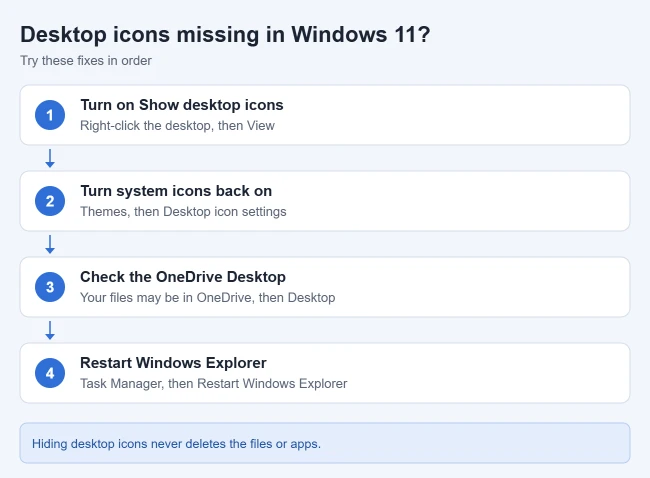
1. Turn on Show desktop icons
- Right-click an empty area of the desktop.
- Select View.
- Make sure Show desktop icons is checked.
2. Turn system icons back on
If only This PC, Recycle Bin, or Network is missing, check them again in Desktop icon settings using the steps near the top of this article.
3. Check the OneDrive Desktop folder
If OneDrive backs up your Desktop folder, your files and shortcuts live in OneDrive > Desktop. If the Desktop folder location got changed, the desktop can look empty.
- Open File Explorer and expand your OneDrive folder.
- Open the Desktop folder there and see whether your items are inside.
- If they are, right-click that Desktop folder, select Properties, and open the Location tab to see where Windows is looking.
If the Location tab is missing, you are looking at a different Desktop folder, such as one for a work or school account.
4. Restart Windows Explorer
- Press Ctrl + Shift + Esc to open Task Manager.
- Find Windows Explorer in the Processes list.
- Right-click it and select Restart.
The taskbar and desktop disappear for a second and reload. If icons are still missing after a restart of the PC, you can move shortcuts you no longer need off the desktop without uninstalling anything, as shown in how to remove apps from the desktop without deleting them.
Older Versions of Windows
In Windows 10, desktop icon settings are in the same place: Settings > Personalization > Themes > Desktop icon settings. In Windows 7, right-click the desktop and select Personalize > Change desktop icons. The desktop’s right-click View menu (Show desktop icons and icon sizes) works the same way in all three versions. Windows 7 and Windows 10 no longer get regular security updates.
Frequently Asked Questions
Why can’t I click Desktop icon settings?
Windows needs to be activated to change most personalization settings. If Windows isn’t activated, some options on the Themes page may be unavailable. On a work or school PC, your organization may also block these settings.
Does deleting a desktop icon delete the app?
No. Deleting a shortcut only removes the icon. The app stays installed, and you can add the shortcut again from the Start menu. Deleting an actual file or folder that is saved on the desktop does move that item to the Recycle Bin, though.
Can I change what a desktop icon looks like?
Yes. In Desktop Icon Settings, select an icon in the preview box, select Change Icon, and pick a new one. Restore Default puts the original back. For an app shortcut, right-click it, select Properties, and then Change Icon.
What does “Allow themes to change desktop icons” do?
When it’s checked, applying a new theme can swap your desktop icons for ones included with that theme. Uncheck it to keep your current icons.

Matthew Burleigh is the founder, head writer, and editor of Solve Your Tech, which he launched in 2012. He has written technology tutorials since 2008 and worked in IT since 2003, including small-business support, IT management, and consulting. He holds Bachelor’s and Master’s degrees in Computer Science from Arizona State University.
Matthew writes practical guides for Windows, iPhone and iPad, Microsoft Office, Outlook, Google apps, and Android. Solve Your Tech’s guides are checked step by step against the device or app maker’s own documentation and tested on his own devices whenever he has the hardware or software, with clear steps, sources, and update dates.
Read more about Matthew and how Solve Your Tech writes and updates its guides, or report a correction.