“The connection to the outgoing server failed” means your iPhone couldn’t reach your email provider’s sending (SMTP) server. It’s usually fixed by checking your internet connection, confirming your email password on the provider’s website, and then removing and re-adding the account in Settings > Apps > Mail > Mail Accounts. Your unsent message waits in the Outbox until it goes through.
They apply to the Mail app on iPhone and iPad with iOS 18 or later, including iOS 27, where Mail settings are under Settings > Apps. On iOS 17 and earlier, the same options are in Settings > Mail > Accounts. If the stuck message is in Outlook on a Windows PC instead, see where the Outbox is in Outlook and how to clear it.
Quick Fixes to Try First
- Check your connection. Open a website in Safari. If it doesn’t load, fix Wi-Fi or cellular data first, or turn Airplane Mode on and off.
- Check for Undo Send. Apple notes that if you see an Undo Send button in your Inbox or mailbox list, the message hasn’t been sent yet. Wait a few seconds for it to finish.
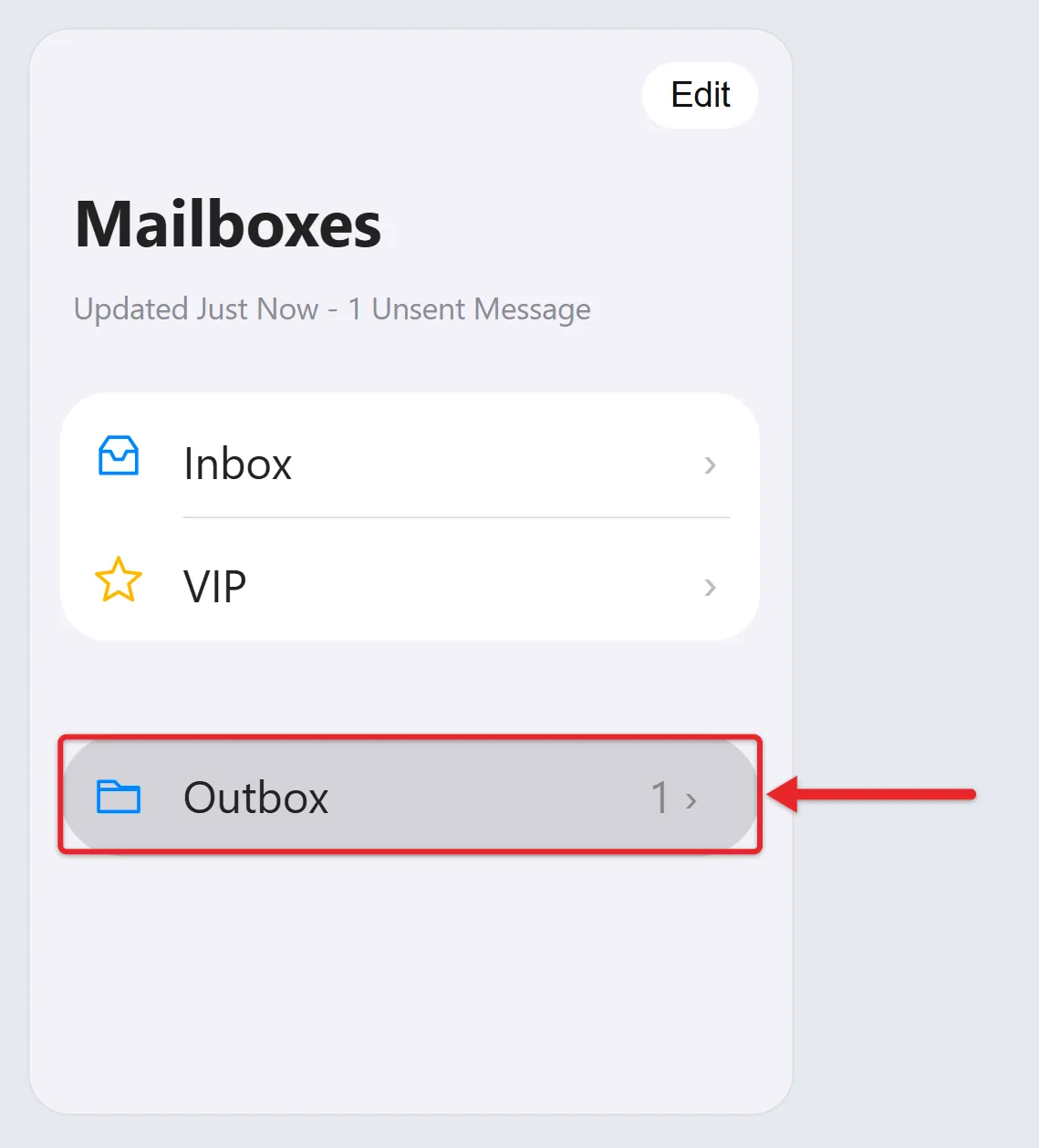
- Check the Outbox. In Mail, go to your list of mailboxes and tap Outbox. If you don’t see an Outbox, your email was sent. If you do, tap the email, make sure the recipient’s address is correct, and tap Send.
- Check your password. Sign in to your email provider’s website with the same address and password. If you changed your password there, update your email password on iPhone too.

If the problem was a brief connection drop or an old password, the message in the Outbox sends once the issue is fixed. If the website sign-in works but your iPhone still can’t send, the problem is in the account settings on the phone, so keep going.
Check With Your Email Provider
If the quick fixes don’t help, contact your email provider or check its status page for a service outage. Also ask about:
- Security features such as two-step verification. You might need a special password (often called an app password) or need to authorize your device before Mail can send email.
- Your account settings. Your provider or IT team can confirm the correct outgoing server, port, and security settings for your account.
If you use Gmail and need to change the password itself, follow the steps to change your Gmail password on an iPad. The Google Account steps are the same on iPhone. Yahoo users can try these fixes for Yahoo Mail not working on iPhone.
For Gmail and Outlook.com, the easiest fix is usually to delete the account and add it again with the Google or Outlook.com button, which signs you in through the provider’s own page. Gmail no longer supports apps that ask you to share your Google username and password, so use Sign in with Google instead. Outlook.com requires modern authentication (OAuth2), so an Outlook.com account set up manually with only a password may refuse to send.
Remove Your Email Account and Set It Up Again
Before you delete the account, sign in to your email provider’s website on a computer and make sure all of your email is there or saved somewhere else. Changing or deleting an account can remove previously downloaded email from your device, and an iCloud or computer backup saves your mail settings, not the messages.
- Go to Settings and tap Apps.
- Tap Mail, then tap Mail Accounts.
- Tap the email account that’s having trouble.
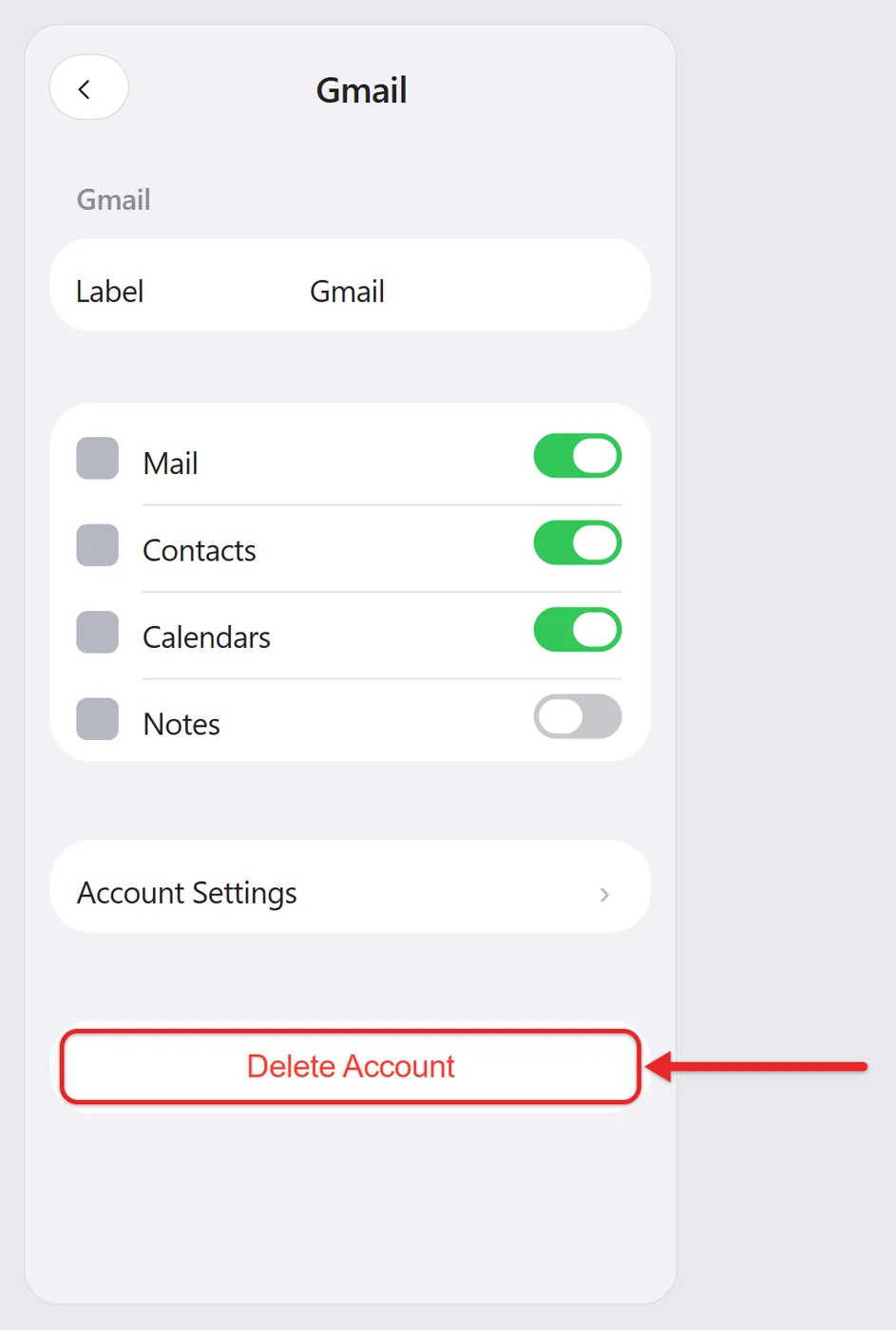
- Tap Delete Account (or Sign Out) and confirm.
- Go back to Mail Accounts, tap Add Account, and enter your email address. Choose your provider from the list if asked.
- Enter your password or sign in on the provider’s page, then tap Next or Save when it appears.

For providers like iCloud, Google, Microsoft Exchange, or Yahoo, Mail sets the account up automatically with just your address and password, which also restores the correct outgoing server settings. Send yourself a test message to confirm that sending works again.
If you have to enter server settings manually
For less common providers:
- Tap Add Account, enter your email address, and tap Next.
- Tap Add Other Account > Mail Account.
- Enter your name, email address, password, and a description, then tap Next.
- If Mail can’t find the settings, choose IMAP or POP and enter the Incoming Mail Server and Outgoing Mail Server details from your provider.
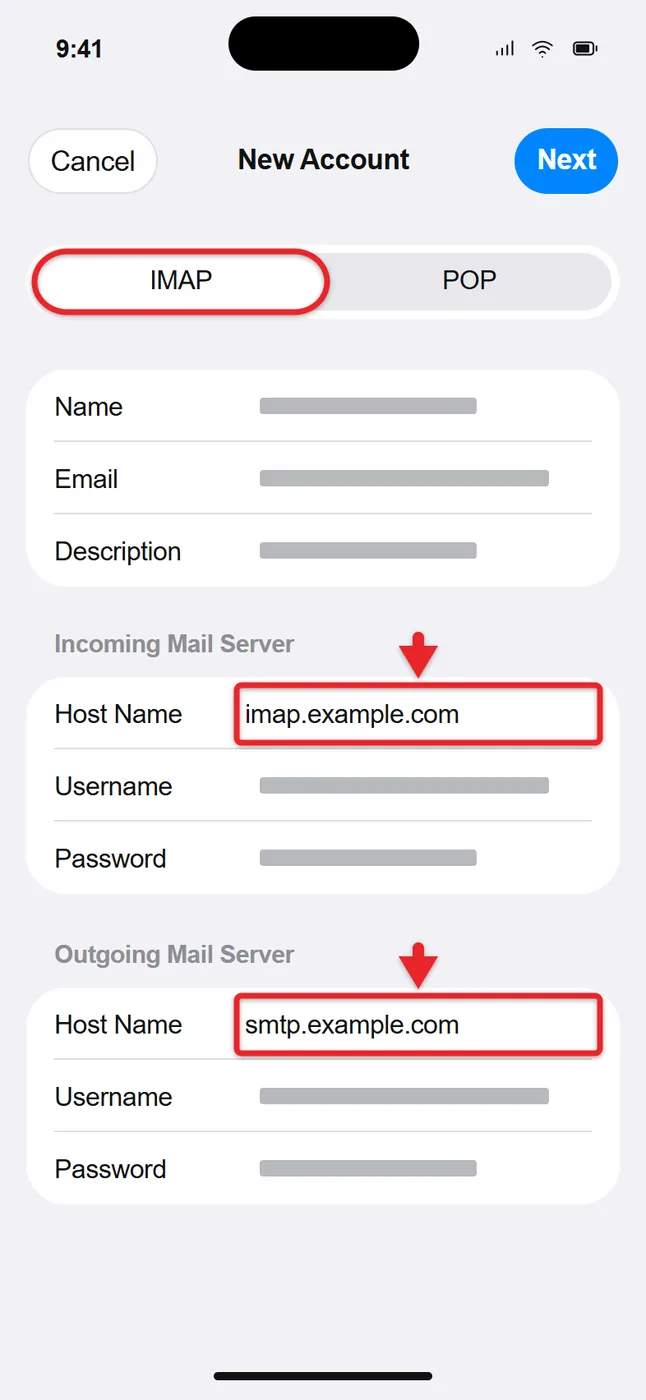
If any setting is wrong, Mail asks you to edit it before you can save. Comcast customers can follow the steps for adding Comcast email to an iPhone, since some of those mailboxes have moved to Yahoo.
Check the Outgoing Server Settings
To check the outgoing server on an account you set up manually:
- Go to Settings > Apps > Mail > Mail Accounts and tap the account.
- Tap the account name at the top.
- Tap SMTP under Outgoing Mail Server, then tap the Primary Server.
- Compare the Host Name, User Name, Password, Use SSL, Authentication and Server Port with the settings your provider lists.
- Make sure the server is turned on, then tap Done.

These are the published outgoing settings for three common providers:
| Provider | Outgoing server | Port | Security | User name and password |
|---|---|---|---|---|
| iCloud Mail | smtp.mail.me.com | 587 | SSL (try TLS or STARTTLS if SSL gives an error) | Full iCloud address and an app-specific password |
| Outlook.com | smtp-mail.outlook.com | 587 | STARTTLS | Sign in with Microsoft (OAuth2) |
| Yahoo Mail | smtp.mail.yahoo.com | 465 or 587 | SSL required | Full Yahoo address and an app password |
Sources: Apple’s iCloud Mail server settings, Microsoft’s Outlook.com POP, IMAP, and SMTP settings, and Yahoo’s IMAP server settings. The iCloud app-specific password applies only to a manual setup. If you’re signed in to iCloud on your iPhone, iCloud Mail uses your Apple Account and needs no server settings.
A few details trip people up:
- User Name is usually your full email address, not only the part before the @.
- Authentication should be Password unless your provider says otherwise.
- The outgoing password is stored separately. If you updated the incoming password after a change, update it here too.
- Leave Use SSL on. Turning it off sends your password without encryption, and most providers reject the connection anyway.
Other Things That Can Block Sending
- Wi-Fi filtering: Some networks, such as hotel, school, or work Wi-Fi, block email ports. Try sending on cellular data instead.
- VPN or security apps: Turn off a VPN temporarily and try again.
- Old iOS: Install updates in Settings > General > Software Update.
- Restart your iPhone: Turn it off and on again to clear temporary network problems, then check the Outbox.
- Reset network settings as a last resort: Go to Settings > General > Transfer or Reset iPhone > Reset > Reset Network Settings. This doesn’t erase your email or photos, but it removes saved Wi-Fi networks and passwords and VPN settings, so you’ll need to rejoin Wi-Fi afterward.
Outgoing Server Questions
Why can I receive email but not send it?
Receiving and sending use different servers. Your iPhone can be connected to the incoming server while the outgoing (SMTP) server rejects the connection because of a password, security setting, or network block.
Will I lose the email in my Outbox?
No. Unsent messages stay in the Outbox until they send or you delete them. Check that it’s empty after fixing the problem.
Does removing the account delete my email?
It removes the account and its downloaded email from your iPhone. For IMAP and Exchange accounts, mail stored on the provider’s server comes back when you add the account again, but check the provider’s website first to be sure.
Why does the error mention a server name like smtp-mail.outlook.com?
That is the outgoing server your iPhone tried to reach. Compare it with the server in the table above or on your provider’s help page. A wrong or outdated server name is a common cause on accounts set up years ago.
What if none of these steps work?
Your email service provider can help further, since they can see why their server is refusing the connection.

Matthew Burleigh is the founder, head writer, and editor of Solve Your Tech, which he launched in 2012. He has written technology tutorials since 2008 and worked in IT since 2003, including small-business support, IT management, and consulting. He holds Bachelor’s and Master’s degrees in Computer Science from Arizona State University.
Matthew writes practical guides for Windows, iPhone and iPad, Microsoft Office, Outlook, Google apps, and Android. Solve Your Tech’s guides are checked step by step against the device or app maker’s own documentation and tested on his own devices whenever he has the hardware or software, with clear steps, sources, and update dates.
Read more about Matthew and how Solve Your Tech writes and updates its guides, or report a correction.