To turn off the voice on a Roku, press the Star (✱) button on the remote four times quickly. That turns off the screen reader, the feature that reads menus out loud. You can also go to Settings › Accessibility › Screen reader and turn it off there.
These steps apply to Roku TVs, Roku streaming sticks and players, and Roku soundbars in the United States. Older Roku software called the same feature Audio Guide. If the voice you hear is describing a movie or show instead of reading menus, skip to the “Which voice are you hearing?” section below.
Turn off the Roku screen reader
Both methods come from Roku’s screen reader support article. They control the same setting, so use whichever is easier.
Method 1: Press Star four times
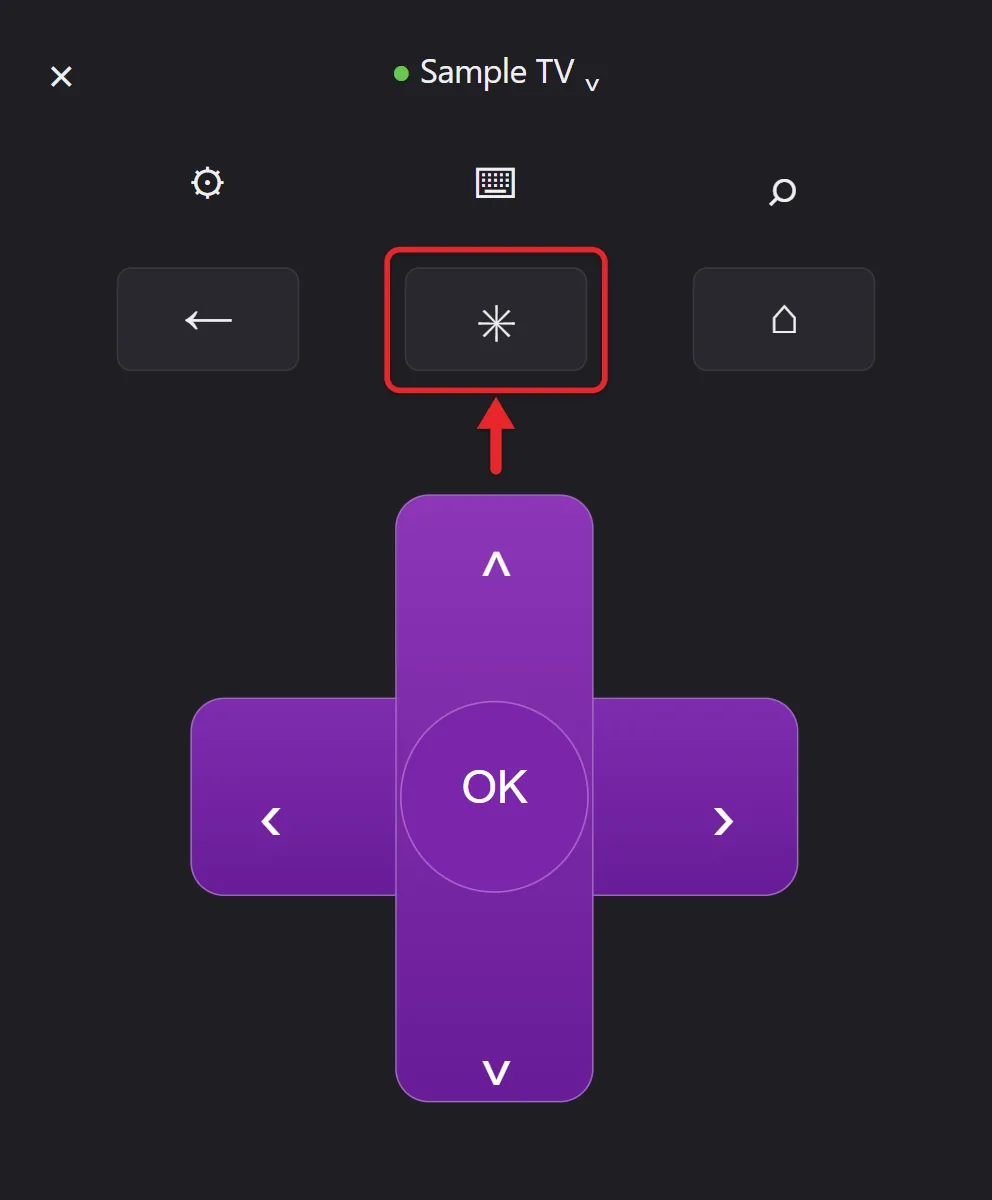
- Find the Star button. Roku says it’s below and to the right of the plus-shaped arrow pad in the middle of the remote.
- Point the remote at the TV and press Star four times in a row, without pausing between presses.
The voice stops. Press Star four times again if you ever want it back.
If a menu pops up on the side of the screen instead, the presses were too slow and the Roku read them as single presses, which open the Options menu. Press Back to close it and try again a little faster. If still nothing happens, the shortcut may be turned off, so use Method 2.
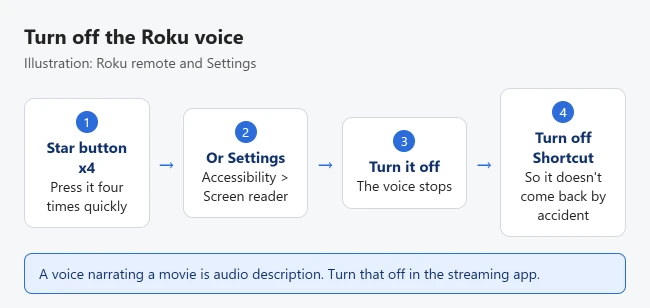
Method 2: Turn it off in Settings
The Roku keeps talking while you move through these menus. That’s normal: it’s reading each item you highlight. Use the up and down arrows to move and OK to select.
- Press Home on the remote. The home screen opens with a menu on the left.
- Scroll down to Settings and press OK.
- Select Accessibility.
- Select Screen reader and turn it off.
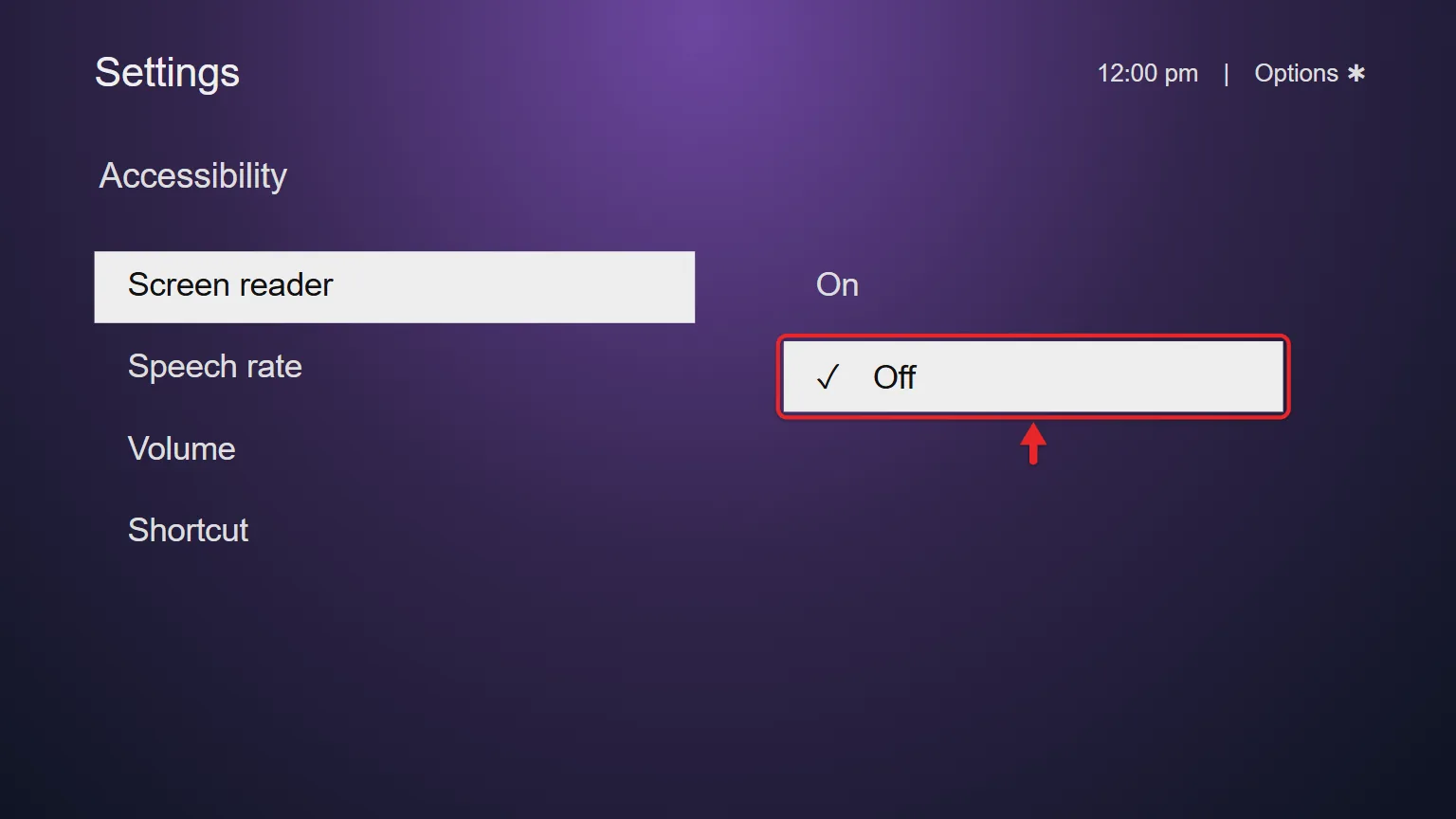
The menus go quiet. This switch does the same thing as pressing Star four times.
Use the Roku mobile app if the remote isn’t working
The free Roku app for iPhone and Android has a remote screen with an Options button, which is the app’s version of the Star button, plus arrows and OK. Your phone and Roku need to be on the same Wi-Fi network. You can use either method from the app. To set up the app, follow the steps for using the Roku remote app on iPhone.
Stop it from turning on by accident
If the voice keeps coming back, someone may be pressing Star too many times, or the remote may be getting pressed in a couch cushion or by a child.
- Go to Settings › Accessibility › Screen reader.
- Select Shortcut and turn it off.
When the shortcut is off, pressing Star four times no longer turns the screen reader on. You can still turn it on from Settings if you ever need it.
If the voice turns on when nobody is touching the remote, a sticking Star button can send repeat presses. Take out the batteries, press the Star button firmly a few times, put in fresh batteries, and see whether it stops. Turning off the shortcut also prevents this.
Keep it on, but make it less intrusive
If someone in your home uses the screen reader, you don’t have to turn it off. In the same Screen reader menu, Roku lets you change the Speech rate (Slow, Normal, Fast or Very Fast) and the screen reader’s Volume relative to the TV. Roku plays a sample as you highlight each speech rate, but you have to press OK to choose it.
Turn off voice search and “Hey Roku”
Voice search is a different feature from the screen reader. A voice remote only listens while you hold down the voice (microphone) button and carries out the request when you let go, so it doesn’t talk or listen on its own. Roku’s voice search instructions don’t describe a setting that turns the button off, so if you don’t want voice search, don’t hold that button.
Hands-free voice (“Hey Roku”) is the exception. It works on the Roku Voice Remote Pro, which has a small switch on the side of the remote. Green means hands-free voice is on, so slide the switch to off (black on the original Voice Remote Pro) and the remote stops listening for “Hey Roku.”
In the Roku mobile app, voice search uses your phone’s microphone only when you tap the Voice button. To block it completely on an iPhone, go to Settings › Apps › Roku and turn off Microphone.
Which voice are you hearing?
Not every voice on a Roku is the screen reader. Match what you hear to the fix:
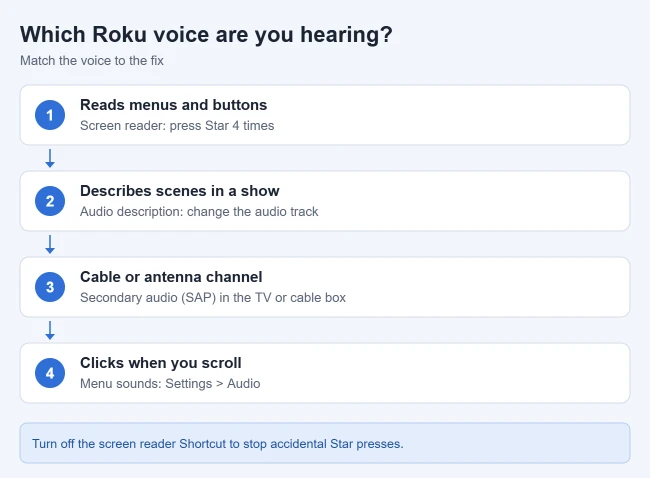
| What you hear | What it is | Where to turn it off |
|---|---|---|
| Menu names, buttons and on-screen text read aloud | Screen reader (Audio Guide) | Star four times, or Settings › Accessibility › Screen reader |
| A narrator describing the action in a show | Audio description | The streaming app’s audio menu |
| Narration on a cable or antenna channel | Secondary audio program (SAP) | Cable box, cable app or TV audio settings |
| Clicks as you move through menus | Menu sounds | Settings › Audio |
A narrator describing what’s happening in a show
That’s audio description (also called Descriptive Audio), not the Roku screen reader. It’s part of the video’s audio track, so turning off the screen reader won’t stop it. Change it in the streaming app you’re watching:
- Start playing the show.
- Open the app’s audio or language menu. In many apps you press the up or down arrow, or Star. In Netflix, select Audio & Subtitles.
- Pick the regular audio track, such as “English,” instead of the one marked “Audio Description” or “AD.”
In the Apple TV app, go to Settings › Accessibility › Audio Descriptions instead. The show plays with normal audio. Each app keeps its own choice, so you may need to change it again in another app.
A narrator on a cable or antenna channel
On live TV, scene narration usually comes from the channel’s secondary audio program (SAP). Turn off SAP or set the audio language back to your main language in your cable box, cable app or the TV input’s audio settings.
Clicks when you move through menus
That’s the menu sound, not a voice. Look under Settings › Audio on your Roku for the menu volume. Your theme pack also sets the navigation sounds.
When the Screen Reader Option Is Missing
The Screen reader option is missing. The screen reader is only supported in the United States, on Roku TVs, Roku Streambar, Streambar Pro and Smart Soundbar, and on Express, Streaming Stick, Premiere and Ultra models (including their plus and 4K versions). It also needs Roku OS 7.5 or later. If your model is supported but you don’t see the option, go to Settings › System › System update and select Check now.
Star does nothing. The shortcut is probably turned off, so use Settings. If no buttons work, the remote may need new batteries or pairing. Use the Roku app in the meantime, or reprogram the Roku remote.
The setting keeps turning back on. Turn off Shortcut as shown above. If it still returns, restart the Roku from Settings › System › Power › System restart (on some models, System restart is directly under System). A restart doesn’t change your settings.
The screen reader is off, but something still talks. It’s coming from the video, not the Roku menus. Check the app’s audio track or the channel’s SAP setting.
Roku Voice Questions
Why did my Roku start talking out of nowhere?
Usually the Star button was pressed four times by accident. Press it four more times, then turn off the Shortcut so it doesn’t happen again.
Is Audio Guide the same as the screen reader?
Yes. The screen reader was previously called Audio Guide, so some older Roku software and guides still use that name.
Can I turn the voice off during setup?
Yes. The screen reader works on the first Language screen of setup, and pressing Star four times toggles it there too. With a voice remote, the remote has to be paired with the Roku before the Star button works during setup.
Does turning off the screen reader turn off captions?
No. Captions are a separate setting under Settings › Accessibility › Captions mode. Follow the steps for turning on closed captions on a Roku.
Does turning off the screen reader stop voice search?
No. Voice search only works while you hold the voice button, and it’s controlled separately. The screen reader setting only affects the voice that reads the menus.
Related Roku guides
Setting up a new Roku? Start with the Roku setup steps. On a Roku TV, you can also change the brightness, and if your Roku is acting up, restart it. A new Roku theme changes how the menus look and sound.
Shopping for a new Roku? See which Roku streaming stick to get.

Matthew Burleigh is the founder, head writer, and editor of Solve Your Tech, which he launched in 2012. He has written technology tutorials since 2008 and worked in IT since 2003, including small-business support, IT management, and consulting. He holds Bachelor’s and Master’s degrees in Computer Science from Arizona State University.
Matthew writes practical guides for Windows, iPhone and iPad, Microsoft Office, Outlook, Google apps, and Android. Solve Your Tech’s guides are checked step by step against the device or app maker’s own documentation and tested on his own devices whenever he has the hardware or software, with clear steps, sources, and update dates.
Read more about Matthew and how Solve Your Tech writes and updates its guides, or report a correction.