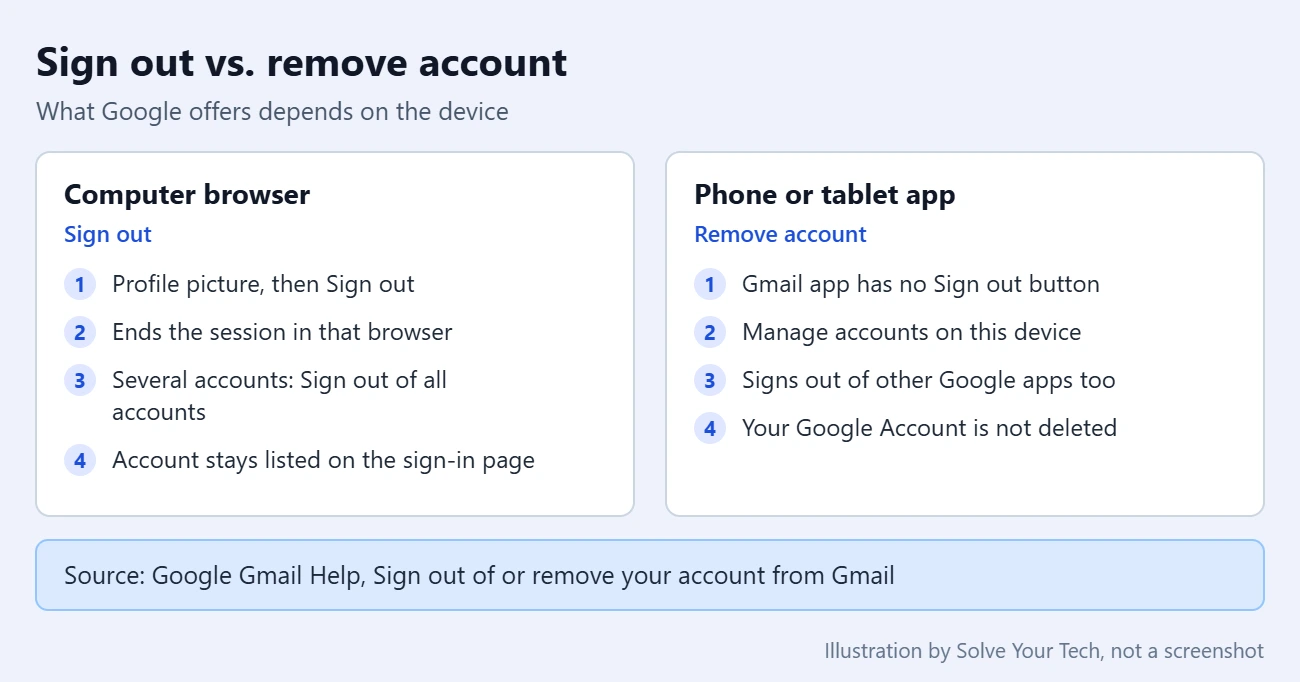
To log out of your Google account on a computer, open Gmail or google.com, click your profile picture in the top-right corner, and select Sign out (or Sign out of all accounts if more than one account is signed in). On a phone or tablet, the Gmail app has no sign-out button: you remove the account from the device instead. To sign out of a device you don’t have with you, use Manage all devices in your Google Account.
Google calls logging out “sign out,” so that is the label to look for on screen. Some menu names differ between devices and app versions, so where Google uses more than one name, both are listed below.
Signing out and removing an account are different
Before you start, it helps to know which of the two actions your device offers.
- Sign out ends your session in one web browser. It is what you get on a computer, or in a mobile browser such as Safari or Chrome.
- Remove account takes the Google Account off a phone or tablet. Google says this also signs you out of the other Google apps on that device, such as Maps and YouTube.
Neither action deletes your Google Account. Your email, files and photos stay in the account, and you can sign in again on any device.
Sign out on a computer
This works in any browser on Windows, Mac or Linux. The steps come from Google’s Sign out of or remove your account from Gmail help page.
- Open Gmail, Google Search or another Google page where you are signed in.
- Click your profile picture or initial in the top-right corner. A small menu opens with your name and email address.
- Click Sign out. If several accounts are signed in, the button reads Sign out of all accounts.
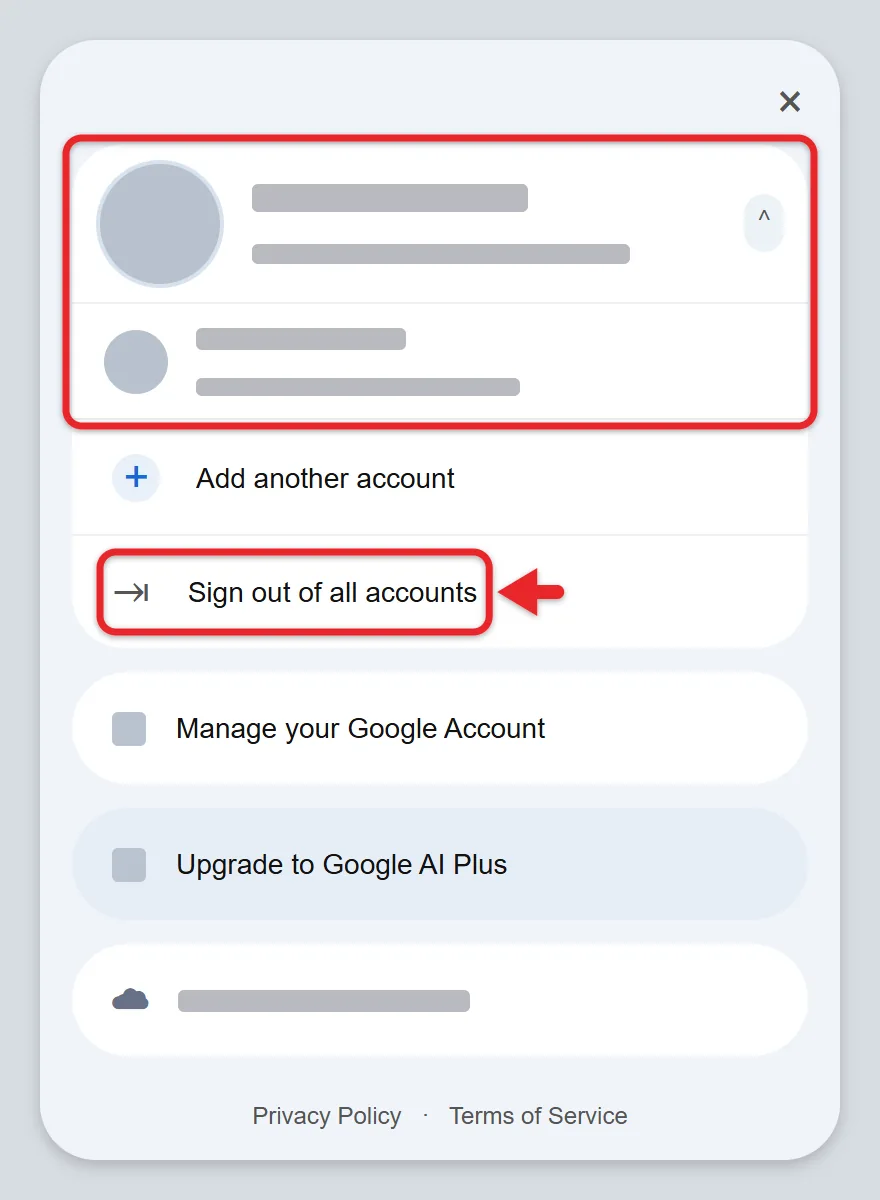
You will know it worked when the profile picture is replaced by a Sign in button, or when Google shows its sign-in page.
That round picture is your Google Account photo. If you see only an initial, here is how to set your Gmail profile picture.
With more than one account signed in, the browser signs all of them out together. To keep using one of them, sign back in to that account afterward.
Remove your account from the sign-in page
After you sign out, your email address can still appear in the list of accounts on Google’s sign-in page. That is handy on your own computer, but not on one you share. Google’s multiple accounts help page gives these steps:
- Go to myaccount.google.com in the browser.
- Click your profile picture or initial, then select Sign out or Sign out of all accounts.
- Select Remove an account.
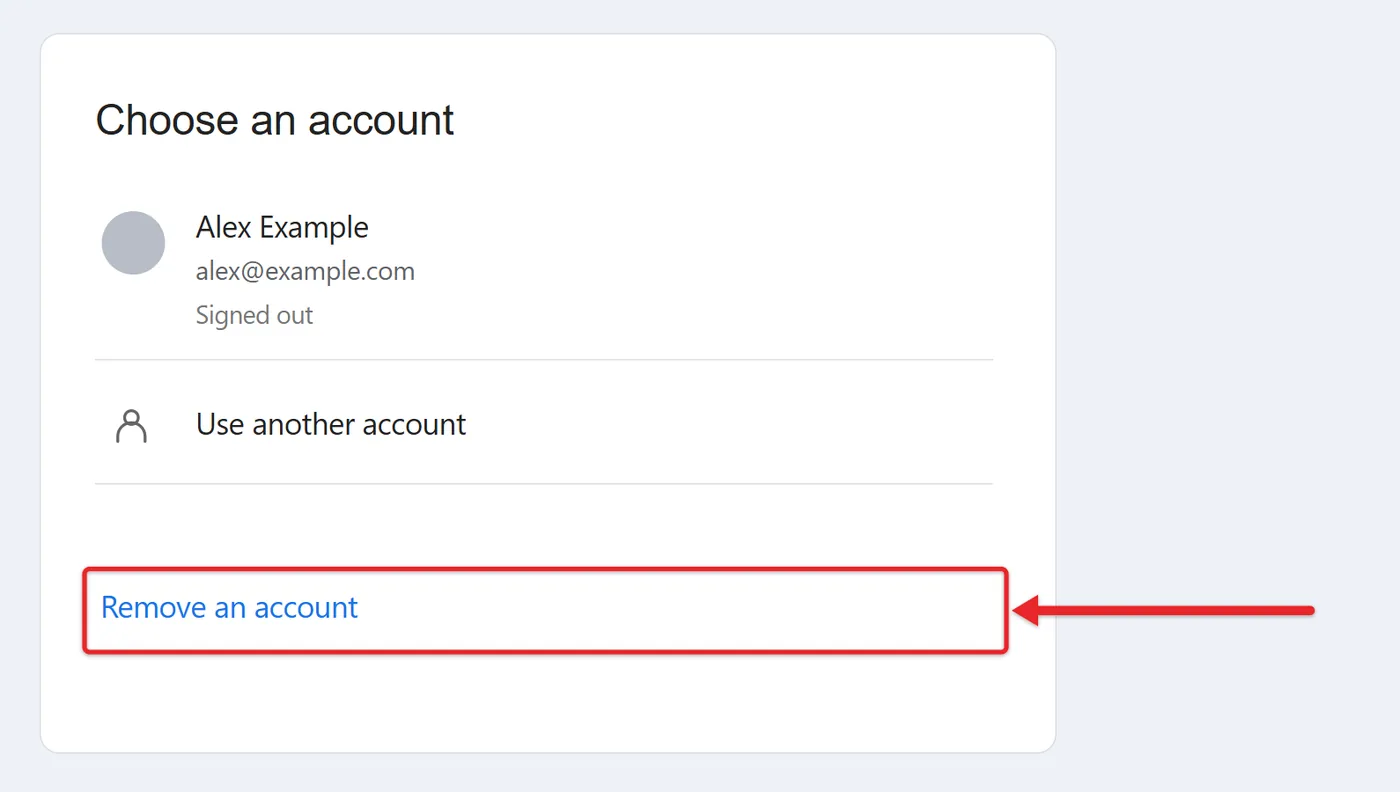
- Select Remove next to the account.
If you signed in with other browsers on that computer, such as Firefox or Safari, repeat the steps in each one.
Sign out of the Chrome browser too
Chrome has its own sign-in, separate from Gmail and other Google sites. Being signed in to Chrome is what lets your bookmarks and passwords follow you between devices. Want a separate copy before signing out? Export your Chrome bookmarks first.
To sign out of Chrome on a computer, click Profile at the top right of the Chrome window and select Sign out of Chrome. Google’s Sign out of Chrome page notes that if you already signed out of a Google site such as Gmail, the option may read Remove Account from Chrome instead.
Before you sign out, you can review the passwords saved to your Google Account so you know which logins it holds.
Sign out on an Android phone or tablet
Before you remove the account: Removing an account also deletes everything associated with it from the device, including email, contacts and settings. That information stays in your Google Account online, and it returns if you add the account again. If this is the only Google Account on the phone, you will be asked for the phone’s pattern, PIN or password.
From the Gmail app:
- Open the Gmail app.
- Tap your profile picture in the top right.
- Tap Manage accounts on this device.
- Choose your account.
- At the bottom, tap Remove account.
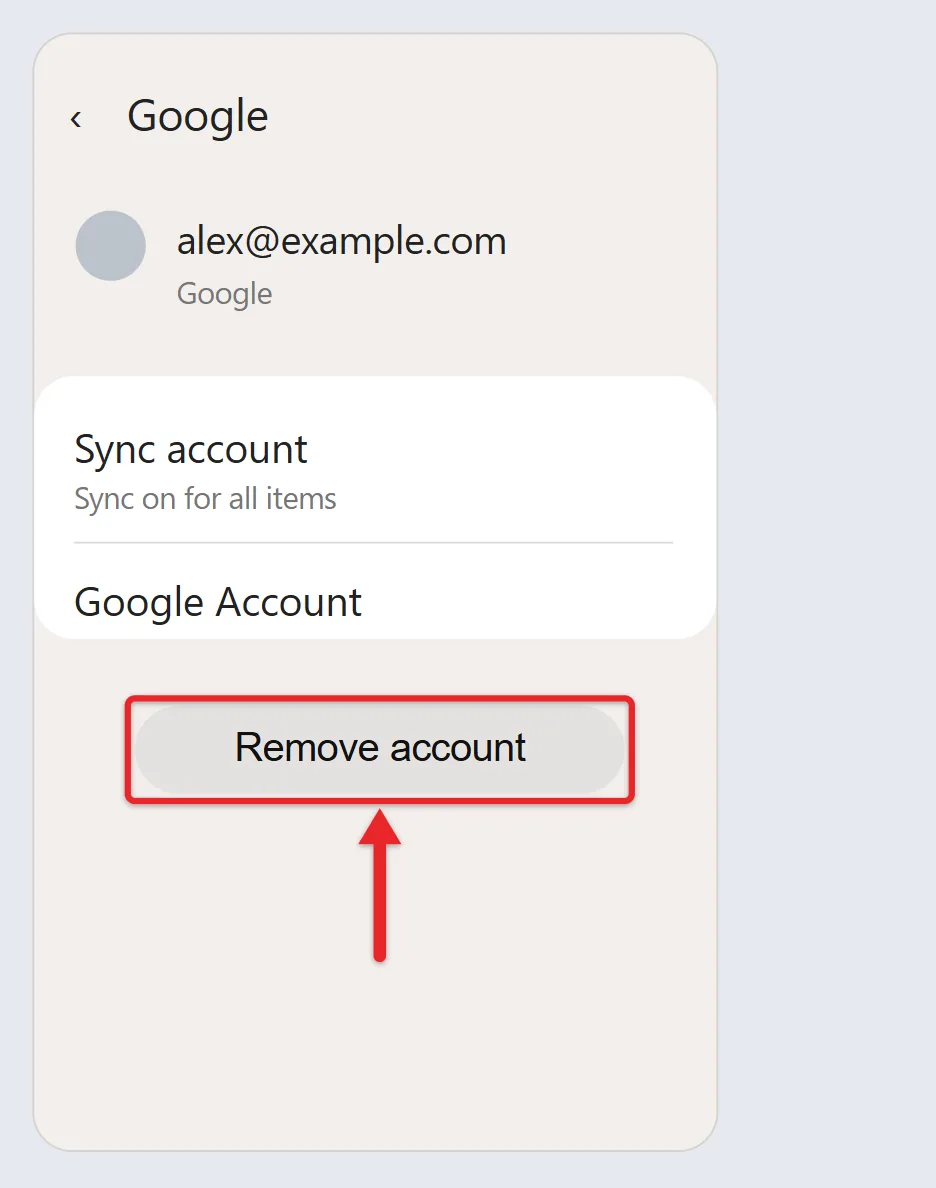
From the Settings app, following Google’s Add or remove an account on Android page (some of these steps only work on Android 14 and up):
- Open Settings.
- Tap Passwords & accounts. On some phones this is named Users & accounts, Passwords, passkeys & autofill or Manage accounts.
- Under Accounts, tap the Google account, then tap Remove account.
- Tap Remove account again to confirm, then Delete if asked.
To undo this, go back to the same accounts screen, tap Add account, choose Google and sign in.
Sign out on an iPhone or iPad
Google apps on an iPhone or iPad share the accounts you add, so removing the account in Gmail also signs you out of other Google apps such as Maps and YouTube.
- Open the Gmail app.
- Tap your profile picture in the top right.
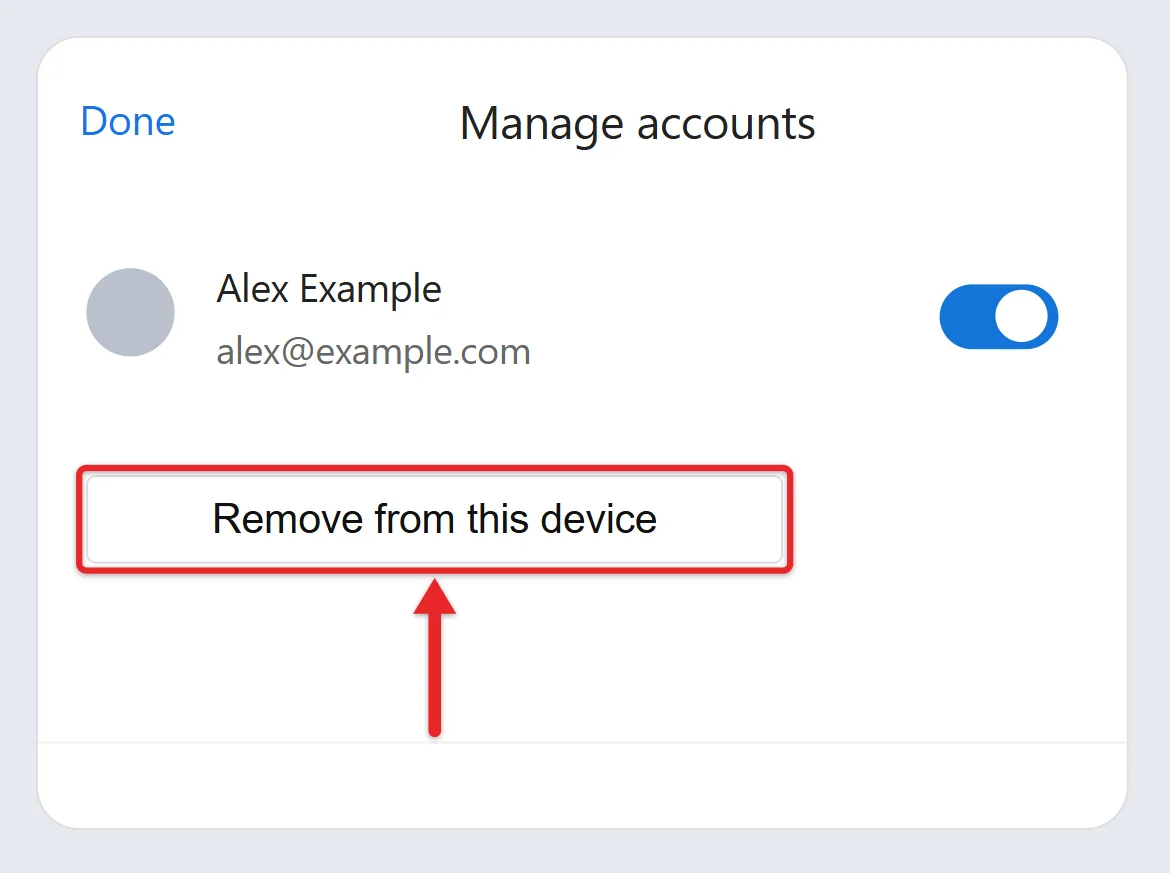
- Tap Manage accounts on this device.
- Tap Remove from this device for the account you want to sign out.
If you signed in to Google in Safari rather than an app, open google.com, tap your profile picture and tap Sign out, just as on a computer. For the Chrome app, Google’s instructions are More > Settings > your name > Sign Out.
If your Gmail address is set up in Apple’s Mail app instead, that is a separate setting. To sign out there, follow the steps for logging out of Mail on iPhone.
If you left your account signed in on a device you no longer have, you can end that session from another device. The steps are on Google’s See devices with account access page.
- On a device you trust, click your profile picture and select Manage your Google Account. This can also show as Edit Google Account.
- Select Security & sign-in.
- In the Your devices panel, select Manage all devices. The page lists devices where you are signed in now or were signed in during the last few weeks.
- Select the device or session you want to end.
- Select Sign out.
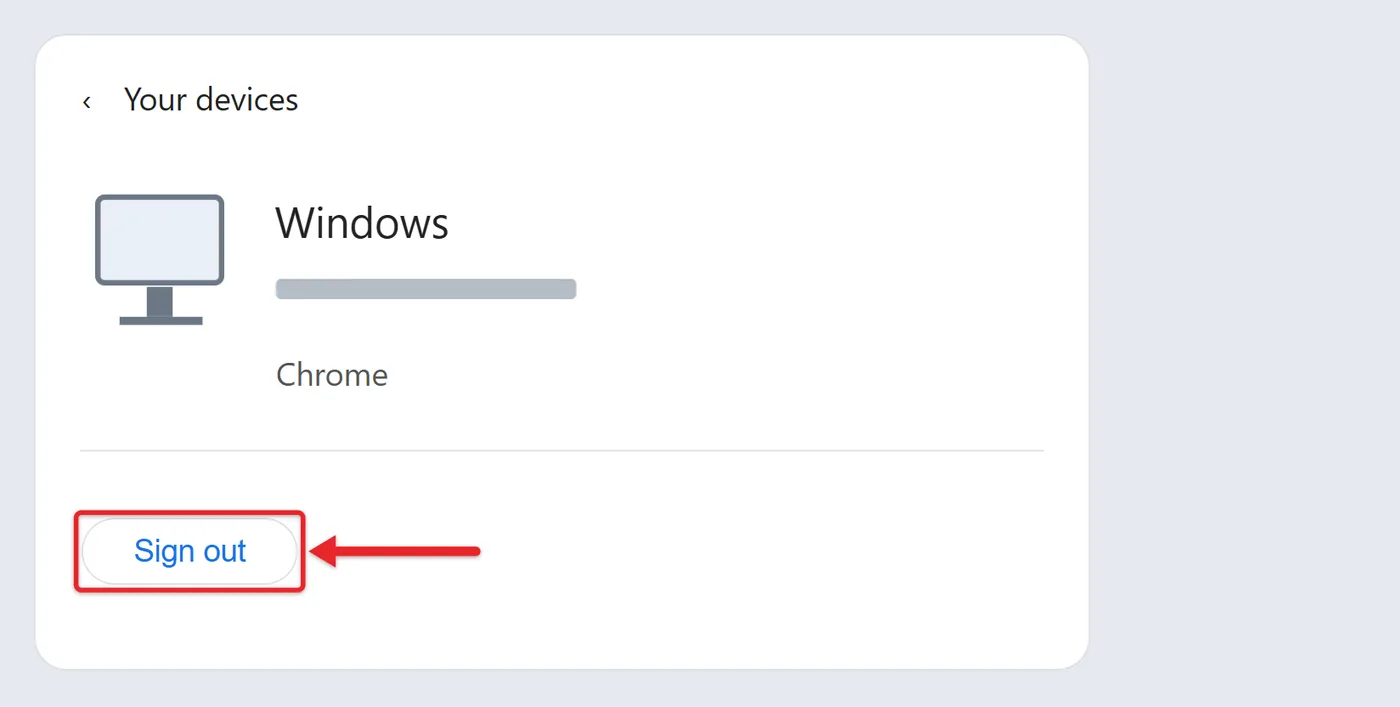
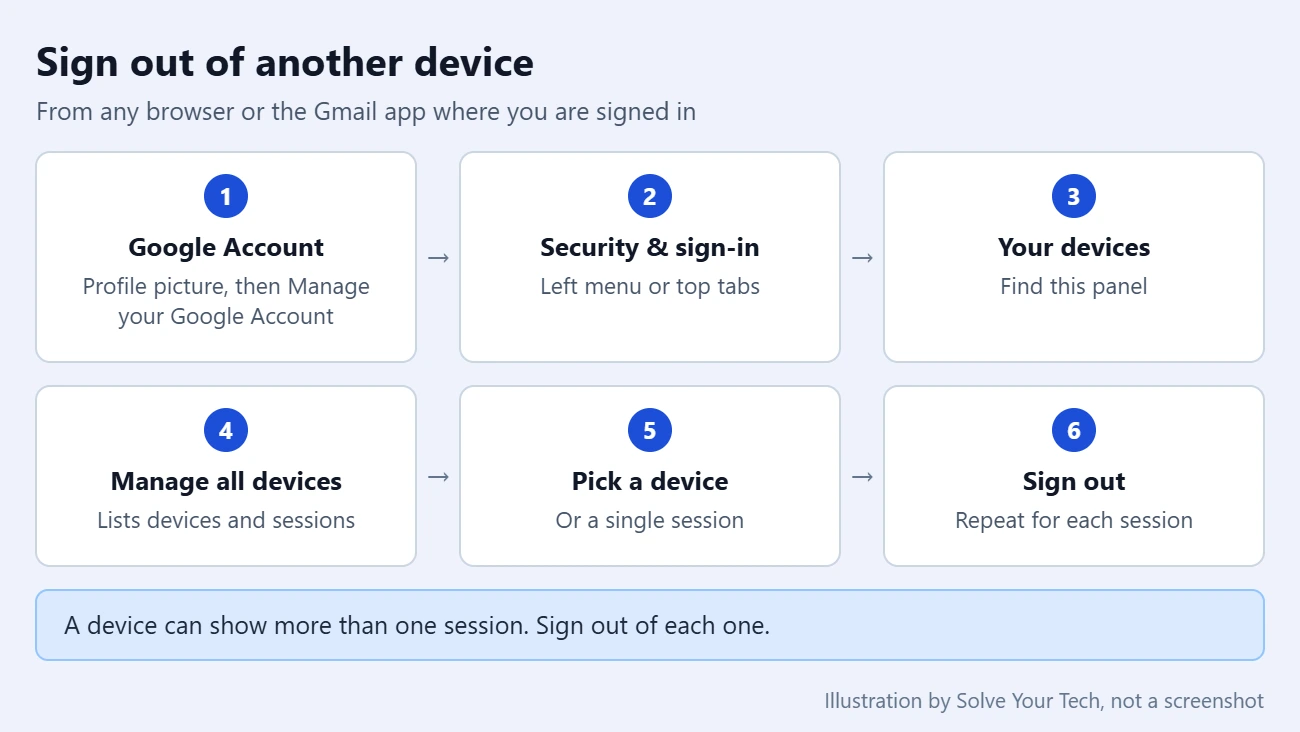
A session is one period of being signed in from a browser, app or service. One device can show several sessions, and that’s normal. To make sure the device has no access, sign out of every session listed for it. Entries you have already ended are marked Signed out.
There is no single button on this page that signs out every device at once. Changing your password comes close: afterward you are signed out everywhere except the devices you use to verify it’s you, some devices with third-party apps you gave access to, and home devices you gave access to.
If the device was lost or stolen, or you see a device you don’t recognize, change your password as well. iPad owners can follow the steps to change a Gmail password on an iPad. If you can’t remember the current one, here is how to recover a forgotten Gmail password.
Using a public or borrowed computer
Google’s advice for a device that isn’t yours is to sign in from a private window in the first place. In Chrome, click Profile and choose Open Guest Profile. In other browsers, open a private window. When you finish, close every Guest or private window, and the cookies that kept you signed in are deleted.
On a computer you share at home, a separate Chrome profile for each person keeps everyone’s Google sign-ins apart.
If you already signed in from a normal window, sign out with the computer steps above, then clear the browser’s cache and cookies. If you have left the building, use the remote steps instead.
Troubleshooting
- There is no Sign out button in the Gmail app. That is expected. The app only lets you remove the account from the device.
- You only see Sign out of all accounts. More than one account is signed in to that browser. Sign out of all of them, then sign back in to the one you need.
- Passwords & accounts is missing on Android. Look for one of the other names Google uses, such as Users & accounts or Manage accounts, or search Settings for “accounts.”
- Chrome still shows your name after you sign out of Gmail. Chrome’s own sign-in is still active. Use Sign out of Chrome or Remove Account from Chrome in the Profile menu.
- The same device appears several times under Manage all devices. Each entry is a separate session. Sign out of each one.
- A work or school account can’t be removed. Phones managed by an organization may restrict account changes. Google’s pages don’t give a workaround, so ask your administrator.
Frequently asked questions
Does logging out delete my Google Account?
No. Signing out or removing the account from a device only ends access on that device. Your Google Account isn’t deleted, and you can reach your email by signing in on another device.
Can I sign out of just one Google account on a computer?
Not on its own. When several accounts are signed in to the same browser, Google only offers Sign out of all accounts. Sign back in to the accounts you still want to use.
Does removing my account from one phone sign me out of my other devices?
No. It affects only that phone or tablet. Your computer and other devices stay signed in until you sign out on each one or end their sessions under Manage all devices.
How do I sign out of a Chromebook?
Select the time at the bottom right, then click Sign out. If you don’t see it, click Power and then Sign out.
Which account should I be signed in to before posting a review?
The one whose name you want shown. If you are about to write a review on Google, sign out of the wrong account first and sign in with the right one.
Next step
Once you are signed out, open Manage all devices one more time and confirm that the device shows Signed out. If you ever want to close the account for good rather than sign out, use Google’s Delete your Google Account page, and read what you will lose before you confirm.

Matthew Burleigh is the founder, head writer, and editor of Solve Your Tech, which he launched in 2012. He has written technology tutorials since 2008 and worked in IT since 2003, including small-business support, IT management, and consulting. He holds Bachelor’s and Master’s degrees in Computer Science from Arizona State University.
Matthew writes practical guides for Windows, iPhone and iPad, Microsoft Office, Outlook, Google apps, and Android. Solve Your Tech’s guides are checked step by step against the device or app maker’s own documentation and tested on his own devices whenever he has the hardware or software, with clear steps, sources, and update dates.
Read more about Matthew and how Solve Your Tech writes and updates its guides, or report a correction.