To install a font on Windows 11, download the font file (.ttf or .otf), unzip it if needed, right-click the font file, and choose Install. You can also get fonts from the Microsoft Store through Settings > Personalization > Fonts.
These steps cover current Windows 11 releases and also work on Windows 10, which uses the same Fonts page in Settings. New fonts show up in most apps, like Word and PowerPoint, as soon as they’re installed. The steps follow Microsoft’s guide to managing fonts.
Want new fonts on your phone too? Changing the font on iPhone covers installing fonts from the App Store and using them in Pages.
Quick Checks Before Installing Fonts
A few checks save most of the trouble people run into.
| File type | Installs on Windows? | Notes |
|---|---|---|
| .ttf (TrueType) | Yes | The most common desktop font format. |
| .otf (OpenType) | Yes | Often includes extra features such as ligatures. If a download has both .ttf and .otf versions, install only one. |
| .ttc (TrueType Collection) | Yes | One file that holds several related fonts. |
| .woff or .woff2 | No | These are web fonts for websites. Look for a desktop download instead. |
| .zip | No | Extract the font files first. |
- Get fonts from a source you trust. Good options include the Microsoft Store and well-known font sites that name the designer and the license. A real font is a font file. Never run an .exe, .msi or .bat file that claims to install fonts.
- Check the license. Many free fonts are for personal use only. If you’re making something for work or for a client, read the license file that came with the font.
- Decide who needs the font. A normal install adds the font only to your Windows account and doesn’t need an administrator password. Install for all users adds it for every account on the PC and needs administrator approval.
How to Install a Font From a File
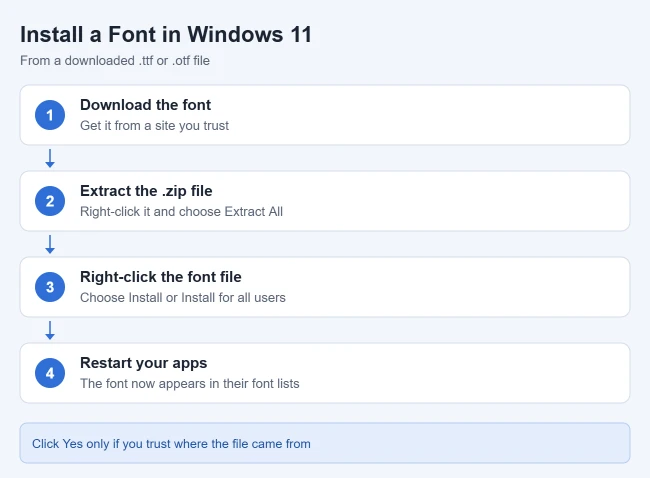
- Download the font from a site you trust. Make sure it’s a TrueType (.ttf) or OpenType (.otf) file.
- If it came in a .zip file, right-click the .zip and choose Extract All, then click Extract. A new folder opens with the font files inside.
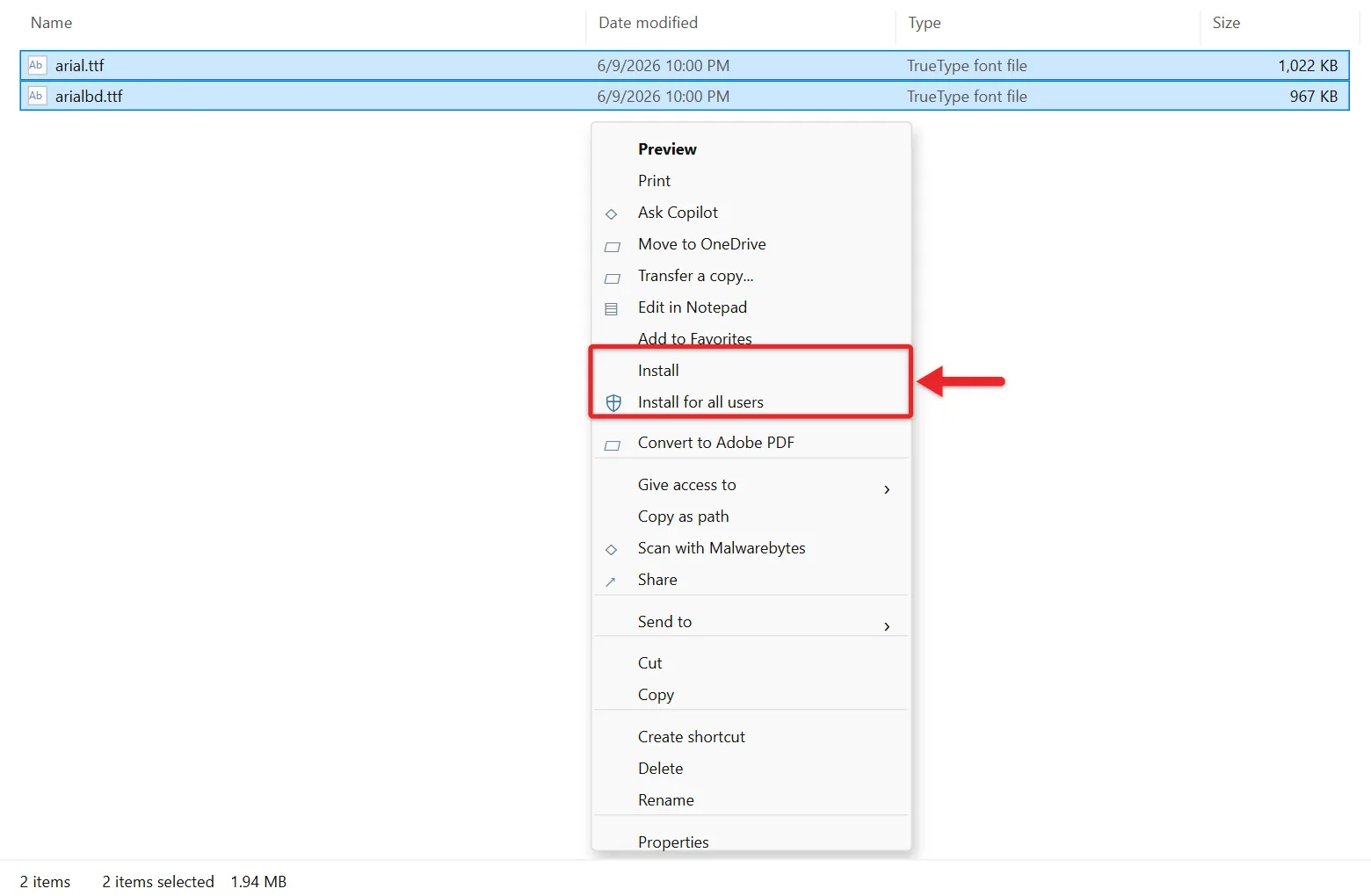
- Right-click the font file and choose Install. To install it for everyone who uses the PC, choose Install for all users. If you don’t see these options, click Show more options at the bottom of the menu first. You can also double-click the font file and select Install in the preview window.
- If Windows asks for permission, click Yes only if you trust where the file came from.
Windows copies the font into its fonts folder in a few seconds. Close and reopen any app that was already running so the new font shows up, because most apps load the font list only when they start.
In Photoshop, the new font then appears in the font menu, ready to apply when you change the font in Photoshop.
To install a whole font family at once, such as the regular, bold and italic styles, open the extracted folder, press Ctrl + A to select every font file, then right-click any of the selected files and choose Install. Installing every style lets the Bold and Italic buttons in Word use the real bold and italic designs.
How to Install Fonts by Dragging Them Into Settings
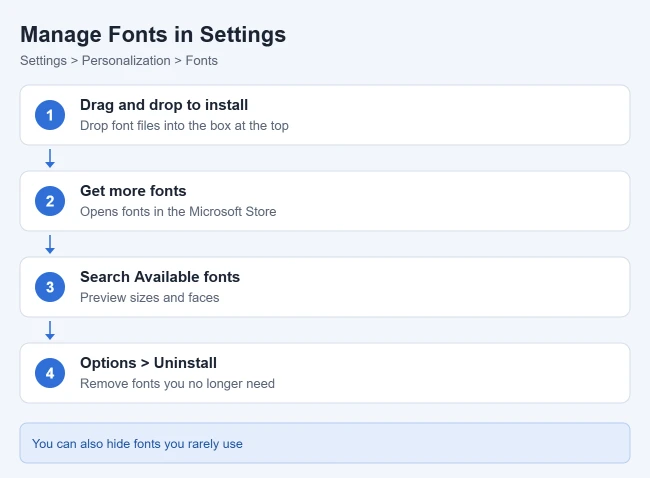
- Go to Settings > Personalization > Fonts. A quick way to open Settings is Windows key + I.
- Drag one or more font files from File Explorer into the Drag and drop to install box at the top.
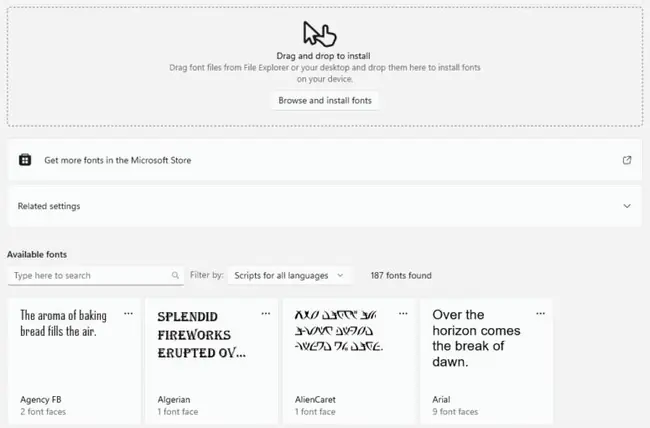
If dragging is awkward on a laptop touchpad, click Browse and install fonts on the same page and pick the files instead. The fonts appear in the Available fonts list when they finish installing.
Microsoft’s font installation guide notes that you can also drop font files straight into the C:\Windows\Fonts folder, and that you can install several fonts at once this way. Because that folder holds the fonts for every account, Windows may ask for administrator permission.
Example: The Fonts Page in 25H2
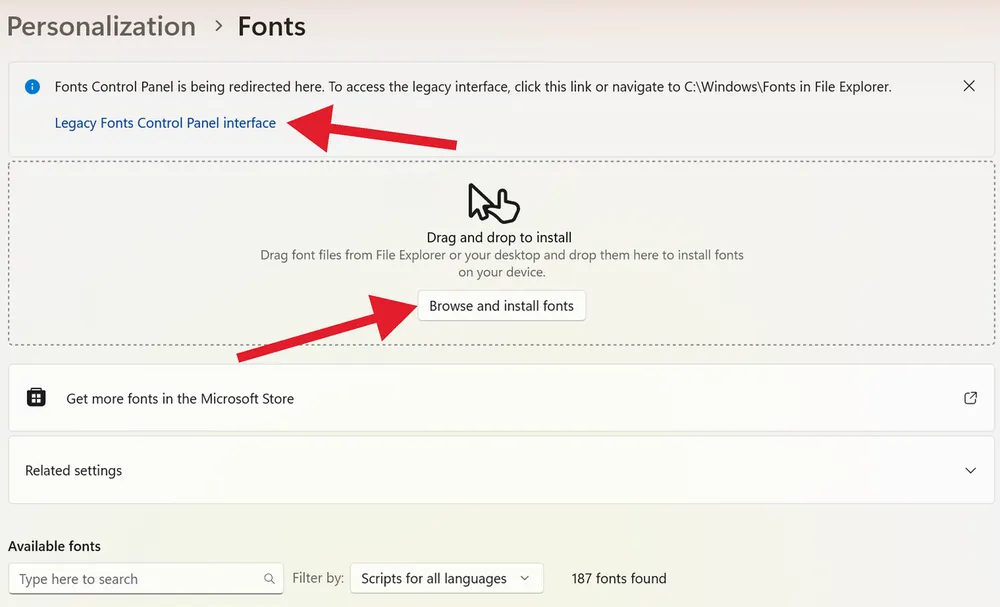
On an Alienware m16 R2 running Windows 11 Home 25H2, Settings > Personalization > Fonts opened with a blue notice that the Fonts Control Panel is being redirected here, plus a Legacy Fonts Control Panel interface link for anyone who still wants the old window (the Windows Fonts folder in File Explorer still works too).
Under the notice was the Drag and drop to install box, and inside it a Browse and install fonts button, so you can also pick a font file instead of dragging it. Below that were Get more fonts in the Microsoft Store and the Available fonts list, which said 187 fonts found on this laptop. That count goes up by one when a new font installs.
How to Get Fonts From the Microsoft Store
- Go to Settings > Personalization > Fonts.
- Click Get more fonts in Microsoft Store. The Store opens to its fonts collection.
- Pick a font and click Get (or Buy). It installs by itself.
There’s nothing to unzip, and the font is ready in your apps right away. The Store has a smaller selection than font websites, but it’s the lowest-risk option.
Install Fonts on Windows 10
Windows 10 uses the same method, as Microsoft’s custom font instructions show:
- Download a .ttf or .otf font from a site you trust, and extract it if it came in a .zip file.
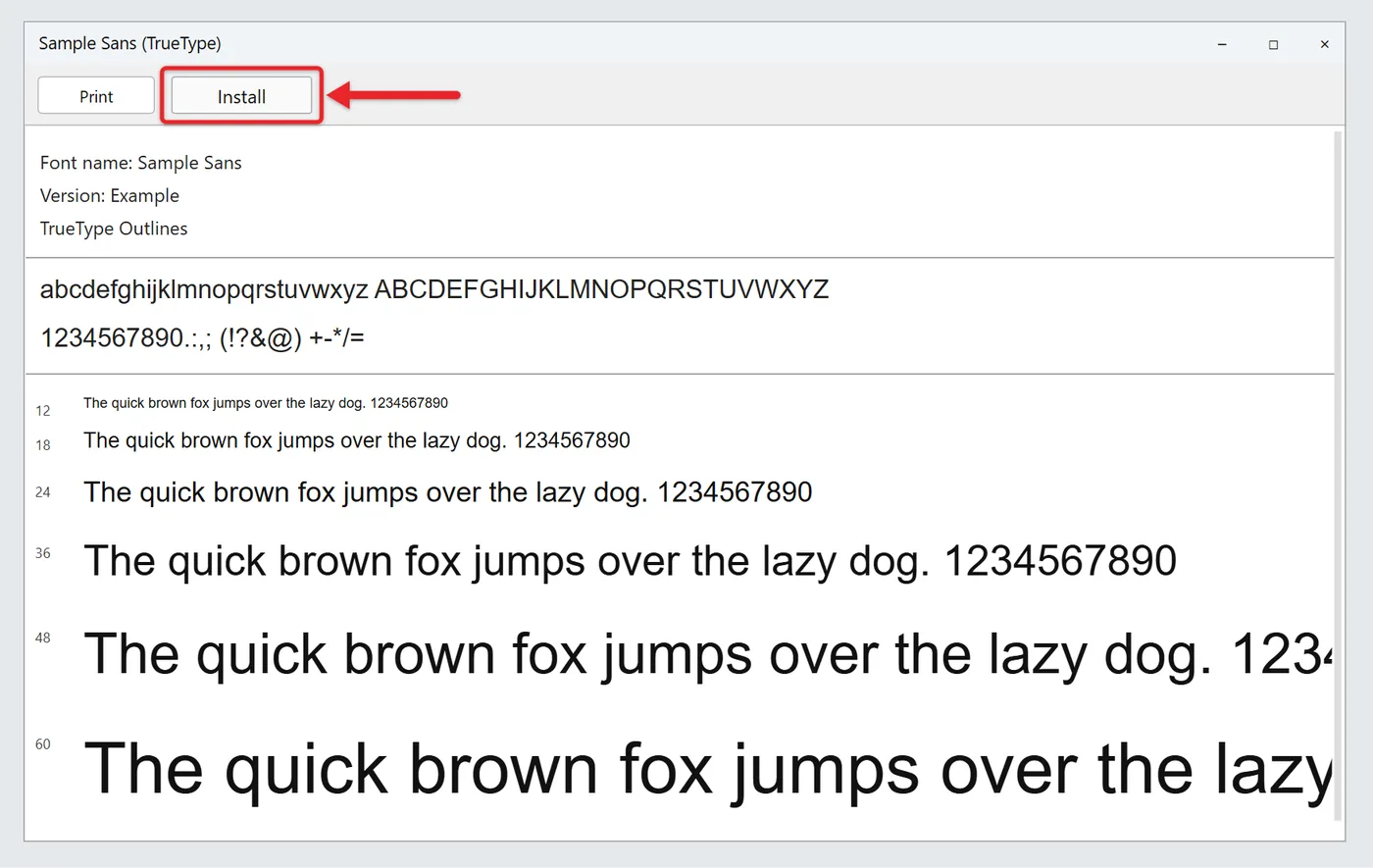
- Double-click the font file to preview it, then select Install. Or right-click the file and choose Install.
- Close and reopen Word or any other open app, then pick the font from its font list.
How to Check That the Font Installed
- Go to Settings > Personalization > Fonts.
- Type the font’s name in the search box under Available fonts. The font appears with a preview.
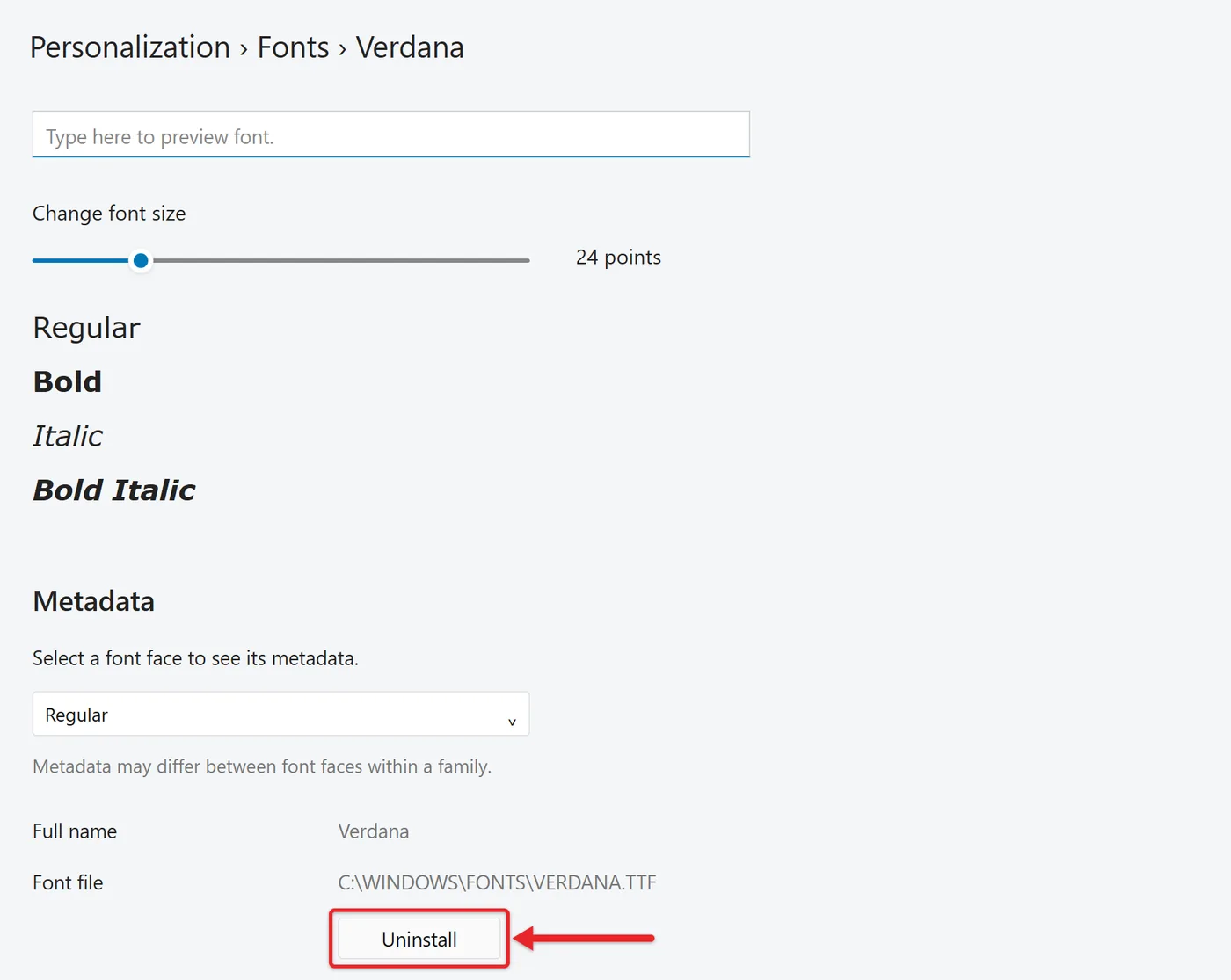
- Click the font to see its styles and a larger preview.
If the font is listed there but missing from an app, the install worked and the app is the problem. Restart the app and look for the font’s family name, which can differ from the file name. A file called OpenSans-Bold.ttf, for example, shows up in Word as Open Sans.
How to See, Hide or Remove Installed Fonts
Go to Settings > Personalization > Fonts. All your fonts are listed under Available fonts, where you can search and preview them. To remove one, click the Options (three dots) button next to it and choose Uninstall. It disappears from your apps the next time they start.
To keep long font lists shorter without uninstalling anything, open Control Panel > Appearance and Personalization > Fonts, select a font, and click Hide. Hidden fonts stay installed. If you need fonts for another language, select Download fonts for all languages under Related settings on the Settings Fonts page, then select OK.
Don’t remove fonts that came with Windows, such as Segoe UI, Arial or Calibri. Windows and many apps depend on them. Remove fonts through Settings rather than deleting files from the fonts folder by hand.
What to Do If a Font Won’t Install
Microsoft suggests these checks:
- Extract it first. Windows won’t install a font that’s still inside a .zip file.
- Check the file type. It should be a .ttf or .otf file, not a .woff or .woff2 web font.
- Unblock it. Right-click the file, choose Properties, and select Unblock if you see it.
- Check permissions. You may need administrator rights, especially on a work PC.
- Search by family name. In an app’s font list, look for the font’s family name, not the file name.
A few other problems come up often:
- “Not a valid font file.” The download may be damaged or incomplete. Download it again, extract it again, and install the .ttf or .otf file.
- The font works for you but not for another account. It was installed for your account only. Right-click the file and choose Install for all users.
- There’s no Install option at all. The file is probably still inside the .zip, or your organization blocks font installs. On a school or work PC, ask IT to install the font.
- An old version of the font keeps showing up. Uninstall the old copy in Settings, restart the app, then install the new file.
- It still doesn’t appear. Restart the PC so every app reloads the font list.
Most install problems come down to a zipped, blocked, or unsupported file.
Windows Font Questions
Why doesn’t my new font show up in an app?
Restart the app. Not every app supports custom fonts, so try another app to check that the font is installed.
Do I need administrator rights to install a font?
No, not for your own account. The regular Install option works without an administrator password. Only Install for all users or copying files into C:\Windows\Fonts needs administrator approval.
Where does Windows store installed fonts?
Fonts installed for all users go in C:\Windows\Fonts. Fonts installed only for you go in a hidden folder inside your user profile. The Fonts page in Settings lists both, so you don’t need to open either folder.
Will my font show up for other people when I share a document?
Only if they have the font too. In Word, you can embed fonts in the file.
How do I make text bigger everywhere in Windows?
That’s a different setting. You can change the font Windows itself uses, or, if you just want bigger text, increase text size in Windows 11.
If you use a newly installed font in a document you will share, embed fonts in a PDF from Word so it looks the same for everyone. To make your new font the starting font for every document, set a default font in Microsoft Word.

Matthew Burleigh is the founder, head writer, and editor of Solve Your Tech, which he launched in 2012. He has written technology tutorials since 2008 and worked in IT since 2003, including small-business support, IT management, and consulting. He holds Bachelor’s and Master’s degrees in Computer Science from Arizona State University.
Matthew writes practical guides for Windows, iPhone and iPad, Microsoft Office, Outlook, Google apps, and Android. Solve Your Tech’s guides are checked step by step against the device or app maker’s own documentation and tested on his own devices whenever he has the hardware or software, with clear steps, sources, and update dates.
Read more about Matthew and how Solve Your Tech writes and updates its guides, or report a correction.