To type a letter with an accent in Windows 11, press Windows key + . (period), select the Symbols tab (the Ω icon), open Latin symbols, and pick the letter. If you type accents often, add the US-International keyboard, which lets you press an accent key followed by a letter. On a Mac, press and hold the letter key and choose the accented version.
This guide covers Windows 11 and Windows 10, Microsoft Word and Outlook, current macOS, Chromebooks, Google Docs, and iPhone, iPad, and Android keyboards. Pick the method that matches how often you type accents and which app you’re in.
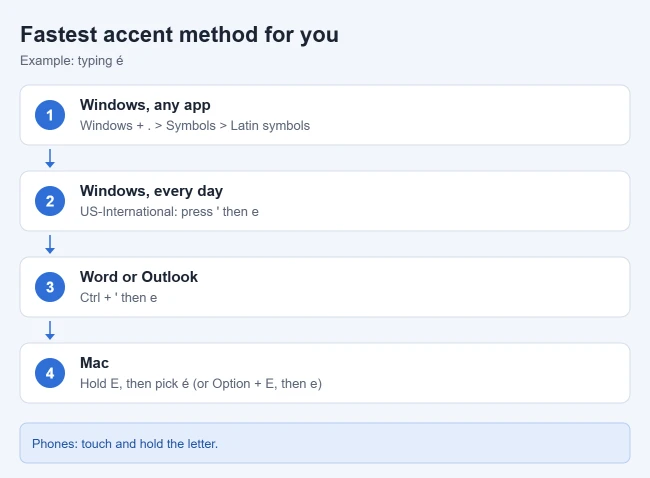
Which method should you use?
| Method | Works in | Best for |
|---|---|---|
| Symbols panel (Windows key + .) | Almost any Windows app | An accent now and then |
| US-International keyboard | Almost any Windows app | Typing accents every day |
| Ctrl shortcuts and Alt + X | Word and Outlook | Word users who want shortcuts |
| Alt codes | Most Windows apps | Keyboards with a number pad |
| Character Map | Any app, by copy and paste | Rare letters with no shortcut |
| Press and hold or Option keys | Most Mac apps | Mac users |
| Insert > Symbols > Special characters | Google Docs and Slides | Any computer, any keyboard |
| Touch and hold a letter | iPhone, iPad, Android | Phones and tablets |
The accent names you will see below are acute (é), grave (è), circumflex (ê), tilde (ñ), umlaut or diaeresis (ü), and cedilla (ç).
Method 1: The emoji and symbols panel (any Windows app)
- Click where you want to type.
- Press Windows key + . (period). The emoji panel opens near your cursor.
- Select the Symbols tab (Ω).
- Choose Latin symbols and select the letter, such as é or ñ.
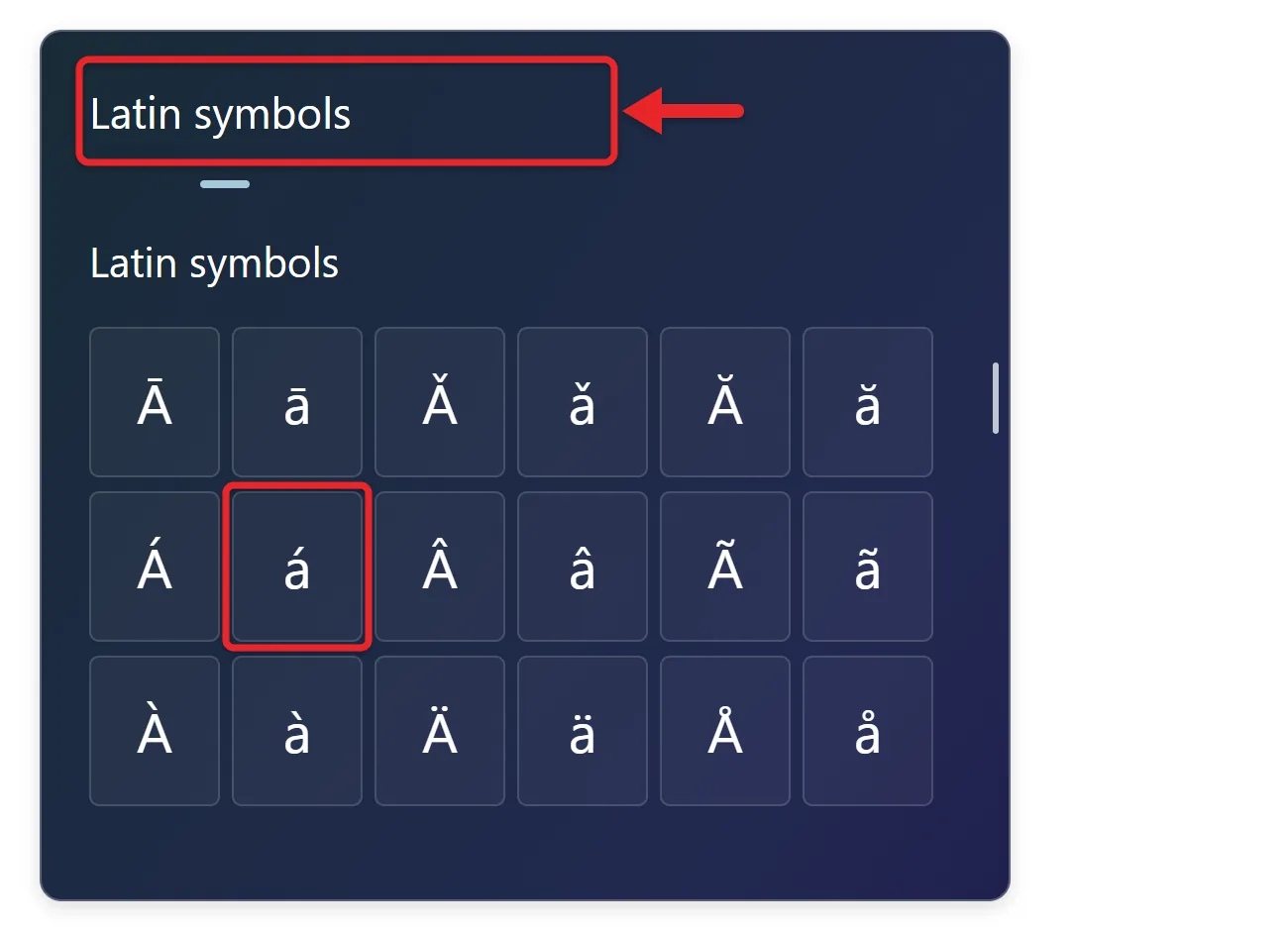
The letter appears at your cursor. The panel remembers recent symbols, so the next time the letter is quicker to find. Microsoft describes this panel in its Windows keyboard tips and tricks, where the Symbols list includes accented characters.
More about this panel: how to open the emoji keyboard in Windows 11.
Method 2: US-International keyboard (best if you type accents often)
- Go to Settings > Time & language > Language & region.
- Next to your language, select … then Language options.
- Under Keyboards, select Add a keyboard and choose United States-International.
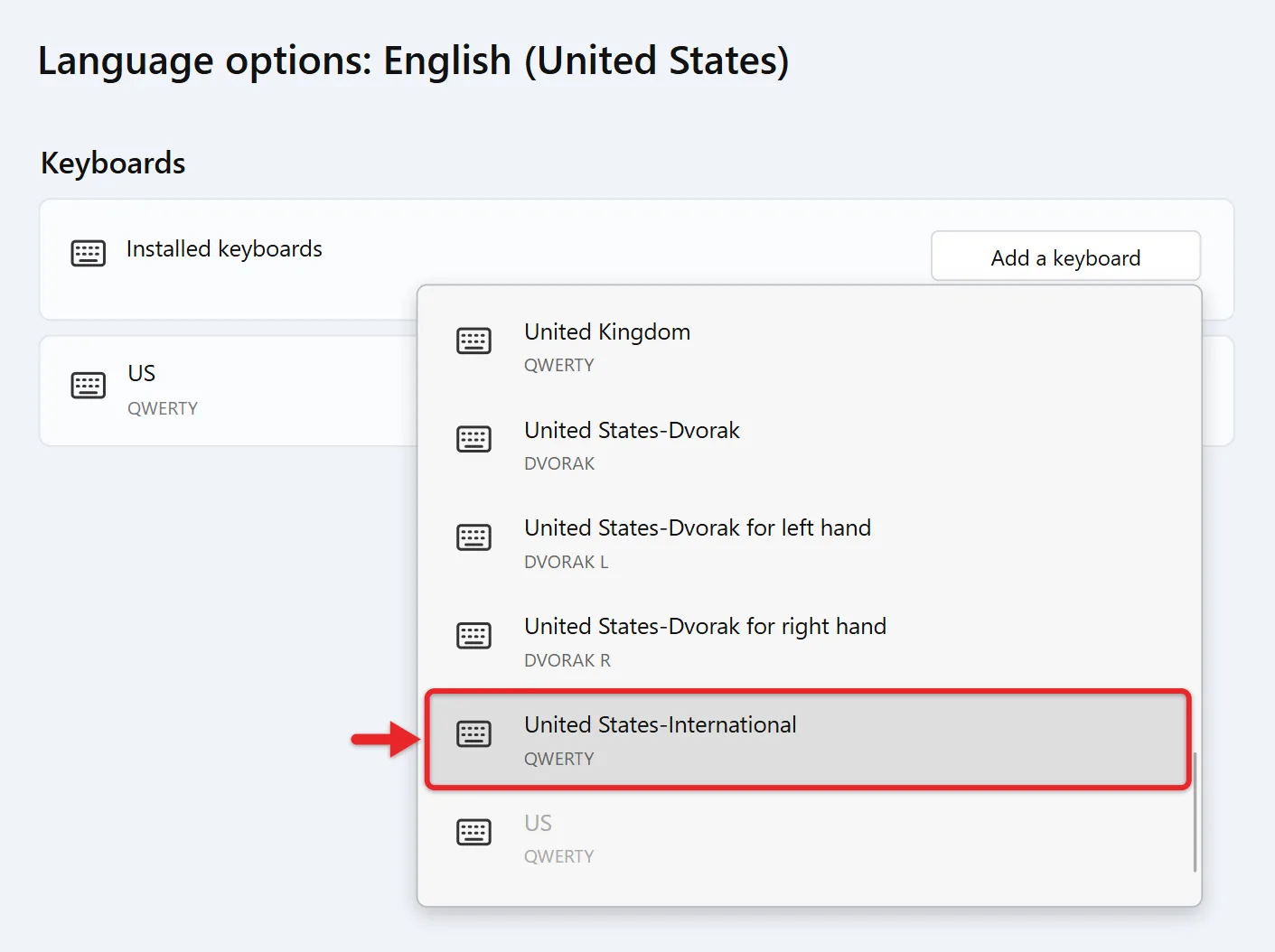
- Switch to it with Windows key + Space. The language indicator on the taskbar shows which keyboard is active.
The accent keys become “dead keys,” which means they wait for the next key before typing anything. Type ‘ then e for é, ` then a for à, ~ then n for ñ, ^ then o for ô, and “ then u for ü. Type ‘ then c for ç. To type the plain apostrophe or quote, press the key and then Space. This works in nearly every app. You can add or switch layouts in the Windows keyboard layout settings.
The same layout also has direct shortcuts with the Right Alt key (the Alt key to the right of the Space bar): Right Alt + a, e, i, o, or u types á, é, í, ó, or ú, Right Alt + n types ñ, Right Alt + 1 types ¡, and Right Alt + / types ¿. Add Shift for a capital letter. The left Alt key doesn’t do this.
On Windows 10, go to Settings > Time & Language > Language. Select your language under Preferred languages, choose Options > Add a keyboard, and pick United States-International. The dead keys work the same way. The Windows 10 keyboard layout steps cover switching layouts. Windows 10 reached end of support on October 14, 2025, so it gets security updates only through Microsoft’s Extended Security Updates program.
If you only need accents for a while, remove the keyboard later from the same Language options page so your apostrophe key goes back to normal.
Method 3: Word and Outlook shortcuts
Press the shortcut, release it, then type the letter. These come from Microsoft’s Keyboard shortcuts to add language accent marks in Word.
- Ctrl + ‘, then a letter: acute accent (é).
- Ctrl + `, then a letter: grave accent (è).
- Ctrl + Shift + ^, then a letter: circumflex (ê).
- Ctrl + Shift + ~, then a letter: tilde (ñ).
- Ctrl + Shift + :, then a letter: umlaut (ü).
- Ctrl + , (comma), then c: cedilla (ç).
- Ctrl + Shift + @, then a: å. Ctrl + Shift + &, then a: æ. Ctrl + /, then o: ø.
- Alt + Ctrl + Shift + ? for ¿ and Alt + Ctrl + Shift + ! for ¡.
The accented letter replaces the shortcut. For a capital, type the letter in uppercase (or turn on Caps Lock) after the shortcut. These shortcuts only work inside Word and Outlook, so they do nothing in a web browser or Notepad.
If a laptop has no number pad, Microsoft points to Insert > Symbol > More Symbols in Word. Pick Latin-1 Supplement from the Subset list, select the letter, and select Insert.
Unicode with Alt + X (Word)
In Word you can also type a letter’s Unicode value and press Alt + X. For example, type 00E9 then press Alt + X to get é, or 00F1 for ñ. Press Alt + X again to turn the letter back into its code. Microsoft’s ASCII and Unicode character guide notes that if Alt + X converts the wrong characters, you can select the code first and then press it.
Alt + X works for math symbols as well. Here’s how to type a square root symbol in Word.
Make Word fix a word for you
If you type the same accented word often, such as a name, add it to AutoCorrect. Go to File > Options > Proofing > AutoCorrect Options, type the plain spelling in Replace (for example, Jose), type the accented spelling in With (José), and select Add. Word swaps it each time you type the word followed by a space.
Method 4: Alt codes (keyboards with a number pad)
- Turn on Num Lock.
- Hold Alt and type the four-digit code on the number pad, including the leading zero.
- Release Alt.
The character appears when you let go of Alt. Codes are case-sensitive, so capitals have their own codes. The number row above the letters won’t work, which is why Alt codes are awkward on most laptops.
| Letter | Code | Capital | Code |
|---|---|---|---|
| á | Alt + 0225 | Á | Alt + 0193 |
| é | Alt + 0233 | É | Alt + 0201 |
| í | Alt + 0237 | Í | Alt + 0205 |
| ó | Alt + 0243 | Ó | Alt + 0211 |
| ú | Alt + 0250 | Ú | Alt + 0218 |
| ñ | Alt + 0241 | Ñ | Alt + 0209 |
| ü | Alt + 0252 | Ü | Alt + 0220 |
| ç | Alt + 0231 | Ç | Alt + 0199 |
| è | Alt + 0232 | È | Alt + 0200 |
| à | Alt + 0224 | À | Alt + 0192 |
For Spanish punctuation, Alt + 0191 types ¿ and Alt + 0161 types ¡. Older three-digit codes also exist, such as Alt + 130 for é. Those work too, but they come from a different character set, which is why Alt + 233 without the zero gives a different symbol.
Method 5: Character Map
- Select Start, type Character Map, and open it.
- Select the letter you want.
- Select Select and then Copy.
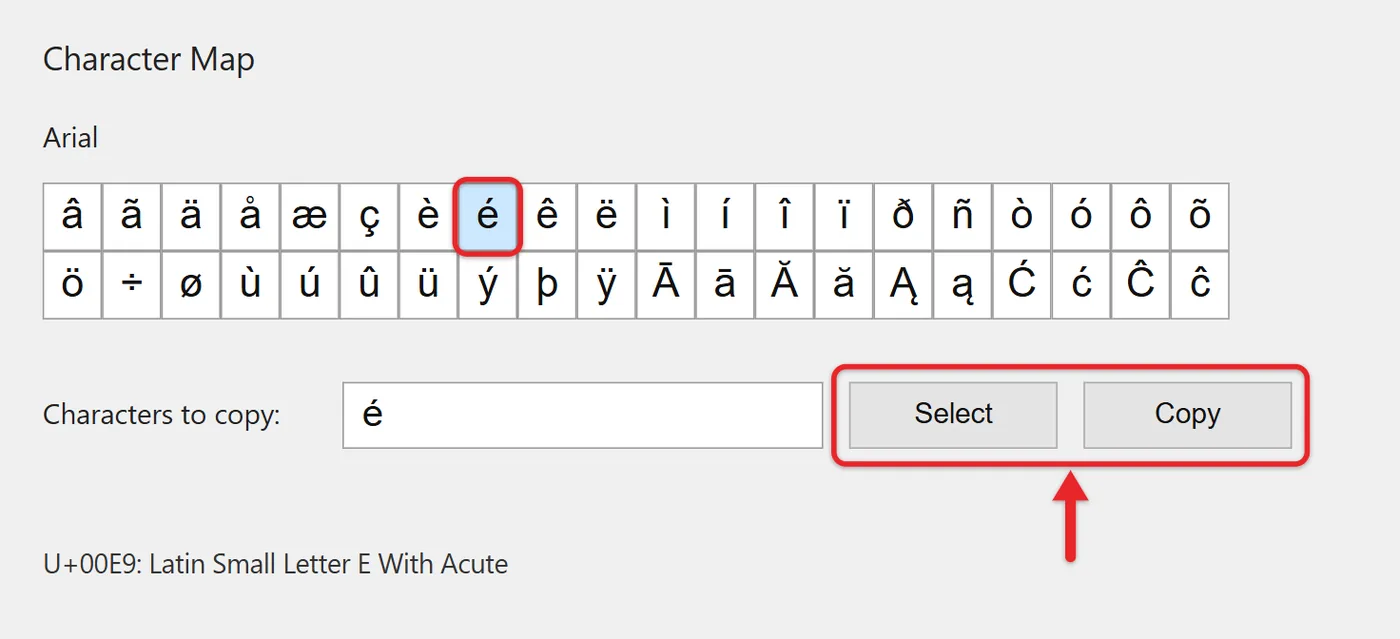
- Paste it with Ctrl + V.
The bottom right corner also shows the letter’s Alt code, such as Alt+0233 for é. If you can’t find a letter, check the Font list at the top, since Character Map only shows characters in the font you pick. Common fonts such as Arial and Times New Roman include all the accented letters above.
Type Accented Letters With the Windows Touch Keyboard
On Windows 11:
- Right-click the taskbar and choose Taskbar settings.
- Under System tray icons, set Touch keyboard to Always if you need its icon while a physical keyboard is attached. The setting is explained on Microsoft’s touch keyboard page.
- Select a text field and open the taskbar’s touch-keyboard icon.
- Press and hold a letter such as e on a layout that has accented versions, select é, è or ê, and check the text.
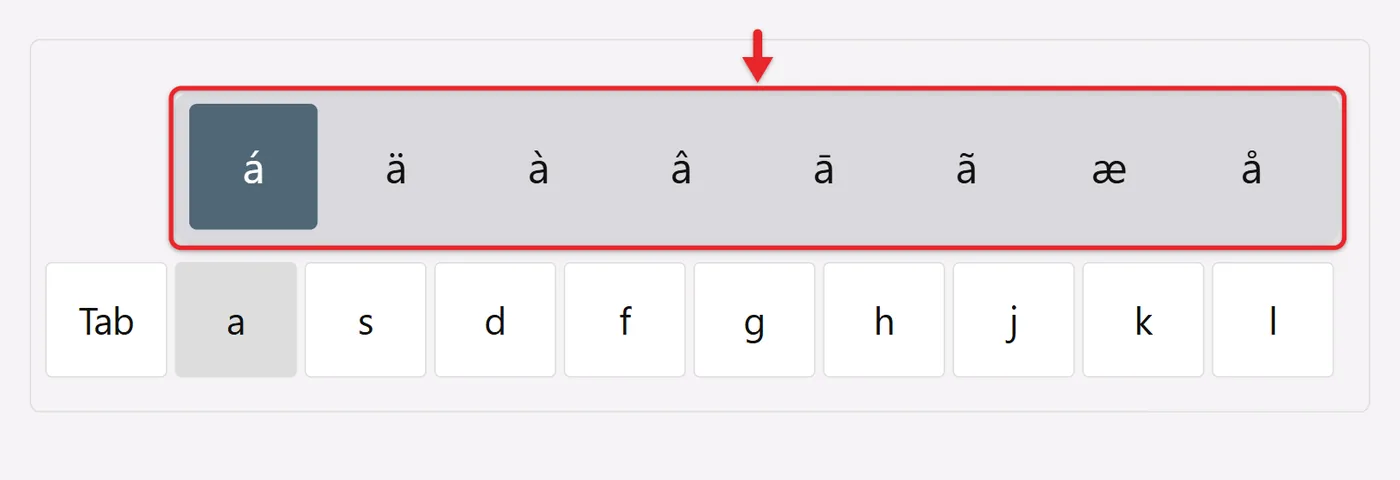
On Windows 10, the taskbar’s right-click menu instead offers Show touch keyboard button. The Accessibility On-Screen Keyboard opened with Windows+Ctrl+O is a separate tool and may not have the same long-press popup. Use Character Map above if the letter you need is missing. Close the keyboard and change the icon setting back if you want.
On a Mac
Apple’s Mac guide lists two ways:
- Press and hold a letter key, such as e, to open the accent menu. Click the version you want, or press the number shown under it. You can also move with the arrow keys and press Space.
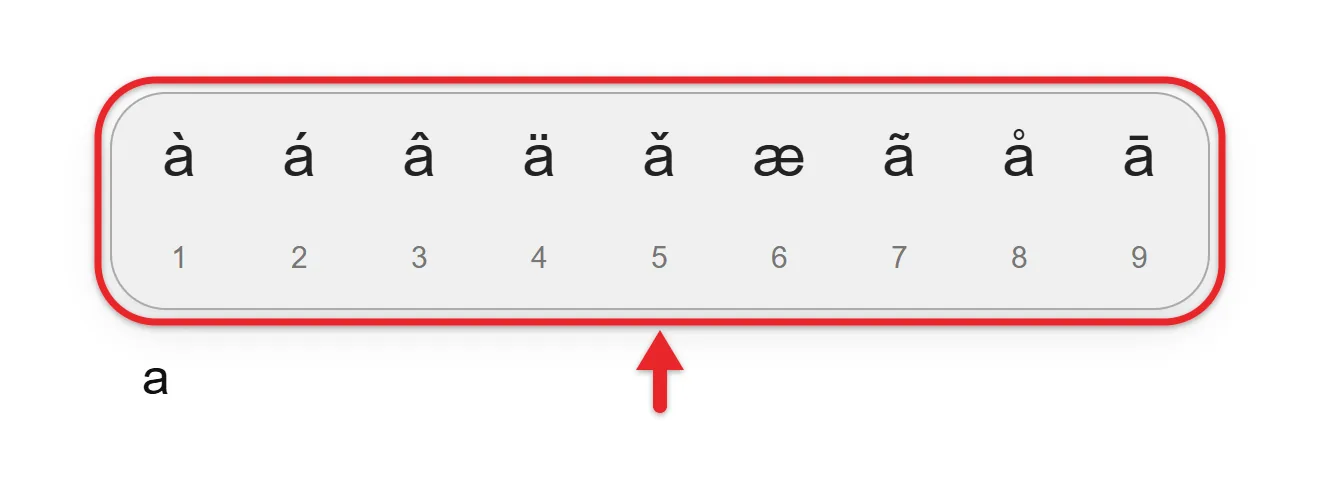
- Dead keys: press a key combination for the accent, then the letter. On the standard ABC layout, Option + E then a vowel gives an acute accent (é), Option + ` gives a grave (è), Option + I a circumflex (ê), Option + U an umlaut (ü), and Option + N a tilde (ñ). Option + C types ç.
For a capital, hold Shift while you press the letter after the dead key, so Option + E and then Shift + E gives É. On a U.S. keyboard, Option + 1 types ¡ and Option + Shift + ? types ¿.
The accent menu isn’t available in every app, and it doesn’t appear for keys with no accented versions. To see which dead keys your layout uses, open the Keyboard Viewer and hold Option. The dead keys show an orange outline. For anything else, open the Character Viewer with Fn/Globe + E or Edit > Emoji & Symbols, search for the letter, and click it (more in Use emoji and symbols on Mac).
If you write in several languages that use the Latin alphabet, add the ABC – Extended input source, which has more accents on dead keys.
On a Chromebook
Google’s Chromebook keyboard language help lists two ways.
Hold a key: Hold the letter, such as e, until the accent menu opens. Press Tab or the right arrow to enter the menu, use the arrow keys to highlight the accent, and press Enter or Space. You can also press the number shown or click the letter. Accents aren’t available for every character.
Use the international keyboard:
- Select the time at the bottom right, then select Settings.
- Go to Device > Keyboard > Change input settings.
- Under Input methods, add English (US) with International keyboard.
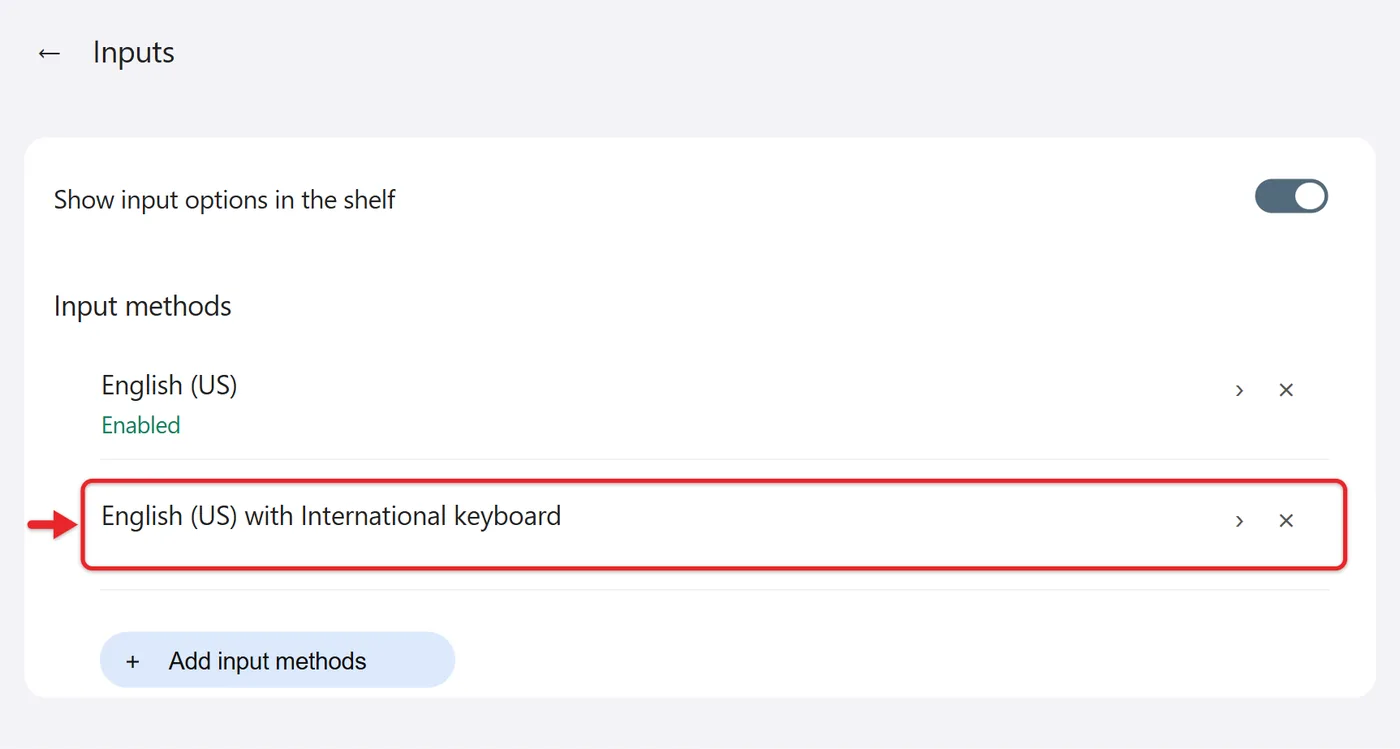
- Type ‘ then a letter for an acute accent, ` for grave, Shift + ` for tilde, Shift + 6 for circumflex, and Shift + ‘ for umlaut.
The Chromebook layout also uses AltGr, the Alt key on the right, for direct letters such as AltGr + e for é and AltGr + n for ñ.
In Google Docs
Google Docs uses your computer’s keyboard methods, so the Windows, Mac, and Chromebook steps above all work there. Docs also has its own picker that works with any keyboard:
- Open the document on a computer.
- Go to Insert > Symbols > Special characters.
- Type a name such as e acute in the search box, or draw the letter in the box on the right.
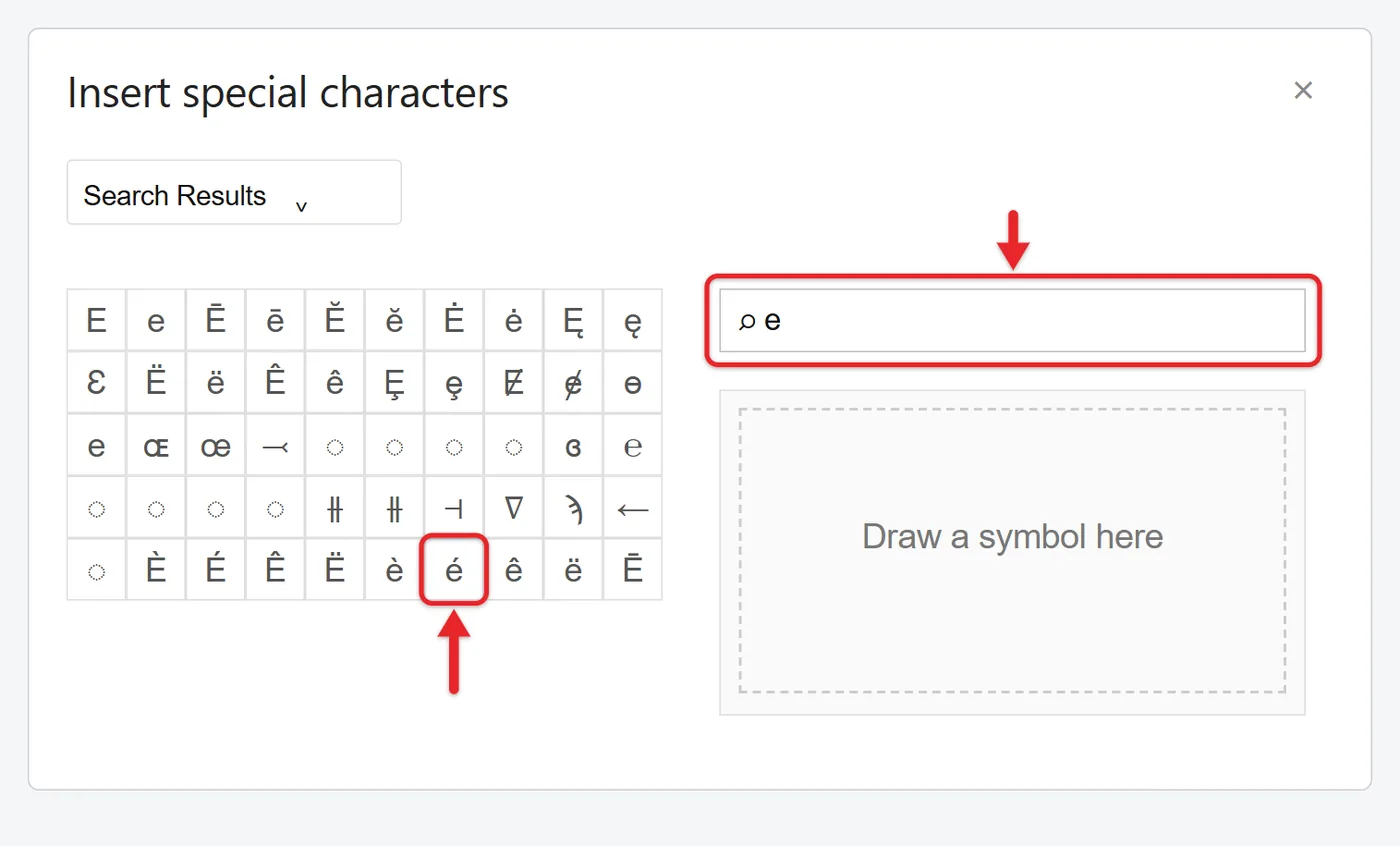
- Click the letter to insert it.
Google’s special characters steps also work in Google Slides. Sheets doesn’t have the picker, so copy the letter from a document and paste it into the cell. For a word you type all the time, add a replacement under Tools > Preferences > Substitutions.
On a phone or tablet
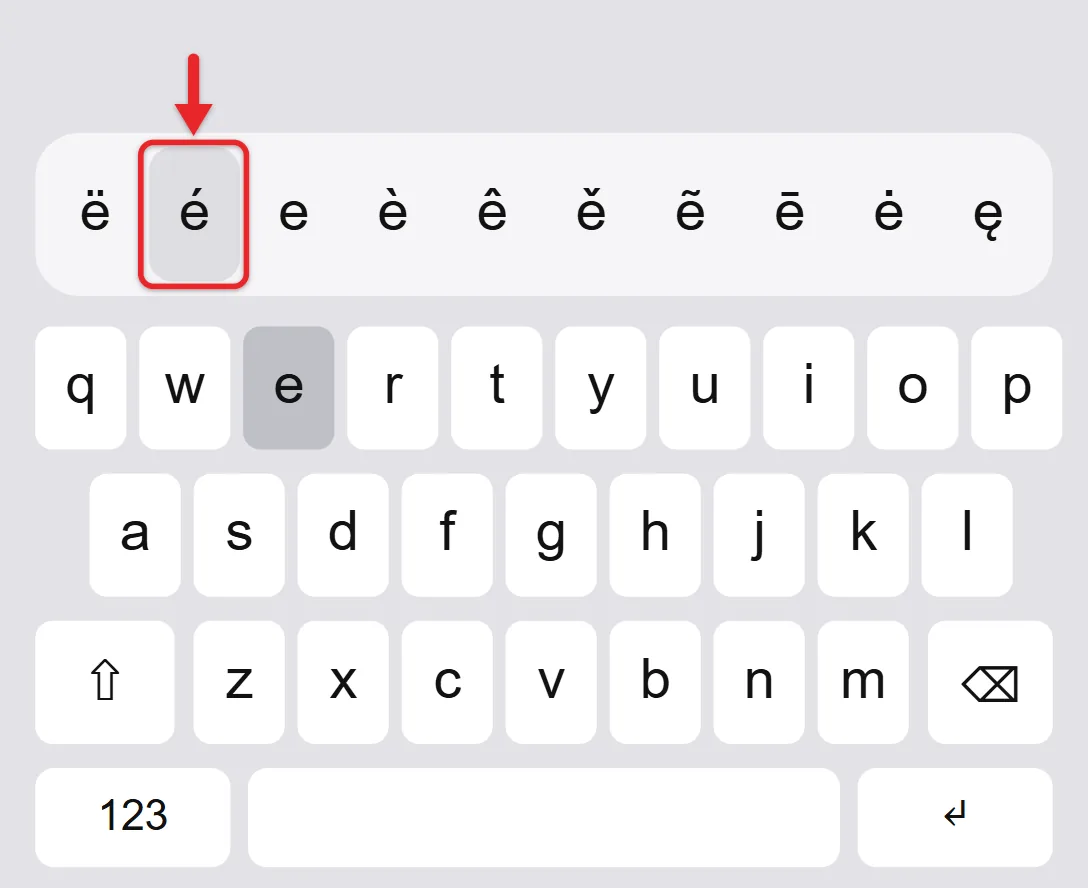
On iPhone, iPad and Android keyboards, touch and hold a letter and slide to the accented version. The gesture is shown in Apple’s onscreen keyboard guide. The same gesture on the 0 key is how to type a degree symbol on iPhone. If you write in another language often, adding that language’s keyboard can also offer accented letters as suggestions. For Spanish, you can add a Spanish keyboard on iPhone.
Troubleshooting
The accent key types a mark and a letter separately, or nothing at all
You pressed the letter before releasing the dead key, or the active layout isn’t the one you think. Check the language indicator on the taskbar (Windows) or the input menu in the menu bar (Mac), and press Windows key + Space on Windows to switch.
My apostrophes and quotes stopped working right
That is the US-International keyboard waiting for a letter. Press Space after ‘ or “, or switch back to your usual layout with Windows key + Space.
Holding a key on my Mac repeats the letter
The app you are in doesn’t support the accent menu. Use the Option dead keys or the Character Viewer instead.
The letter shows as an empty box
The font doesn’t include that character. Change the font of that text to a common one such as Arial, Calibri, or Times New Roman.
Frequently Asked Questions
Which method works in every Windows app?
The symbols panel (Windows key + .) and the US-International keyboard work in almost all apps. The Ctrl shortcuts and Alt + X work in Word and Outlook.
Why don’t my Alt codes work?
Make sure Num Lock is on, use the number pad rather than the top row, and include the leading zero (0233, not 233). On a laptop without a number pad, use the symbols panel or the US-International keyboard instead.
How do I type an accent mark by itself?
On the US-International keyboard, press the accent key and then Space. On a Mac, press the Option dead key, such as Option + E, and then Space.
How do I type a capital accented letter?
Type the letter in uppercase after the accent: with Shift on a dead-key layout, after the Ctrl shortcut in Word, or with the capital Alt code from the table above. On a phone, turn on Shift first and then touch and hold the letter.
Does the US-International keyboard change anything else?
Yes. The apostrophe and quote keys wait for the next key, so you press Space after them when you want a plain apostrophe. You can switch back to your usual layout with Windows key + Space.

Matthew Burleigh is the founder, head writer, and editor of Solve Your Tech, which he launched in 2012. He has written technology tutorials since 2008 and worked in IT since 2003, including small-business support, IT management, and consulting. He holds Bachelor’s and Master’s degrees in Computer Science from Arizona State University.
Matthew writes practical guides for Windows, iPhone and iPad, Microsoft Office, Outlook, Google apps, and Android. Solve Your Tech’s guides are checked step by step against the device or app maker’s own documentation and tested on his own devices whenever he has the hardware or software, with clear steps, sources, and update dates.
Read more about Matthew and how Solve Your Tech writes and updates its guides, or report a correction.