In Safari, open the tab overview, touch and hold Done, then choose Close All [number] Tabs. Confirm if prompted. This affects the group you are viewing; other Tab Groups and Private Browsing need separate attention.
These steps are for Safari on iPhone with iOS 26 and iOS 27, and the touch-and-hold method also works on earlier versions that show a Tabs button. Swiping Safari away in the App Switcher closes the app, not its tabs. A frozen app is a different fix: close and restart the iPhone app.
Before closing: submit or save unfinished forms and bookmark pages you want to keep. Text you hadn’t saved may be gone when you reopen the page, and a half-finished checkout may need to start over.
Close all Safari tabs at once
- Open Safari.
- Open the tab overview with Tabs (two overlapping squares). If your layout shows More (three dots) instead, tap it and choose All Tabs. You should see previews of your webpages.
- Touch and hold Done to display the closing menu.
- Select Close All [number] Tabs and confirm if asked. The selected group’s webpages close, and Safari shows an empty start page.
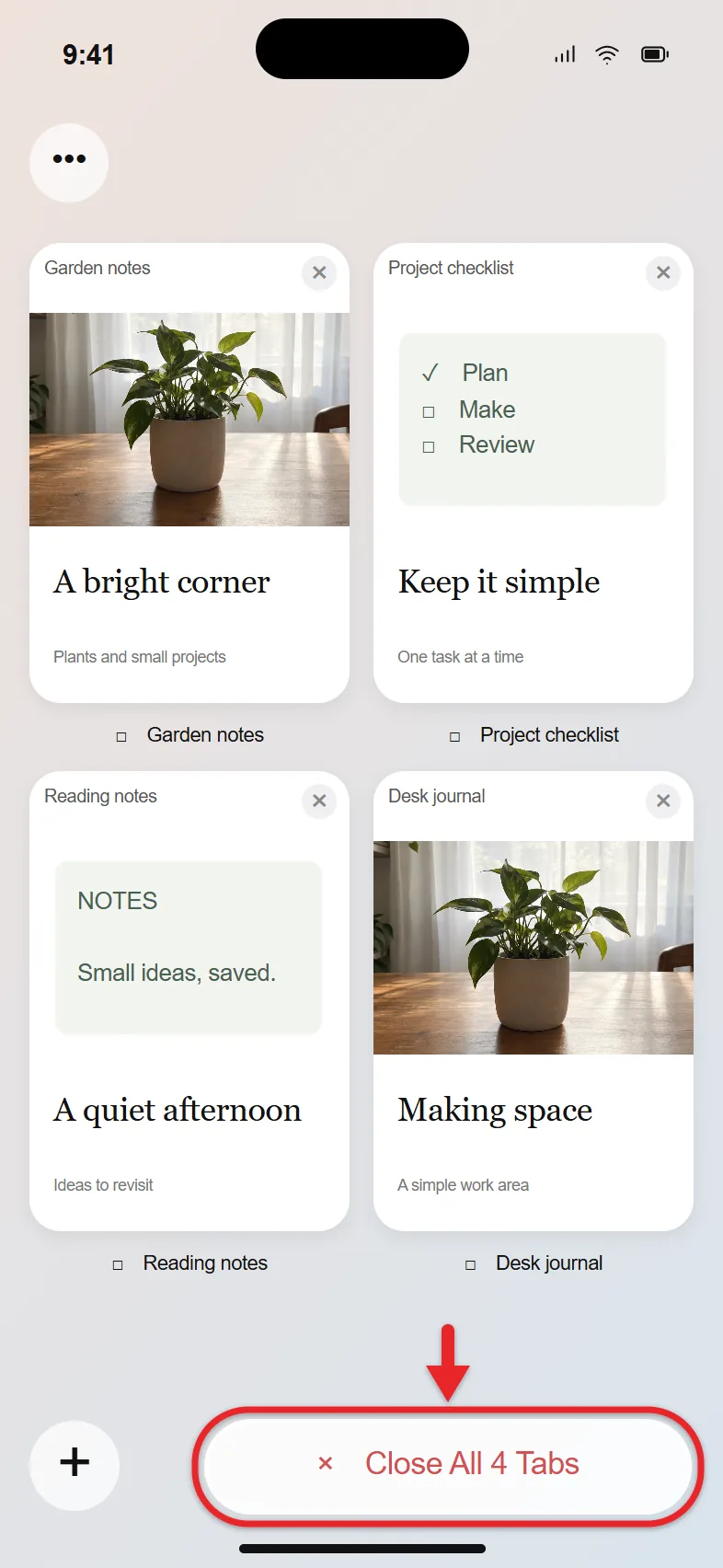
Apple documents the Done-menu method. Where the tab button sits depends on the layout you picked under Settings > Apps > Safari > Tabs: Bottom and Top show a Tabs button, while Compact squeezes the controls into one bar. In the iOS 26 Compact layout, the tab overview is under More. In iOS 27, the bottom-right button of the Compact bar opens your tabs directly. Apple’s Safari layout guide shows each option. For tablet controls, follow the iPad Safari tab-closing steps.
Shortcut on layouts with a Tabs button
While viewing a webpage, touch and hold Tabs, then choose Close All [number] Tabs and confirm. This skips the overview. If the menu doesn’t appear, use the overview method above.
Close some tabs, not all
- One tab: in the overview, tap the X on a webpage preview, or swipe the preview to the left.
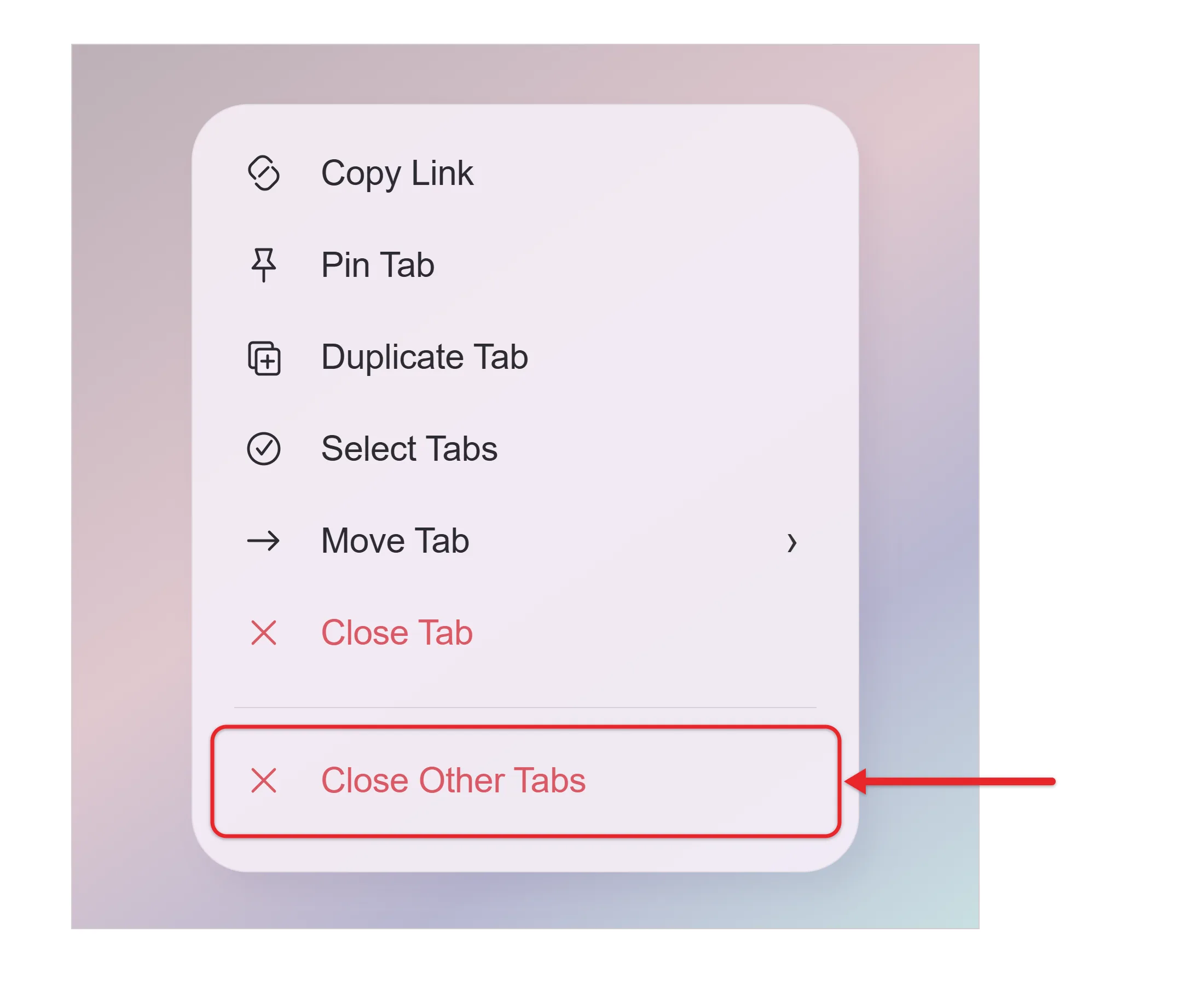
- Every tab except one: in the overview, touch and hold the X on the tab you want to keep, then choose Close Other Tabs. Only that page stays open.
- A handful you want to keep: bookmark them or add them to your Reading List first, then close everything. You can find them again after the tab list is empty.
Close tabs automatically
- Open Settings > Apps > Safari.
- Tap Close Tabs.
- Choose After One Day, After One Week, or After One Month. Safari closes tabs you haven’t viewed in that time.
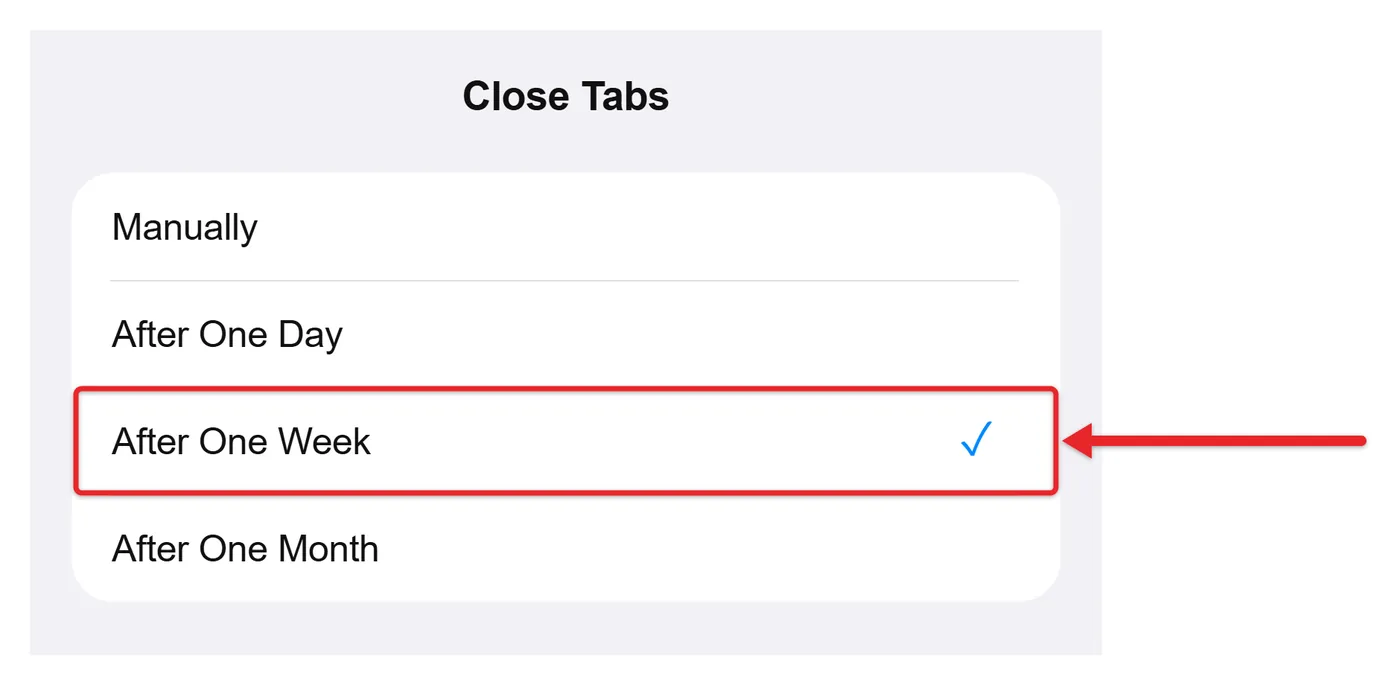
Choose Manually to keep tabs until you close them yourself. One week suits most people: pages you still use stay open, and forgotten ones clear out on their own. On iOS 17 and earlier, Safari settings are directly under Settings > Safari. For a full walkthrough, read about closing Safari tabs automatically after one week.
Private Browsing, Tab Groups and profiles
Safari keeps separate tab sets, and Close All Tabs only empties the one on screen.
- Private tabs: open the overview, swipe right on the bottom tab bar to Private, unlock with Face ID, Touch ID or your passcode if needed, and repeat the closing method. Leaving Private Browsing keeps its pages open and locked, according to Apple’s Safari guide. To switch back to regular tabs, leave Private Browsing on iPhone.
- Tab Groups: use the group selector at the bottom of the overview to switch groups, then repeat. Apple’s Tab Groups guide explains this selector. When Safari is turned on in iCloud, Tab Groups sync, so closing tabs in a group also changes that group on your other Apple devices.
- Profiles: if you set up Safari profiles (such as Personal and Work), each one keeps its own tabs. Switch profiles from the same selector and close each set.
Close all tabs in Chrome and Firefox
Other browsers keep their own tabs, so closing Safari tabs doesn’t touch them.
Chrome (Google’s guide):
- Regular tabs: tap Switch tabs at the bottom, then Close All at the bottom left.
- Tabs and groups together: in the tab switcher, tap More at the top right, then Close All Tabs and Groups.
- Incognito tabs: in the tab switcher, tap the Incognito icon at the top, then Edit > Close All Tabs. For the related controls, read about opening an Incognito tab in the Chrome iPhone app.
- Inactive tabs: open Inactive tabs, tap Close all inactive, then confirm with Close all. This section only appears when Chrome has set older tabs aside.
- Pinned tabs: touch and hold each pinned tab at the bottom of the switcher and choose Close Tab.
Firefox: open the tab tray, tap the trash icon, then Close all tabs. The same controls are shown on Mozilla’s Firefox for iOS tabs page. For private tabs, tap the Private Browsing icon at the top of the tray and close them there.
If a Firefox tab is only stuck or out of date, you can keep it open and reload the page in the Firefox app instead.
If you also use an Android phone, the buttons are different. Follow the steps for closing tabs on Android.
When you’re ready to browse again, open a new tab in Chrome on iPhone.
Reopen a tab you closed by mistake
- In Safari, open the same tab overview used above.
- Touch and hold the + button. A list of recently closed tabs appears.
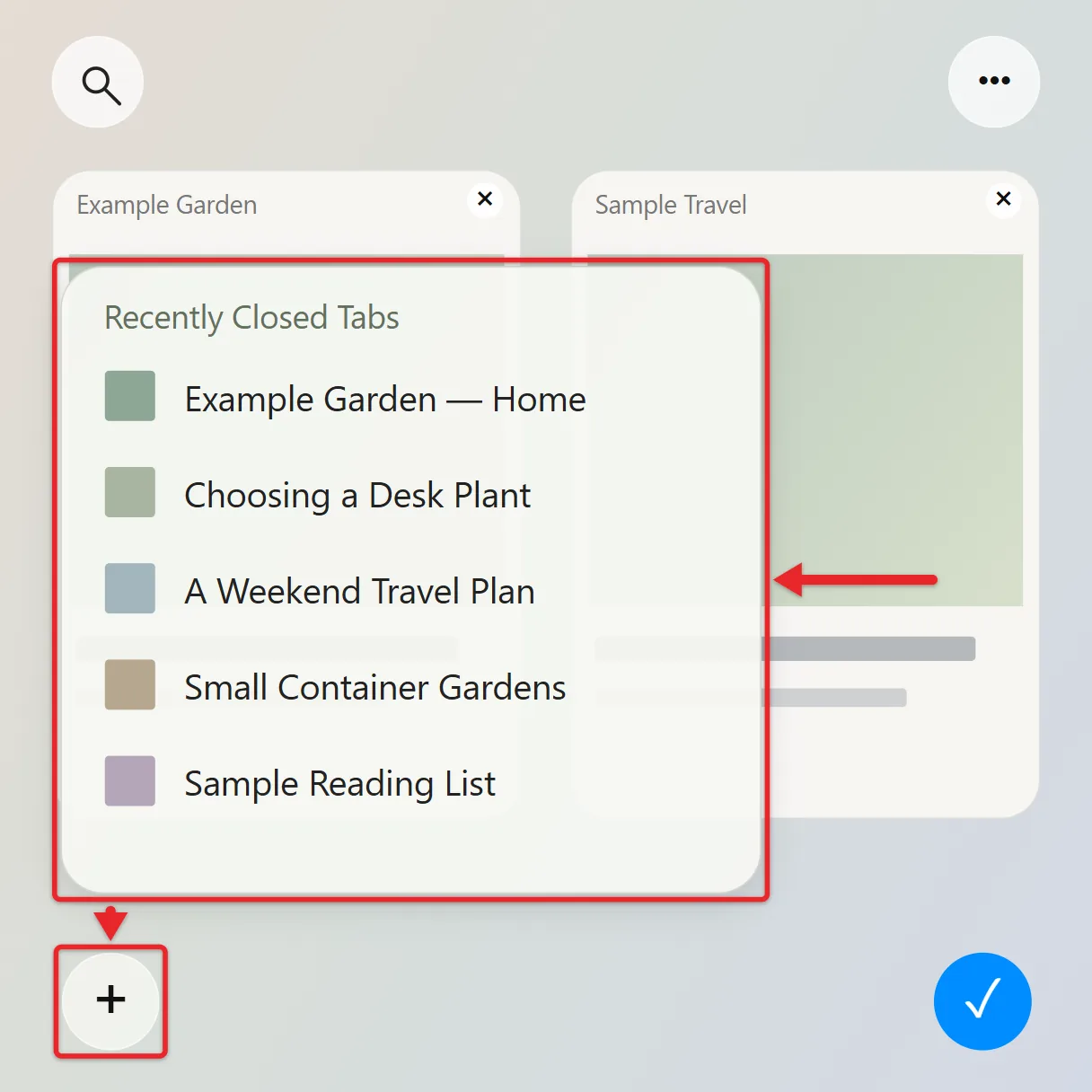
- Tap the tab you want back. Repeat for each page, since tabs come back one at a time.
On an iPad, you can restore tabs on iPad in Safari and Chrome. On a computer, here’s how to reopen a closed tab in Google Chrome.
Private Browsing doesn’t keep a history, so private tabs you close can’t be reopened this way. If a page isn’t in the recent list, search for it in Safari’s History.
When Close All Tabs Doesn’t Show
- You don’t see Close All Tabs: open the overview first, then hold Done instead of tapping it briefly. If you can’t find the overview control, check your layout under Settings > Apps > Safari > Tabs.
- Some tabs are still open: check the Private group, any other Tab Groups and each Safari profile; each closes separately.
- Chrome or Firefox tabs are still there: those apps don’t share Safari’s tabs. Use the steps in their section above.
- The tab overview freezes: swipe Safari away in the App Switcher, reopen it, and try again. Your tabs will still be there.
- Too many tabs to scroll: use Close All Tabs or the automatic setting instead of closing each one.
Safari Tab Closing Questions
Does closing tabs make my iPhone faster?
Usually not. iOS pauses background pages, so open tabs rarely cause a slow phone, low storage or battery drain. Closing them mainly makes the tab list easier to use.
Does closing tabs clear my history or bookmarks?
No. History, bookmarks, saved passwords and Reading List items stay until you remove them. Recent iOS versions also offer a Close All Tabs switch when you clear history in Settings > Apps > Safari > Clear History and Website Data. To clear history on its own, learn how to clear search history on iPhone.
Do private tabs close too?
Only if you’re viewing the Private group when you close all tabs. Otherwise they stay open behind the lock.
Does closing a tab sign me out of a website?
Not reliably. Many sites keep you signed in after you close the page. Use the site’s own sign-out option, especially on a shared iPhone.

Matthew Burleigh is the founder, head writer, and editor of Solve Your Tech, which he launched in 2012. He has written technology tutorials since 2008 and worked in IT since 2003, including small-business support, IT management, and consulting. He holds Bachelor’s and Master’s degrees in Computer Science from Arizona State University.
Matthew writes practical guides for Windows, iPhone and iPad, Microsoft Office, Outlook, Google apps, and Android. Solve Your Tech’s guides are checked step by step against the device or app maker’s own documentation and tested on his own devices whenever he has the hardware or software, with clear steps, sources, and update dates.
Read more about Matthew and how Solve Your Tech writes and updates its guides, or report a correction.