You can’t delete System Data on an iPad directly, because there is no button for it. You can shrink it by clearing Safari’s history and website data, deleting and reinstalling apps that cache a lot, removing large message attachments and offline downloads, then restarting and updating the iPad. Check its size first in Settings > General > iPad Storage.
These steps cover iPadOS 27, the current version, and iPadOS 26 and 18, which use the same menus. On iPadOS 17 and earlier, app settings such as Safari sit directly in the Settings list instead of under Apps.
This guide follows Apple’s Manage storage on iPad guide and its How to check the storage on your iPhone and iPad article, which explains what each storage category contains.
What Is System Data on iPad?
System Data is a storage category for files iPadOS needs or creates while you use the iPad. Apple’s storage article describes this category (also labeled “Other” when you view the iPad’s storage on a computer) as items such as Siri voices, fonts, dictionaries, logs and caches, the Spotlight search index, and system data such as Keychain and the CloudKit database. A cache is a stored copy of something you already loaded, kept so it opens faster next time.
It’s separate from System, the space the operating system itself takes. System varies by model and you can’t reduce it.
Apple also explains that your iPad creates cached files when you stream or view music, videos and photos. Your iPad removes these files when it needs more space, and you can’t delete them yourself. That’s why System Data rises and falls on its own.
A Mac manages its own System Data category in a similar way. For that, read about deleting junk files on a MacBook Air.
How much System Data is normal?
Apple doesn’t publish a normal size, and it varies with your model, storage size, and how you use the iPad. It often jumps after an iPadOS update or a large download while the iPad rebuilds its search index, then settles over a few days. It’s worth acting when System Data keeps growing for a week or more, or when it leaves you too little room to install an update or save new photos.
How to Check How Much Space System Data Uses
- Open Settings.
- Tap General, then tap iPad Storage.
- Wait for the bar at the top to finish calculating. The bar shows each category in a different color, with the used and available space above it.
- Scroll to the bottom of the list and tap System Data to see its size.
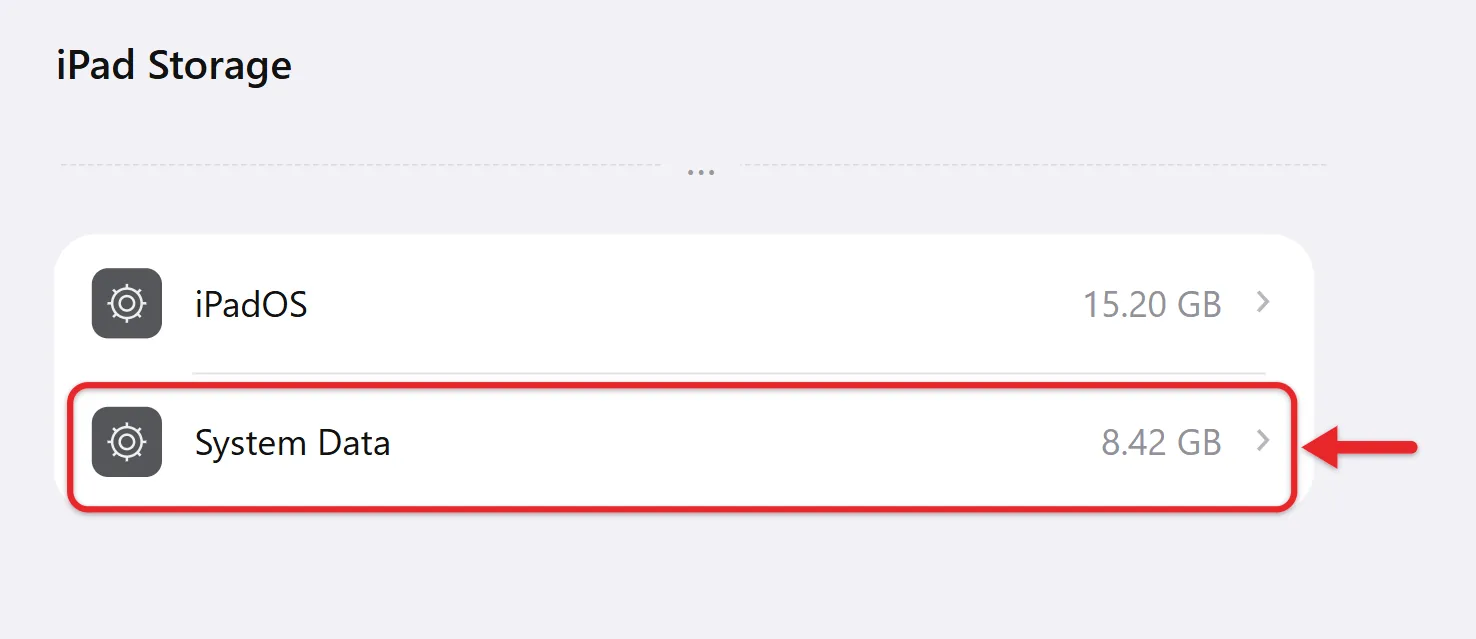
Write the number down so you can compare it after each method below. Cached and temporary data might not count as usage in an app’s storage details, so app sizes in this list may look smaller than the space they actually take.
Ways to Shrink System Data on iPad
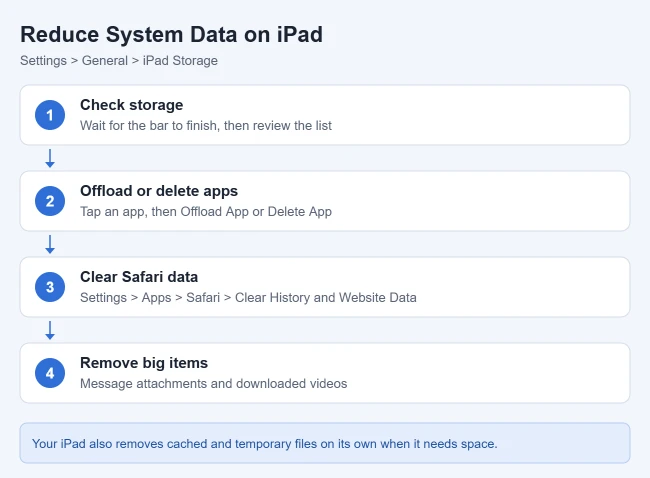
Start at the top of this list. The first methods are quick and don’t remove anything important.
Restart the iPad
Restarting clears some temporary files and gives iPadOS a chance to tidy up caches.
- Open Settings > General and tap Shut Down. You can also hold the top button (on an iPad with a Home button) or the top button and either volume button (without a Home button) until the slider appears.
- Drag the slider to the right. The screen goes dark.
- Wait about 30 seconds, then hold the top button until the Apple logo appears.
A frozen screen needs a hard reset on the iPad instead. Apple’s guide to turning iPad on or off shows the button positions for each model.
Clear Safari history and website data
Website caches and cookies can add up. Clearing them signs you out of most websites, so make sure you know your passwords first.
- Open Settings > Apps > Safari.
- Tap Clear History and Website Data.
- Choose a timeframe, such as All History, and tap Clear History.
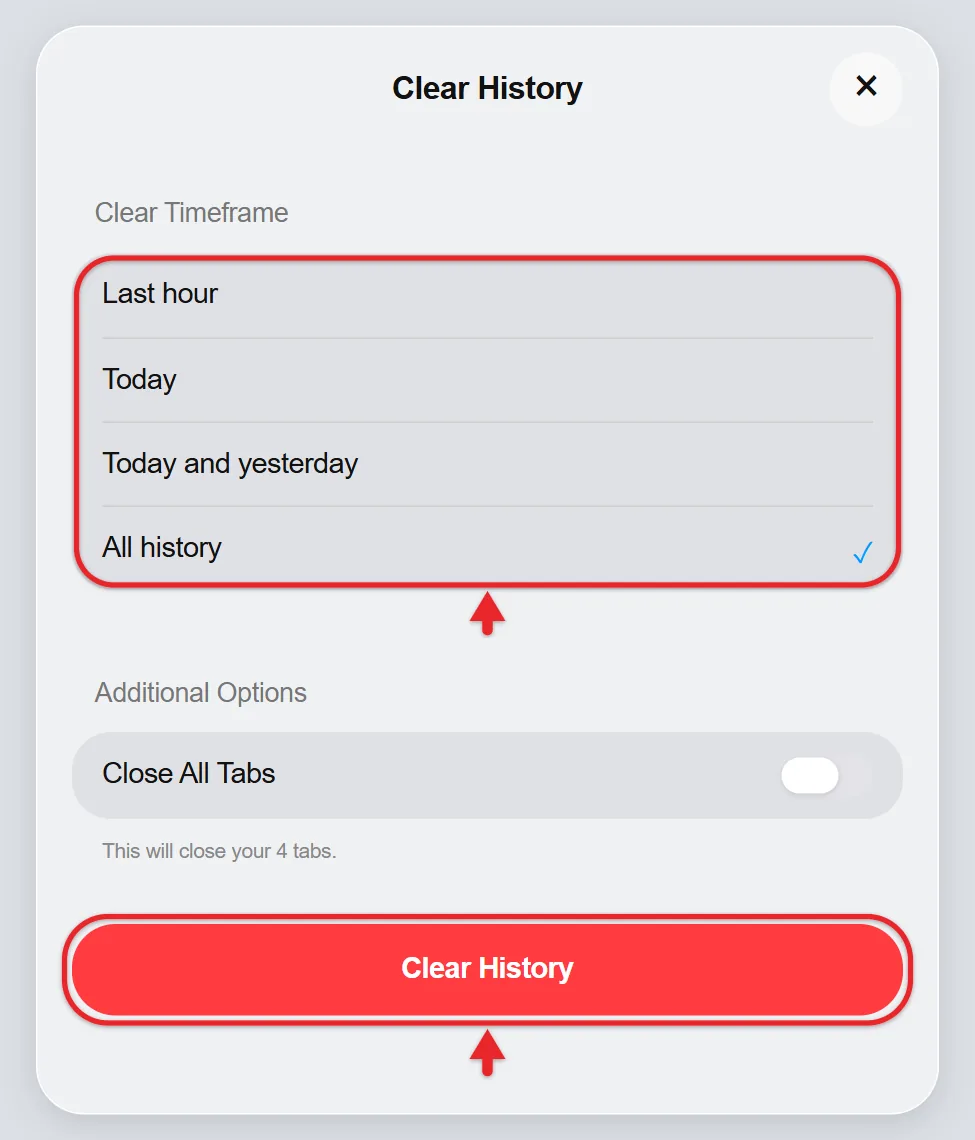
Apple’s Safari article notes this doesn’t change your AutoFill information. To keep your history, go to Advanced > Website Data > Remove All Website Data instead. If the button is grayed out, there may be nothing to clear, or Screen Time web content restrictions may be blocking it.
Clearing a single site only? You can delete cookies for a specific website on iPad. See also how to clear cookies and cache on iPad.
If you use Chrome, Firefox, or another browser, it keeps its own cache. Look for a Delete browsing data or Clear data option in that browser’s settings or history menu.
Clear caches inside your apps
Some apps have their own cache controls, usually under Settings, Storage, or Data inside the app. Streaming, music, maps, and social apps often have an option to clear the cache or remove downloads. For apps that have this option and what to do when they don’t, read about clearing app cache on iPad.
Drawing, video editing, and note apps can hold large projects. Export the projects you finished to the Files app or iCloud Drive, check the copy opens, delete the original in the app, and empty the app’s own trash or Recently Deleted folder.
Offload or delete apps with big caches
In iPad Storage, tap an app to see its details. There are two options:
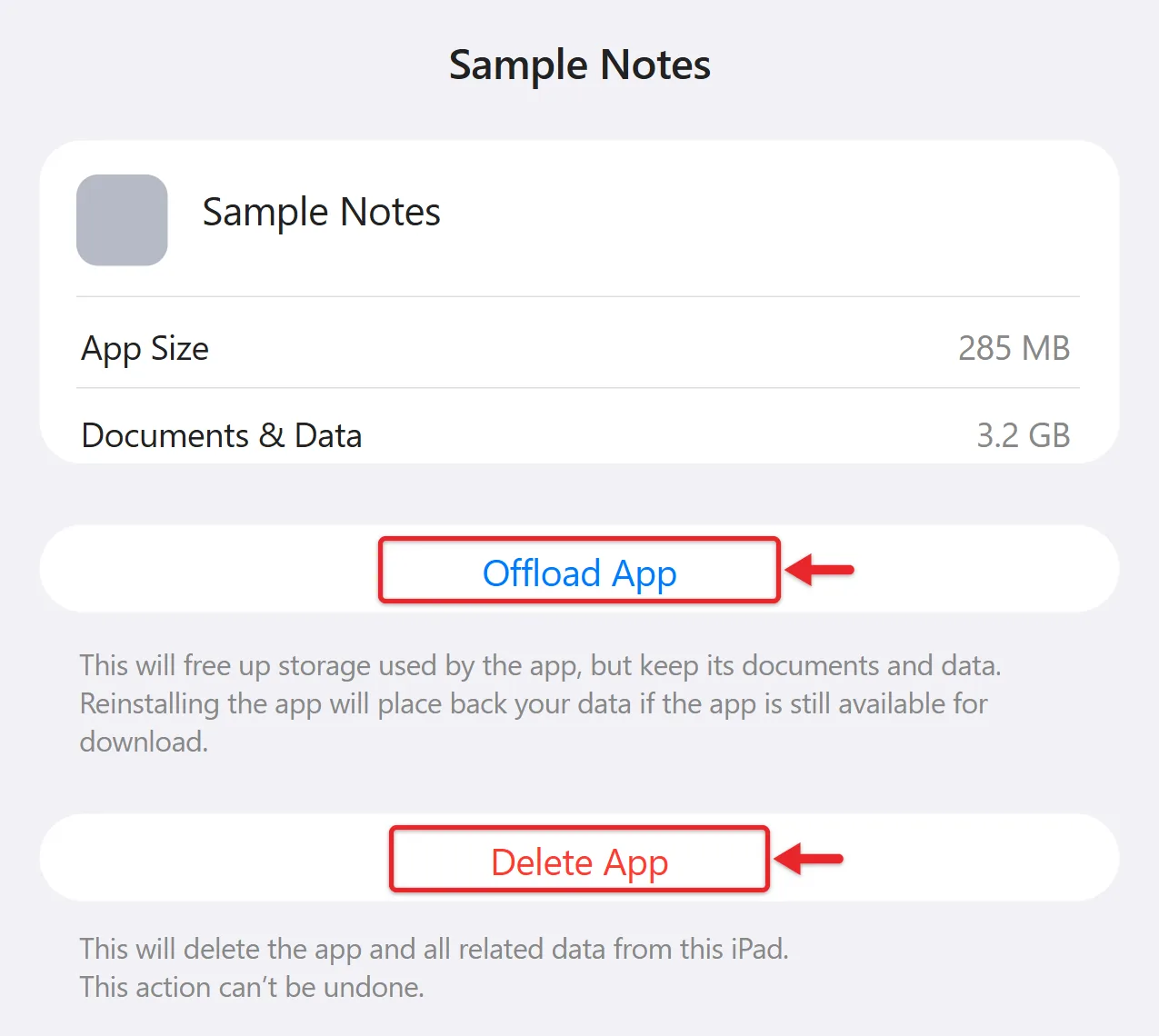
- Offload App frees the space the app itself uses but keeps its documents and data. Tap the app icon later to reinstall it. Offloading doesn’t remove the app’s cached data, so it helps less with System Data.
- Delete App removes the app and all its data, including caches. Reinstalling it from the App Store gives you a clean start.
Deleting and reinstalling works well for streaming and social apps that build large caches. Before you do it, make sure anything you made in the app is saved to an account or to iCloud, because offline downloads and unsaved drafts are lost. Apple also notes that some iPad apps are larger than their iPhone versions.
Clean up Messages
Large photos and videos in Messages can take a lot of space.
- In Settings > General > iPad Storage, tap Messages.
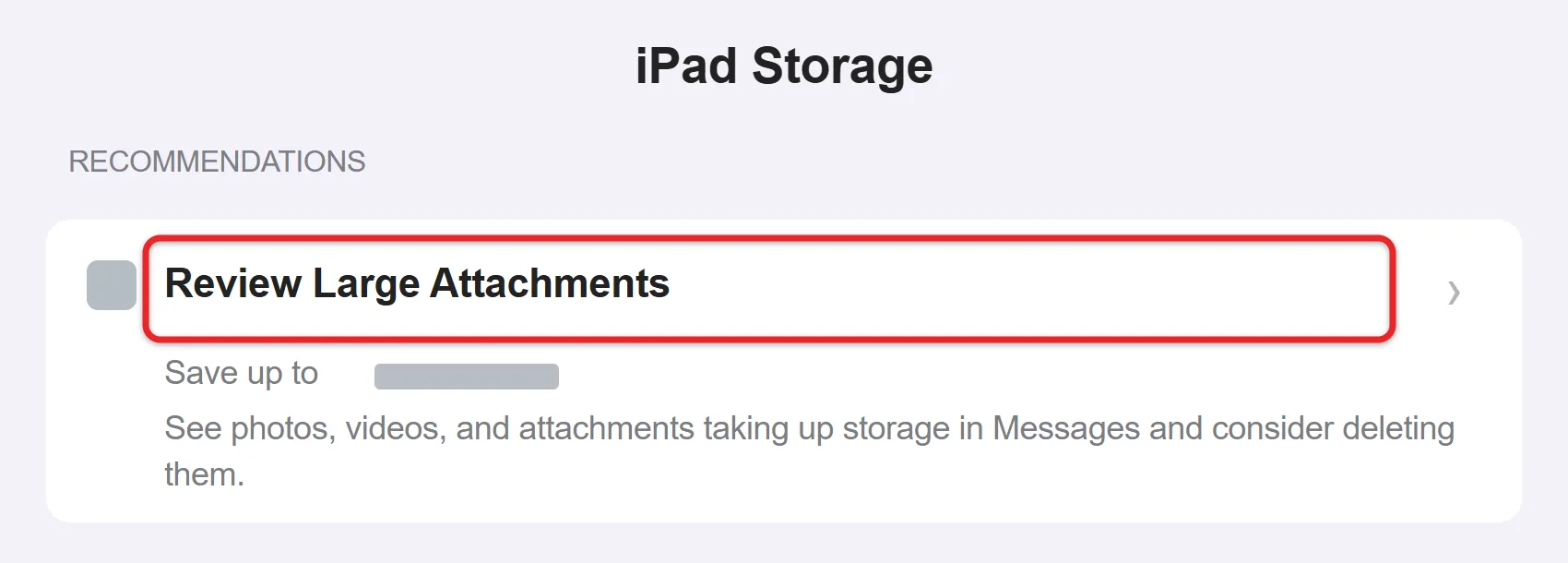
- Tap Review Large Attachments if it appears, or tap a category under Documents, such as Photos or Videos.
- Tap Edit, select the items you don’t need, and tap the trash button.
You can also delete whole conversations: in Messages, swipe left on a conversation and tap Delete. To stop old messages piling up, open Settings > Apps > Messages > Keep Messages and choose 30 Days or 1 Year. This deletes older conversations and attachments, including on your other devices if you use Messages in iCloud, so save anything you need first. See also how to set your iPad to delete messages after 30 days.
If you share Messages with an iPhone, check how to keep your iPhone from deleting old texts before you shorten the setting.
Remove downloaded videos and offline files
Review videos you downloaded in the TV app and other streaming apps, delete files you don’t need in the Files app, and remove offline files in apps like Pages, Numbers and Keynote. After deleting in Files, open Browse > Recently Deleted and empty it, or the space isn’t freed for up to 30 days.
Update iPadOS
Updates fix bugs that can stop caches from clearing or fill the iPad with logs. Open Settings > General > Software Update and install anything available, with the iPad on Wi-Fi and connected to power. If there isn’t enough space for the update, follow the steps for installing a software update on iPad.
Check the result
Go back to Settings > General > iPad Storage and compare the totals with the number you wrote down. System Data may not drop right away, because iPadOS clears its own caches on its own schedule. Check again after a day of normal use.
If you still need room, go through the larger categories one at a time with these steps for clearing iPad storage.
Let Your iPad Free Up Space Automatically
When your device is low on storage, it frees up space by removing items you can download again or that aren’t needed, like unused apps and temporary files. You can help it along:
- Offload Unused Apps: go to Settings > Apps > App Store and turn on Offload Unused Apps. The app icon stays on your Home Screen with a cloud symbol. Tap it to reinstall the app.
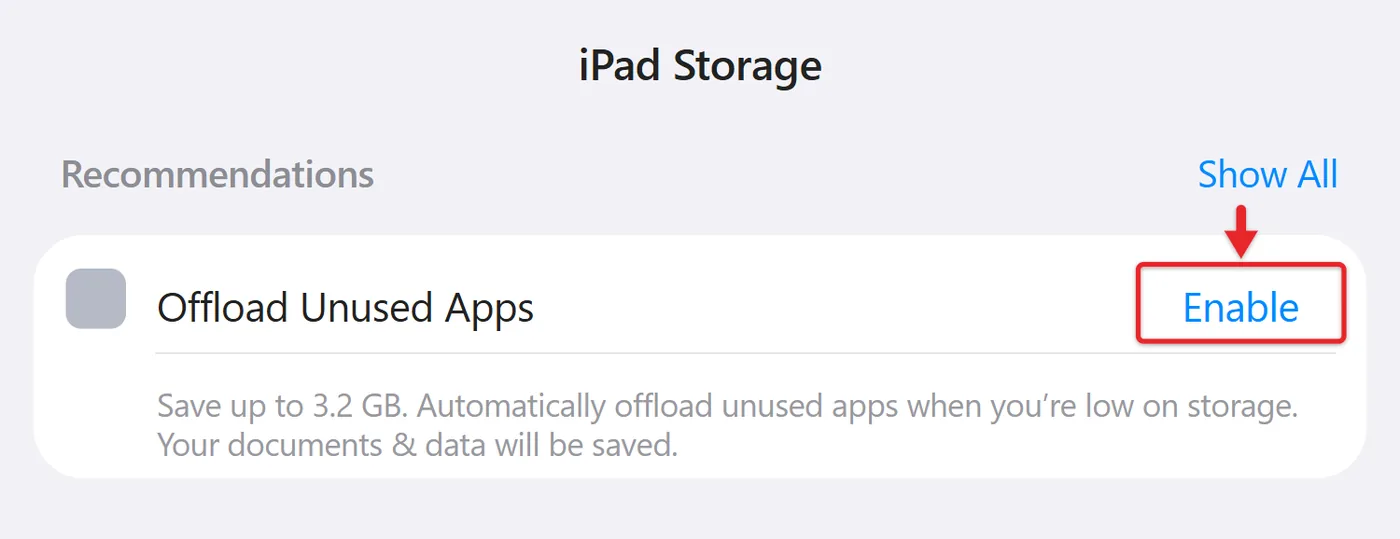
- Storage recommendations: in iPad Storage, tap Show All to see recommendations, then tap Enable or review the content you can delete.
If you see a Storage Almost Full alert, check these recommendations or remove content such as videos and apps.
Avoid Cleaner Apps and Risky Tricks
Cleaner apps can’t reach System Data. iPadOS keeps every app in its own space, so another app can’t see or delete system caches. Most cleaner apps only sort photos, contacts, or videos, which you can do yourself in the Photos and Contacts apps.
You may also see tips like changing the date in Date & Time, connecting the iPad to a computer, or resetting all settings to force a cleanup. Apple doesn’t document any of these as a storage fix. Changing the date can confuse apps and make Messages remove conversations set to expire, so skip it. No Apple menu has a Delete All button for System Data, whatever a guide may say.
Last Resort: Erase and Restore
If System Data is still huge after everything above, erasing the iPad and restoring it from a backup can rebuild the system files from scratch. Apple doesn’t list this as a System Data fix, and it removes everything on the iPad, so treat it as a last resort.
- Back up first. Turn on iCloud Backup on iPad and run Back Up Now, or back up to a Mac with Finder or to a Windows PC with the Apple Devices app.
- Make sure you know your iPad passcode and your Apple Account password. You need both during the erase.
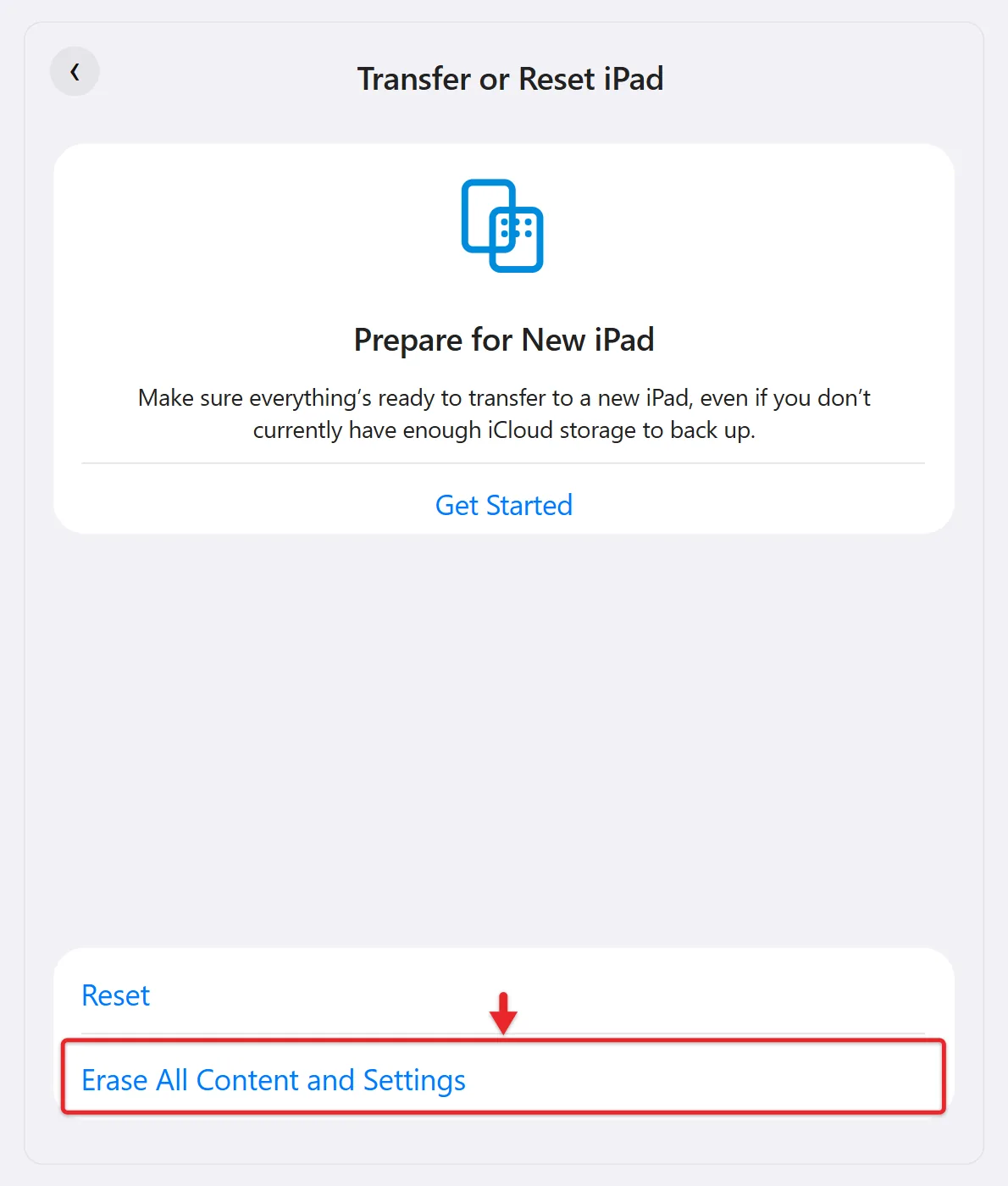
- Open Settings > General > Transfer or Reset iPad and tap Erase All Content and Settings, then follow the prompts in Apple’s factory reset article.
- When the Hello screen appears, set up the iPad and choose to restore from your backup.
Restoring brings back your apps and data, and the iPad builds fresh caches as you use it. For more detail on the erase itself, read about wiping an iPad clean.
Frequently Asked Questions
Can I delete System Data directly?
No. There’s no button for it. You reduce it indirectly by clearing caches and removing content, and your iPad removes cached files when it needs space.
Why does System Data change size?
It includes caches, logs, and temporary files that grow when you stream, browse, or update, and shrink when the iPad clears them.
Is System Data the same as System?
No. System is listed separately as the space the operating system takes. You can’t reduce System.
Does offloading an app delete my data?
No. Offloading keeps the app’s documents and data. Deleting the app removes them.
Will clearing System Data delete my photos or files?
No. The methods in the main section only touch caches, website data, and the items you choose to delete. Only the erase and restore option removes everything, which is why it needs a backup.
Does buying more iCloud storage reduce System Data?
No. iCloud storage is separate from the storage on the iPad. It can help indirectly if you use iCloud Photos with Optimize iPad Storage, which keeps smaller copies of photos on the iPad.

Matthew Burleigh is the founder, head writer, and editor of Solve Your Tech, which he launched in 2012. He has written technology tutorials since 2008 and worked in IT since 2003, including small-business support, IT management, and consulting. He holds Bachelor’s and Master’s degrees in Computer Science from Arizona State University.
Matthew writes practical guides for Windows, iPhone and iPad, Microsoft Office, Outlook, Google apps, and Android. Solve Your Tech’s guides are checked step by step against the device or app maker’s own documentation and tested on his own devices whenever he has the hardware or software, with clear steps, sources, and update dates.
Read more about Matthew and how Solve Your Tech writes and updates its guides, or report a correction.