You called someone from your iPhone and, instead of ringing or a voicemail greeting, a recording said the person is not available. That recording comes from the phone network, not from the other person’s iPhone, and the words alone do not prove you were blocked. On Verizon, it means the person didn’t answer and has no voicemail set up.
This covers regular cellular calls; FaceTime is handled near the end.
What the Recording Actually Means
A network announcement is a recorded message played by a mobile carrier’s system when a call can’t be completed in the normal way. Neither iPhone creates it.
Verizon is the one major US carrier that publishes a plain explanation for its version. Its announcement says, “Welcome to Verizon Wireless. The cellular customer you have called is not available at this time. Please try your call again later.” According to Verizon’s support page for that announcement, you hear it when you call someone who doesn’t answer and doesn’t have voicemail set up.
AT&T and T-Mobile don’t publish a meaning for their own “not available” style recordings on their calling troubleshooting pages. AT&T’s page explains only messages such as “Insert SIM” and “Emergency Call Only.” T-Mobile’s page asks you to share any error message or recording you hear when you contact support. So if the other person isn’t on Verizon, treat the exact meaning as unknown and let the carrier interpret it.
Here’s a worked example with fictional details. You call your friend Dana at 6:40 p.m. Her Verizon line plays the announcement above. The most likely reading, based on Verizon’s own explanation, is that Dana didn’t answer and her voicemail was never set up. It says nothing about whether she is avoiding you.
What You Can and Cannot Conclude
Start by noting exactly what you heard and where. These are different services, and each one points somewhere different.
| What you observe | What it tells you | Next check |
|---|---|---|
| Verizon’s “cellular customer you have called is not available” announcement | Per Verizon, the person didn’t answer and has no voicemail set up | Try later or use another contact method you both normally use |
| A similar recording on another carrier | The call didn’t complete normally; the carrier hasn’t published why | Note the exact words and any code, and ask your carrier if it repeats |
| A personal voicemail greeting | You reached that person’s mailbox, not a network recording | Leave a message; the greeting doesn’t explain why they didn’t answer |
| Only one number fails | The issue may be with that line or the route to it | Check the number and dialing format, then report it to your carrier |
| Many numbers fail | Your own line, coverage or settings may be involved | Work through Apple’s failed-call checks and contact your carrier |
| FaceTime or another app shows it | The app may use similar words for a different condition | Check that app’s status and help pages |
No row tells you what the other person intended. Ring counts and timing aren’t reliable signals either.
Is the Recording Proof You Were Blocked?
No. Apple’s page on blocking phone numbers and contacts on iPhone says a blocked caller can still leave a voicemail (the iPhone owner just doesn’t get a notification for it), messages from a blocked number aren’t delivered, and the blocked person isn’t notified that the call or message was blocked. Apple doesn’t describe a “not available” recording as part of that process.
Resist the urge to test a suspected block by calling again and again from other numbers or hiding your caller ID. It won’t give you a dependable answer, and it can feel like pressure to the other person. If you share the same concern from the opposite direction, you can check which numbers you have blocked on your own iPhone, and a related call status is explained in what Canceled Call means in your Recents list.
iPhone Settings That Change What Happens to a Call
Several features on the other person’s iPhone affect whether your call rings. Apple documents what each one does on the receiving phone. What matters for you is that, in Apple’s descriptions, these features silence a call or send it to voicemail; none of them is described as playing a “person is not available” recording. On recent versions of iOS, most of these settings live under Settings > Apps > Phone.
Do Not Disturb and Other Focus Modes
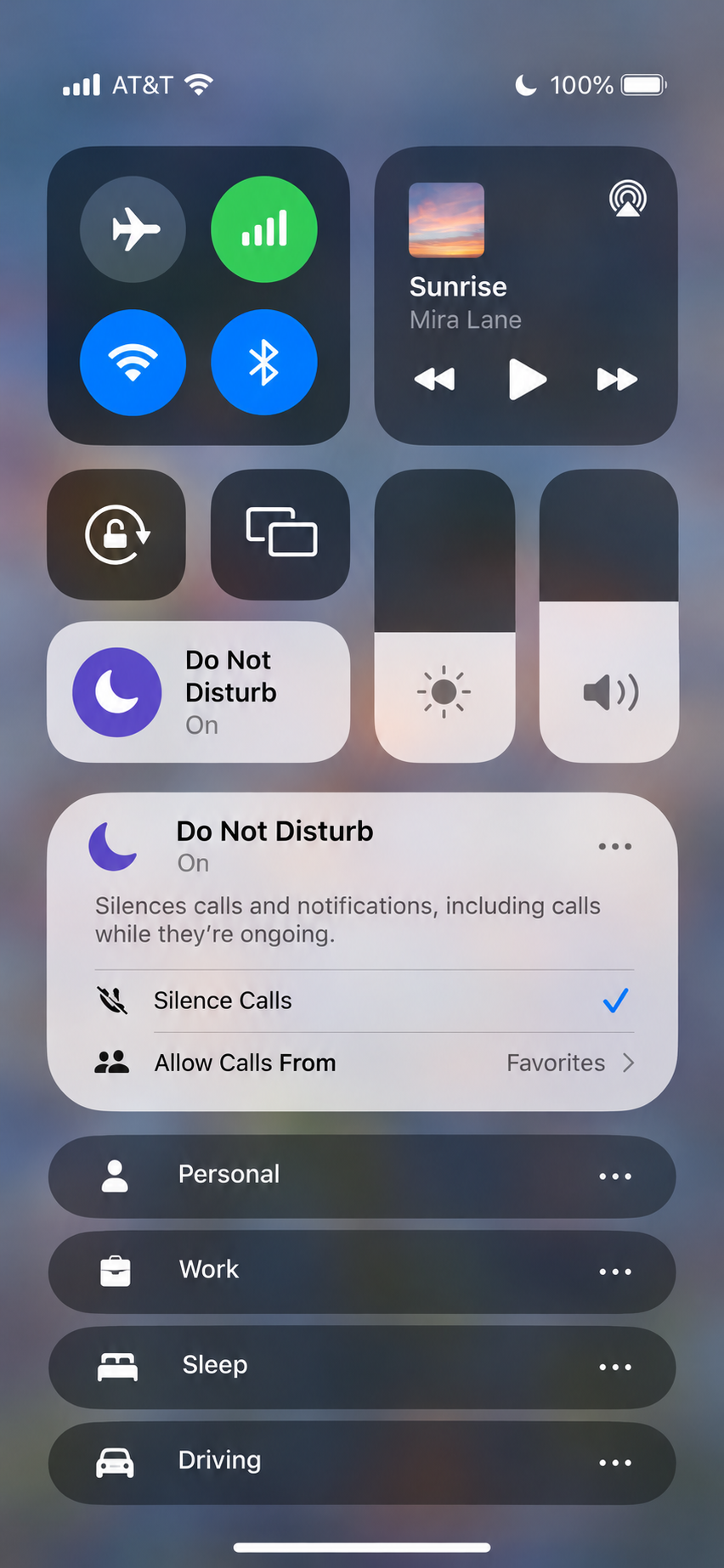
Focus is Apple’s name for modes such as Do Not Disturb, Sleep and Driving that filter what reaches the iPhone owner. Apple says Do Not Disturb silences calls, alerts and notifications, and that other Focus options can also prevent someone from receiving calls. The owner can use Allow Notifications to let chosen people through, and a schedule can switch Do Not Disturb back on automatically. In each Focus’s People settings, Apple’s iPhone User Guide on allowing notifications in a Focus says the owner can also allow calls from certain groups of people and allow repeated calls, meaning two or more calls from the same person within 3 minutes, or turn on Allow Calls From Silenced People. If the owner shares their Focus status, people contacting them in Messages may see that they have notifications silenced. Apple also lists an active Focus as one of the first things to check when calls don’t ring and go straight to voicemail. For the on and off steps, see how to turn Do Not Disturb on or off on iPhone.
Screen Unknown Callers
If your number isn’t saved in the other person’s contacts, this setting matters. Apple’s page on managing unknown callers on iPhone describes three choices under Settings > Apps > Phone > Screen Unknown Callers:
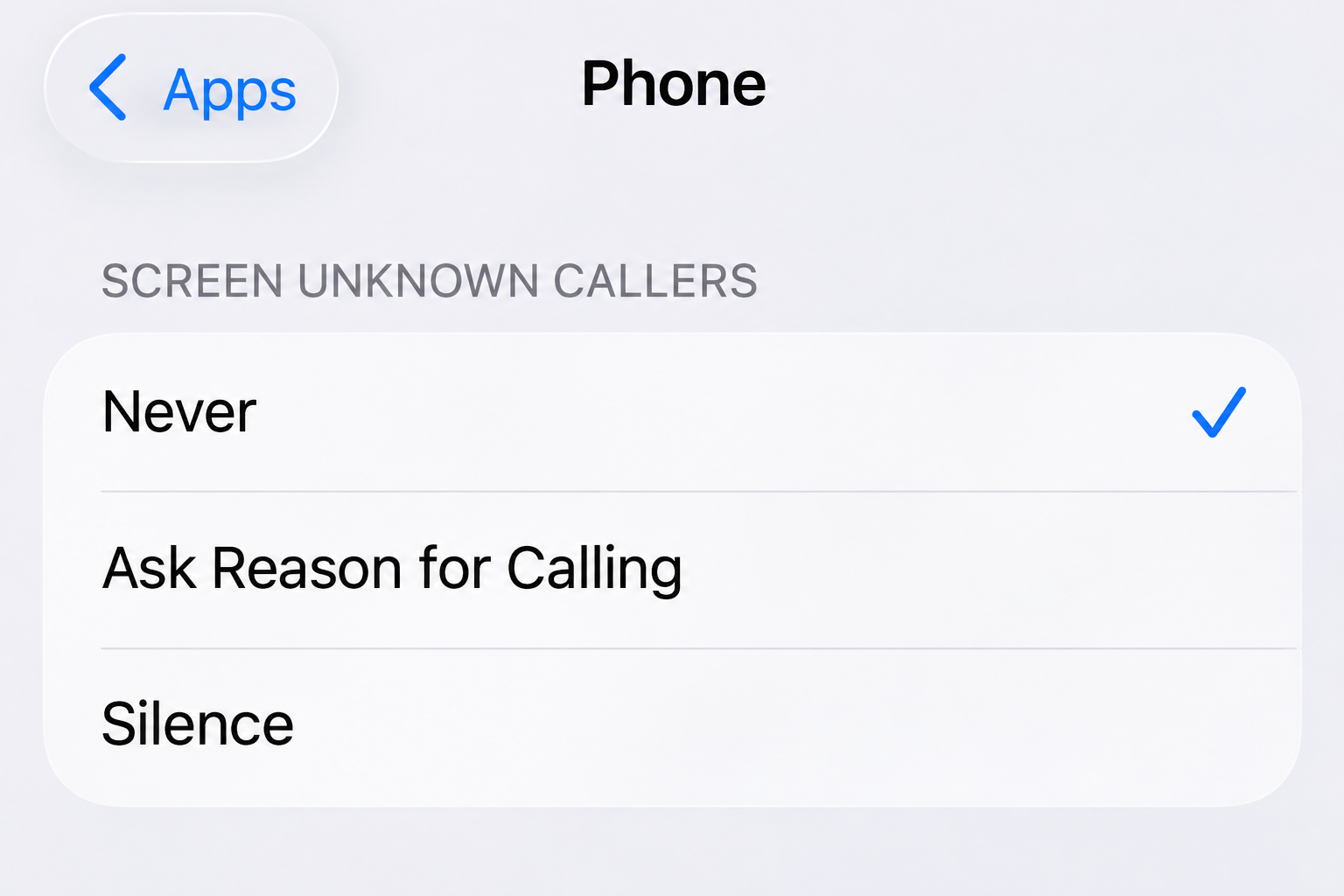
- Never: calls from unsaved numbers ring like any other call.
- Ask Reason for Calling: the call is screened, and the caller is asked why they’re calling before the phone rings.
- Silence: calls from unsaved numbers are silenced and sent to voicemail.
Apple’s call troubleshooting page adds that when silencing is on, a caller must be listed in Contacts or Recents to ring through. So if you’ve never called this person before, or they never saved you, Silence is a real possibility. The full settings are covered in how to silence unknown callers on iPhone.
Call Screening and Live Voicemail
With Ask Reason for Calling, you may hear a prompt asking who you are and why you’re calling. That is the iPhone screening the call, not a carrier announcement, so answer it briefly and the person can decide whether to pick up. Apple notes two exceptions: calls aren’t screened while the iPhone is roaming, and call screening turns off for 24 hours after the owner calls emergency services. On versions earlier than iOS 17, Live Voicemail also has to be on for screening to work. For the receiving side, see how Live Voicemail works on iPhone.
Blocked Contacts
In iOS 26, Apple places the list at Settings > Privacy & Security > Blocked Contacts, and its call troubleshooting page also points to Blocked Contacts in the Phone settings. People sometimes block a number by accident.
Airplane Mode, Power and Coverage
Verizon’s guide to phones that can’t receive calls says calls won’t reach a phone in Airplane mode, and that in places with no network coverage, Wi-Fi Calling must be turned on to receive calls. It also lists Silent mode, blocked numbers and call forwarding among the causes. What you hear in those cases depends on the carrier.
Wi-Fi Calling
Wi-Fi Calling lets an iPhone place and receive calls over a Wi-Fi network instead of cellular. Apple’s Wi-Fi Calling setup page says the carrier has to offer it, and the switch is at Settings > Cellular > Wi-Fi Calling > Wi-Fi Calling on This iPhone. When it’s in use, “Wi-Fi” appears in the status bar in Control Center. AT&T adds that a weak Wi-Fi connection can stop calls from going through.
When Only One Number Gives the Message
If your other calls work, the cause is most likely on their line or phone. Work through these in order:
- Check that you dialed the right number. T-Mobile’s calling guide recommends entering the full 11-digit number and including any country code or area code.
- Wait a while and try once more. A single failed call is not enough to say anything about the other phone or account.
- Send a text or use another contact method you normally use with this person, and ask whether they can receive calls. A delivered or undelivered text isn’t proof of anything on its own, so just look for a reply.
- If they answer, ask them to check Focus, Screen Unknown Callers and Blocked Contacts using the list in the last section below, and to confirm their voicemail is set up.
- If the recording keeps coming back and they can’t find a cause, write down the exact words and any announcement code, then contact your carrier. The other person may need to contact their own carrier about incoming calls.
Don’t count on being able to leave a message after the recording. Verizon’s version means the person has no voicemail set up, so there is no mailbox to leave a message in.
When Many of Your Calls Fail
If you hear recordings or failed calls with several different numbers, the problem is more likely on your side. Apple’s guide for when you can’t make or receive calls on iPhone lists these checks. Work through them in this order and test a call after each step:
- Contact your carrier, or check its app, to confirm your account is set up correctly, there are no local outages, and there’s no billing-related block on your account.
- Install any carrier settings update and the latest iOS update (the software update may need Wi-Fi).
- Turn Airplane Mode on, wait five seconds, then turn it off.
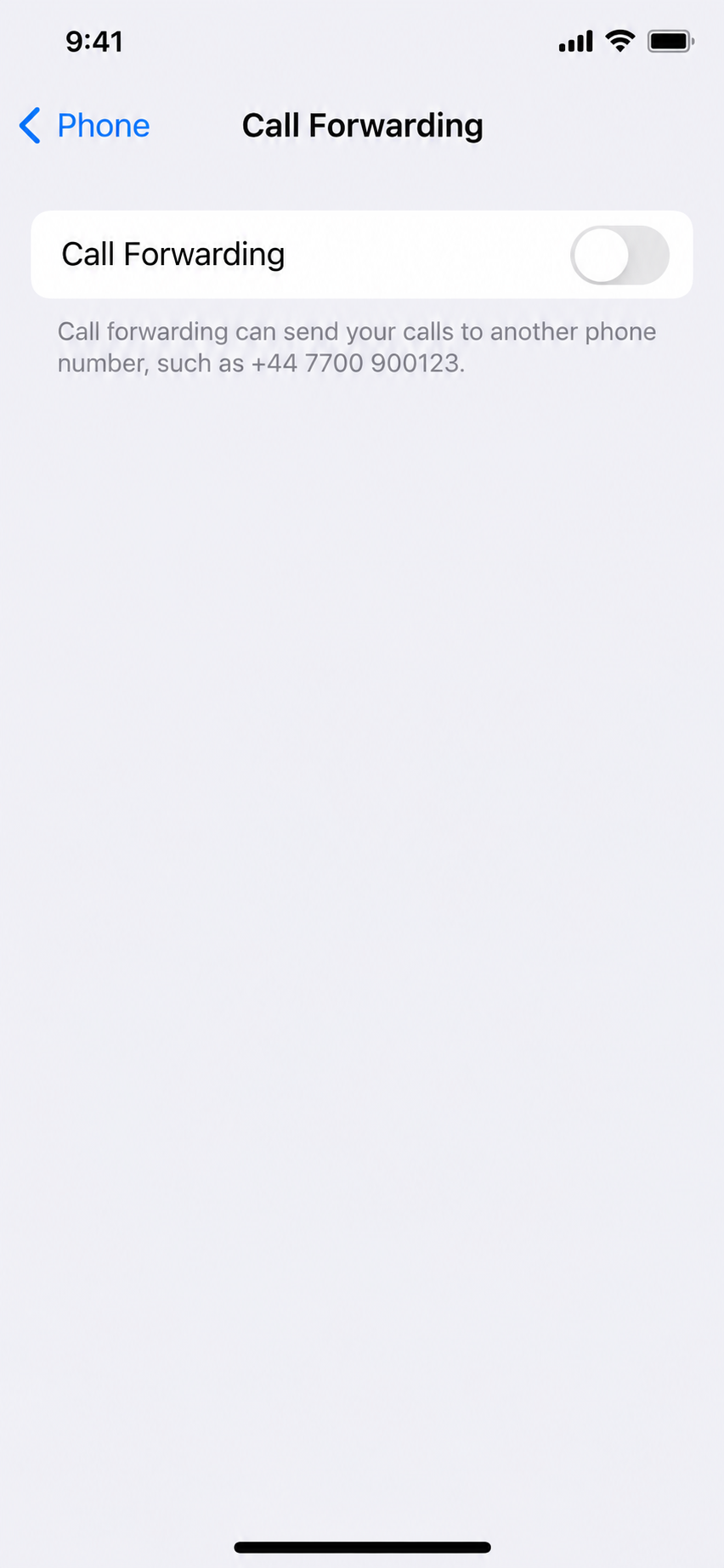
- Make sure Call Forwarding is off at Settings > Apps > Phone > Call Forwarding. AT&T customers can also dial #21# to turn off call forwarding. If you use forwarding on purpose, how call forwarding works on iPhone shows where the setting is.
- Check that you have a usable signal. T-Mobile suggests at least two bars and an active line.
- On iOS 18 and later, Apple says you can run diagnostics from the latest version of the Apple Support app.
- Only if nothing else has worked, reset network settings (see the warning below).
Before you reset network settings: Apple says this erases all current saved network settings, including Wi-Fi passwords, preferred networks, and VPN and APN settings. The path is Settings > General > Transfer or Reset iPhone > Reset > Reset Network Settings. It isn’t a first diagnostic step.
If your status bar says No Service or Searching, that’s a different problem, and Apple handles it on a separate support page.
If the Words Appear in FaceTime or Another App
Treat a “not available” message shown in FaceTime or another calling app as that app’s own status, not as the carrier announcement you’d hear on a regular call. Note the app and the exact wording, then check whether a regular phone call to the same person works.
FaceTime has a separate setting from the Phone app. Apple says that with Silence Unknown Callers turned on at Settings > Apps > FaceTime, calls from unknown numbers are silenced and sent to voicemail. For other apps, use that app’s help pages rather than treating the message as a carrier issue.
What to Tell Your Carrier
Carriers can trace how a call was routed. Have these ready:
- The date, time and time zone of the failed call.
- The number you called (share it privately with support, never in a public forum).
- The exact words of the recording and any announcement number or code.
- Whether other numbers work from your iPhone.
- Whether the same thing happens over Wi-Fi Calling and over cellular.
T-Mobile specifically asks customers to share any error messages or recordings they hear.
If You Are the Person People Can’t Reach
Maybe a friend told you they hear a recording when they call you. Apple’s guide for when calls don’t ring and go straight to voicemail lists the checks:
- Open Control Center and turn off any active Focus, such as Do Not Disturb or Sleep.
- Go to Settings > Apps > Phone and set Screen Unknown Callers to Never, so unknown numbers ring.
- In the same screen, under Call Filtering, turn off Unknown Callers so those calls appear with your other calls.
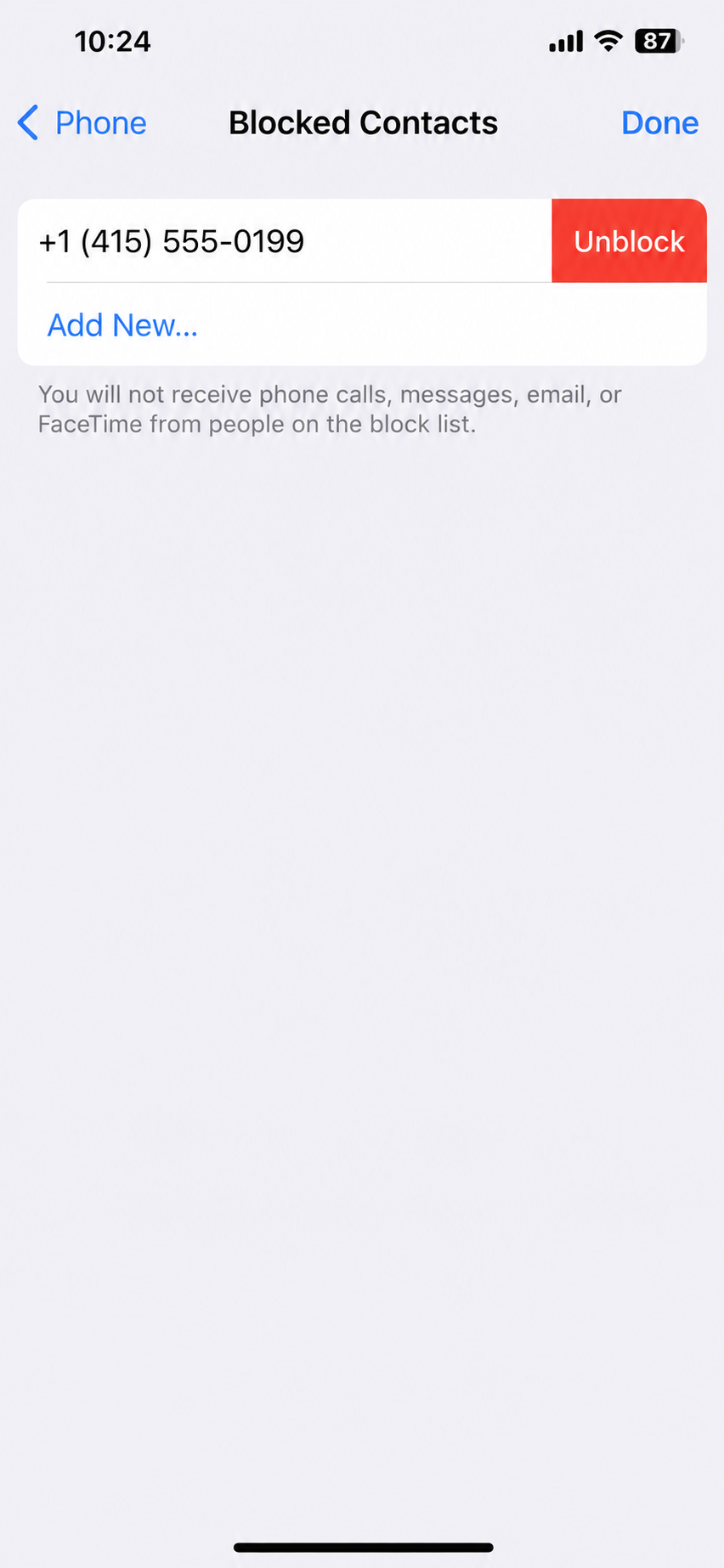
- Tap Blocked Contacts and review the list. To remove a number, swipe left on it and tap Unblock.
- Under Calls, turn on Wi-Fi Calling so the iPhone can use Wi-Fi when cellular is weak or unavailable. If the option is missing, your carrier might not offer it.
- If you’re on Verizon, set up voicemail by dialing *86 and following the prompts. Verizon says you can confirm it works by calling your own phone, and check that the voicemail add-on is active under Manage Products and Apps in My Verizon.
If calls still don’t reach you, the steps in why an iPhone goes straight to voicemail cover the remaining causes on the receiving side.
Common Questions About the Message
Why Did I Hear a Recording Instead of Voicemail?
On Verizon, that’s the expected result when the person doesn’t answer and has no voicemail set up. Apple’s own call features (Focus, silencing unknown callers and blocking) are documented as silencing calls or sending them to voicemail, so a missing mailbox fits the recording better than any of them.
Does Wi-Fi Calling Make a Difference?
It can. Apple says an iPhone with Wi-Fi Calling on uses it when cellular is weak or unavailable, and Verizon says that where there’s no network coverage, Wi-Fi Calling must be on to receive calls.
Does the Message Mean Their Phone Is Off?
Not necessarily. Carriers don’t publish a rule that ties this recording to a phone being off. Verizon says calls won’t reach a phone in Airplane mode, but it doesn’t say which announcement callers hear in that case.
Can My Own iPhone Cause This?
Yes, if it happens with many numbers. Call forwarding, account or billing blocks, weak signal and outdated carrier settings all appear on Apple’s and the carriers’ troubleshooting lists. If it happens with just one number, the cause is more likely on their end.
Is It an Emergency If Someone Can’t Be Reached?
The recording itself isn’t evidence of an emergency. If reaching the person is urgent, try the contact method they normally use or ask a mutual contact to check in. If you have a concrete reason to believe someone is in immediate danger, contact local emergency services.
Where to Go From Here
Treat the recording as a network status, not a message from the person. Try once more later, reach out another way you both use, and if it keeps happening, give your carrier the exact wording, the time and the number so it can trace the call.

Matthew Burleigh is the founder, head writer, and editor of Solve Your Tech, which he launched in 2012. He has written technology tutorials since 2008 and worked in IT since 2003, including small-business support, IT management, and consulting. He holds Bachelor’s and Master’s degrees in Computer Science from Arizona State University.
Matthew writes practical guides for Windows, iPhone and iPad, Microsoft Office, Outlook, Google apps, and Android. Solve Your Tech’s guides are checked step by step against the device or app maker’s own documentation and tested on his own devices whenever he has the hardware or software, with clear steps, sources, and update dates.
Read more about Matthew and how Solve Your Tech writes and updates its guides, or report a correction.