To open the Run command in Windows 11, press Windows key + R. The Run box opens in the bottom-left corner. You can also right-click the Start button and select Run, or search for Run from Start.
The Run dialog lets you open apps, settings, folders, and system tools by typing a short command. This guide shows every practical way to open it in Windows 11, how to run a command as administrator, a list of useful commands, and Microsoft’s new modern Run dialog.
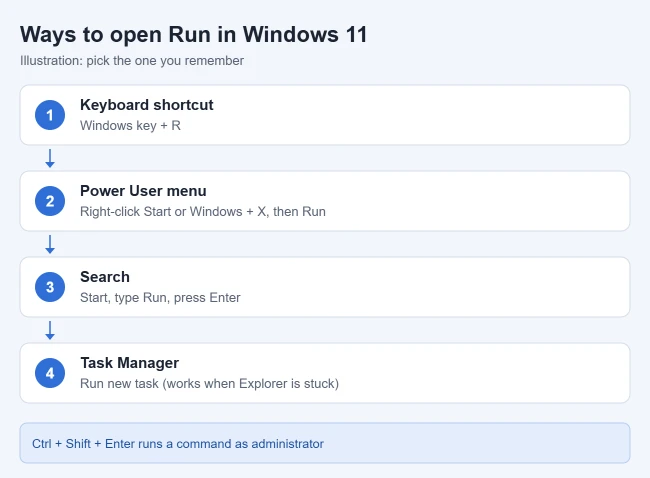
Method 1: Press Windows Key + R
- Press and hold the Windows key, then press R. The Run box opens in the bottom-left corner of the screen.
- Type a command, such as control, and press Enter or select OK. The app or tool opens.
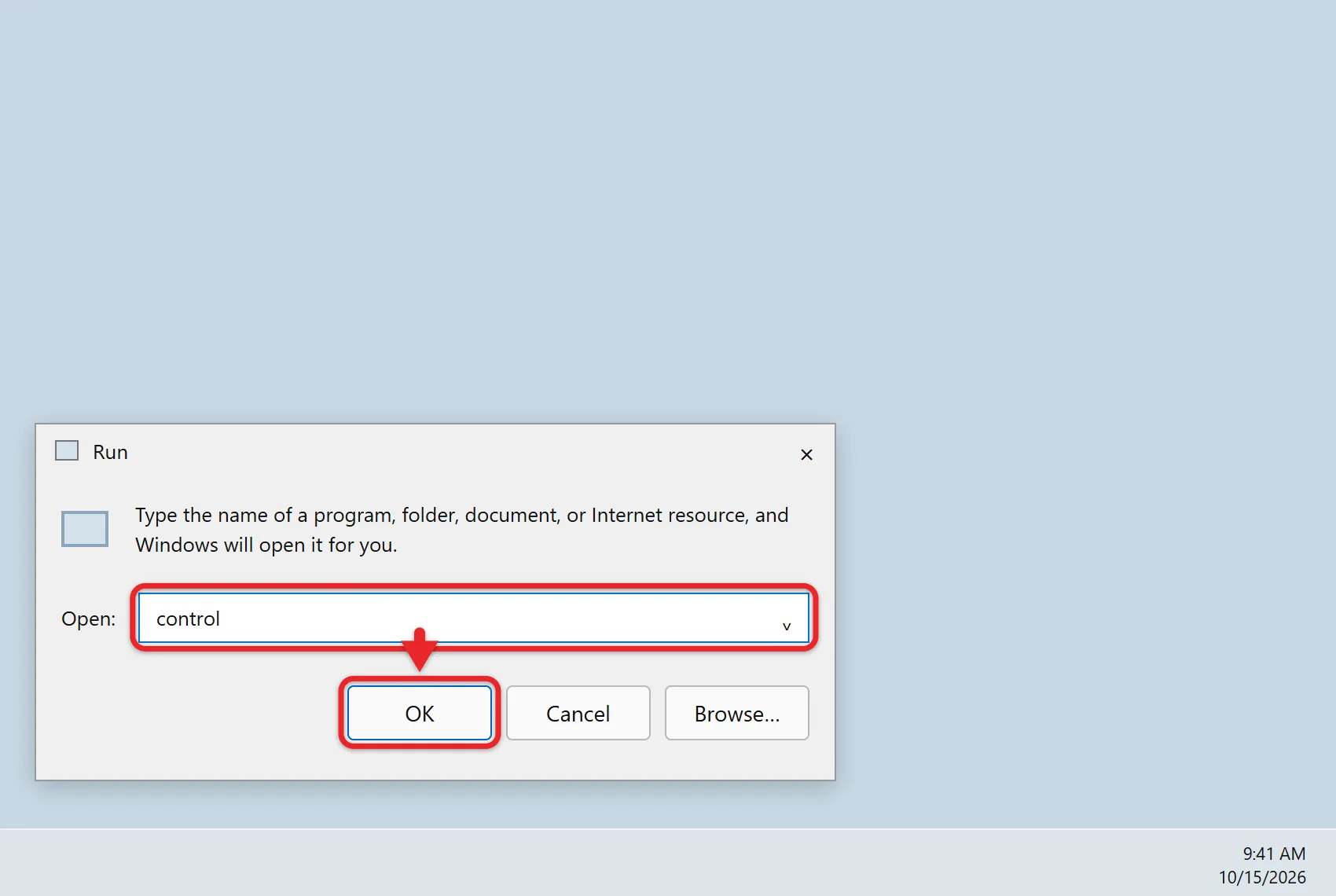
This shortcut is listed in Microsoft’s Windows keyboard shortcuts, and it works from anywhere in Windows.
Method 2: Use the Power User Menu
- Right-click the Start button, or press Windows key + X. A menu of system tools opens.
- Select Run.
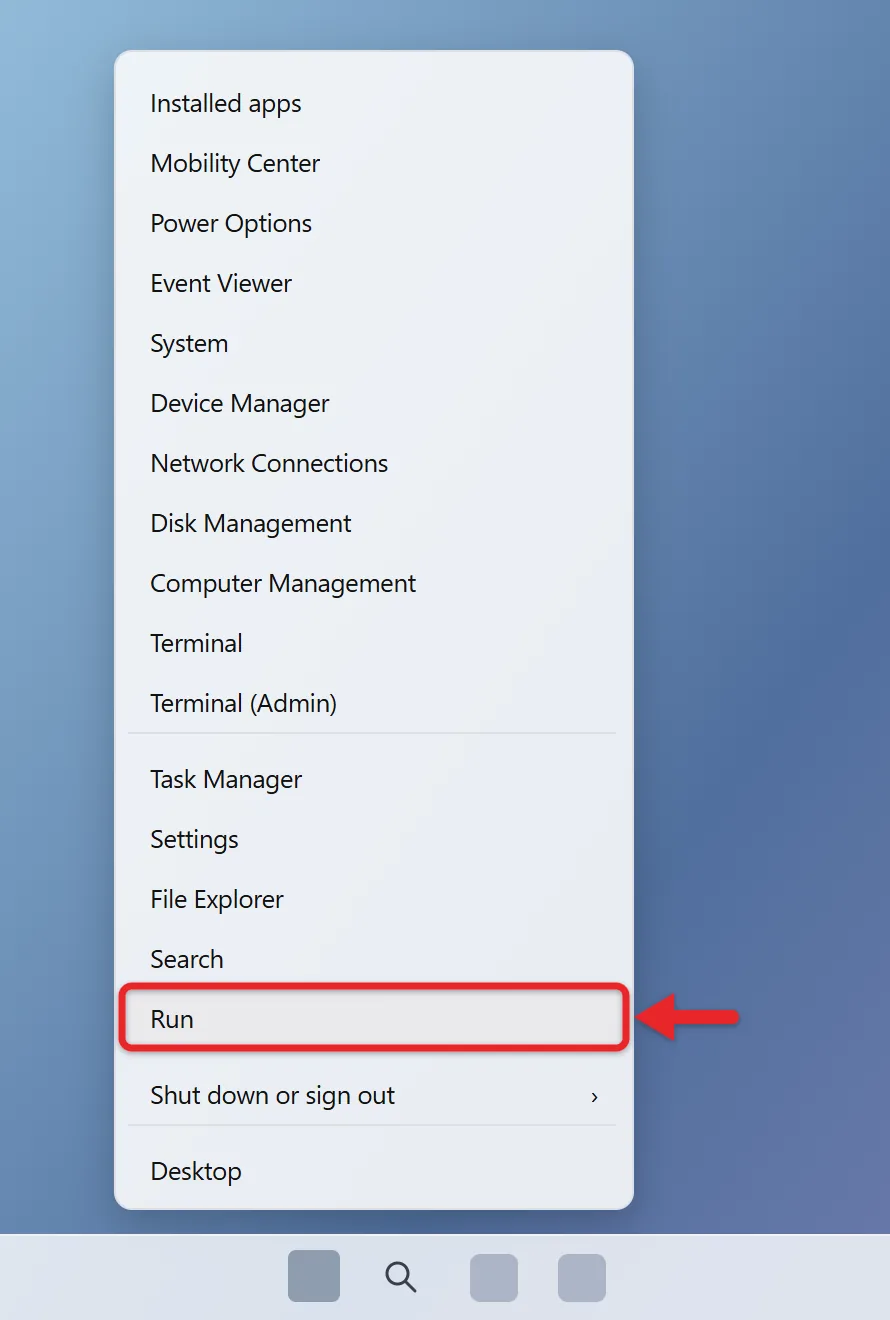
Method 3: Search for Run
- Select Start or press Windows key + S.
- Type Run and select the Run app in the results. The Run box opens.
From the search result, you can also choose Pin to Start or Pin to taskbar if you use Run often.
Once Run is open, typing %appdata% is the quickest way to access the AppData folder in Windows 11.
Method 4: Open Run From Task Manager
This is useful when the taskbar or Start menu isn’t responding.
- Press Ctrl + Shift + Esc to open Task Manager.
- Select Run new task at the top. The Create new task box opens, and it works just like Run.
- To open the command with admin rights, check Create this task with administrative privileges, then select OK.
Other Ways to Open Run
- Command Prompt: run
explorer.exe shell:::{2559a1f3-21d7-11d4-bdaf-00c04f60b9f0}. - PowerShell: run
(New-Object -ComObject "Shell.Application").FileRun(), which works where the command above opens File Explorer instead. - Desktop shortcut: right-click the desktop, select New > Shortcut, and use the same
explorer.exe shell:::command as the location.
Tips for Using the Run Box
- Browse: select Browse in the classic Run box to pick a program or file instead of typing its path.
- Paths and folders: type a full path like
C:\Program Filesto open that folder in File Explorer, or%appdata%for your app data folder. - Websites: type an address such as
www.microsoft.comto open it in your default browser. - Recent commands: select the arrow at the end of the text box, or press the down arrow key, to reuse a command you ran before.
- Settings pages:
ms-settings:commands open specific Settings pages, such asms-settings:displayfor Display settings.
Run a Command as Administrator
Type the command in the Run box and press Ctrl + Shift + Enter instead of Enter. Select Yes in the User Account Control prompt, and the tool opens with administrator rights. For example, cmd with Ctrl + Shift + Enter opens an elevated Command Prompt.
Useful Run Commands
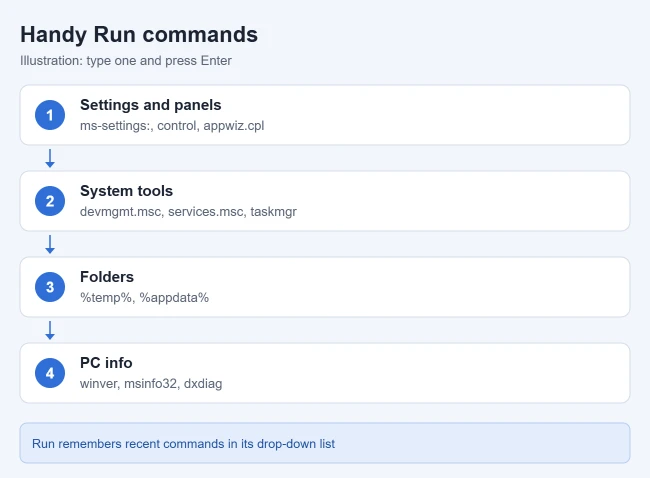
| Command | Opens |
|---|---|
control | Control Panel (see how to open Control Panel) |
ms-settings: | The Settings app |
cmd | Command Prompt |
regedit | Registry Editor (see how to open Registry Editor) |
msconfig | System Configuration (see how to check system configuration) |
%temp% | Your temporary files folder (see how to delete temp files) |
appwiz.cpl | Programs and Features |
devmgmt.msc | Device Manager |
services.msc | Services |
taskmgr | Task Manager |
diskmgmt.msc | Disk Management |
ncpa.cpl | Network Connections |
powercfg.cpl | Power Options |
winver | Your Windows version |
dxdiag | DirectX Diagnostic Tool |
mstsc | Remote Desktop Connection |
Most of these open instantly. Some tools, like Registry Editor, show a User Account Control prompt first.
On Windows 11 editions that include it, gpedit.msc opens Local Group Policy Editor. Our guide to opening Local Group Policy Editor explains the edition requirements, what to expect, and what to check if Windows cannot find the console.
Typing certmgr.msc in Run opens your own certificate store, and our guide on how to remove certificates from Windows 11 explains what is safe to delete there.
Typing shell:recent in Run opens the Recent Items folder, which our guide on seeing recent files in Windows 11 explains.
The New Modern Run Dialog
Microsoft is testing a redesigned Run dialog with dark mode, a Fluent Design look, and shortcuts like typing ~\ to jump to your user folder. According to Microsoft Learn, it’s currently in Windows Insider builds on the Experimental Channel. Where it’s available, turn it on in Settings > System > Advanced with the Run Dialog toggle. Windows key + R then opens the new version.
Troubleshooting
- Windows key + R does nothing: check that a game mode or keyboard utility hasn’t disabled the Windows key, then try the Power User menu or Task Manager method.
- Run is missing or blocked: a work or school administrator can disable it with policy. Contact your IT team.
- “Windows cannot find” error: check the spelling. Some tools, like
gpedit.msc, aren’t included in Windows 11 Home.
Frequently Asked Questions
Can I run a command as administrator from Run?
Yes. Type the command and press Ctrl + Shift + Enter instead of Enter.
Why is Run disabled on my PC?
A work or school administrator can block it with Group Policy or device management.
How do I clear the Run history?
Run keeps recent commands in its drop-down list. Clearing it involves editing the registry, which we don’t recommend for most people. Old entries are harmless. That list is separate from the recent files shown in File Explorer, which you can remove by following how to clear recent files in Windows 11.
You can also use Run to open System Properties with sysdm.cpl. See how to open environment variables in Windows 11.

Matthew Burleigh is the founder, head writer, and editor of Solve Your Tech, which he launched in 2012. He has written technology tutorials since 2008 and worked in IT since 2003, including small-business support, IT management, and consulting. He holds Bachelor’s and Master’s degrees in Computer Science from Arizona State University.
Matthew writes practical guides for Windows, iPhone and iPad, Microsoft Office, Outlook, Google apps, and Android. Solve Your Tech’s guides are checked step by step against the device or app maker’s own documentation and tested on his own devices whenever he has the hardware or software, with clear steps, sources, and update dates.
Read more about Matthew and how Solve Your Tech writes and updates its guides, or report a correction.