To check screen time on iPhone, open Settings, tap Screen Time, then tap Daily Average and choose Week or Day at the top. You’ll see your total time, your most-used apps, how often you picked up the phone, and how many notifications you got.
These steps are for checking your own usage on an iPhone running iOS 27, with notes for iOS 26 and earlier where the labels differ. They follow Apple’s Set up Screen Time for yourself on iPhone and Set Screen Time Schedules and Time Allowances guides. Apple says the latest Screen Time features need iOS 27, iPadOS 27, macOS 27, watchOS 27, visionOS 27 or later on all your Apple devices. Checking a child’s usage is covered in its own section below.
Before You Start
- Screen Time has to be on. It only records from the moment you turn it on. There is no way to see usage from before that.
- Know your iOS version. Open Settings > General > About and look at iOS Version. Apple redesigned Screen Time in iOS 27, so some labels differ on older versions.
- Check whether Share Across Devices is on. If it is, your report can include time from your iPad and Mac, which makes the iPhone number look higher than it is.
How to See Your Screen Time Report
- Open the Settings app.
- Tap Screen Time. The top of the screen shows a small chart of today’s use.
- Tap Daily Average. Your full report opens.
- Tap Week at the top for the last seven days, or Day for today.
- Scroll down to see Most Used, Pickups and Notifications.
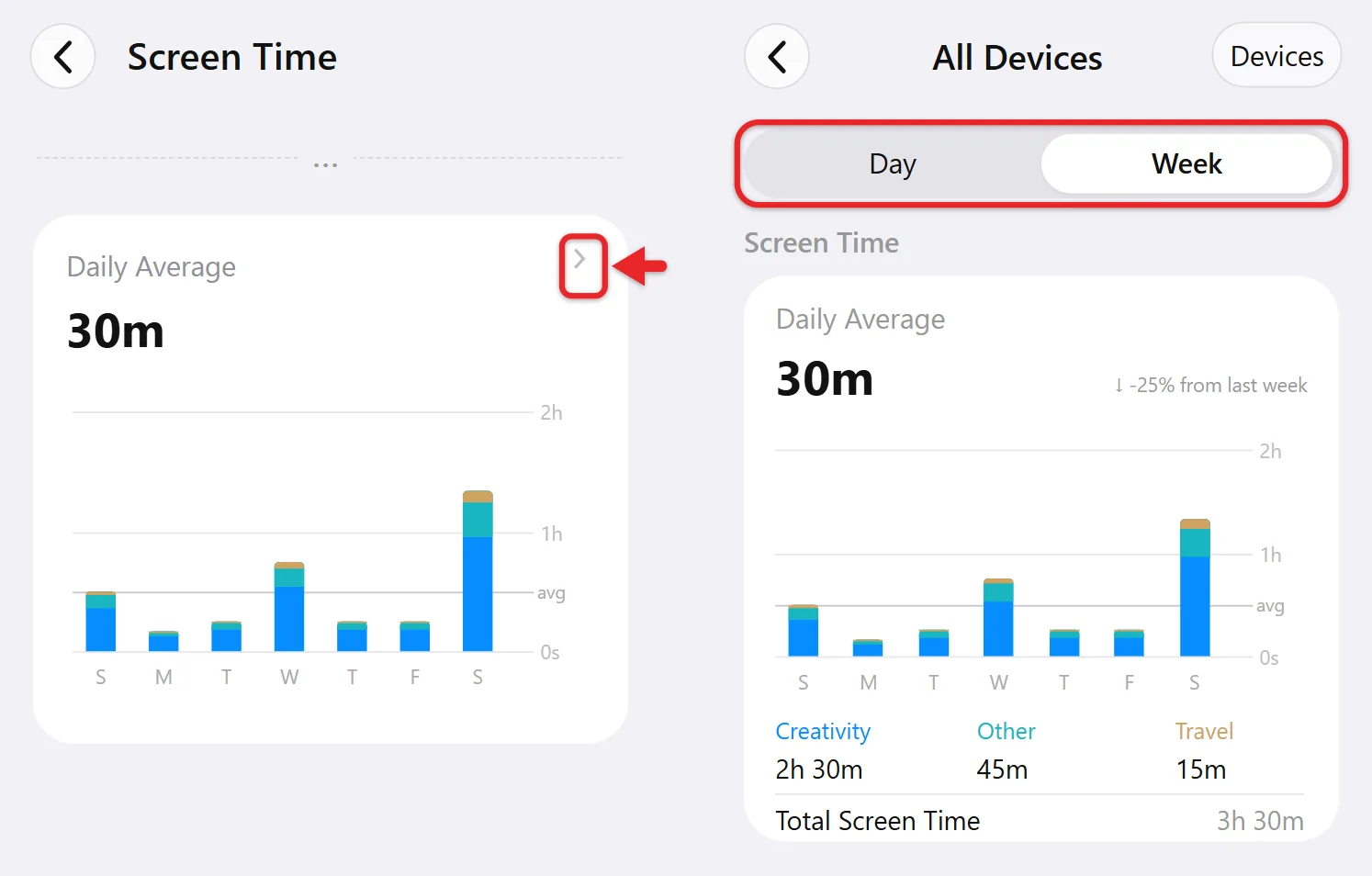
The Week view shows your daily average for the week and how it compares with the week before. The Day view breaks today into hours. Swipe left or right on the chart to step back through earlier days or weeks.
On iOS 26 and earlier: open Settings > Screen Time and tap See All App & Website Activity (on some older versions, See All Activity). Tap Week or Day at the top, then scroll for your most-used apps, pickups and notifications.
What the Report Shows
Each part of the report answers a different question, so it helps to know what you’re looking at.
| Section | What it tells you |
|---|---|
| Chart at the top | Total screen time for the day or week, colored by app category such as Social or Entertainment |
| Most Used | Apps and websites ranked by time; tap Show Categories to group them by type |
| Pickups | How many times you picked up the iPhone, and which apps you opened first after picking it up |
| Notifications | How many notifications you got, and which apps sent the most |
A few tips for reading it:
- Use the Week view for habits. One unusual day, such as a trip or a sick day, can make a Day report look extreme. The weekly daily average smooths that out.
- Look at pickups, not only hours. A high pickup count with short sessions often means notifications are pulling you back to the phone. The Notifications list shows which apps to quiet first.
- Categories are Apple’s. Apple assigns each app to a category, so an app may not land where you expect. Tap Show Categories to see the groupings.
How to Check Screen Time for One App
- Open your report from Settings > Screen Time > Daily Average.
- Scroll to Most Used. If the app isn’t listed, tap Show More.
- Tap the app’s name. A detail screen opens.
The detail screen shows your daily average for that app, a chart for the day or week, and the app’s pickups and notifications. Websites you visit in Safari can appear in the same list, so you can check a site the same way.
You can also see averages by category. Go to Settings > Screen Time > Time Allowances and tap Manage Categories. Tap a category to see your average daily use of it, then tap an app to see your average daily use of that app.
How to Open the Weekly Report Notification
Each week your iPhone sends a Screen Time Weekly Report notification with your average and how it changed from the week before. Tap it to open the weekly summary. If it disappears before you tap it, swipe down from the top of the screen to open Notification Center and look for it there.
If You Don’t See Any Data
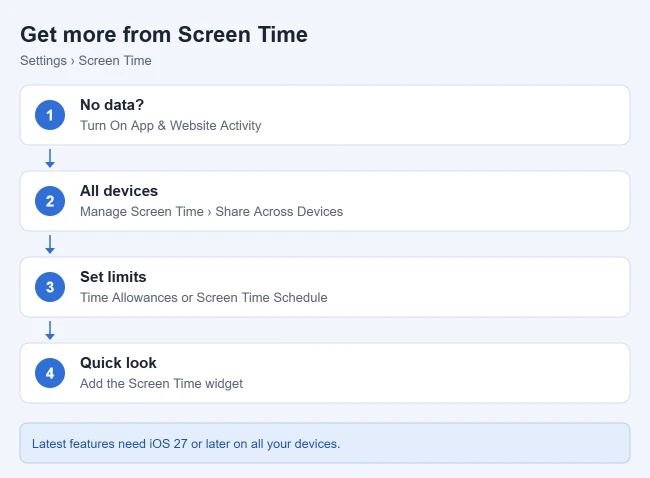
If the Screen Time screen offers to turn it on, or the report is blank, tracking is off.
- Go to Settings > Screen Time.
- Tap Manage Screen Time (or Screen Time Schedule or Time Allowances).
- Tap Turn On App & Website Activity.
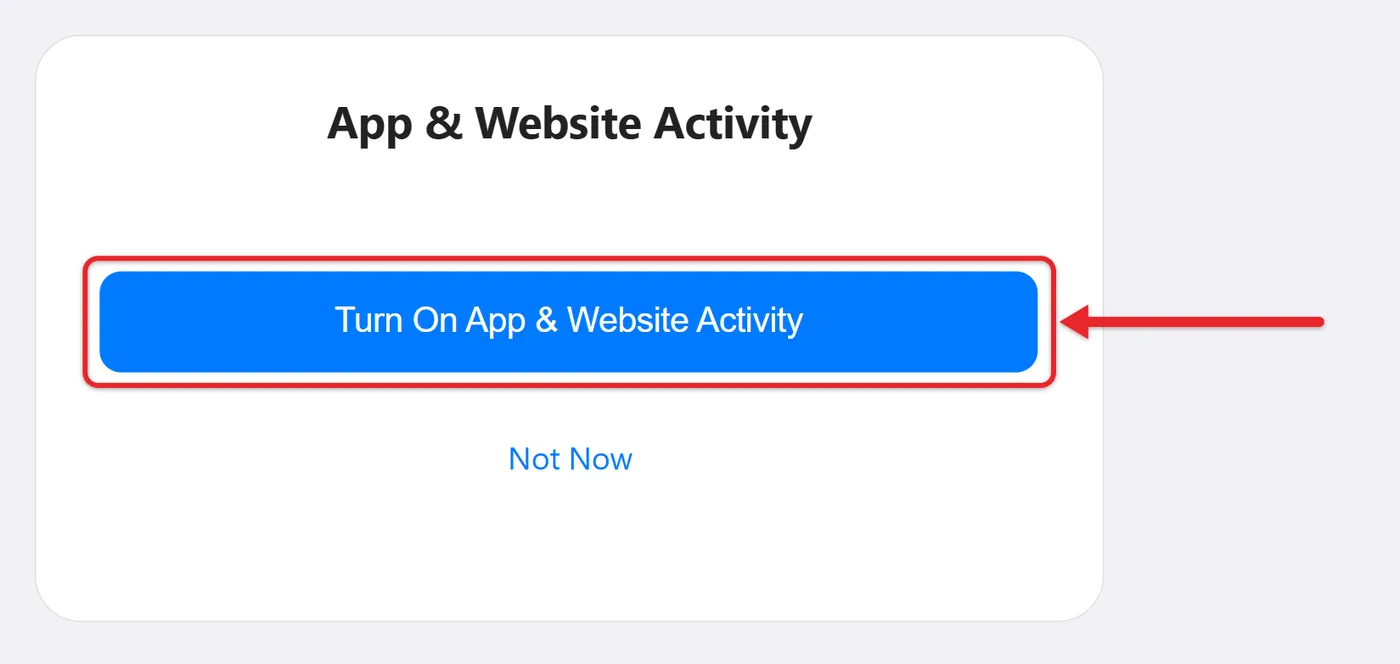
On iOS 26 and earlier, tap App & Website Activity and then Turn On App & Website Activity. If you are asked whether this is your iPhone or your child’s, choose the option for your own iPhone.
Screen Time starts tracking right away, and your report fills in as you use the phone. Usage from before you turned it on can’t be recovered. If the report stays blank after a few hours of use, restart the iPhone and check again.
How to Include Your iPad and Mac
- Open Settings and tap Screen Time.
- Tap Manage Screen Time.
- Turn on Share Across Devices.
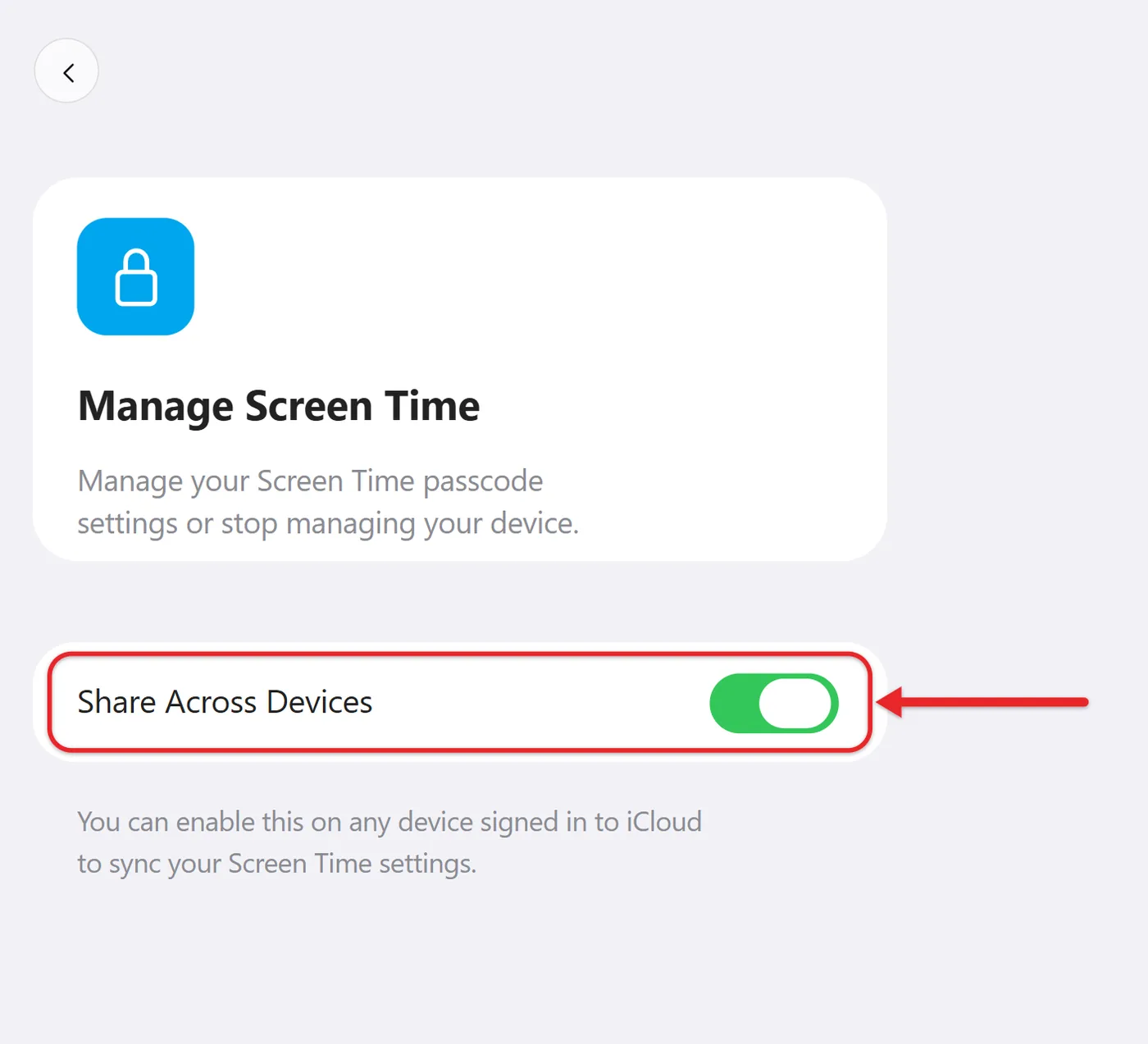
Your report combines activity from your iPhone, iPad and Mac signed in to the same Apple Account. Schedules and time allowances then apply on all of those devices too. Turn the setting off and each device keeps its own Screen Time settings.
When sharing is on, the report may show a Devices option at the top. Tap it to switch between all devices and this iPhone only. That’s the first thing to check when a total seems too high.
Check Screen Time on an iPad or Mac
On iPadOS 27, open Settings > Screen Time > Daily Average, then select Week or Day. Scroll for pickups and notifications, and swipe the summary to review history. Apple’s iPad Screen Time guide documents these controls.
On a Mac, choose Apple menu > System Settings, then click Screen Time in the sidebar to see app and website activity for that Mac.
Share Across Devices can combine results from devices using the same Apple Account, so check whether it is on before treating a report as iPad-only or Mac-only usage.
How to Check a Child’s Screen Time
You need Family Sharing set up, with the child in your family group, and you need to be the organizer or a parent or guardian.
- On your own iPhone, open Settings.
- Tap Family, then tap your child’s name.
- Tap Screen Time to see their usage and controls.

The redesigned family controls need iOS 27, iPadOS 27, macOS 27 or watchOS 27 or later on every device in the family group. On iOS 26 and earlier, go to Settings > Screen Time and tap your child’s name under Family. If no data appears, make sure the child’s device is online and Screen Time is turned on for it. Apple’s guide to managing a child’s Screen Time covers the rest of the parental controls.
How to Set Limits Based on What You See
Once you know where your time goes, you can set limits in the same Screen Time menu.
- Time Allowances: In Settings > Screen Time > Time Allowances, drag the slider to set a daily total, or tap a category such as Social Media or Games to set its own limit. On iOS 26 and earlier, the closest setting is App Limits.
- Screen Time Schedule: Tap Screen Time Schedule, turn on Schedule, then tap Add Schedule to set time windows for different days. On iOS 26 and earlier, the closest setting is Downtime.
- Always Allowed: Tap Always Allowed to pick apps and contacts that stay available no matter what limits you set. If that list shows a name you do not recognize, you can find out why a weird app is listed on the Always Allowed screen.
- A passcode: A Screen Time passcode stops limits from being changed without the code. Look for Lock Screen Time Settings (inside Manage Screen Time on iOS 27). Use a code that is different from your iPhone’s unlock code.
For content filters and app-store controls, the overview of iPhone restrictions with Screen Time explains each setting, and you can also block the App Store with Screen Time.
Screen Time can also block in-app purchases, which pairs well with the steps to require a password for purchases on iPhone.
Check It Faster With a Widget
A Screen Time widget on your Home Screen shows today’s total without opening Settings.
- Touch and hold an empty part of the Home Screen until the apps jiggle.
- Tap Edit at the top (or the add button, depending on your iOS version), then tap Add Widget.
- Search for Screen Time and pick a size.
- Tap Add Widget, then tap Done.
Apple’s widgets guide has the full steps. The same steps work for other widgets, such as a weather widget on iPhone.
Troubleshooting
- The total seems too high. Check Share Across Devices and the Devices option at the top of the report, which may be adding iPad or Mac time.
- Today’s numbers look stuck. Leave Settings, then open Screen Time again. If the chart still doesn’t update, restart the iPhone.
- There’s no history from last month. Screen Time keeps recent days and weeks, not a permanent record. Take a screenshot of the Week view if you want to keep track over time.
- You see App Limits and Downtime instead of Time Allowances and Screen Time Schedule. Your iPhone is on iOS 26 or earlier. Use the older labels in this guide, or update in Settings > General > Software Update.
- Settings are grayed out or ask for a passcode. A Screen Time passcode is set, or the iPhone is managed through Family Sharing or by an organization. Enter the passcode or ask the person who manages the device.
Frequently Asked Questions
How do I turn off Screen Time?
Go to Settings > Screen Time, tap Manage Screen Time, then tap Turn Off App & Website Activity. Enter your Screen Time passcode if asked. Tracking stops, and your limits and schedules stop working until you turn it back on.
Can I see screen time from past weeks?
Yes, for recent weeks. Open the report from Daily Average, tap Week, and swipe left or right on the summary to move through your history.
Does music or a podcast playing with the screen off count?
Screen Time measures time you spend using apps on screen, so audio playing in the background with the screen locked generally doesn’t add much to the total. A video playing with the screen on counts even if you don’t touch the phone.
Can someone else see my Screen Time?
Your report stays on your devices. A parent or guardian in your Family Sharing group can see a child’s report. With Share Across Devices on, anyone using a device signed in to your Apple Account can see the combined report.
Why is Screen Time different on my iPhone and iPad?
Each device tracks its own use unless Share Across Devices is on. Turn it on in Manage Screen Time on both devices to see a combined report.
Related
- Setting limits for a child? The same Screen Time settings let you change age restrictions on an iPad.
- Want the same numbers for your PC? Follow the steps for checking screen time on Windows 11.
Parents can also block Private Browsing on iPhone with Screen Time.
To keep a child off YouTube entirely, block YouTube on the iPhone.
Handing your iPhone to a child for a few minutes? Guided Access locks the phone to a single app until you end the session.

Matthew Burleigh is the founder, head writer, and editor of Solve Your Tech, which he launched in 2012. He has written technology tutorials since 2008 and worked in IT since 2003, including small-business support, IT management, and consulting. He holds Bachelor’s and Master’s degrees in Computer Science from Arizona State University.
Matthew writes practical guides for Windows, iPhone and iPad, Microsoft Office, Outlook, Google apps, and Android. Solve Your Tech’s guides are checked step by step against the device or app maker’s own documentation and tested on his own devices whenever he has the hardware or software, with clear steps, sources, and update dates.
Read more about Matthew and how Solve Your Tech writes and updates its guides, or report a correction.