You can’t change the iPhone’s system font. Settings, Messages, notifications, and other built-in screens always use Apple’s San Francisco typeface. What you can change is the Lock Screen clock font, the size and weight of text everywhere, the font in places like Safari Reader, Apple Books, and Mail, and the fonts in your documents, by installing fonts from the App Store and picking them in apps like Pages.
These steps are written for iOS 27 and iOS 26 and also match recent earlier versions (the Lock Screen clock options date back to iOS 16). In iOS 27, Text Size, Bold Text, and Display Zoom sit under Settings > Appearance; on iOS 26 and earlier they are under Settings > Display & Brightness.
Which Font Change Do You Want?
| You want to change | Where to do it | What it affects |
|---|---|---|
| The clock on the Lock Screen | Lock Screen > Customize > tap the time | Lock Screen time only |
| How big or thick all text looks | Text Size, Bold Text, Larger Text | Every app that supports it |
| Text in one app only | Accessibility > Per-App Settings | The app you pick |
| Fonts in documents | Font app from the App Store, then Pages, Keynote, or Numbers | Documents in supporting apps |
| The font you read in | Safari Reader, Apple Books | That article or book |
| Fancy letters in chats and posts | A font keyboard app | Only the characters you type |
Change the Lock Screen Clock Font
This is the most visible font change Apple allows.
- With your iPhone unlocked, go to the Lock Screen and touch and hold an empty spot until the wallpapers spread out.
- Tap Customize, then tap the Lock Screen preview. To build a new design instead, tap Add (the plus button) and pick a wallpaper.
- Tap the time at the top of the screen. A panel opens with font and color choices.
- Tap a font to preview it on the clock. Below the fonts, choose a color, and use the slider to adjust the weight if it’s shown.
- Close the panel, then tap Done. Your Lock Screen shows the clock in the new style.
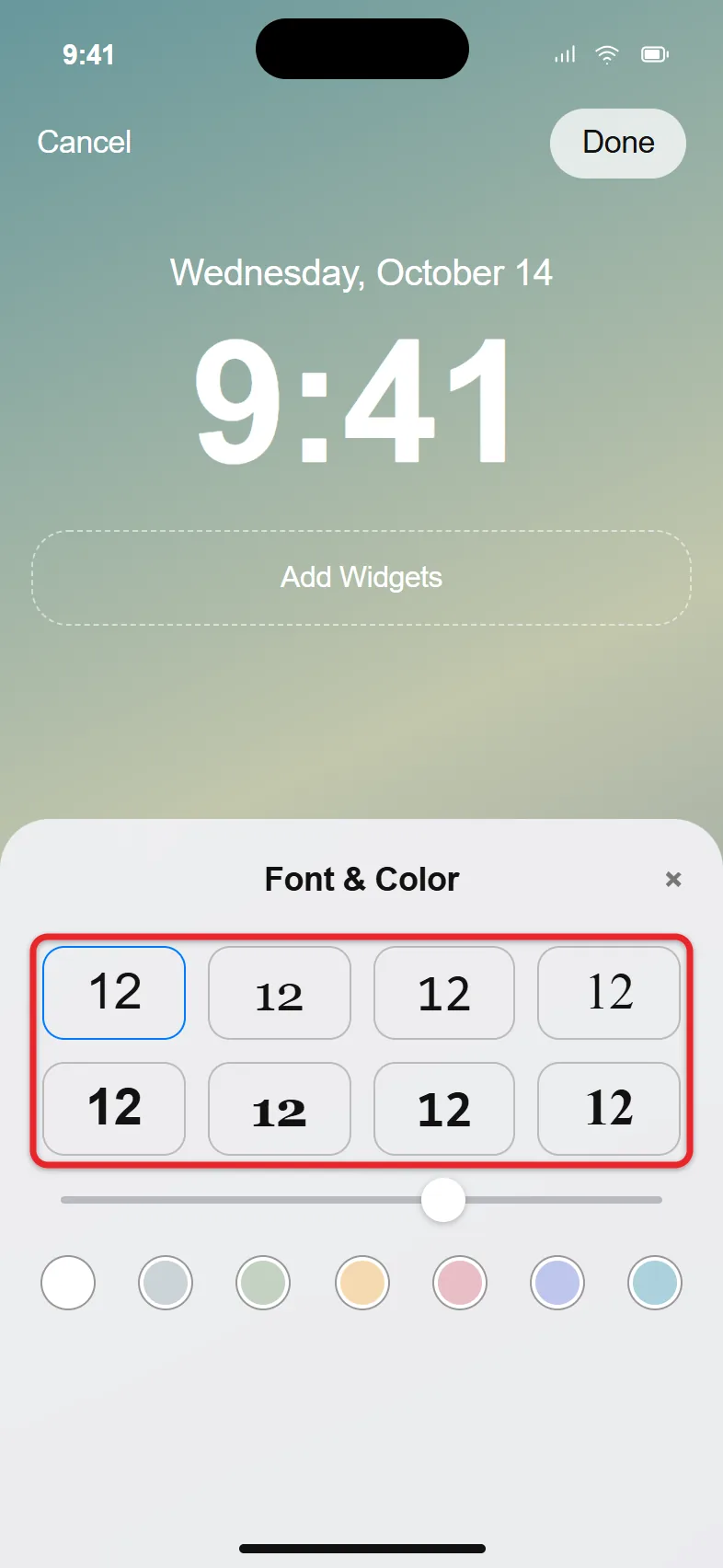
The new font only affects the Lock Screen time. It doesn’t change the Home Screen, notifications, or apps. To change wallpapers, widgets, and linked Focus modes in the same editor, follow the steps for changing the Lock Screen on iPhone.
Make Text Bigger or Bolder Everywhere
If the goal is easier reading, size and weight matter more than the typeface. On a tablet, the text size slider, Bold Text and the Lock Screen clock font are covered in how to change the font on an iPad.
- Open Settings and tap Appearance on iOS 27, or Display & Brightness on iOS 26 and earlier. If you can’t find either, swipe down on the main Settings screen and search for Text Size.
- Tap Text Size and drag the slider right for bigger text or left for smaller text. Apps that support Dynamic Type, Apple’s system for scaling text, update right away.
- Go back and turn on Bold Text if you want heavier lettering across the system.
For sizes beyond the normal range, open Settings > Accessibility > Display & Text Size > Larger Text and turn on Larger Accessibility Sizes. Apple’s font size article warns that very large text can make some buttons hard to tap, so check a few apps afterward. Apple also lists other ways to make text easier to read, and the steps for making text bigger on iPhone walk through each size setting.
Change text in one app only
- Open Settings > Accessibility > Per-App Settings.
- Tap Add App and choose the app, such as Mail or Books.
- Tap the app’s name, then set Larger Text or Bold Text for that app alone.
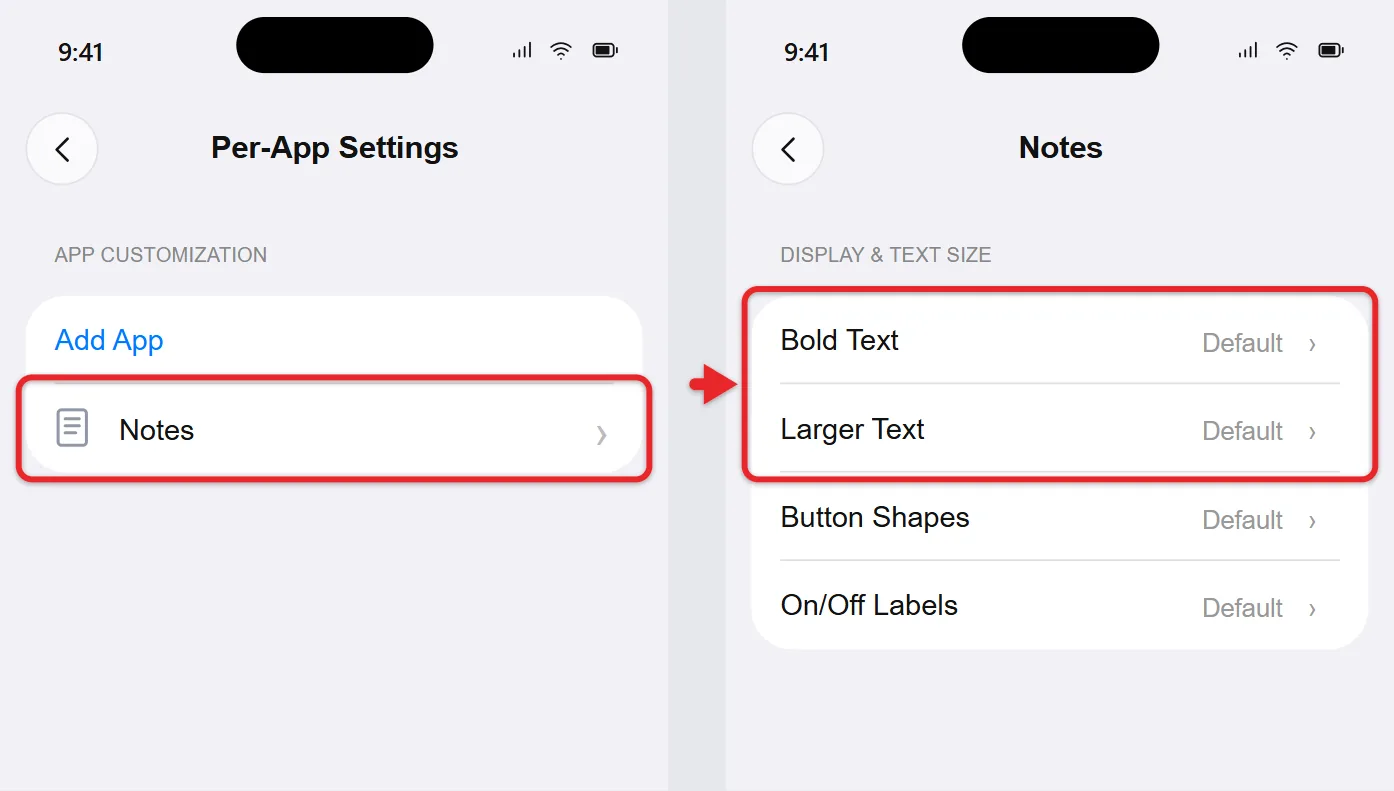
You can also add the Text Size control to Control Center. While you’re in an app, open Control Center, tap the control, and drag the bar. The choice at the bottom lets you apply the size to that app only or to all apps.
Make everything bigger with Display Zoom
Display Zoom enlarges text, icons, and buttons together. In the same Appearance or Display & Brightness screen, tap Display Zoom, choose Larger Text, tap Done, and confirm. The screen restarts its layout with fewer, larger items. Choose Default to undo it.
Install New Fonts for Documents
Apple lets App Store apps add fonts that other apps can use, such as Pages, Keynote, Numbers, and many third-party writing apps. The fonts don’t change the system font. Pages and Keynote already include dozens of fonts, such as Avenir, Charter, and Georgia, so check the built-in list before installing anything. Apple’s guide to installing and managing fonts on iPhone covers the basics.
- Open the App Store and search for an app that provides installable fonts. One well-known option is Adobe’s Creative Cloud app, which installs fonts from the Adobe Fonts library after you sign in with an Adobe account (a free account includes a selection of fonts).
- Download and open the app, then sign in if it asks you to.
- Find the font family you want and tap the app’s install button.
- When iOS shows a confirmation asking whether to install the fonts, tap Install.
- Open Settings > General > Fonts. The new font family appears in the list with its number of styles.
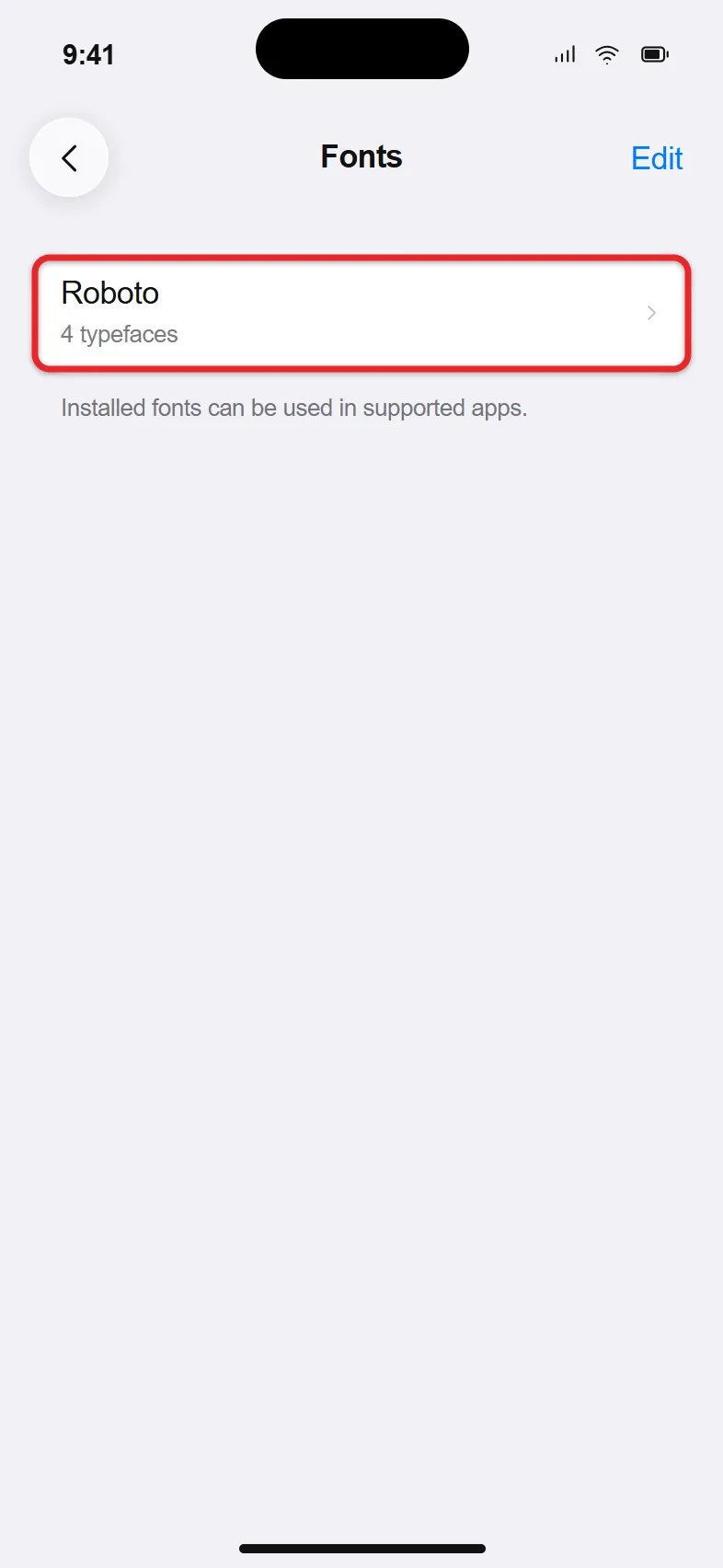
To remove a font later, open Settings > General > Fonts, tap Edit, select the font, and tap Remove. Documents that used it will show a substitute font until you install it again.
Avoid Font Apps That Want a Profile
Some older font apps install fonts through a configuration profile instead of the built-in method. A profile can change more than fonts, so stick with apps that use the standard install prompt above. If you already installed one, you’ll find it in Settings > General > VPN & Device Management, and removing it also removes the fonts it added. Leave work or school profiles alone; your organization manages them and may use them to supply company fonts.
Use an Installed Font in Pages
Pages is Apple’s free word processor and shows installed fonts in its font list. These steps follow Apple’s Pages text formatting guide.
- Open your document in Pages and select the text you want to change. To change text in a text box, shape, or table cell, tap that object.
- Tap the Format button (the paintbrush icon) in the toolbar. If you don’t see the text options, tap Text or Cell at the top of the panel.
- Tap Font, then scroll to the font you installed and tap it.
- To choose a variation such as Light or Semibold, tap the info button next to the font name and pick a style.
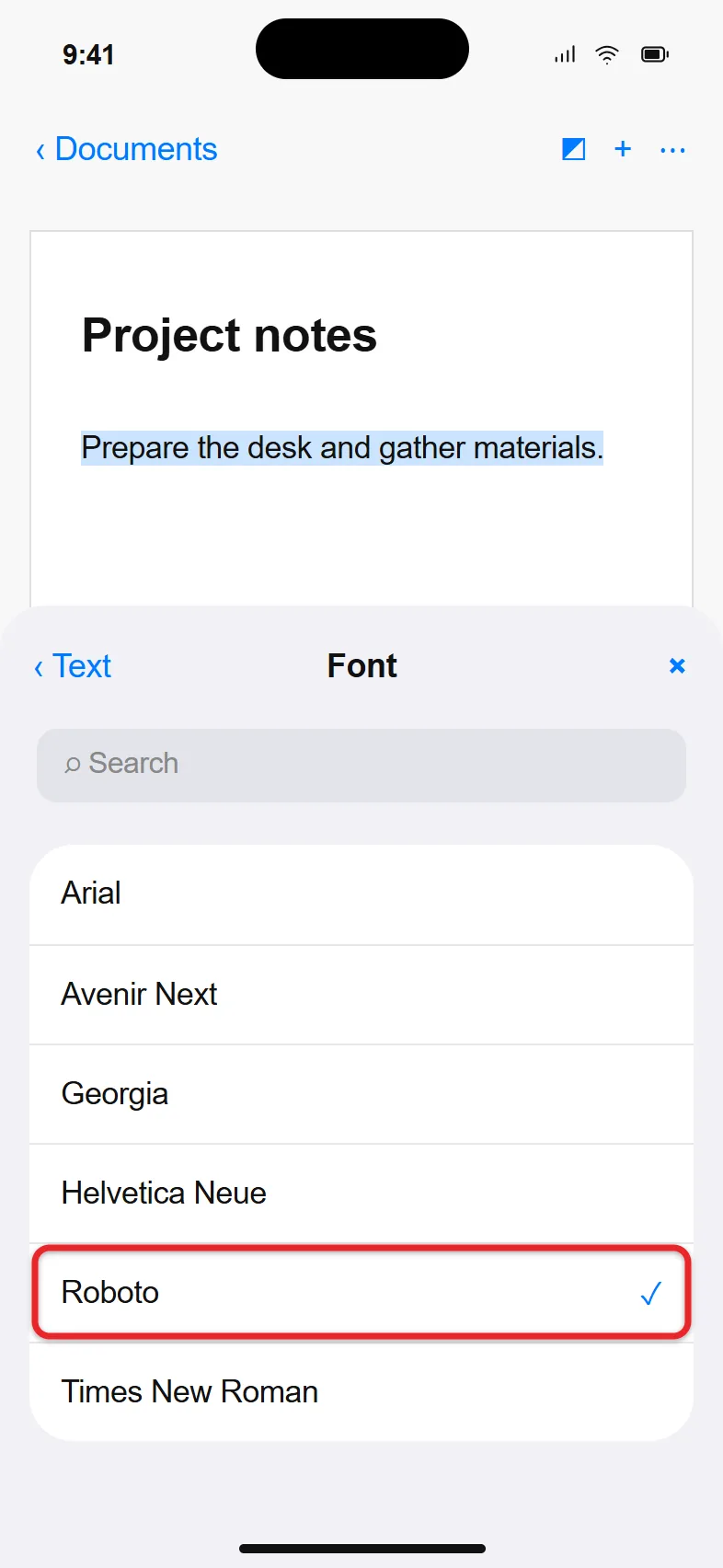
Close the panel to see the change. A new typeface can change line breaks and page count, so scroll through the document afterward. If you send the file to someone who doesn’t have the font, their device substitutes a different one, so export a PDF when the look has to stay exact.
Change the Font You Read In
Safari Reader
Reader shows an article without ads and menus, and it has its own font list.
- Open an article in Safari and tap the Page Menu button in the address bar.
- Tap Show Reader. If it’s missing, the page doesn’t support Reader.
- Tap the Page Menu button again to see the Reader options. Choose a font, a background color, and the small or large A to change the size.
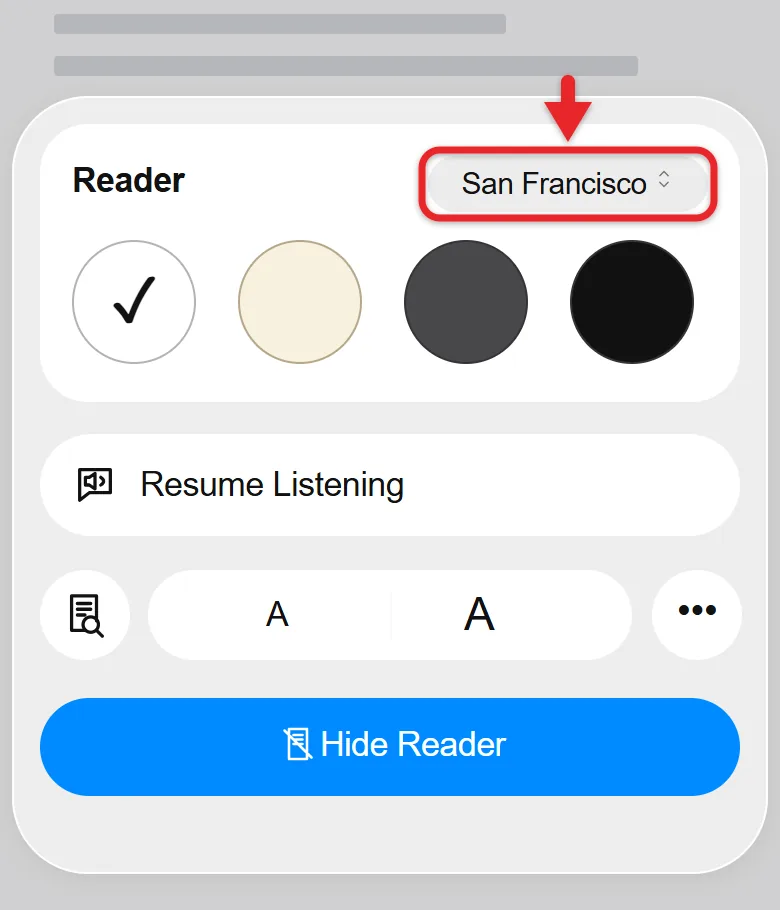
Safari remembers the choice for Reader on other sites. For more Reader options, read about using Reader mode in Safari.
Apple Books
- Open a book in Books and tap the middle of the page to show the controls.
- Tap the menu button in the bottom-right corner, then tap Themes & Settings.
- Tap Customize, then tap Font and choose a typeface.
- Tap Done.
This changes how your books read. Fixed-layout books and PDFs keep their original fonts.
Change the Font in an Email You Write
Mail lets you style the text of a message you’re sending. In a new message, tap the Format button (Aa) above the keyboard. From there you can choose a font, size, color, and bold or italic. The recipient sees the font only if their mail app supports it; otherwise their app shows its default font. For bold and italic shortcuts, here’s how to bold text in iPhone emails.
What About “Font” Keyboard Apps?
Keyboard apps that promise fancy fonts for Messages, Instagram, or TikTok don’t install fonts. They type look-alike Unicode symbols that resemble styled letters. They work in many apps, but screen readers like VoiceOver can’t read them properly, some apps strip them out, and some symbols show as empty boxes on other phones.
To add one after you download it, go to Settings > General > Keyboard > Keyboards > Add New Keyboard and pick it under Third-Party Keyboards. While typing, touch and hold the globe or emoji key to switch. Many of these apps ask for Allow Full Access, which lets the keyboard send what you type to its developer, so read the privacy policy first. Your iPhone switches back to Apple’s keyboard for password fields.
Skip old tutorials that change the system font by jailbreaking or with sideloaded tools. Those methods relied on security flaws Apple has since fixed, and modifying iOS can cause crashes and security problems.
If a Font Doesn’t Show Up
- It’s not in Settings > General > Fonts: the install wasn’t finished. Open the font app again and make sure you tapped Install in the iOS confirmation, not just a preview.
- It’s in Settings but not in your app: not every app reads installed fonts. Pages, Keynote, and Numbers do. Close the app fully and reopen it so the font list refreshes.
- Pages says a font is missing: the document uses a font that isn’t on this iPhone. Install that font, or tap the warning and choose a replacement.
- Text Size didn’t change an app: the app may not support Dynamic Type. Try Per-App Settings, or use Display Zoom to enlarge the whole screen.
- Messages and Mail look the same: that’s expected. Installed fonts don’t replace the system font.
iPhone Font Questions
Can I change the system font on iPhone without jailbreaking?
No. iOS has no setting to replace the interface font. The Lock Screen clock, text size, Bold Text, and Display Zoom are the only system-wide appearance controls.
What font does the iPhone use?
iOS uses Apple’s San Francisco typeface (SF Pro) for its interface.
Can I change the font in Messages?
Not the font itself. You can make message text bigger or bolder with the settings above, and on iOS 18 and later you can add bold, italic, underline, or strikethrough to words you send.
Are installed fonts free?
Some are. Adobe’s free account includes a set of fonts, and other font apps charge per family or by subscription. Check the app’s listing before you buy.
Do installed fonts sync to my iPad?
No. Install the fonts on each device separately through the same app.

Matthew Burleigh is the founder, head writer, and editor of Solve Your Tech, which he launched in 2012. He has written technology tutorials since 2008 and worked in IT since 2003, including small-business support, IT management, and consulting. He holds Bachelor’s and Master’s degrees in Computer Science from Arizona State University.
Matthew writes practical guides for Windows, iPhone and iPad, Microsoft Office, Outlook, Google apps, and Android. Solve Your Tech’s guides are checked step by step against the device or app maker’s own documentation and tested on his own devices whenever he has the hardware or software, with clear steps, sources, and update dates.
Read more about Matthew and how Solve Your Tech writes and updates its guides, or report a correction.