To update your iPad, open Settings > General > Software Update. If an update is available, tap Download and Install (or Update Now), enter your passcode, and let the iPad restart. Back up first and keep the iPad plugged in and on Wi-Fi while it installs.
These steps work on every iPad that can run iPadOS, including iPadOS 27, the current version, and iPadOS 26. If your iPad is older, the Software Update screen only offers versions your model can run, so a missing update doesn’t always mean something is wrong. The compatibility section below explains that.
Before You Update
- Back up your iPad. Updates are designed to keep your apps, photos, and settings, but a backup protects you if something fails. Our guide to turning on iCloud Backup on iPad shows the quickest way.
- Plug in the charger. The update needs at least 50% battery, or a power connection.
- Connect to Wi-Fi. Large updates download much faster on Wi-Fi, and a stable connection avoids failed downloads.
- Plan for downtime. You can keep using the iPad while the update downloads, but it can’t be used while installing, and a major upgrade can take half an hour or longer.
Update Your iPad in Settings
- Open the Settings app.
- Tap General, then tap Software Update. The iPad checks for updates, which takes a few seconds.
- Read what’s offered. If you see more than one option, the top one is usually an update for the version you already have (such as iPadOS 26.6), and the bottom one is an upgrade to the newest major version (such as Upgrade to iPadOS 27). Pick the one you want.
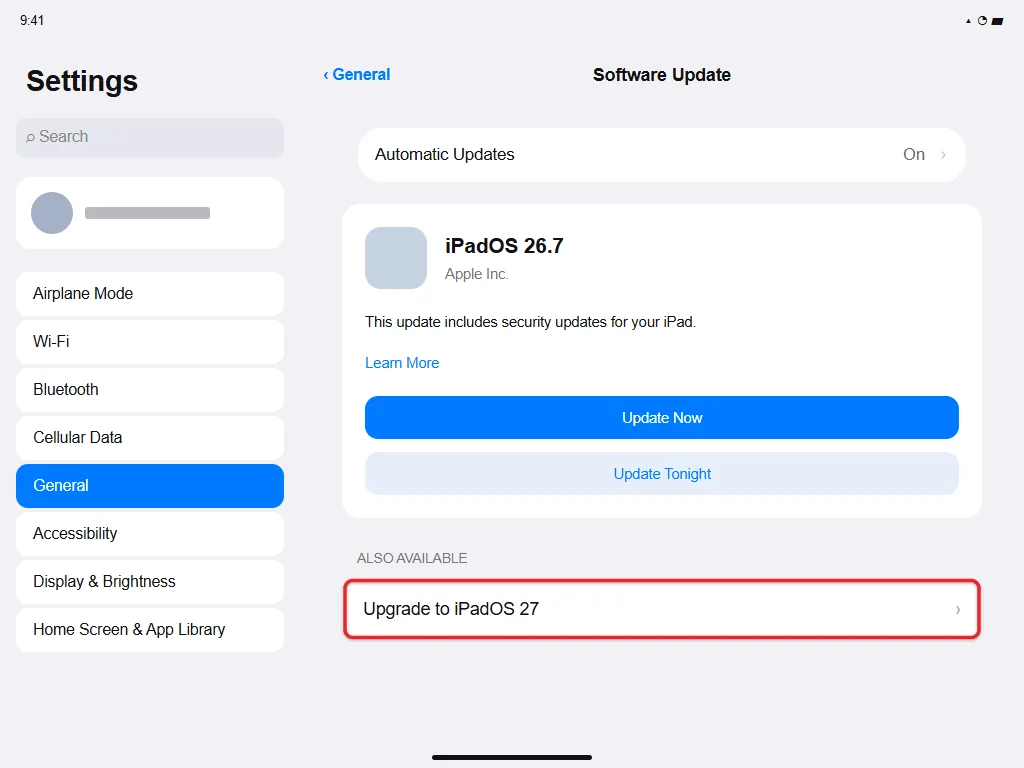
- Tap Download and Install. If the update has already downloaded, tap Install Now or Update Now.
- Enter your passcode and agree to the terms if asked.
- Wait for the download and the “Preparing Update” step, then let the iPad restart. You’ll see the Apple logo and a progress bar.
- When it’s done, unlock the iPad and go back to Settings > General > Software Update. It should say your iPad is up to date.
Apple covers the same steps, plus what happens if you don’t have enough space, in its guide to updating your iPhone or iPad.
Turn On Automatic Updates
If you’d rather not check by hand, the iPad can install updates overnight.
- Go to Settings > General > Software Update > Automatic Updates.
- Turn on Automatically Install. Updates install overnight while the iPad is charging and on Wi-Fi, and you get a notice before it happens.
- If you’d rather approve each install yourself, leave Automatically Install off and turn on Automatically Download. The update downloads in the background and waits for you.
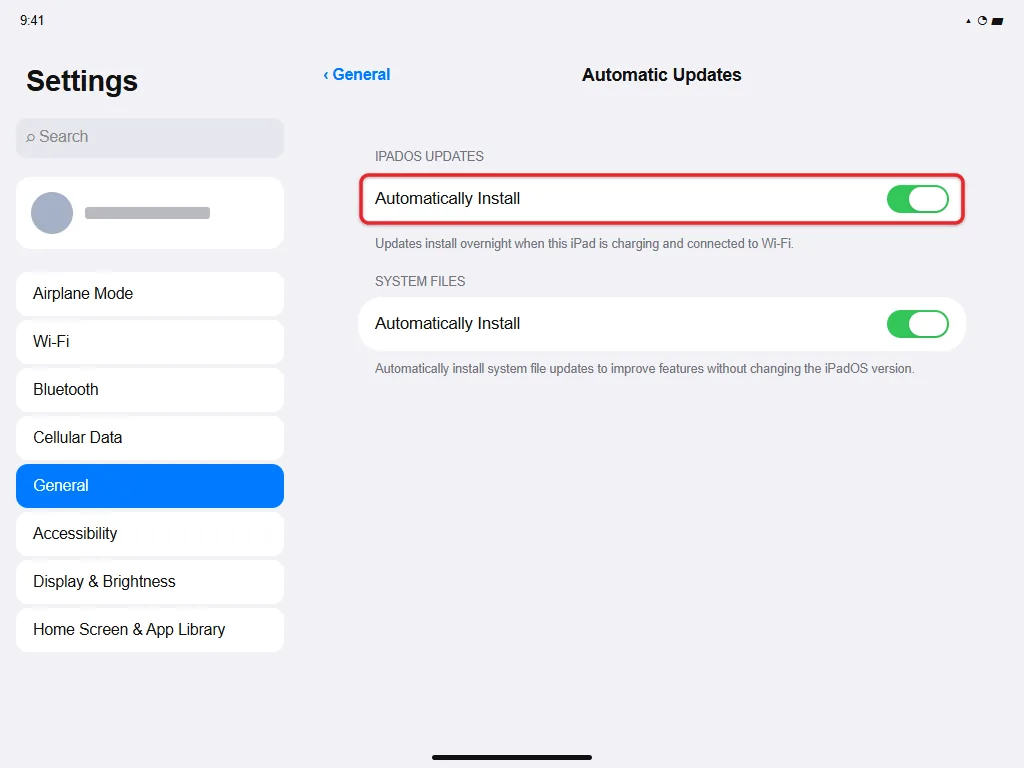
On the same screen, keep Automatically Install on under System Files. These are smaller security fixes that can install without a full iPadOS update.
Update Your iPad With a Computer
Use a computer if the iPad doesn’t have enough free space for a wireless update or the update keeps failing. The computer downloads the software instead of the iPad.
On a Mac (macOS Catalina or later):
- Connect the iPad to the Mac with a USB cable that supports data.
- Unlock the iPad and tap Trust if asked.
- Open Finder and click your iPad in the sidebar.
- Click General, then Check for Update.
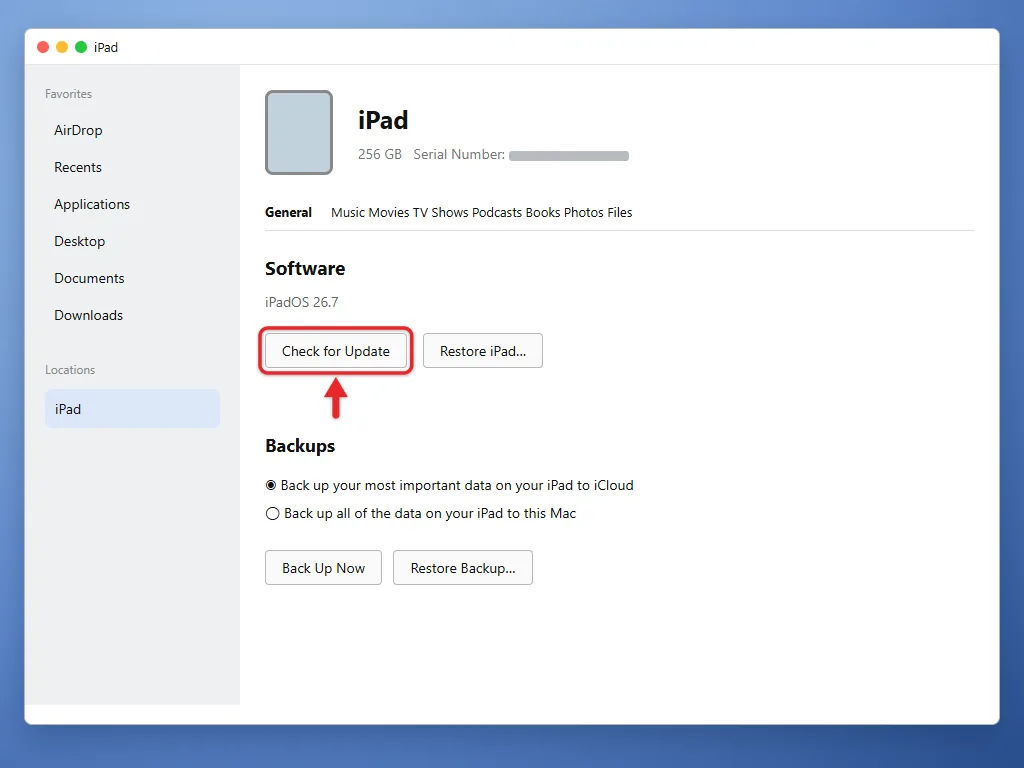
- Click Download and Update and follow the prompts.
On a Windows PC:
- Install or open the Apple Devices app from the Microsoft Store.
- Connect the iPad, unlock it, and tap Trust if asked.
- Click your iPad in the sidebar, then click General.
- Click Check for Update, then Update.
Older Macs (Mojave and earlier) and PCs without Apple Devices can use iTunes instead: click the device button, choose Summary, then Check for Update. Apple’s Finder update instructions cover the Mac method in more detail. Leave the iPad connected until it restarts.
Can My iPad Get the Latest iPadOS?
Every iPadOS release supports a list of models, and older iPads drop off the list over time. If Software Update says you’re up to date but you don’t have the newest version, your iPad probably can’t run it.
To check your model, open Settings > General > About and look at Model Name. If you need the exact model, tap Model Number to see the A-number and match it on Apple’s iPad identification page. Then compare it with Apple’s list of supported models for the current iPadOS.
A few older examples help show how this works:
- The iPad mini 2, iPad mini 3, and the original iPad Air stopped at iOS 12 and can’t install iPadOS 13 or later.
- The iPad Air 2 and iPad mini 4 can run iPadOS 15 but not iPadOS 16.
An unsupported iPad still gets security updates for a while on its last version, and Software Update will show them. Resetting the iPad or using a computer can’t install a version the hardware doesn’t support.
If the Update Won’t Install
Not enough storage
The update screen tells you how much space it needs. If the iPad offers to remove apps temporarily, tap Continue and it reinstalls them afterward. Otherwise, go to Settings > General > iPad Storage to free up space, or use the computer method above. Our guide to checking how much storage is left on your iPad shows where to look.
“Unable to Check for Update” or “Unable to Verify Update”
Make sure Wi-Fi is working, turn off any VPN, and try again. If a downloaded update keeps failing, go to Settings > General > iPad Storage, tap the update in the list, and tap Delete Update. Then return to Software Update and download it again.
The update is stuck
The progress bar can sit still for a long time. Leave the iPad plugged in and give it at least an hour before doing anything. If it still won’t finish or start up, follow Apple’s troubleshooting guide for updates.
The computer can’t see the iPad
Unlock the iPad and tap Trust, try another cable or USB port, and update the Apple Devices app or macOS.
Frequently Asked Questions
Will updating my iPad delete anything?
No. A normal update keeps your apps, photos, and settings. Back up first anyway, just in case.
How do I see which version I have now?
Go to Settings > General > About and look at the iPadOS Version line.
Does a software update also update my apps?
No. Apps update through the App Store. See how to update all your apps on iPhone or iPad.
How do I update Safari on my iPad?
Safari updates along with iPadOS, so installing the latest software update also gives you the latest Safari your iPad can run.

Matthew Burleigh is the founder, head writer, and editor of Solve Your Tech, which he launched in 2012. He has written technology tutorials since 2008 and worked in IT since 2003, including small-business support, IT management, and consulting. He holds Bachelor’s and Master’s degrees in Computer Science from Arizona State University.
Matthew writes practical guides for Windows, iPhone and iPad, Microsoft Office, Outlook, Google apps, and Android. Solve Your Tech’s guides are checked step by step against the device or app maker’s own documentation and tested on his own devices whenever he has the hardware or software, with clear steps, sources, and update dates.
Read more about Matthew and how Solve Your Tech writes and updates its guides, or report a correction.