To put a Plantronics headset in Bluetooth pairing mode, use the procedure for its exact model. On a Voyager 5200, turn it on and hold the Call button until you hear “pairing” and the lights flash red and blue. A BackBeat GO 2 instead starts powered off and uses the power button. There is no single button sequence for every Plantronics headset.
These steps cover the Plantronics and Poly headsets HP still documents (Voyager 5200, Voyager Legend, Voyager Focus 2, Voyager 4300 UC, BackBeat GO 2 and BackBeat FIT 3100/3200), plus general patterns for older models. Plantronics merged with Polycom to form Poly, and Poly is now part of HP, so current manuals and support pages for these headsets are on HP’s site.
Find Your Headset Model
- Find the model name. Check the box, the receipt, or the label on the headset. On many models it is printed inside the earcup, on the headband, or near the charging port.
- Charge the headset. A low battery can stop it from entering pairing mode.
- Know the difference between pairing and reconnecting. Turning a headset on usually reconnects it to a device it already knows. Pairing mode is the separate state that makes it discoverable to a new phone or computer.
- Watch for the signal. Most models say “pairing” and flash red and blue. A few flash red and white. A plain blue flash usually means the headset is on or connected, not ready to pair.
- Keep it close. Stay within a few feet of the phone or computer during setup.
Quick Reference by Model
| Model | Start with the headset | Hold | Pairing light | Name on your phone |
|---|---|---|---|---|
| Voyager 5200 | On | Call button | Red and blue | Poly V5200 Series |
| Voyager Legend (classic) | On | Call button | Red and blue | PLT_Legend |
| Voyager Focus 2 | Off | Power switch, slid and held | Red and blue | Poly VFOCUS2 Series |
| Voyager 4300 UC | Off | Power switch, slid and held | Red and blue | Poly V43XX Series |
| BackBeat GO 2 | Off | Power button, 5 to 6 seconds | Red and blue | PLT_BBTGO2 |
| BackBeat FIT 3100/3200 | Off (or out of the case the first time) | Right earbud | Red and white | PLT BBFIT31XX Series |
Older firmware can show a slightly different name, such as “PLT V5200 Series.” Pick the entry that matches your model.
Voyager 5200: Use the Call Button
- Turn the headset on. For a new device, press and hold the Call button until you hear “pairing.” The headset lights flash red and blue.
- Open the phone’s Bluetooth settings and select Poly V5200 Series.
- If the phone requests a passcode, enter 0000. Wait for the successful-pairing announcement; the headset lights stop flashing.
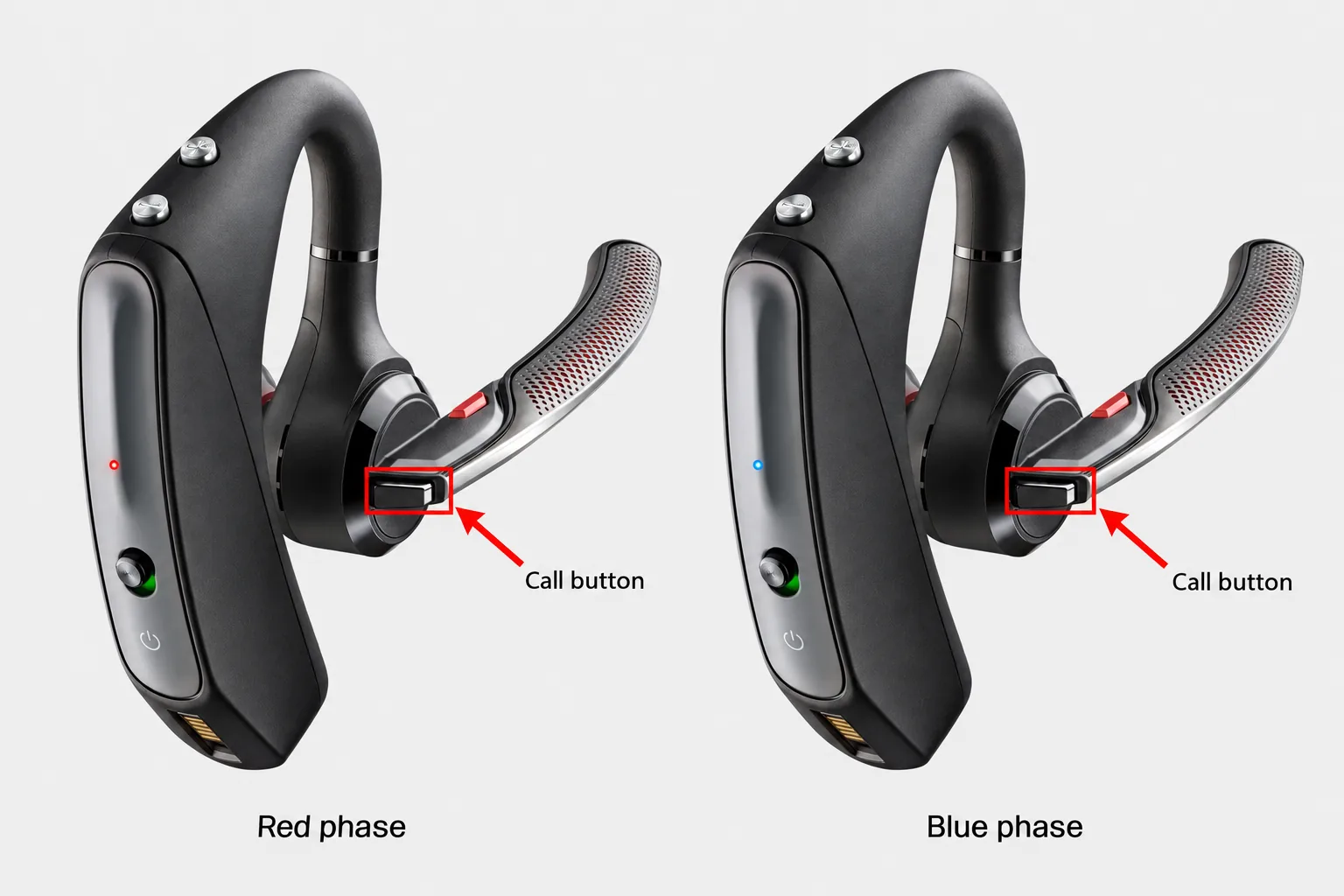
The first time you turn on a Voyager 5200, it can enter pairing mode automatically. For later pairings, hold the Call button as shown above. Holding the power switch does not start pairing on this model. These steps follow HP’s Voyager 5200 pairing instructions.
Classic Voyager Legend: Turn It On, Then Hold Call
- Turn on the classic Voyager Legend headset and put it on.
- Hold the Call button until you hear “pairing.”
- Search in the phone’s Bluetooth settings and choose PLT_Legend. Enter 0000 only if requested. Wait for the successful-pairing announcement.
Its first power-on can start pairing automatically. HP also documents a voice-command option. These are classic Voyager Legend instructions; check the manual if your model is Legend 30, Legend 50, or another variant.
BackBeat GO 2: Start With the Headset Off
- Make sure the BackBeat GO 2 is powered off.
- Hold its power button for about five to six seconds, until the indicator flashes red and blue, then release it.
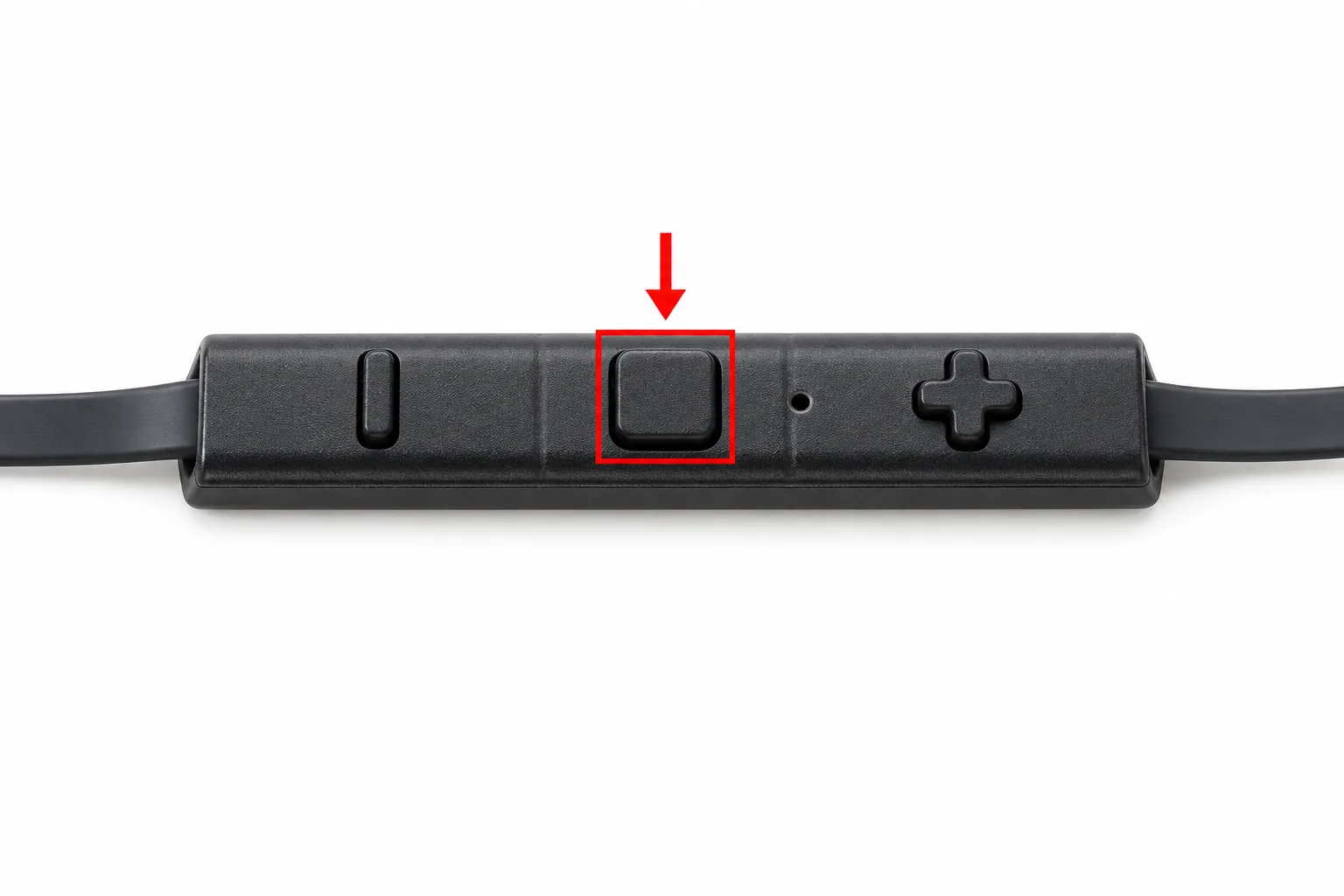
- Search for Bluetooth devices on your phone and select PLT_BBTGO2. If asked for a passcode, enter 0000.
Start with the headset off. If it’s already on, holding the power button turns it off instead of starting pairing. HP’s BackBeat GO 2 pairing guide confirms the timing and device name.
BackBeat FIT 3100 and 3200: Use the Right Earbud
For first-time pairing, take the earbuds out of their charging case. The right earbud flashes red and white. Open the phone’s Bluetooth device list and select the headset. HP lists PLT BBFIT31XX Series in its pairing instructions; confirm the name against your exact model’s manual if it differs.
For another device or to pair again, start with the headset powered off, then click and hold the right earbud until you hear “pairing.” Its indicator flashes red and white, not red and blue. Continue in the phone’s Bluetooth settings. See HP’s BackBeat FIT 3100/3200 instructions.
Voyager Focus 2 and Voyager 4300 UC: Slide and Hold the Power Switch
These two headsets use the same move. Slide the Power switch away from the off position and keep holding it until you hear “pairing” and the LEDs flash red and blue. Then release the switch and choose the headset on your phone:
- Voyager Focus 2: select Poly VFOCUS2 Series. See HP’s Voyager Focus 2 UC user guide.
- Voyager 4300 UC: select Poly V43XX Series. See HP’s Voyager 4300 UC user guide.
You’ll hear “pairing successful” when it connects, and the LEDs stop flashing.
Older Models Without Voice Prompts
Many older Plantronics headsets, such as the Voyager Pro and older Explorer and Discovery models, have no “pairing” announcement. They usually fall into one of three types, based on their controls:
- Sliding on/off switch: turn the headset on, then hold the Call button for about five to six seconds.
- One button for both power and calls: start with the headset off, then hold that button for about five to six seconds.
- Separate power button: start with the headset off, then hold the power button for about five to six seconds.
In each case, release the button when the light alternates red and blue (red and white on a few models), then pair from your phone. If the light only flashes blue, keep holding a little longer or start again from the other power state. The manual for your exact model is the final word, since a few older headsets use button combinations instead.
Finish the Connection on Your Phone
- Put the headset in pairing mode using its model’s procedure above.
- On an iPhone or iPad, open Settings > Bluetooth and turn Bluetooth on. On Android, swipe down from the top of the screen, touch and hold Bluetooth, and tap Pair new device. Google’s Android Bluetooth help notes that menu names can vary by phone.
- Tap the headset’s name when it appears and complete any pairing prompt. Use the passcode specified by its manual if one is requested; for most Plantronics headsets it is 0000, and many phones never ask.
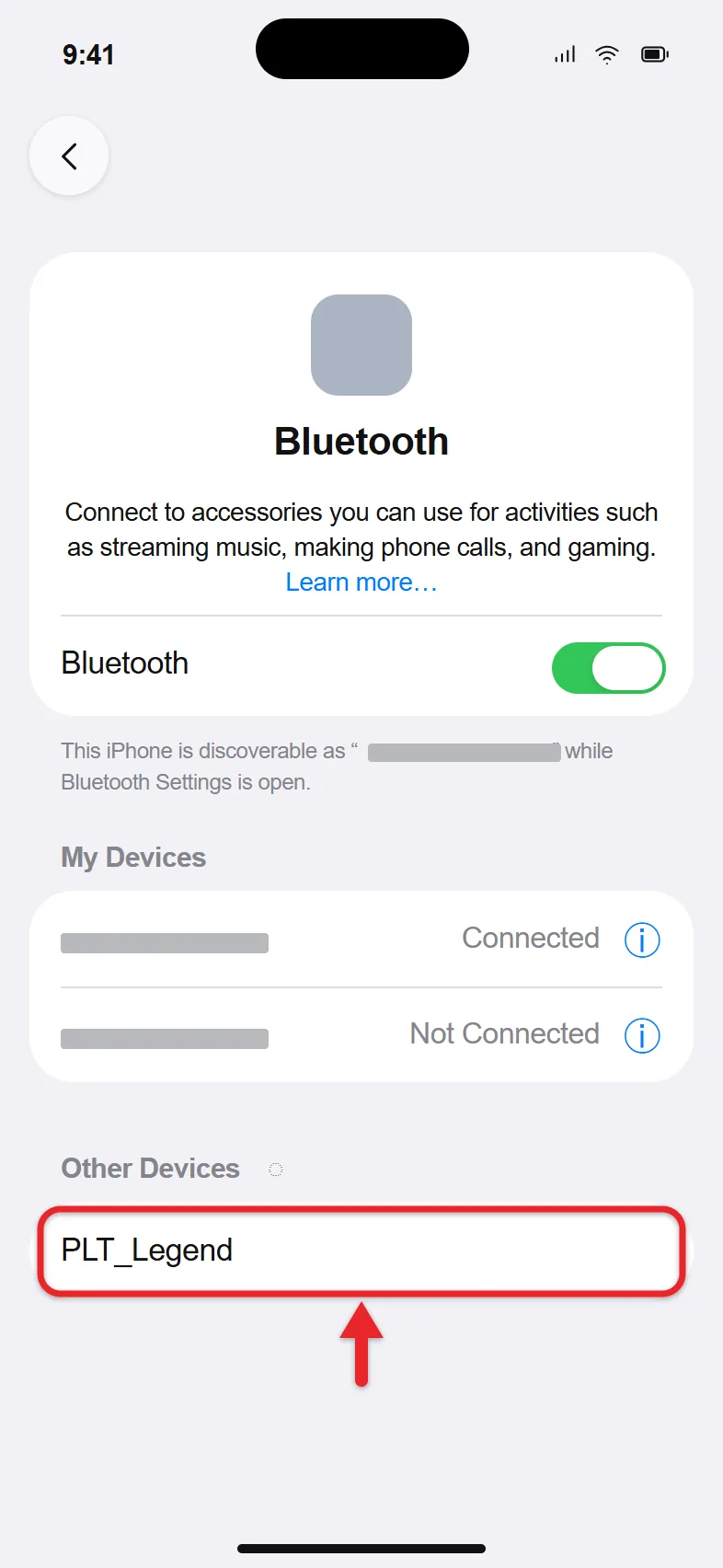
- Check that the headset shows as connected. Try a short audio clip at a comfortable volume and, if you need calls, check the call’s audio selection separately.
Apple’s Bluetooth accessory instructions explain discovery and passcodes. For the phone-side steps and the difference between pairing a new headset and reconnecting a saved one, read the iPhone Bluetooth headphones guide. Its Sony button sequences apply to those Sony models, so keep using the Plantronics controls above. To use the headset with a watch instead, you can pair Bluetooth headphones with an Apple Watch.
Pair With a Windows PC or Mac
Without a USB adapter (built-in Bluetooth):
- Windows 11: Put the headset in pairing mode. Select the Network, Sound or Battery icon near the clock, select Manage Bluetooth devices next to the Bluetooth tile, and choose the headset under New devices. Microsoft’s Bluetooth pairing guide also covers what to do if it doesn’t appear. If Bluetooth itself is missing, you can install a Bluetooth driver in Windows 11.
- Mac: Put the headset in pairing mode, open Apple menu > System Settings > Bluetooth, hold the pointer over the headset and click Connect (the Mac Bluetooth guide covers these steps).
With a Poly Bluetooth USB adapter: Many UC models ship with an adapter that is already paired to the headset. For the Voyager 5200 adapter setup, turn on the headset and insert the adapter into the computer. A solid adapter light and the “PC connected” announcement indicate a connection. Follow HP’s Voyager 5200 computer instructions for that setup.
If a BT700 adapter loses its pairing or you bought it separately, HP’s Voyager Focus 2 and 4300 UC guides say to re-pair it with the free HP Poly Studio desktop app:
- Insert the adapter into the computer and wait for it to be recognized.
- Put the headset in pairing mode.
- Open HP Poly Studio and select Poly BT700.
- Select Pair new device. The adapter flashes red and blue.
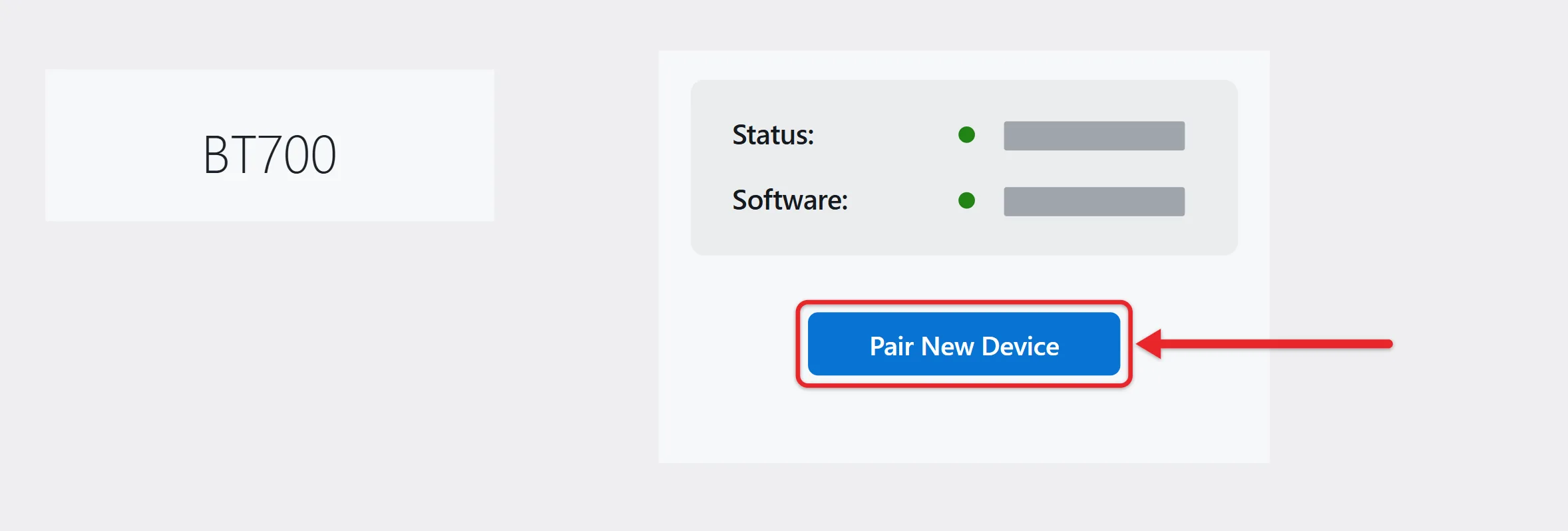
- Wait for “pairing successful” and “PC connected.” The adapter light turns solid.
Phone pairing and USB adapter pairing are separate procedures, so pairing your phone doesn’t affect the adapter.
Use More Than One Device
Whether you can use more than one device depends on the model. The Voyager 5200, Voyager Focus 2 and Voyager 4300 UC support up to eight saved devices and two simultaneous connections, and the USB adapter counts as one of the two connections. Saved pairings, active connections, and simultaneous audio playback are different things. Other Plantronics headsets may have different limits.
For example, if your Voyager 5200 is already connected to a computer and you want to add a new iPhone, hold its Call button until you hear “pairing,” then select it in the iPhone’s Bluetooth settings. If two devices are already connected, turn off Bluetooth on one of them before pairing a third.
If the Headset Does Not Appear or Will Not Connect
Check the starting state and button first. A power light doesn’t mean the headset is ready to pair. Check your model and its pairing announcement or light instead of holding a different button longer. Charge it and try turning it off and back on before repeating the correct steps.
Search while the lights are flashing. Pairing mode times out after a short while. If the red and blue flashing stops before your phone finds the headset, start pairing mode again and search right away.
Check existing connections. A nearby phone or computer may reconnect automatically. Disconnect the headset there while setting up the new device. If your phone already lists the headset as a saved device, try selecting that entry to reconnect instead of expecting a new entry every time.
Remove an old pairing only when needed. If reconnecting fails on an iPhone or iPad, Apple’s connection troubleshooting suggests unpairing and pairing again. In Settings > Bluetooth, tap the information button beside the headset, then Forget This Device and confirm. The steps for deleting a Bluetooth device on an iPhone show the screens. This removes that saved pairing, so you must put the headset back in discovery mode and set it up again.
Reset only as a last step. Reset button combinations differ by model, and a reset clears the headset’s saved pairings. Use the reset steps in your model’s HP user guide rather than a combination you found for a different headset. Updating the firmware with HP Poly Studio (desktop) or the HP Poly Studio mobile app can also fix connection bugs on supported models.
Plantronics Pairing Questions
What is the Plantronics pairing code?
When a phone asks, the code is usually 0000 (four zeros). Most current phones pair without asking for a code.
How do I know the headset is in pairing mode?
Newer models say “pairing” and flash red and blue (red and white on the BackBeat FIT 3100/3200). A slow or steady blue light normally means the headset is on or connected, not discoverable.
Are Plantronics and Poly headsets the same?
Yes. Plantronics became Poly, and Poly is now part of HP. That’s why your phone may list a Plantronics headset with a “Poly” or “PLT” name, and why support for these models is on HP’s site.
Do I need to pair again every time I turn the headset on?
No. Once paired, the headset reconnects to its saved devices when it powers on and Bluetooth is on. Use pairing mode only to add a new device or to fix a pairing you deleted.
If your model isn’t listed here, search for its name on HP’s support site and follow the pairing section of its user guide.

Matthew Burleigh is the founder, head writer, and editor of Solve Your Tech, which he launched in 2012. He has written technology tutorials since 2008 and worked in IT since 2003, including small-business support, IT management, and consulting. He holds Bachelor’s and Master’s degrees in Computer Science from Arizona State University.
Matthew writes practical guides for Windows, iPhone and iPad, Microsoft Office, Outlook, Google apps, and Android. Solve Your Tech’s guides are checked step by step against the device or app maker’s own documentation and tested on his own devices whenever he has the hardware or software, with clear steps, sources, and update dates.
Read more about Matthew and how Solve Your Tech writes and updates its guides, or report a correction.