If you hear callers on speakerphone but not when the iPhone is against your ear, start with the call’s audio destination and earpiece—not a factory reset. During a call, turn up the volume, tap Audio and choose iPhone if another device is selected, then try a second call. Remove a case or screen protector that covers the top receiver opening. If it is dirty, Apple recommends a clean, dry, small soft-bristled brush. Do not blow compressed air or put liquid or a pointed object into the opening.
These checks apply to ordinary iPhone calls and FaceTime audio. The call controls were verified against Apple’s iOS 26 and iOS 27 guides; button appearance can differ on older software or in other calling apps.
First, identify which sound is missing
The receiver at the top of the iPhone is the private-call earpiece. Speakerphone uses a different sound path. If the other person can hear you but you cannot hear them except on speaker, follow the checks below. If they cannot hear you, the microphone needs a different diagnosis. If both earpiece and speakerphone fail, or calls drop or crackle, test the network and contact Apple or your carrier as appropriate.
Check call volume and the selected output
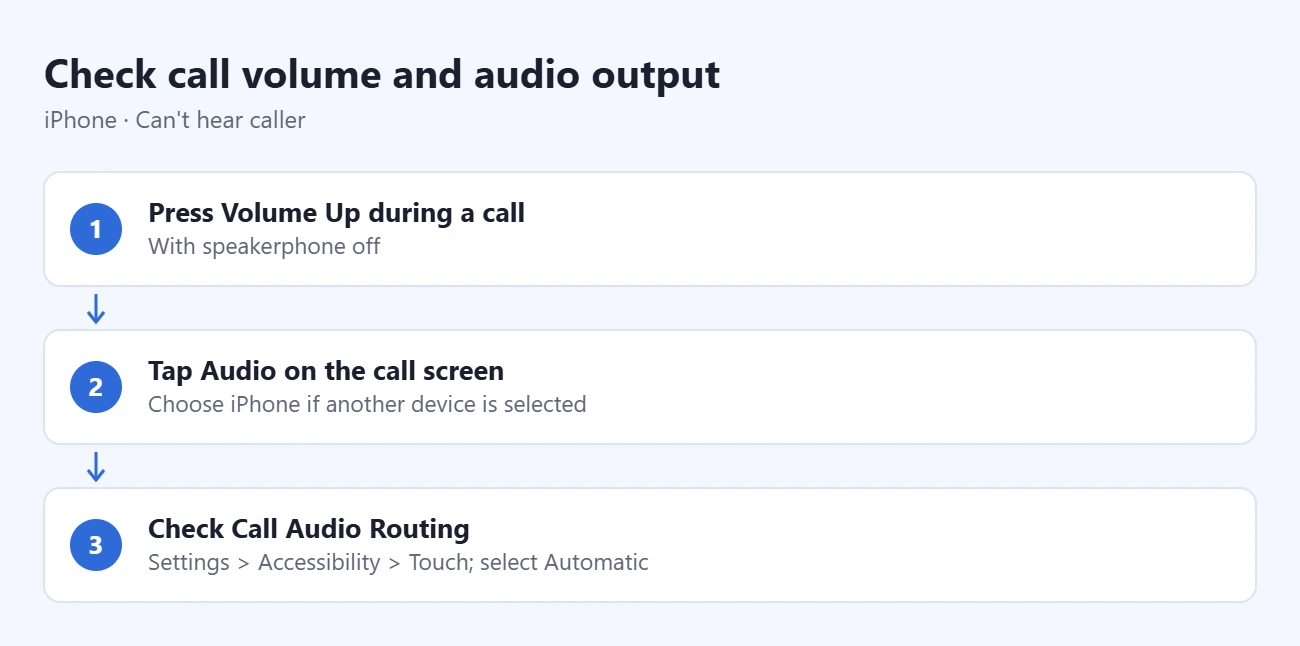
- Make a call in a place where you can safely test audio. While the call is active and speakerphone is off, press the Volume Up button. Call volume is adjusted during the call; the ringtone slider is not a substitute for this check.
- Return to the active call screen; if you see only a call banner, swipe down on it. Tap Audio (or the audio-output control). If AirPods, a car, a hearing device or another Bluetooth accessory is selected, switch to iPhone and test again. Disconnect an accessory temporarily if the routing is unclear.
- Open Settings > Accessibility > Touch > Call Audio Routing. If it is set to Speaker or a Bluetooth destination unintentionally, select Automatic and retry. Apple documents this setting for phone and FaceTime calls in its call-audio routing guide.
Apple’s in-call controls guide distinguishes volume and audio destination from Mute. Mute stops your microphone from reaching the other person; toggling it does not restore the sound you hear.
If calls start on the loudspeaker but the receiver works when selected, follow how to stop iPhone calls from starting on speaker. That setting problem is different from a receiver that remains silent after selection. If you want calls to start that way on purpose, here is how to make an iPhone answer calls on speaker automatically.
Changing the destination is a test, not proof that Bluetooth is defective. Do not forget or unpair every accessory unless you have isolated a specific one.
Check the receiver without damaging it
- Remove a case, film or screen protector that may cover the narrow receiver opening above the display. Place another test call before cleaning.
- Inspect the opening in good light. Before cleaning, disconnect cables and turn the phone off using Settings > General > Shut Down. If needed, gently clean it with a small, clean, dry, soft-bristled brush. Keep moisture and debris out of the opening.
- Turn the iPhone back on, then test a call again. If sound remains faint or distorted, stop rather than scraping the mesh or trying stronger cleaning methods.
Apple’s speaker and receiver troubleshooting recommends removing obstructions and a clean, dry soft brush. Apple’s iPhone cleaning instructions also say to avoid compressed air and moisture in openings. Do not scrape the mesh with a toothpick or insert a tool.
Separate a call problem from an earpiece problem
Call another person or try again in a different location. If only one caller or location has the issue, the connection or their audio may be involved. Try a FaceTime audio call if available; compare what happens through the receiver and through speakerphone. If the receiver is silent across call types after checking routing, volume and blockage, a receiver fault becomes more plausible. These observations are clues, not a remote hardware diagnosis.
Restart, then check for an update
- End your test call. Open Settings > General > Shut Down, then drag the power-off slider. This provides a common route without mixing the different button combinations used by iPhone models.
- After the phone turns off, press and hold its power button until the Apple logo appears. Make another call and compare receiver and speaker audio. Apple explains this in its power-off and restart guide.
- Back up your iPhone before installing an update. Go to Settings > General > Software Update. Check the installed version and whether an update is offered. Follow the onscreen download and installation instructions if you choose to update; see Apple’s iOS update guide.
Retest after each change so you know what helped. Updating is sensible maintenance, but it is not a guaranteed fix for a blocked or failed receiver.
When to get help—and what not to reset
If the receiver stays silent, crackles or is extremely faint across callers and call apps while speakerphone works, contact Apple Support about service. Mention the results of the output, volume, obstruction and second-call tests. If both audio modes fail only on cellular calls or in one location, contact your carrier after checking reception.
Do not erase the iPhone or reset network settings just because speakerphone works. Erasing removes local content and can create needless recovery work; a network reset removes saved network settings and is a poor first test for an isolated receiver path. Apple may suggest further diagnostics after these non-destructive checks. If you rely on the phone for urgent communication, use speakerphone, a working headset or another phone while arranging help.
Quick answers
Why can I hear music but not a caller at my ear?
Music on the main speaker and a private call through the top receiver use different output paths. Check the in-call Audio selection, in-call volume and top opening before assuming the whole phone has no sound. If music and videos are quiet as well, see how to raise the maximum volume on an iPhone.
Will Silent mode or Do Not Disturb fix this?
Those controls affect alerts and interruptions, not a blocked receiver or the in-call audio destination. They are worth checking for missed calls, but not the central test for this symptom.
Should I use compressed air?
No. Apple’s published receiver-cleaning step specifies a small, clean, dry, soft-bristled brush. If gentle cleaning does not help, seek service instead of forcing air, liquid or tools into the opening.

Matthew Burleigh has been writing tech tutorials since 2008. His writing has appeared on dozens of different websites and been read hundreds of millions of times.
After receiving his Bachelor’s and Master’s degrees in Computer Science he spent several years working in IT management for small businesses. However, he now works full time writing content online and creating websites.
His main writing topics include iPhones, Microsoft Office, Google Apps, Android, and Photoshop, but he has also written about many other tech topics as well.