To turn on network discovery in Windows 11, open Settings > Network & internet > Advanced network settings > Advanced sharing settings, expand Private networks, and turn on Network discovery. It only works while your current network is set to Private, so set your home network to Private first.
Network discovery lets your PC see other computers, printers, and storage drives on your network, and lets them see it. You need an administrator account to change it.
Step 1: Set Your Home Network to Private
Windows treats new networks as Public, which keeps your PC hidden from other devices. Change it only for networks you trust, like your home or office. For the other connection options, see how to change adapter settings in Windows 11.
- Press Windows key + I to open Settings.
- Select Network & internet.
- Select Wi-Fi (or Ethernet for a wired connection), then select your network’s properties.
- Under Network profile type, select Private network.
Step 2: Turn On Network Discovery
- Go back to Network & internet and select Advanced network settings.
- Under More settings, select Advanced sharing settings.
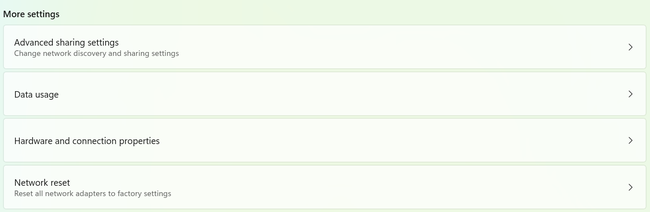
- Expand Private networks and turn on Network discovery.
- Leave Set up network connected devices automatically checked if you want Windows to add network printers and other devices on its own.
- Turn on File and printer sharing if you want other PCs to open folders or printers you share.
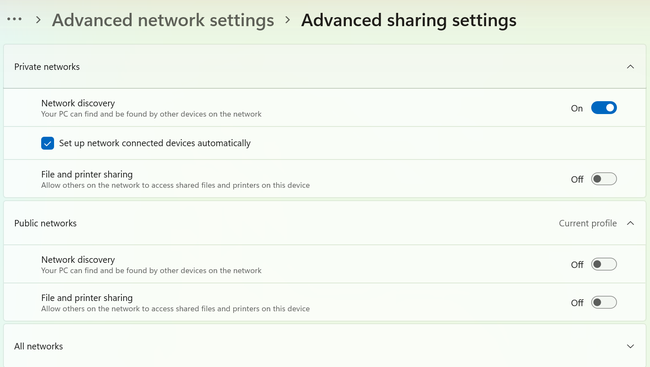
Other computers and devices on the network now appear under Network in File Explorer. It can take a minute or two for them to show up. These steps match Microsoft’s file sharing guide. To connect to a shared folder as a drive letter, see how to map a network drive in Windows 11.
Turn On Network Discovery From the Command Line
If the switch won’t stay on, you can enable the firewall rules it uses directly. Right-click Start, select Terminal (Admin), and run:
netsh advfirewall firewall set rule group="Network Discovery" new enable=YesThen check Advanced sharing settings again. To turn it back off, run the same command with enable=No.
If Network Discovery Keeps Turning Off

- Confirm the network is set to Private. Network discovery for Public networks is off by default. A network reset can switch your networks back to Public, so check this again if you recently ran one.
- Press Windows key + R, type services.msc, and press Enter.
- Find Function Discovery Provider Host, Function Discovery Resource Publication, SSDP Discovery, and UPnP Device Host. Microsoft lists these in its file sharing guide.
- For each one, double-click it, set Startup type to Automatic, select Start if it isn’t running, and select OK.
- Open Windows Security > Firewall & network protection > Allow an app through firewall, select Change settings, and check Network Discovery for Private.
- Turn Network discovery on again in Advanced sharing settings.
If Other Devices Still Don’t Appear
- Make sure the other PCs also have network discovery turned on and are set to Private.
- Check that all devices are on the same network, not a guest network. Some routers create a guest network by default; here is how to turn off the guest network on a Cisco E1000 router as one example.
- Restart the PC and the router.
- If you use a third-party firewall or security suite, check that it allows local network traffic.
- On older NAS drives that use SMB1, Windows 11 may not see them because SMB1 is turned off by default. Update the NAS firmware rather than turning SMB1 back on, and try typing the NAS address, such as \\192.168.1.50, in the File Explorer address bar.
If a shared computer or NAS asks for a user name and password when you open it, see how to find network credentials in Windows 11.
Frequently Asked Questions
What are network discovery and file sharing?
Network discovery lets your PC see other computers and devices on the network, and lets them see it. File and printer sharing is a separate switch that lets other PCs open folders and printers you choose to share. You can have discovery on without sharing anything.
Should I turn on network discovery for public networks?
No. On public Wi-Fi at a coffee shop or airport, keep it off so strangers on the same network can’t see your PC.
Why does network discovery turn itself off?
It usually means the network is set to Public, or one of the discovery services isn’t running. Work through the steps in the section above.
If other PCs still can’t see yours after turning on network discovery, the firewall may be blocking the connection. See how to turn off the firewall on Windows 11, including the safer option of allowing a single app through.

Matthew Burleigh is the founder, head writer, and editor of Solve Your Tech, which he launched in 2012. He has written technology tutorials since 2008 and worked in IT since 2003, including small-business support, IT management, and consulting. He holds Bachelor’s and Master’s degrees in Computer Science from Arizona State University.
Matthew writes practical guides for Windows, iPhone and iPad, Microsoft Office, Outlook, Google apps, and Android. Solve Your Tech’s guides are tested on current devices or checked against official product documentation, with clear steps, sources, and update dates.
Read more about Matthew and how Solve Your Tech writes and updates its guides, or report a correction.