Windows 11 doesn’t have its own Caps Lock popup, so the on-screen “Caps Lock On” or padlock indicator comes from software your PC or keyboard maker installed. To turn it off, switch off the indicator in that maker’s app (for example, Lenovo Vantage or Logi Options+), or stop the utility that draws it, such as HP System Event Utility on HP laptops. If you hear a beep instead of seeing a popup, turn off Toggle keys in Settings > Accessibility > Keyboard.
These steps are for Windows 11 versions 24H2 and 25H2 and work the same way on Windows 10. A Microsoft support answer on Caps Lock indicators in Windows 11 confirms that these indicators come from non-Microsoft software, usually from the PC vendor, which is why the fix depends on your brand.
Find Out Which App Shows the Popup
- Press Caps Lock and look closely at the indicator. Note its style, position, and any logo. Press Caps Lock again to turn it back off.
- Match it to your computer or keyboard brand. An HP laptop almost always uses HP’s utility, a Lenovo laptop uses Lenovo’s, and so on. If the popup only appears when a particular external keyboard is plugged in, the keyboard’s software is the source.
- If you’re not sure, press Ctrl + Shift + Esc to open Task Manager, click Processes, and look for utilities from your PC or keyboard maker (names with HP, Lenovo, Dell, Acer, or Logitech in them).
Then jump to the section for your brand below.
Lenovo: Turn Off the On-Screen Display in Lenovo Vantage
Lenovo laptops show the Caps Lock and Num Lock overlay through Lenovo’s hotkey software, and Lenovo Vantage has a switch for it.
- Click Start, type Vantage, and open Lenovo Vantage.
- Click Device at the top of the window.
- Open the input settings. On recent versions, click Power under System Tools to open My Smart Settings, then click the Input & Accessories tab.
- Scroll to the bottom and turn off the Capslock or Numlock OSD toggle.
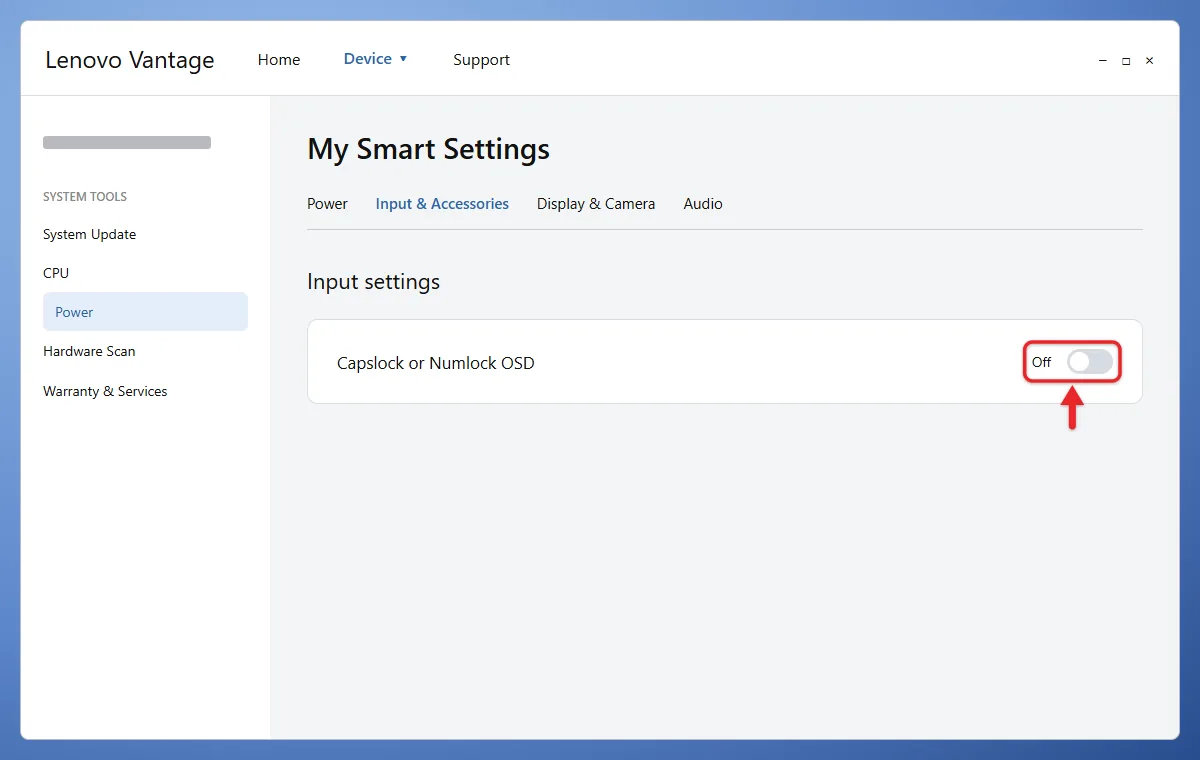
- Press Caps Lock to check that the overlay no longer appears.
If you don’t have Lenovo Vantage, or the toggle isn’t there, use the Services method below and disable the Lenovo Fn and function keys service.
HP: Turn Off HP System Event Utility
On HP laptops, the Caps Lock and Num Lock overlay comes from HP System Event Utility, which HP preinstalls to handle the function keys. HP doesn’t offer a switch for just the overlay, so the fix is to stop the utility from starting.
Before you start, know that this utility also runs some HP function keys and hotkey popups. If a function key you use stops working, turn the startup app back on or reinstall the utility from HP’s support site for your model.
- Press Windows key + I to open Settings.
- Click Apps, then Startup.
- Find HP System Event Utility in the list and switch it Off.
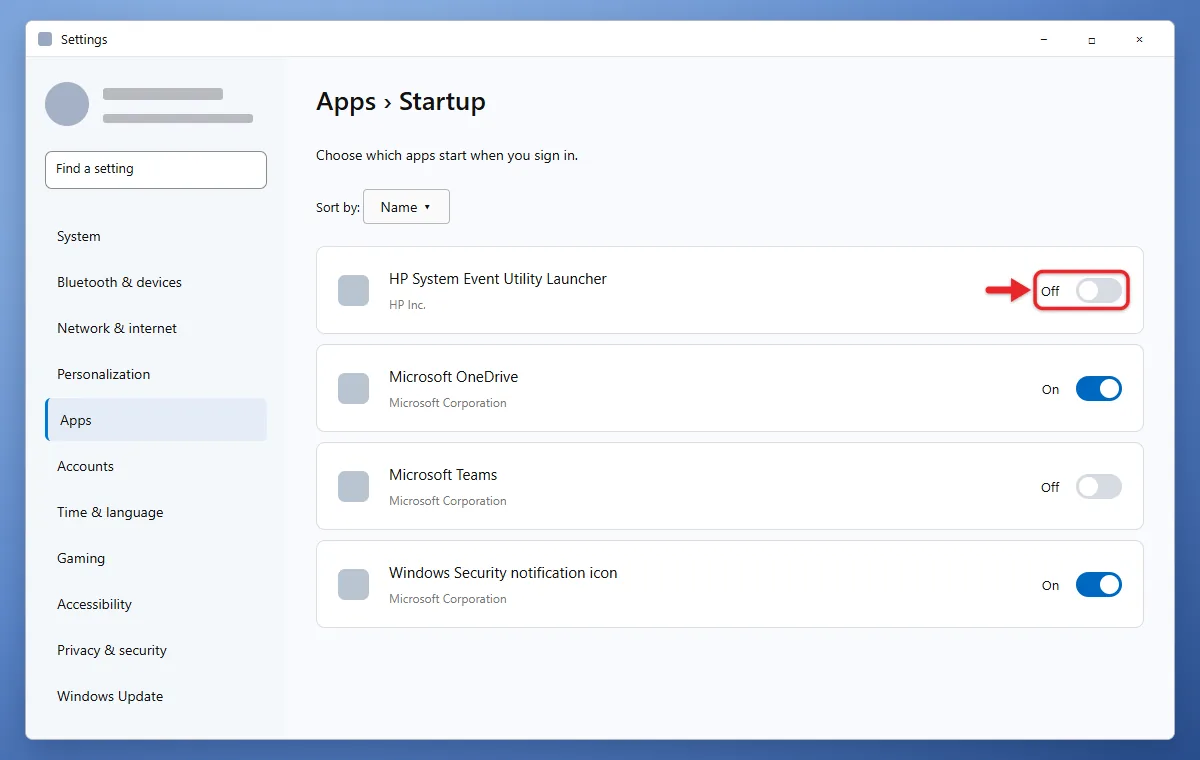
- Restart the computer and press Caps Lock to check.
If the overlay still appears after a restart, uninstall the utility: go to Settings > Apps > Installed apps, click the three dots next to HP System Event Utility, choose Uninstall, and confirm.
Dell, Acer, and Other Brands: Disable the Service
Some brands run their lock-key indicator as a Windows service rather than a regular app. You can stop it from the Services window:
- Press Windows key + R, type services.msc, and press Enter. The Services window opens.
- Find the service for your brand and double-click it: Dell Peripheral Manager for Dell keyboards and mice, Quick Access Service on Acer laptops, or Lenovo Fn and function keys on Lenovo laptops without the Vantage toggle.
- Set Startup type to Disabled.
- Click Stop if the service is running, then click OK.
- Restart the computer and press Caps Lock to check.
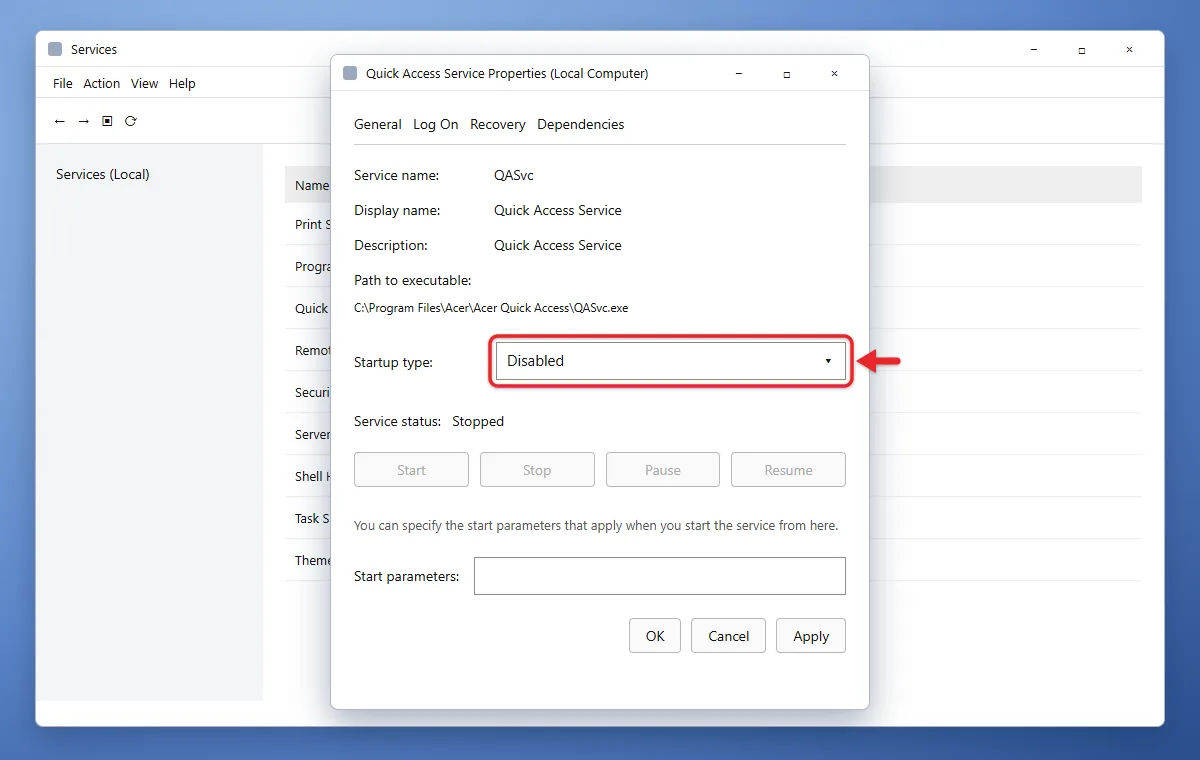
To undo this, open the same service, set Startup type back to Automatic, and click Start. Disabling one of these services can also turn off other features it handles, such as hotkey shortcuts or keyboard backlight popups, so only disable the one that matches your hardware.
Logitech Keyboards: Turn Off Notifications in Logi Options+
If the popup appears only when you use a Logitech keyboard, it comes from the Logi Options+ app.
- Open Logi Options+ from the Start menu or the system tray.
- Click your keyboard.
- Open its settings and turn off the Caps Lock and Num Lock on-screen notification option.
- Press Caps Lock to check.
Other gaming and accessory brands, such as Razer and Corsair, put a similar option in their keyboard software.
Turn Off a Windows Notification Banner About Caps Lock
If the alert slides in from the corner of the screen like other Windows notifications and names an app, you can mute it in Windows itself:
- Open Settings > System > Notifications.
- Under Notifications from apps and other senders, find the app named in the alert.
- Switch that app Off, or click it and turn off Show notification banners to keep the alerts in the notification center only.
Microsoft explains these controls in its guide to notifications and Do Not Disturb in Windows. A floating overlay from a vendor utility doesn’t use Windows notifications, so this won’t hide it.
Be careful not to switch off the apps you rely on for reminders on Windows 11, such as Microsoft To Do or Outlook.
For other banners and browser alerts, follow the steps to stop pop-ups on Windows 11.
If notifications stop for every app at once, check whether you need to turn off Do not disturb in Windows before changing app settings.
Stop the Caps Lock Beep
A tone every time you press Caps Lock comes from the Toggle keys accessibility feature.
- Open Settings > Accessibility > Keyboard.
- Turn Toggle keys off.
Toggle keys is one of the keyboard accessibility settings, and it plays a sound for Caps Lock, Num Lock, and Scroll Lock. Leave it on if you often hit Caps Lock by accident, since the beep warns you.
Some beeps come from inside an app instead. For example, here is how to stop QuickBooks from beeping when you save.
If the Popup Keeps Coming Back
- A software update turned it back on. PC maker updates often re-enable startup apps and services. Repeat the steps for your brand.
- You disabled the wrong app. Turn it back on and recheck Task Manager for another utility from your PC or keyboard maker.
- It’s still there after a restart. Check Settings > Apps > Startup again. Some utilities run from both a startup entry and a service, so you may need to switch off both.
For keyboard problems in general, read about troubleshooting keyboard issues in Windows 11.
Frequently Asked Questions
Is there a Windows 11 setting to hide the Caps Lock indicator?
No. Windows 11 doesn’t draw a Caps Lock overlay, so there’s no switch for it in Settings. The indicator comes from software your PC or keyboard maker installed.
Will turning off the notification disable the Caps Lock key?
No. The key still works normally. You only lose the on-screen reminder. Most laptops also have a small light on or near the Caps Lock key that shows when it’s on.
If you’d rather Caps Lock did something else, you can change keybinds on Windows 11 with PowerToys.
Is it safe to disable HP System Event Utility?
It’s safe for Windows, but some HP function keys or hotkey popups may stop working. You can turn it back on in Settings > Apps > Startup or reinstall it from HP’s support site.
How do I turn the Caps Lock popup back on?
Reverse the step you used: turn the toggle back on in your maker’s app, switch the startup app back on, or set the service’s Startup type to Automatic and restart.

Matthew Burleigh is the founder, head writer, and editor of Solve Your Tech, which he launched in 2012. He has written technology tutorials since 2008 and worked in IT since 2003, including small-business support, IT management, and consulting. He holds Bachelor’s and Master’s degrees in Computer Science from Arizona State University.
Matthew writes practical guides for Windows, iPhone and iPad, Microsoft Office, Outlook, Google apps, and Android. Solve Your Tech’s guides are checked step by step against the device or app maker’s own documentation and tested on his own devices whenever he has the hardware or software, with clear steps, sources, and update dates.
Read more about Matthew and how Solve Your Tech writes and updates its guides, or report a correction.