To change the email address for a Windows 11 administrator who signs in with a personal Microsoft account, add and verify a new email alias on that same Microsoft account, then choose Make primary. You do this on Microsoft’s account website, not by replacing the Windows user.
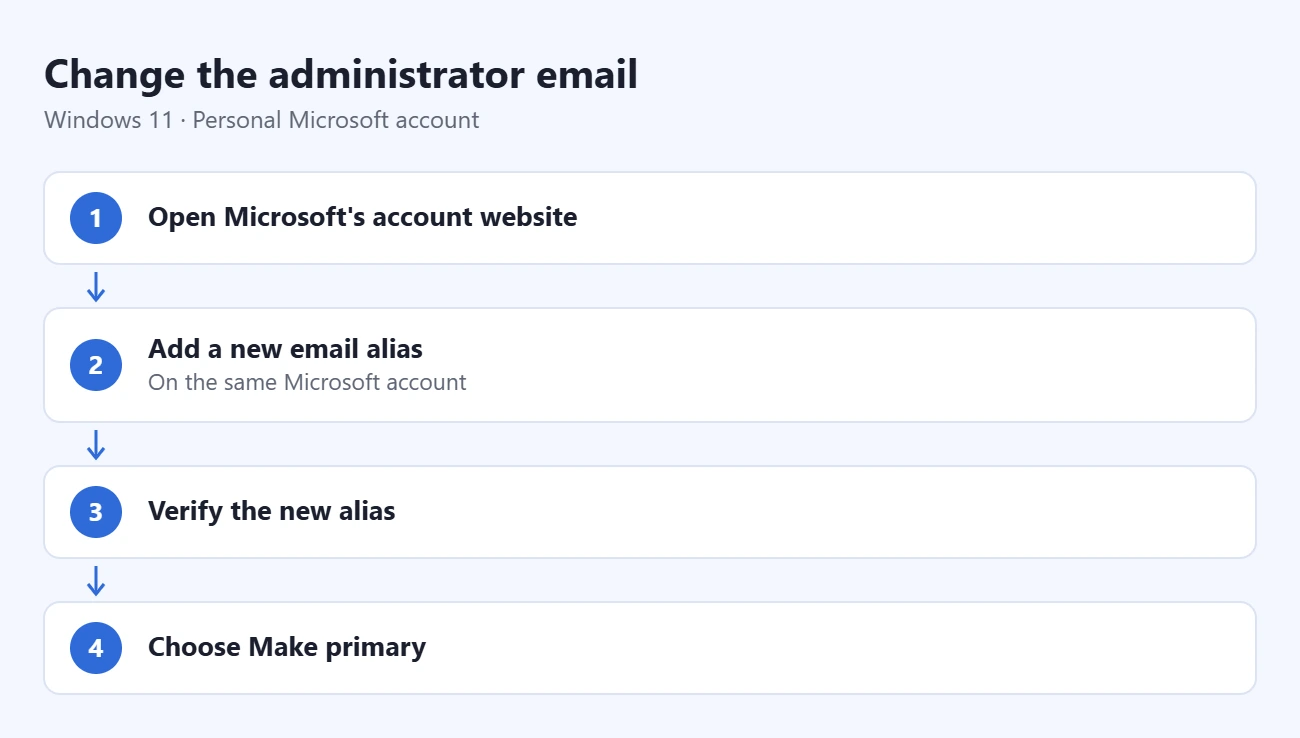
An alias is another sign-in address on the same account. These steps cover a personal Microsoft account linked to your Windows 11 profile, and the same account-website steps work on a Windows 10 PC (Windows 10 reached end of support on October 14, 2025). They do not switch you to a different account or change who has administrator rights. If you want a fresh address first, you can create a new Outlook email account.
Which Method Fits Your Goal
| What you want | Use this method |
|---|---|
| Same account, files and purchases, new sign-in address | Change the primary email (alias), below |
| A completely different Microsoft account on this profile | Replace the linked account |
| Another person or address with admin rights, keeping yours | Add a second administrator |
Check Which Kind of Account You Use
Press Windows key + I, open Accounts, and select Your info. Look under your name:
- An email address (personal Microsoft account): Use the alias method below to change its primary email while keeping the account.
- Local account: There is no Microsoft sign-in email to edit. The Sign in with a Microsoft account instead link connects the profile to an account; it is not a step you need when you already use one.
- Work or school account: Ask your organization’s IT team. Personal Microsoft account aliases do not rename an organizational sign-in, and your organization may block adding its addresses.
Change the Primary Email on the Same Microsoft Account
Have your current Microsoft account password and verification method ready. For an address you already own, make sure you can open its inbox. Keep your old alias during this change. Removing a Microsoft-domain alias, such as an Outlook.com or Hotmail address, permanently deletes it; it cannot be attached to a Microsoft account again.
1. Open your account’s alias settings
Open a browser and follow the Edit account info link in Microsoft’s email-change guide, or go to account.microsoft.com, open Your info, and select Edit account info. Sign in with the account shown in Windows. Check that the address at the top matches your Windows account, especially if the browser is already signed in with another account.
2. Add the new email address
Select Add email. Choose either a new Outlook.com address or an existing address from another provider, such as Gmail or Yahoo. Enter the address and select Add alias. You are adding a username to this account, not opening a separate Microsoft account.
3. Verify an existing email address
For an address from another provider, Microsoft sends a verification message. Open it in that inbox and follow the link, then return to the alias list and check that the address no longer shows as unverified. A new Outlook.com alias usually needs no extra verification. Microsoft’s instructions for adding an email address explain the choices.
4. Make the new alias primary
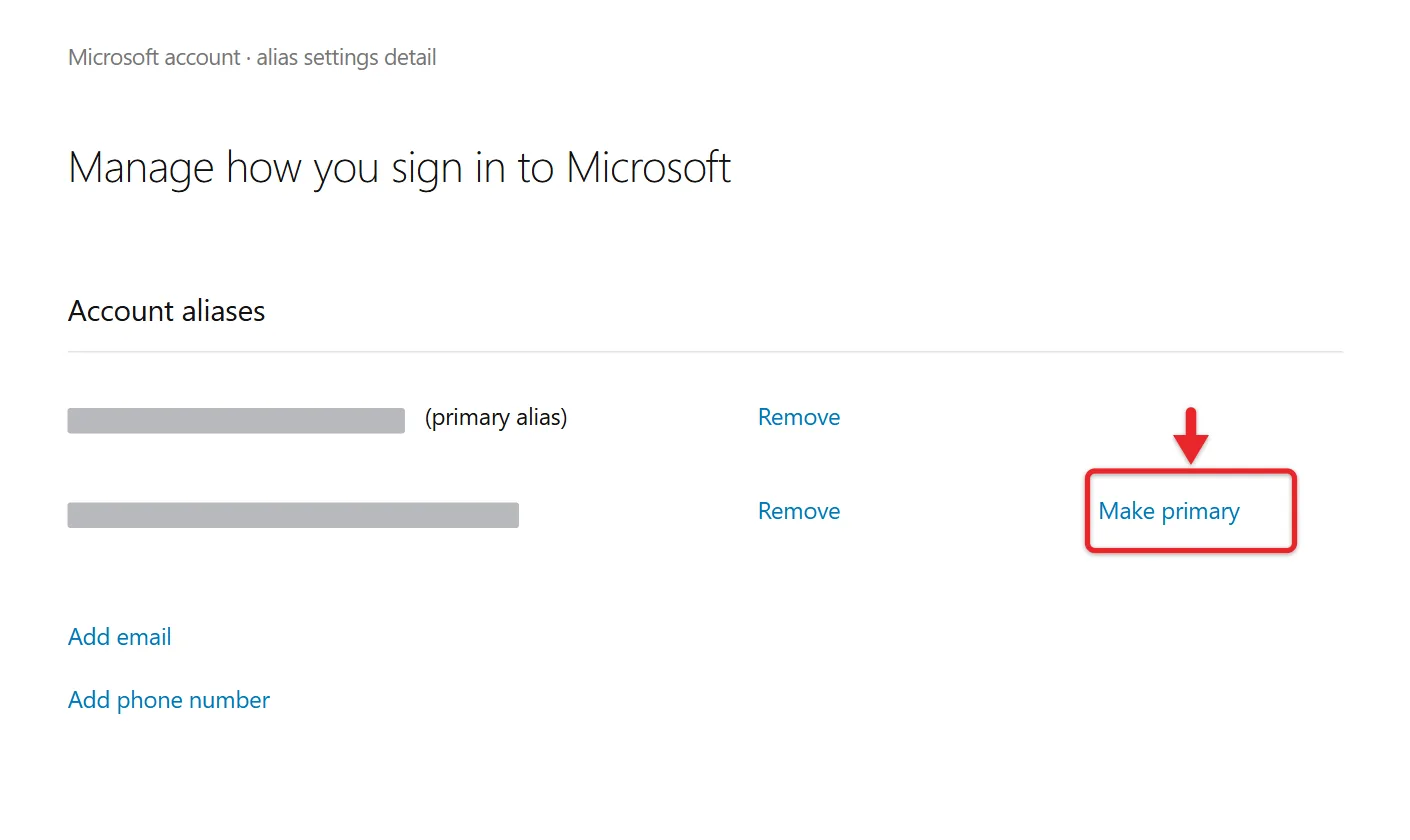
On the Manage how you sign in to Microsoft page, select Make primary beside the new address and confirm any prompt. Adding an alias does not make it primary on its own. Check that the primary label now sits beside the address you intended.
5. Confirm sign-in without deleting the old address
In a private browser window, sign in to your Microsoft account with the new address and your existing password. Then open Settings > Accounts > Your info on the PC. If Windows still shows the old address, sign out of Windows and sign back in, or restart the PC. You don’t need to delete or recreate your Windows profile.
Replace the Linked Account Instead
If your real goal is a different Microsoft account, switch the profile to a local account with Sign in with a local account instead on the Your info page, sign out, and then select Sign in with a Microsoft account instead and sign in with the other account. Microsoft documents both links in its guide to switching between a local account and a Microsoft account.
Your files and desktop apps stay, but OneDrive files, Microsoft Store purchases and subscriptions belong to the old account. To see every screen, follow the steps for changing the Microsoft account on Windows 11.
To stop using a Microsoft account on this PC entirely, remove the Microsoft account from Windows 11.
Give Another Address Administrator Rights
To let a different Microsoft account manage the PC while keeping your own:
- Open Settings > Accounts > Other users.
- Select Add account and enter the other Microsoft account’s email address.
- Select the new account, then select Change account type.
- Choose Administrator and select OK. The account now shows an Administrator label.
That user gets a new, empty profile, so their files and desktop start fresh. Microsoft’s user-account management guide recommends keeping the number of administrators low. For more on admin roles, read about giving yourself administrator rights in Windows 11.
If the Change Does Not Work
The address is already associated with another Microsoft account: You cannot add it as an alias. Aliases do not combine separate accounts. Pick another external address or create a new Outlook.com alias from the add-email screen.
You want to use an existing Outlook.com or Hotmail account: An address that belongs to a separate Microsoft account cannot be moved in as an alias. Do not delete it to try to free it. Use the replace-the-account method above if switching accounts is your goal.
Verification fails: Check the spelling and the new inbox’s spam folder, then resend the message from the alias page. If you cannot sign in to the original account, use the sign-in helper linked from Microsoft’s email-change guide first.
The sign-in screen still shows the old address: Give it a few minutes, then sign out and back in or restart.
Only Outlook or another app shows the old account: Check that app’s own account settings. Settings > Accounts > Email & accounts lists accounts used by apps, and changing those does not change your Windows sign-in.
Windows Admin Email Questions
Does this change administrator permissions?
No. An email alias and an administrator role are separate settings. The same profile stays an administrator after the primary email changes, so you don’t need to change the account type.
Will my files, apps or password change?
No. Aliases on one Microsoft account share its password, OneDrive storage, subscriptions and purchases, and your Windows files stay where they are. Adding a Gmail or other address as an alias does not import that mailbox into Outlook.
Can I make the old address primary again?
Yes, as long as the old address is still an alias. Return to the alias list and choose Make primary beside it. This is why you should keep the old alias instead of removing it.
Can I remove the old email afterward?
You can select Remove beside it on the alias page, but you would lose the option to switch back. A removed Outlook.com or Hotmail address cannot be added to any account again, so keep it unless you have a clear reason.
Once the primary label and a fresh sign-in both show the new address, you’re done. If you prefer an account without a Microsoft sign-in email, create a local Windows 11 account instead.

Matthew Burleigh is the founder, head writer, and editor of Solve Your Tech, which he launched in 2012. He has written technology tutorials since 2008 and worked in IT since 2003, including small-business support, IT management, and consulting. He holds Bachelor’s and Master’s degrees in Computer Science from Arizona State University.
Matthew writes practical guides for Windows, iPhone and iPad, Microsoft Office, Outlook, Google apps, and Android. Solve Your Tech’s guides are checked step by step against the device or app maker’s own documentation and tested on his own devices whenever he has the hardware or software, with clear steps, sources, and update dates.
Read more about Matthew and how Solve Your Tech writes and updates its guides, or report a correction.