To use Alexa Drop In, turn it on for each Echo in the Alexa app (look in the device’s Communications settings for Drop In, then choose On), then say “Alexa, drop in on” followed by the device or contact name. To reach someone outside your home, they must allow you as a contact first.
Want to check on the kids’ room from the kitchen, or reach a parent’s Echo without them answering? Drop In does that.
What Drop In Does
Drop In opens a live audio connection (and video, on an Echo with a screen) to another Echo device. Unlike a normal Alexa call, the other device isn’t expected to ring and wait to be answered: guides to the feature describe the connection opening on its own after a short alert. That makes it work like an intercom between rooms, or a quick way to check in on a relative who has trouble reaching their device.
Because nobody has to accept, Drop In is permission based. Each Echo has its own Drop In setting, and contacts outside your household can only drop in if you’ve specifically allowed them. Amazon’s help pages on how Drop In works with Alexa are the official reference; the steps below follow the menu names commonly shown in the Alexa app, which can shift between app versions.
Set Up the Alexa App
- The Alexa app on your phone, signed in to the Amazon account your Echo devices use.
- Alexa communications set up. The first time you open the Communicate tab, the app may ask you to confirm your name and phone number and to allow access to your contacts.
- Two Echo devices online. If one keeps dropping off, fix that first with the steps to connect Alexa to Wi-Fi.
- Clear device names. “Kitchen” and “Upstairs Bedroom” are easier to say than “Second Echo Dot.” You can rename a device in the Alexa app before you start.
Turn On Drop In for Each Echo
Drop In is a per-device setting, and several publishers report it’s off by default. Repeat these steps on every Echo you want to reach:
- Open the Alexa app and tap Devices.
- Tap Echo & Alexa (or the device category your app shows), then tap the Echo you want to change.
- Open the device settings and look for Communications.
- Tap Drop In and choose On to enable it or Off to disable it.
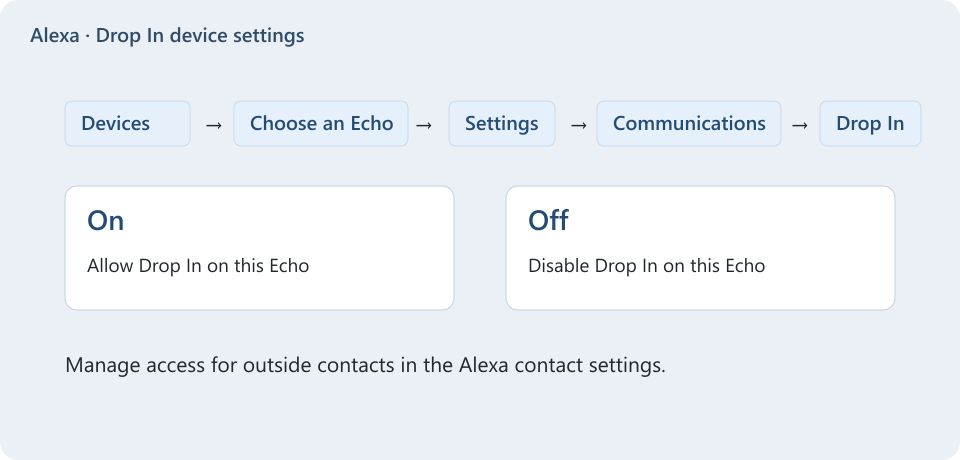
Amazon documents On and Off for each compatible Echo. Manage access for people outside your household in the contact settings.
| Option | Who can usually drop in | Good for |
|---|---|---|
| On | Your household plus contacts you’ve given Drop In permission | A relative’s Echo you want to reach from your own home |
| Off | Nobody | Bedrooms, offices or any room where you want privacy |
Turn Drop In on for shared rooms where you want to use the intercom and off in rooms where people expect privacy. Review which contacts have permission before enabling it.
Let a Contact Drop In on You
To connect two homes, permission has to be given on the receiving side. If a grandparent wants their Echo Show to accept Drop Ins from you, it’s their Alexa app (or whoever manages their account) that needs these steps:
- In the Alexa app, tap Communicate.
- Tap the contacts icon, then tap the person’s name.
- Turn on Allow Drop In.
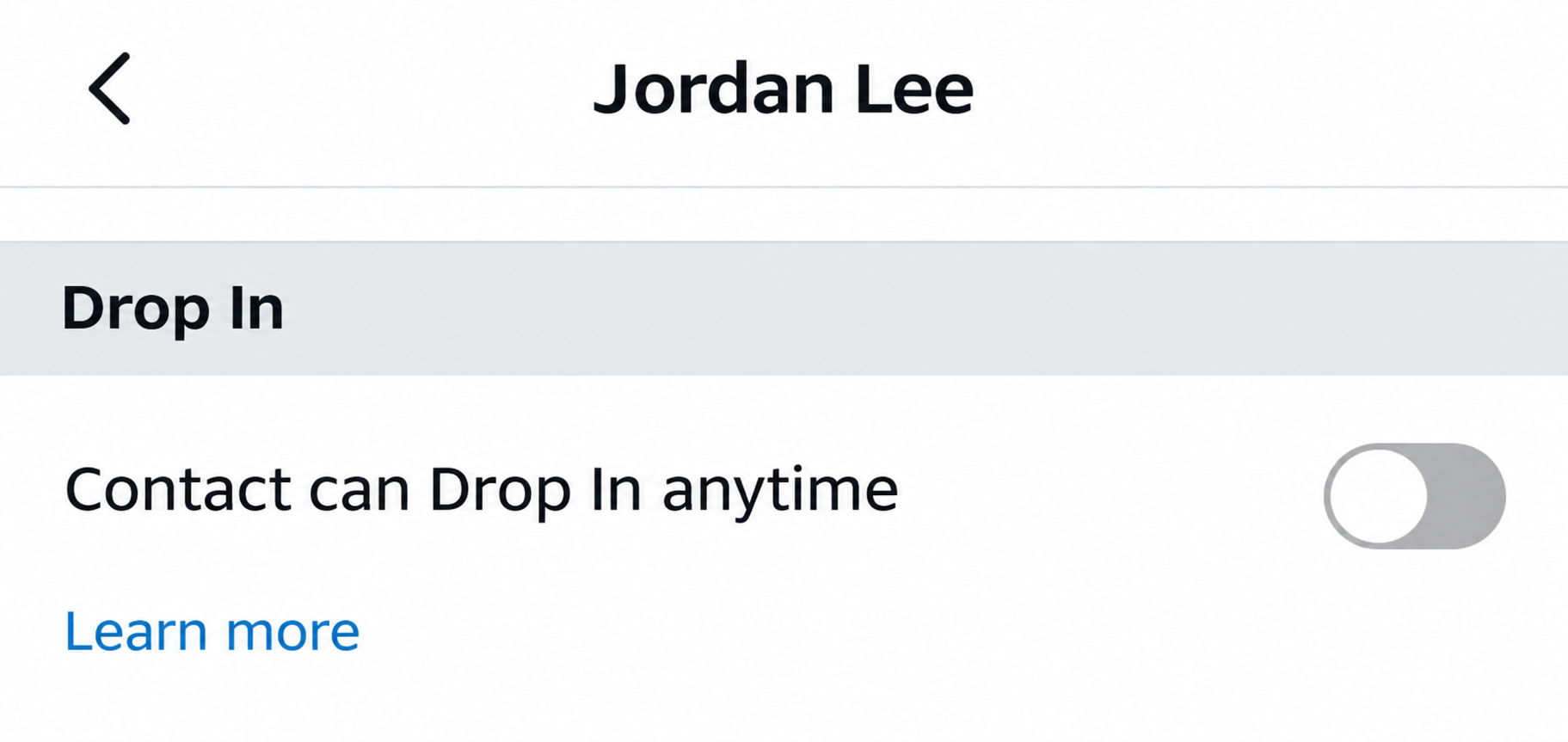
Amazon says both contacts must grant Drop In permission. Each person can check the other’s contact entry in the Alexa app. The receiving Echo also needs Drop In set to On.
Drop In by Voice or From the App
With permissions in place, starting a Drop In takes one sentence:
- Another Echo in your home: “Alexa, drop in on Kitchen” (use the device’s name).
- A contact: “Alexa, drop in on” plus the contact’s name. If the contact has more than one Echo, Alexa may ask which one.
- Every Echo in your home at once: “Alexa, drop in on all devices.” Several publishers describe this as a group conversation across your household devices.
From your phone, open the Alexa app, tap Communicate, then tap Drop In and pick a device or contact. This is handy when you’re away from home and want to check on a pet sitter or speak to someone near an Echo. Reports suggest the phone app can start a Drop In but people can’t drop in on your phone, so treat the app as a starting point only.
What the Other Side Sees and Hears
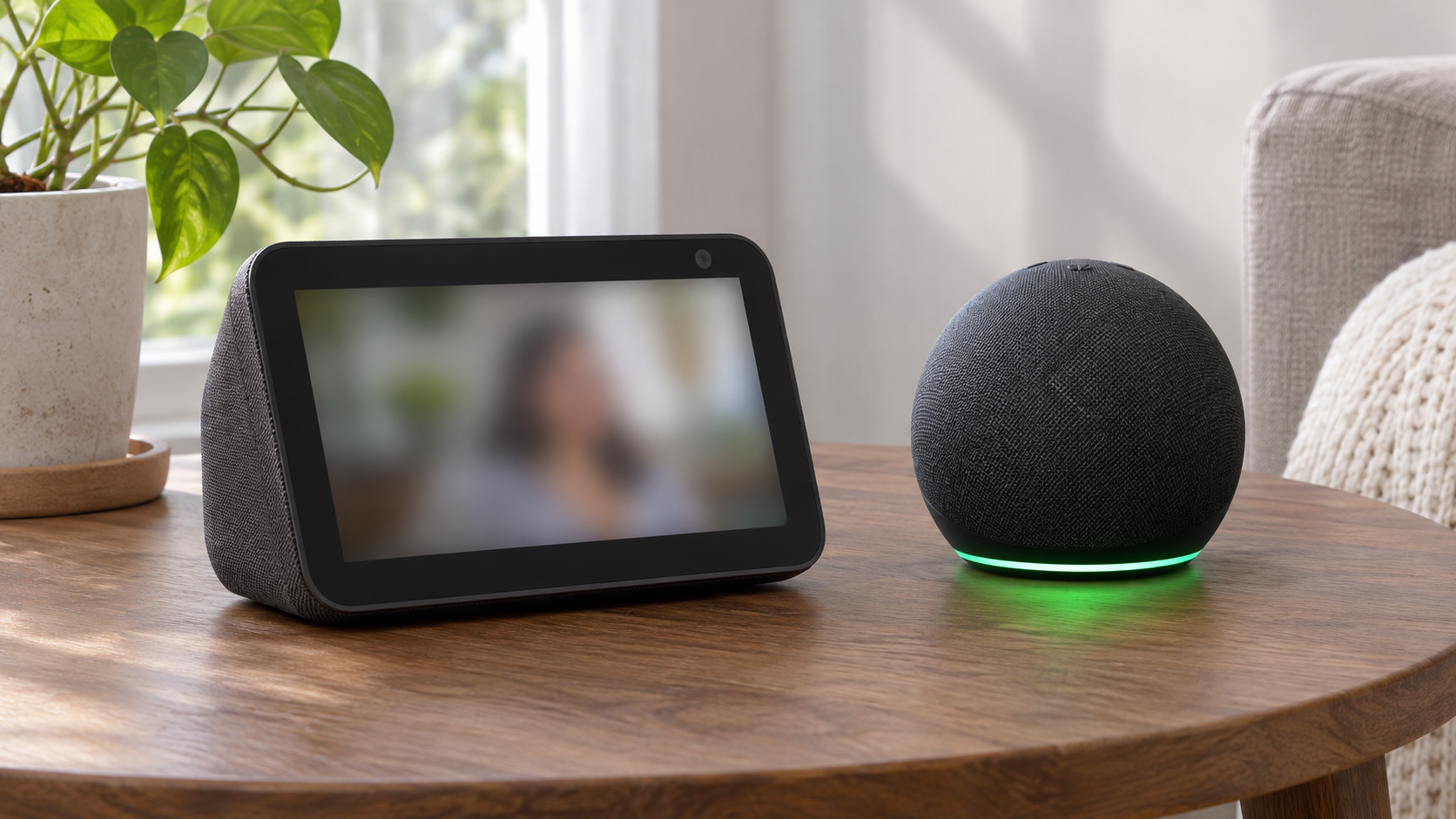
When a Drop In starts, the receiving Echo is commonly reported to play a short tone and show a pulsing green light on its light ring or screen. On an Echo Show, the video may start slightly blurred for a few seconds before it sharpens, which gives people a moment to react. During the conversation, either side can talk without pressing anything.
To end it, saying “Alexa, hang up” or “Alexa, end call” usually works, or tap the end button on an Echo Show screen or in the app. On an Echo Show, you can usually say “Alexa, video off” or tap a camera button to continue with audio only.
Control Who Can Drop In on You
Drop In is useful, but it’s also the Alexa feature most worth reviewing for privacy. You have several levels of control:
- Turn it off on one device. Go back to Devices, open the Echo, tap Communications and Drop In, and choose Off. This is the cleanest fix for a bedroom or home office.
- Remove a contact’s permission. In Communicate, open the contact and turn off Allow Drop In.
- Use Do Not Disturb. Do Not Disturb is commonly reported to block incoming Drop Ins and calls while it’s on, which suits overnight hours. Check the behavior on your own device before relying on it.
- Press the microphone off button. On most Echo devices, turning the microphones off means the other side can’t hear the room, and many Echo Show models have a camera shutter or camera off button that blocks video.
Some guides note that contacts with Drop In permission may see when your device was recently active; check the contact and Drop In settings in your app if that concerns you.
Talk to the people in your home before enabling Drop In on devices in shared rooms, and especially before you allow outside contacts. If you’d rather stop Alexa listening on your phone altogether, see how to turn Alexa off on an iPhone.
When Drop In Doesn’t Work
Most failures come down to a setting on one side. Work through these:
- Alexa says the device isn’t available: check that the target Echo’s Drop In setting isn’t Off, and that the device is online in the Alexa app.
- It works at home but not with a relative: their device needs Drop In set to On, and both of you need to grant each other permission.
- Alexa picks the wrong device: rename devices so their names don’t sound alike, and say the full name.
- Nothing happens on the other end: check for Do Not Disturb or a muted microphone on the receiving Echo.
- Still stuck: update the Alexa app, restart both Echo devices by unplugging them for a few seconds, and try again.
Drop In only connects Echo devices and the Alexa app. If you’re also connecting a video doorbell, see how to connect a Ring doorbell to Alexa, which uses doorbell announcements, Live View and Two-Way Talk rather than Drop In.
Alexa Drop In Questions
Does the other person have to answer?
No, and that’s the point of Drop In. If you want the other person to choose whether to pick up, use a regular Alexa call instead.
Can a stranger drop in on my Echo?
When Drop In is on, your household can use it. A contact you authorize and members of their household can also connect to your Echo devices. Review Allow Drop In for each contact to control that access.
Can I use Drop In between two different homes?
Generally yes, as long as each side has given the other Allow Drop In in their contacts and the receiving device is set to On.
Does Drop In record the conversation?
Check Amazon’s own privacy information for current details. You can review what Alexa has stored from voice requests in the app; see how to view Alexa voice history on an iPhone.
Start by setting Drop In to On for the Echo you want to test, then try “Alexa, drop in on” with one room name. Once that works at home, add outside contacts one at a time.

Matthew Burleigh is the founder, head writer, and editor of Solve Your Tech, which he launched in 2012. He has written technology tutorials since 2008 and worked in IT since 2003, including small-business support, IT management, and consulting. He holds Bachelor’s and Master’s degrees in Computer Science from Arizona State University.
Matthew writes practical guides for Windows, iPhone and iPad, Microsoft Office, Outlook, Google apps, and Android. Solve Your Tech’s guides are checked step by step against the device or app maker’s own documentation and tested on his own devices whenever he has the hardware or software, with clear steps, sources, and update dates.
Read more about Matthew and how Solve Your Tech writes and updates its guides, or report a correction.