No, you can’t see who views your Facebook profile. Facebook’s Help Center says it doesn’t let people track who views their profile or posts, and that third-party apps can’t provide this either, so any app or browser extension that claims to list your profile visitors is fake and should be reported.
This applies to personal profiles in the Facebook app on iPhone and Android and on facebook.com in a computer browser. What you can see is narrower: who viewed your stories, who reacted to or commented on your posts, and total counts if you run a Page or use professional mode.

What Facebook Shows and What It Doesn’t
| Activity | Do you see names? |
|---|---|
| Someone opens your profile | No |
| Someone searches for your name | No |
| Someone views your story | Yes, in the story’s viewer list |
| Someone reacts to, comments on or shares your post | Yes, on that post |
| Visitors to your Page or professional profile | Totals only, no names |
The rule works in both directions. Facebook also confirms that people can’t tell that you’ve seen their profile, so you can browse a profile without the owner being told.
Facebook is just as quiet about blocks, but you can still learn how to tell if you’re blocked on Facebook from what your own account shows.
Why “Profile Viewer” Tricks Don’t Work
- Apps and extensions: they can’t get this data from Facebook, because Facebook doesn’t make profile visits available to users or app developers. Whatever names they show are made up or pulled from your friends list. Many of these tools exist to capture your password, post spam from your account, or show you ads.
- Page source tricks: old tips that tell you to search your profile’s page source for friend ID numbers don’t reveal visits. Those numbers relate to friends and chat contacts, not profile views.
- Old news stories: articles from years ago claimed a “Who viewed my profile” option was coming. The feature still doesn’t exist, according to Facebook’s Help Center.
How to Spot a Fake Viewer Tool
Treat a tool as a scam if it does any of these things:
- Asks for your Facebook password on a page that isn’t facebook.com.
- Asks you to paste code into your browser or install an extension.
- Requests permission to post for you or read your messages.
- Promises a list of “secret admirers” or “stalkers.”
If you come across one, report it to Facebook instead of trying it.
Hints That Aren’t Proof
- Friend list order: some sites claim the friends shown first on your profile are the people who visit most. Facebook has never said that, so treat it as speculation.
- “People You May Know”: these suggestions come from mutual friends, contacts and other signals. The sources are spelled out on Facebook’s People You May Know help page. A suggestion doesn’t mean that person visited your profile.
- Frequent likes: someone who reacts to everything clearly sees your posts, but you know that because they reacted, not because Facebook tracked a visit.
- Active Status: the green dot only shows that a friend is online. It doesn’t show what they’re looking at. If you’d rather hide your own status, turn off Active Status on Facebook.
What You Can See
Who Viewed Your Story
Stories are the one place Facebook shows names of viewers.
- Post a story from the top of Feed.
- While the story is live, open it by tapping or clicking your story at the top of Feed.
- Tap or click the viewer count at the bottom of the story, or swipe up in the app, to see the list of people who viewed it.
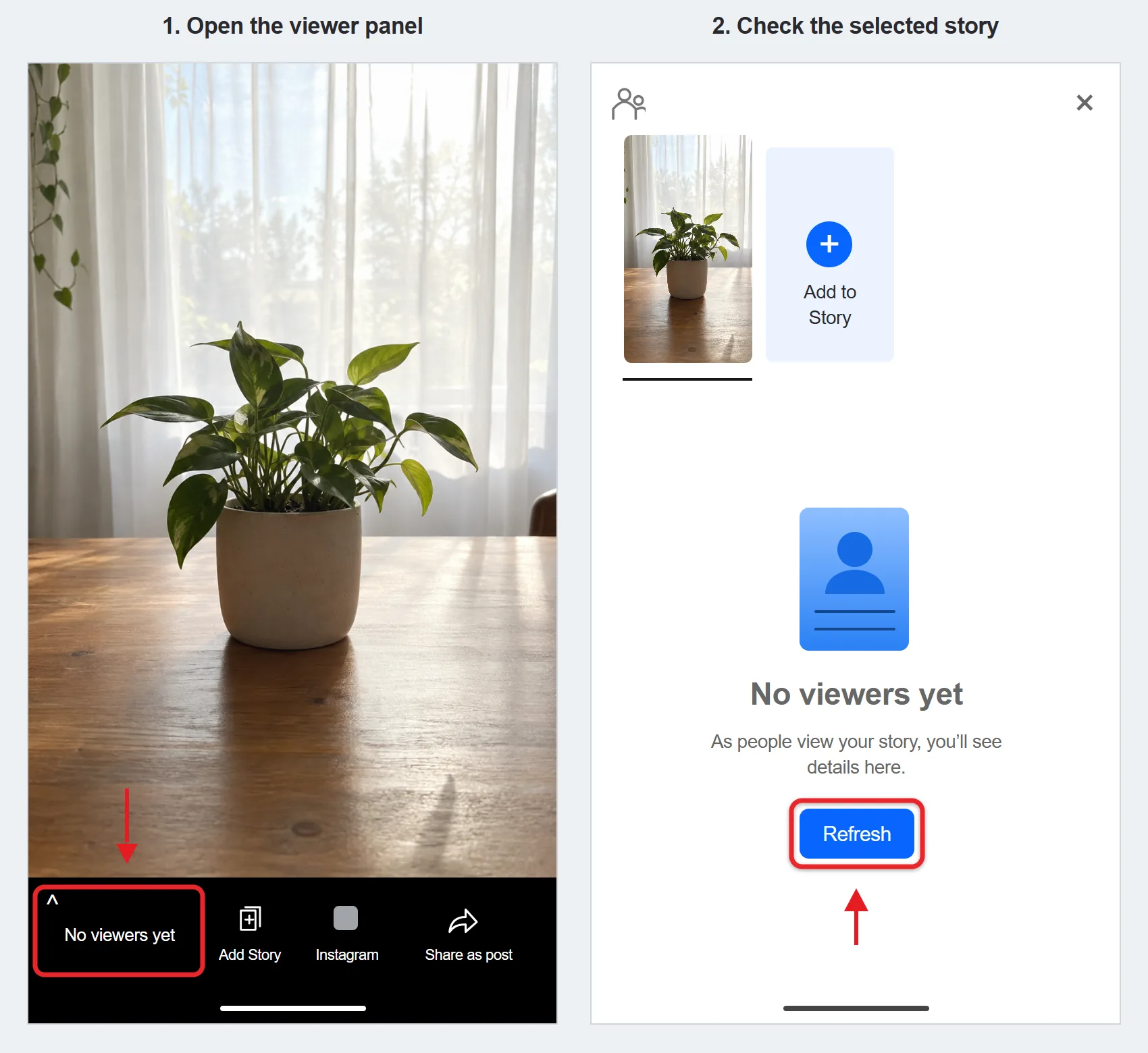
The list is available while the story is live, which is usually 24 hours, and in your story archive if archiving is turned on. A story view doesn’t prove someone visited your profile, because most people see stories from their Feed.
Reactions, Comments and Shares
Anyone who reacts to, comments on or shares your posts is listed on that post. Tap or click the reaction count to see the names. People who only read a post without interacting don’t appear anywhere.
Page and Professional Mode Insights
If you run a Page or turn on professional mode for your profile, Facebook gives you reach and audience statistics, such as how many people saw your content and general audience details. These numbers are totals. They never list the individual people who opened your profile.
If You Already Tried a Profile Viewer App
Assume the app wanted your login or account access, and lock things down:
- On Facebook, open Menu > Settings & privacy > Settings. Under Permissions, tap Apps and websites and remove the viewer app.
- Remove any matching browser extension from your browser’s extensions page.
- Open Accounts Center > Password and security > Change password and pick a password you don’t use anywhere else.
- In Accounts Center > Password and security > Two-factor authentication, select your account and turn it on.
- In Accounts Center > Password and security > Where you’re logged in, select your account and log out of any device you don’t recognize.
Once you’ve done this, the app loses access to your account, and anyone who captured your old password can’t use it. Check your profile and Messenger afterward for posts or messages you didn’t send, and delete them.

If you cannot sign in or someone has changed your account information, get your hacked Facebook account back before continuing with the settings above.
Control Who Can See Your Profile
If you’re worried about who’s looking, limit what they can see instead. Some public information can also be visible to people without an account, so check what Facebook lets logged-out visitors see and the limits that apply.
- Check what strangers see. Facebook lets you see the public view of your profile.
- Change who can see your posts, friends list and personal details. See Control who can see what’s on your Facebook profile, or follow the steps to make your Facebook account private.
- Set your future posts to Friends and limit older public posts in your privacy settings.
- Lock your profile if the option is offered in your country. The steps to lock your Facebook profile also cover what non-friends see afterward.
- Add a friend to your Restricted list if you want to stay friends but share only public posts with them.
- Block anyone you don’t want viewing your profile at all. Open their profile, select the three dots, and choose Block.
After these changes, people who aren’t your friends see only the details you leave public. Profile photos, cover photos and your name are usually public, so choose those with that in mind.
To keep visitors from browsing your connections, also make your Facebook friends list private.
Facebook Profile Viewer Questions
Can someone see that I searched for them?
No. People can’t tell when you’ve viewed their profile, and searching for a name doesn’t notify the person either.
Does viewing a story tell the person?
Yes. Unlike profiles, stories show the owner a list of viewers, so your name appears if you watch someone’s story.
Do Facebook Page owners see who visits?
No. They see totals such as reach and visits, not individual names. Names only appear when visitors like, comment, share or send a message.
Can I see who viewed my profile picture or a photo?
No. Facebook doesn’t show who viewed a photo, including your profile picture. You only see the people who reacted to it or commented.
What should I do if an app says it can show my viewers?
Don’t sign in to it. Report it to Facebook and, if you’ve already used it, follow the security steps above.
Related: How to Change Your Facebook Profile Name on Desktop and Mobile.

Matthew Burleigh is the founder, head writer, and editor of Solve Your Tech, which he launched in 2012. He has written technology tutorials since 2008 and worked in IT since 2003, including small-business support, IT management, and consulting. He holds Bachelor’s and Master’s degrees in Computer Science from Arizona State University.
Matthew writes practical guides for Windows, iPhone and iPad, Microsoft Office, Outlook, Google apps, and Android. Solve Your Tech’s guides are checked step by step against the device or app maker’s own documentation and tested on his own devices whenever he has the hardware or software, with clear steps, sources, and update dates.
Read more about Matthew and how Solve Your Tech writes and updates its guides, or report a correction.