You want a Facebook Page for your business, but you don’t want to tie it to your personal Facebook profile or show your name on it. The honest answer: Meta requires a Facebook profile to create a Page, and there is no supported way around that. What you can do is keep your profile and the Page separate, hand day-to-day work to others, and put the Page in a business portfolio so it isn’t tied to you alone.
Why Facebook Asks for a Profile First
A profile is the personal account a real person signs in with. A Page is the public presence for a business, brand or organization. Meta’s help article on how to create a Facebook Page states it plainly: to create a Page, you must have a Facebook profile. Meta’s comparison of Pages, profiles and groups adds that a personal profile is required to create a Page or group, and that profiles are meant for personal use, not for businesses.
The good news is that the two stay apart. Meta’s Page setup guidance says information from your personal profile won’t appear on your Page unless you share it there, and that your profile and Page are considered separate on Facebook.
Older articles claimed that Business Manager lets you skip the profile. That isn’t what Meta documents. Meta’s current help pages call this a business portfolio, and creating one also requires a Facebook profile or a managed Meta account (a work login run through an organization’s Meta Organization Manager, which most small businesses don’t have).
Pick the Route That Fits Your Situation
Most people asking this question have one of a few real goals. Match yours to a route:
| Your goal | What to do |
|---|---|
| Keep your name off the business | Create the Page from your profile, post while switched into the Page, and tighten your profile’s privacy |
| Not be the only person who controls it | Move the Page into a business portfolio and give a second trusted person full control |
| Have staff or an agency run it | Give them task access (business tools only) or Facebook access, depending on what they need |
| Never have a Facebook profile yourself | Ask a trusted partner or agency to create the Page with their own profile and manage it, or use an option that needs no Facebook profile |
Create the Page From Your Profile
If you don’t have a profile yet, create one with your real name, as Meta’s rules require (more on that below). Then follow Meta’s Page steps for the device you’re using.
On a Computer
- Log in to Facebook and click Pages in the menu on the left.
- Below Your Pages and profiles, click Create new Page.
- Enter the Page name (use the business name customers know) and choose a Category.
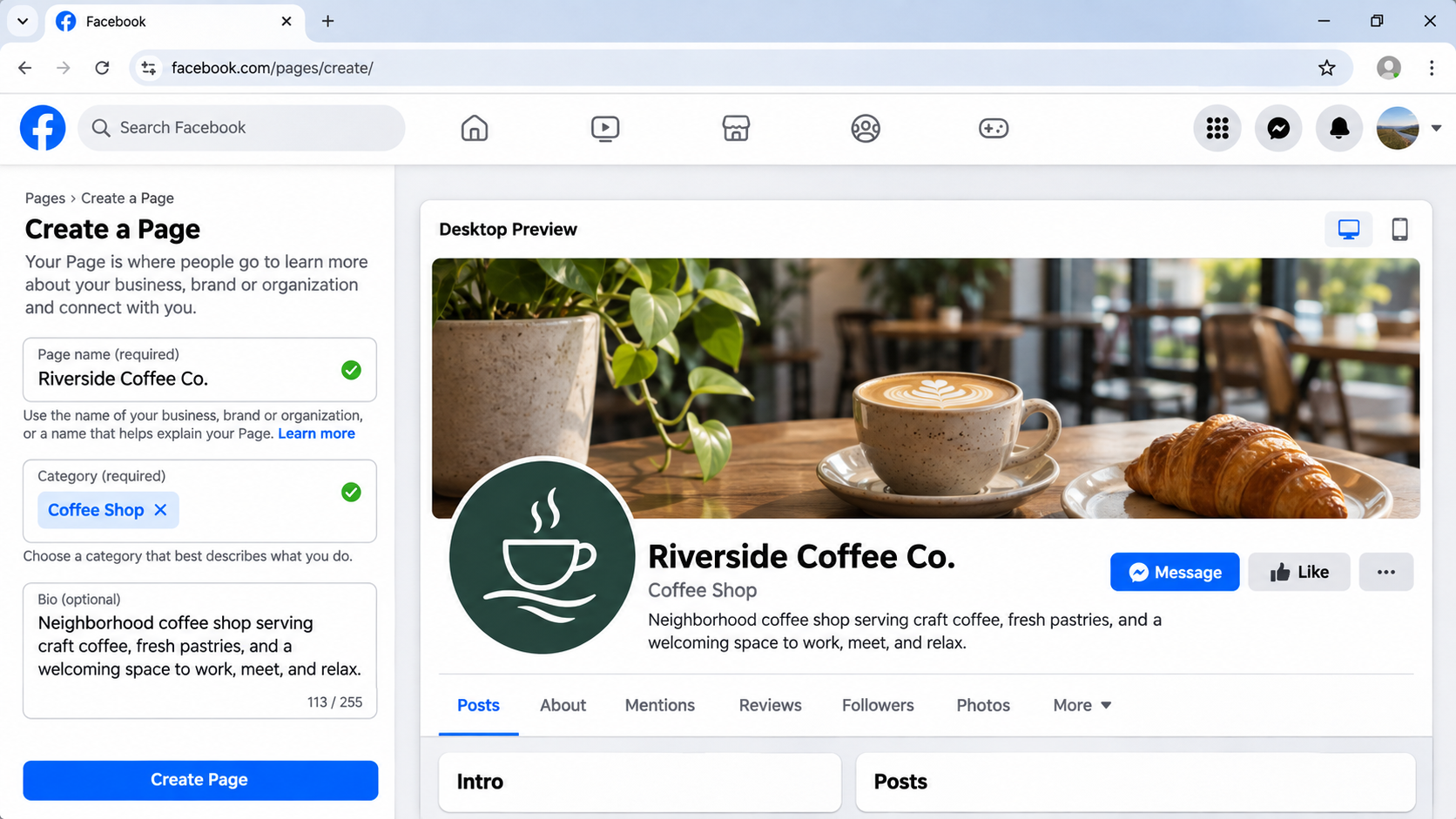
- Click Create Page. You can then add a bio, a profile picture and a cover photo.
In the Facebook App
- Tap Menu, then Pages, then Create.
- Enter the Page name and tap Next.
- Pick a category (or one of the popular categories) and tap Create.
- Follow the prompts to add a bio, contact information, location and hours.
There’s no separate Publish step in Meta’s current instructions. Once the Page exists, finish the basics Meta recommends: a profile picture, a cover photo, a one or two sentence description, contact details, location and hours, and up to three more categories. Only add contact details you’re happy for the public to see, such as a business phone number or business email rather than your personal ones.
If you already turned your own profile into something business-like and want to undo that, see whether a Facebook profile can be converted to a Page before you change anything.
Switch Into the Page to Work as the Business
To manage the Page on Facebook, you switch from your profile into the Page. On a computer, click your profile photo, choose See all profiles, then select the Page. While you’re switched in, you work from the Page instead of your personal profile, so posts, comments and messages you send there come from the Page, not your personal profile. Before you reply to a customer, glance at the name and picture beside the comment box to confirm which one you’re using.
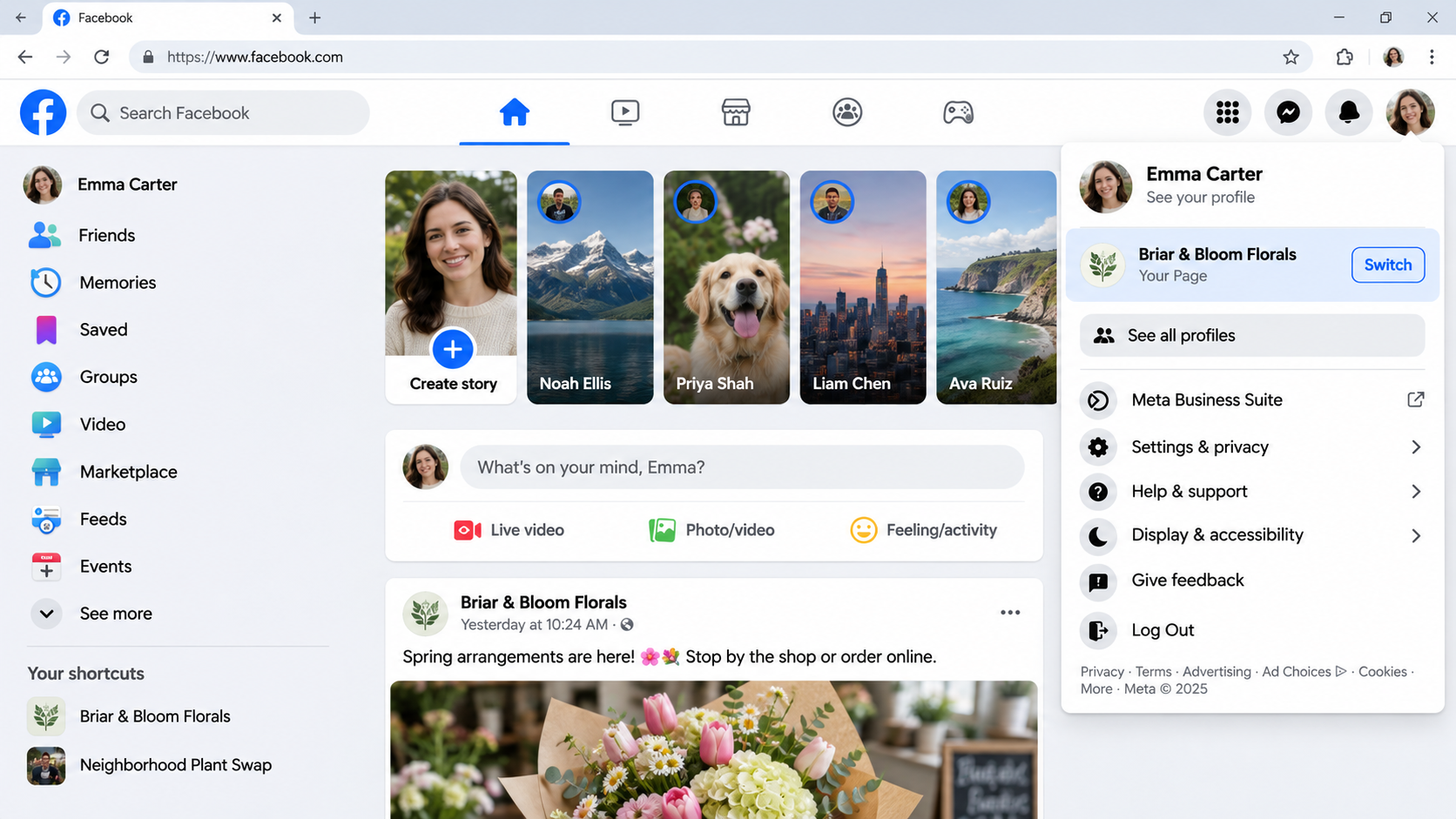
Switch back to your profile the same way when you’re done.
Put the Page in a Business Portfolio
A business portfolio, managed in Meta Business Suite, groups a business’s Pages, Instagram accounts, ad accounts and other assets in one place, and lets you grant access by role instead of by personal friendship. Meta’s article on creating a business portfolio in Meta Business Suite lists these steps for a computer:
- Go to business.facebook.com and log in with your Facebook profile (or a managed Meta account, if your organization uses one).
- Open the dropdown below Home in the top left and choose Create a business portfolio.
- Enter the portfolio name. It should match the public name of your business and can’t contain special characters.
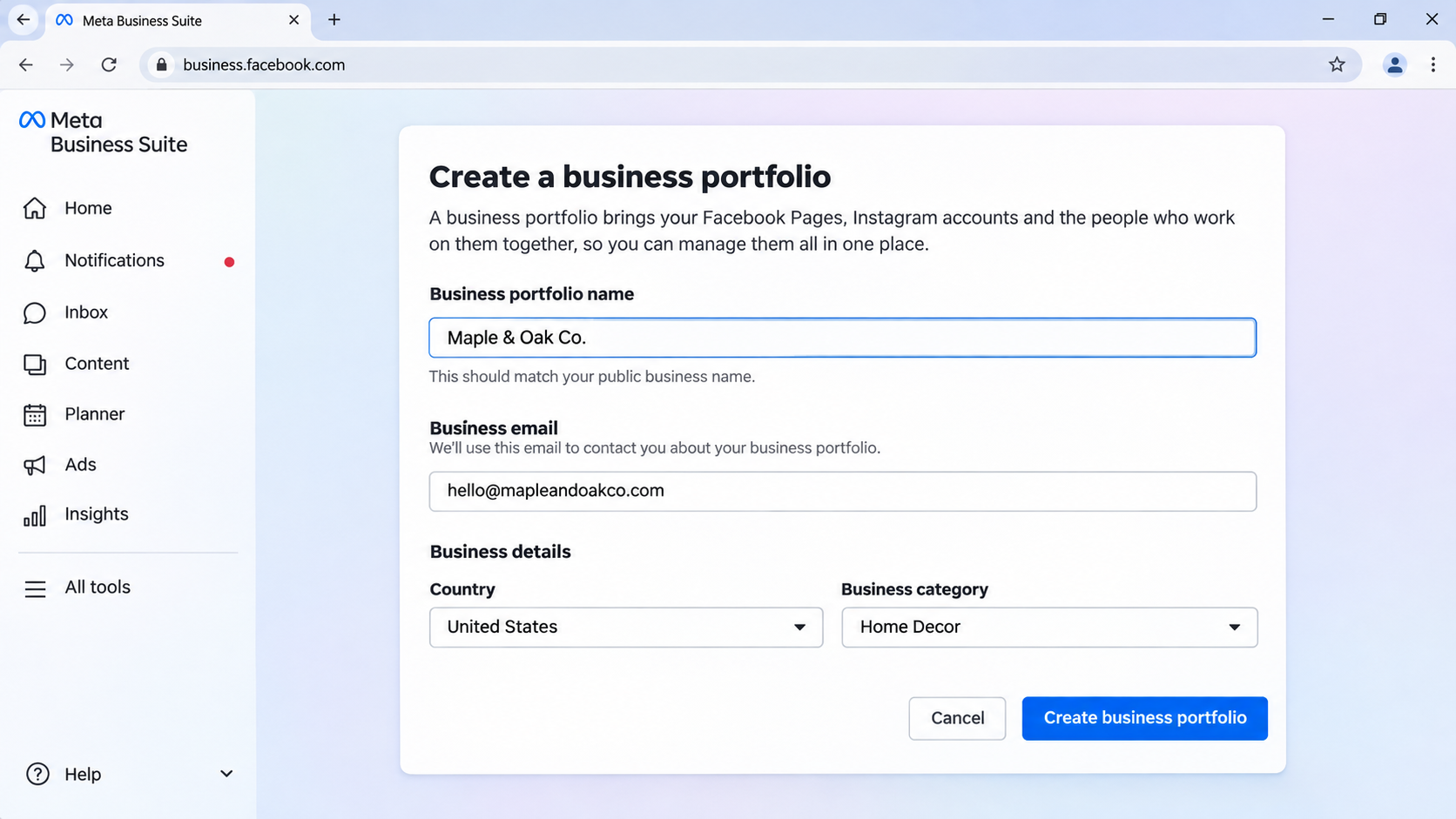
- If you logged in with your Facebook profile, enter your first and last name and a business email address. Then click Create (or Create portfolio).
- If you used a Facebook profile, open the email Meta sends and confirm the address.
A few limits are worth knowing before you start. Meta says the business email isn’t shown to customers, but your contact information is visible to people you add to the portfolio. You can personally create up to two business portfolios, and each asset, such as a Page or ad account, can belong to only one portfolio. New portfolios may not have every advertising feature right away. After the portfolio exists, add your Page to it from the portfolio’s settings.
Give Other People Access So You Can Step Back
Don’t share your password (Meta’s terms forbid it); give each helper their own access. These steps and access levels apply to Pages in a business portfolio; a Page outside a portfolio has different access settings. Meta’s instructions for giving someone access to a Facebook Page go like this:
- Open Meta Business Suite on a computer and go to Settings.
- Below Profiles, click Pages and select the Page.
- Click Assign people, then Add People, and choose the person.
- Choose the access type, then click Assign.
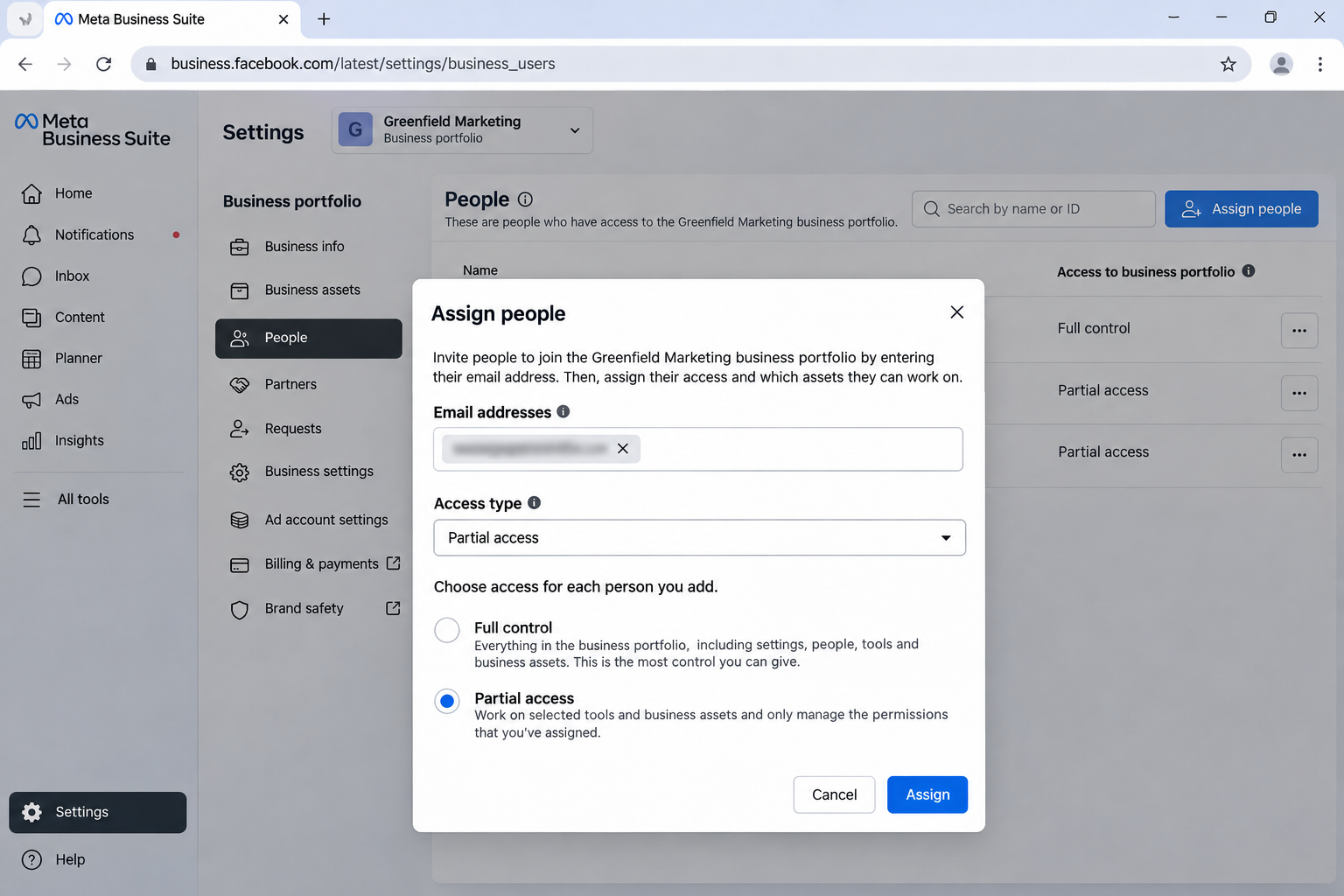
You need full access to the Page or the portfolio to do this. If the person isn’t in your portfolio yet, you can request that they be invited, and someone with full access to the portfolio must approve it first.
The Three Access Levels
Meta’s overview of Page access for Pages in a business portfolio describes three levels:
- Partial access (business tools only): the person works through Meta’s business tools and can’t switch into the Page on Facebook. This suits a contractor who only schedules posts or runs ads.
- Partial access (business tools and Facebook): adds the ability to switch into the Page on Facebook, which suits someone who answers comments and messages.
- Full control: includes Page settings, deleting the Page, and giving or removing other people’s access. Keep this for owners.
Give full control to at least two people you trust. Meta warns that if nobody has full control, the Page is automatically deactivated and scheduled for deletion. A second full-control person is also your safety net if your own profile is ever locked or disabled. To check who changed what later, open the Page’s Page Management history (you need Facebook access to the Page; switch into the Page, click the Page’s profile picture, then Settings & privacy > Settings > Page setup > Page Management history), which logs people being added or removed and setting changes.
When you eventually want out entirely, these steps to remove your personal account from a Facebook Page cover the handover.
Keep Your Personal Profile Private
Since a profile has to exist, make it as quiet as you like. Set your default post audience to friends, limit who can find you by email or phone number, hide your friends list, and review what appears in your About section. The walkthrough on making your Facebook account private covers each setting, and this one explains how to hide your Facebook friends list specifically.
Also turn on two-factor authentication for your account. Because your profile is your way into the Page, someone who takes over your profile can take over the business presence too.
Why a Second or Business-Named Profile Is a Bad Idea
Some sites suggest making a throwaway profile with a business email, or a profile named after the business, just to own the Page. Don’t. The Meta Terms of Service require you to use the name you use in everyday life, provide accurate information about yourself, create only one account (your own) for personal purposes, and not share or transfer your account. A profile named after your shop breaks those rules, and so does a second account in your own name.
The risk isn’t only to the extra profile. Meta’s Account Integrity standard says Meta can restrict or disable not just accounts but also Pages, groups and business assets (such as Business Managers and ad accounts) that break its rules or are owned by the same person as a disabled account. If a disabled profile was the only one with full control, the business Page can go down with it. And under the terms, someone whose account Meta disabled for breaking its rules agrees not to create another one without Meta’s permission.
If you’d rather not use your own profile at all, the legitimate version of this idea is to have a real person, such as a business partner, employee or agency, create the Page with their own profile and manage it for you. More on the one-account rule is in this look at whether you can make a second Facebook account.
What a Meta Account and Instagram Can and Can’t Do
A Meta account (managed in Accounts Center) links the Facebook, Instagram and other profiles you add to it so they share a login and some settings, as Meta’s page on managing connected experiences in a Meta account explains. It doesn’t create a Page or replace a Facebook profile.
Instagram is different. Meta’s article on setting up a professional Instagram account shows that you can switch an Instagram account to a professional business account without a Facebook Page. The Facebook login step during the switch is optional and can be skipped. In the Instagram app:
- Go to your profile and tap More, then Settings and activity.
- Under For professionals, tap Account type and tools, then Switch to professional account.
- Pick a category, tap Switch to professional account, choose Business, then tap Next. You can skip contact details with Don’t use my contact info.
A private account becomes public when you switch, and switching back to a personal account later disconnects any linked Page and ends ads access.
What Instagram can’t do is make a Facebook Page without a Facebook profile. Meta’s article on connecting a professional Instagram account to a Facebook Page shows that both choosing an existing Page and Create a new Facebook Page come after you tap Login to Facebook, so a Page made from Instagram still goes through a Facebook account. Linking also needs full control of the Page, and both must be in the same business portfolio. Anyone with access to either the Page or the linked Instagram account can manage both, so choose who gets access carefully.
Options That Need No Facebook Profile
If staying off Facebook matters more than being on it, you still have ways to be found:
- Instagram professional account: set up as described above, with no Facebook Page required.
- Google Business Profile: Google’s help page on adding or claiming your Business Profile says to visit business.google.com/add, choose to add your business, enter your details and complete a verification method. Your address must be accurate and follow Google’s address guidelines, and only businesses eligible for a Business Profile can add one.
- Your own website: a simple site with your hours, location and contact form needs no social account at all and is fully under your control.
If Something Goes Wrong
- You can’t find Create new Page: make sure you’re switched into your personal profile, not an existing Page, and that the app is up to date.
- A helper can’t switch into the Page: give them partial access (business tools and Facebook) instead of business tools only.
- You can’t create a business portfolio: check whether you’ve already created two, which is Meta’s limit for portfolios you create yourself (you can still be added to others). Ask an existing portfolio’s admin to add you instead.
- Your profile was disabled: a second person with full control can keep running the Page. Don’t create a new profile to get back in; follow Meta’s appeal options for the disabled account.
Facebook Page and Profile Questions
Can I create a Page with just a business email?
No. The business email in a portfolio is only a contact address for Meta and your portfolio members; a Page still needs a Facebook profile behind it.
Will customers see who manages my Page?
Meta says your profile information won’t appear on the Page unless you share it there. Facebook may still show some general information about a Page’s management, and what it shows can change, so open your Page from a logged-out browser after setup and check its About and transparency details yourself.
Can an agency create the Page and add me later?
Yes. The agency’s staff create it with their own profiles, then give you access. To take it over fully, ask for full control and make sure the Page sits in a portfolio you own, since an asset can belong to only one portfolio.
What happens to the Page if I delete my profile?
If the Page is in a business portfolio and someone else has full control, it carries on. Meta deactivates a portfolio Page and schedules it for deletion when nobody has full control, so hand over full control before you delete your profile.
Where to Go From Here
Create the Page from your profile, lock down that profile’s privacy, then move the Page into a business portfolio and add a second full-control owner the same day. That last step is the one that truly separates the business from you.

Matthew Burleigh is the founder, head writer, and editor of Solve Your Tech, which he launched in 2012. He has written technology tutorials since 2008 and worked in IT since 2003, including small-business support, IT management, and consulting. He holds Bachelor’s and Master’s degrees in Computer Science from Arizona State University.
Matthew writes practical guides for Windows, iPhone and iPad, Microsoft Office, Outlook, Google apps, and Android. Solve Your Tech’s guides are checked step by step against the device or app maker’s own documentation and tested on his own devices whenever he has the hardware or software, with clear steps, sources, and update dates.
Read more about Matthew and how Solve Your Tech writes and updates its guides, or report a correction.